18 Creative Homemade Carnival Games for a Backyard Party
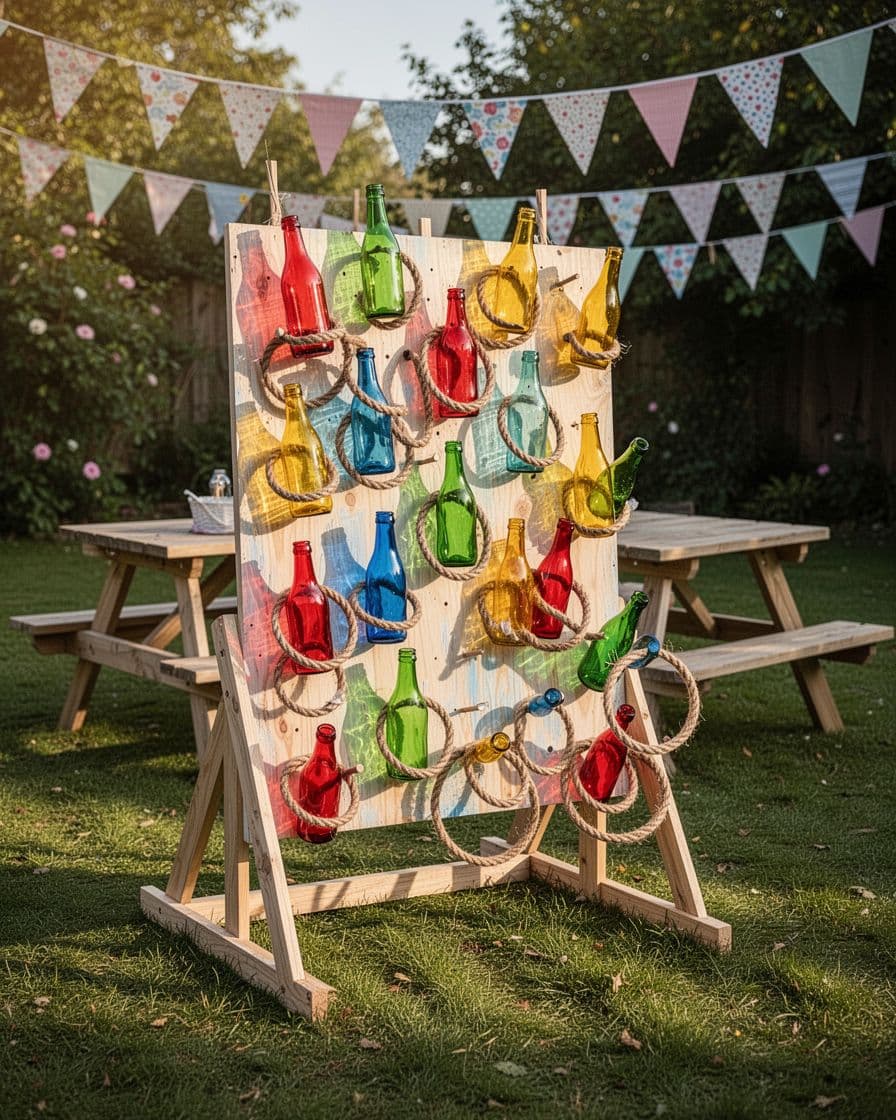
Homemade carnival games turn a backyard, school event, or birthday party into a lively fair with simple supplies and plenty of charm. These 18 ideas give you easy ways to build colorful game stations that fit your space, budget, and guest list.
18 Homemade Carnival Games
1. Ring Toss With Painted Bottles
Ring toss gives your carnival a classic fairground feel with very little setup. Line up painted plastic bottles, glass-free containers, or sturdy wooden pegs, then give each player several rope or plastic rings.
Use different distances to create easy and challenging throws. You can also place the targets on a low crate or box so younger children can aim without lifting the rings too high.
Choose soft rings when toddlers or preschoolers will attend. Keep the target pieces large and secure, since the CPSC small-parts guidance warns that small detachable pieces can create choking risks for young children.
2. Bean Bag Toss Board
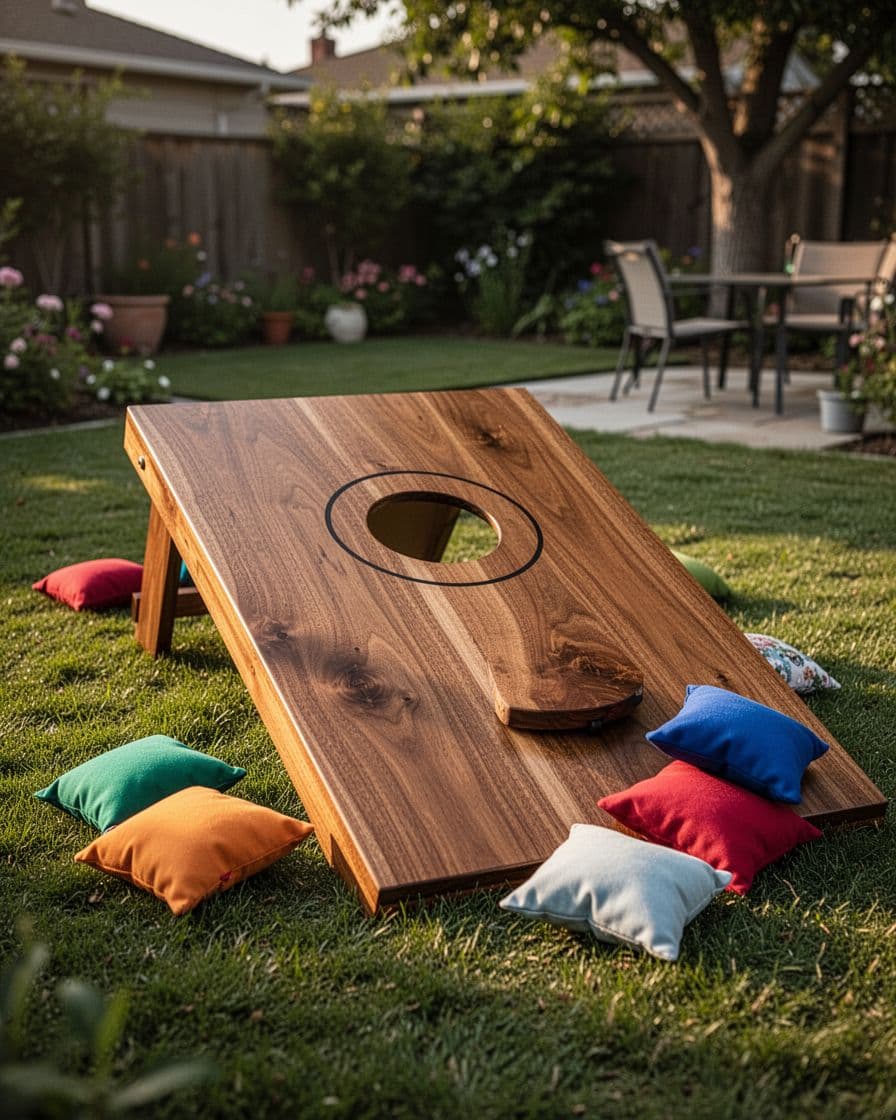 A bean bag toss board gives you a bright focal point and an easy game for nearly every age. Cut large holes into a piece of plywood, sand the edges, and paint the board in colors that match your party decorations.
Place the board on a stable stand or lean it against a heavy box so it won’t slide. Smaller children can stand close to the target, while older players can move farther back for a more difficult round.
Sew your own bean bags with cotton fabric and dried rice, or buy soft fabric bags made for indoor play. Avoid tiny filler pieces that could spill if a seam tears, especially when children under age 3 will play.
3. Tin Can Knockdown
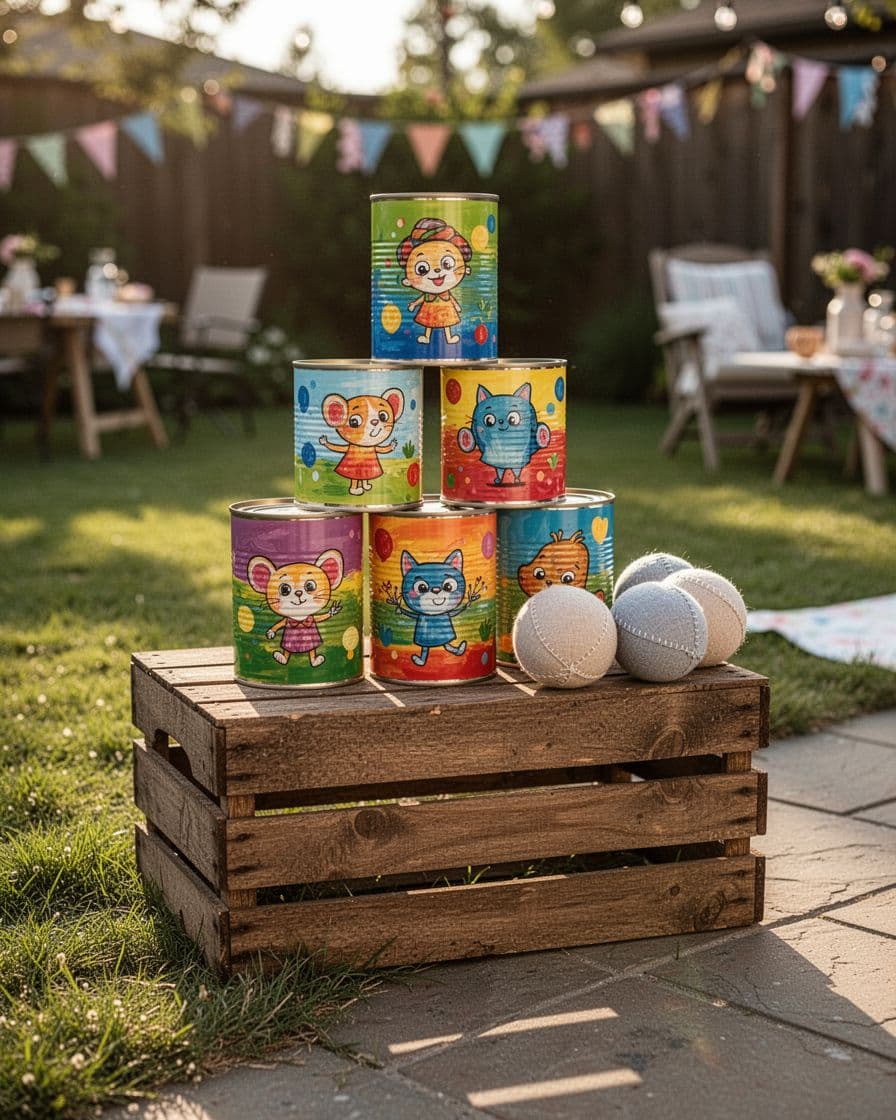 Tin can knockdown brings instant action to your homemade carnival. Stack six or nine empty cans on a wooden crate, then let players roll or toss soft balls toward the pile.
Cover sharp rims with strong tape before you paint the cans. You can also use empty plastic food containers if you want a lighter setup for younger children.
Choose foam balls or fabric balls instead of hard rubber balls. The CPSC toy safety guidance recommends keeping small balls and small parts away from children younger than age 3, so use large, soft equipment for family events.
Paint each can a different color, or keep the whole stack in one cheerful shade. When a child knocks down the full pile, rebuild it right away so the game keeps moving.
4. Balloon Pop Board
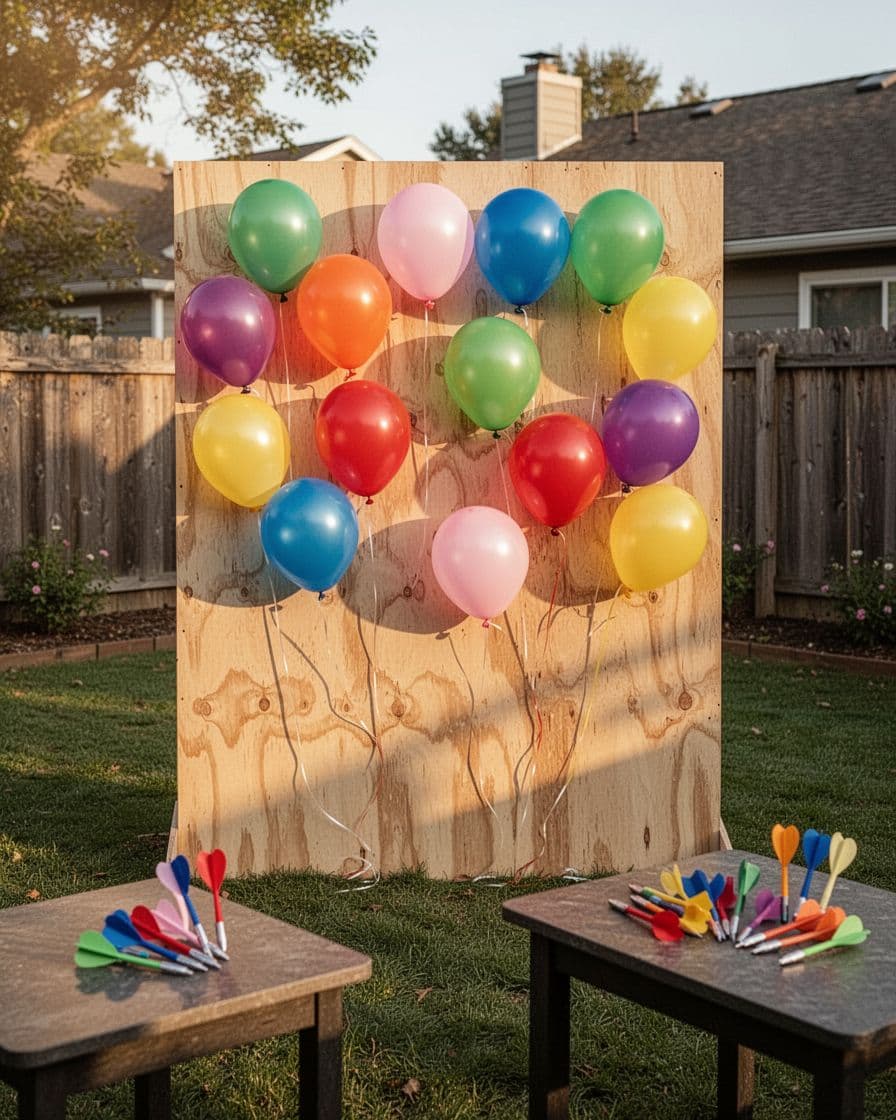 A balloon pop board adds bright color and a satisfying burst to your carnival lineup. Attach inflated balloons to a sturdy board, then let older children pop them with safe, blunt-tipped party darts under close adult supervision.
Give every player one or two attempts so the balloons last through the event. Hide small prizes behind selected balloons, or let each player choose a prize after a successful pop.
Keep uninflated balloons and broken pieces away from young children. The CPSC notes that deflated balloons require special care, especially around children younger than age 8, because balloon fragments can create a choking hazard.
For a version without darts, place balloons on the ground and let players stomp them while wearing shoes. That variation creates less risk from sharp objects and works well for an active birthday party.
5. Duck Pond Pick-Up
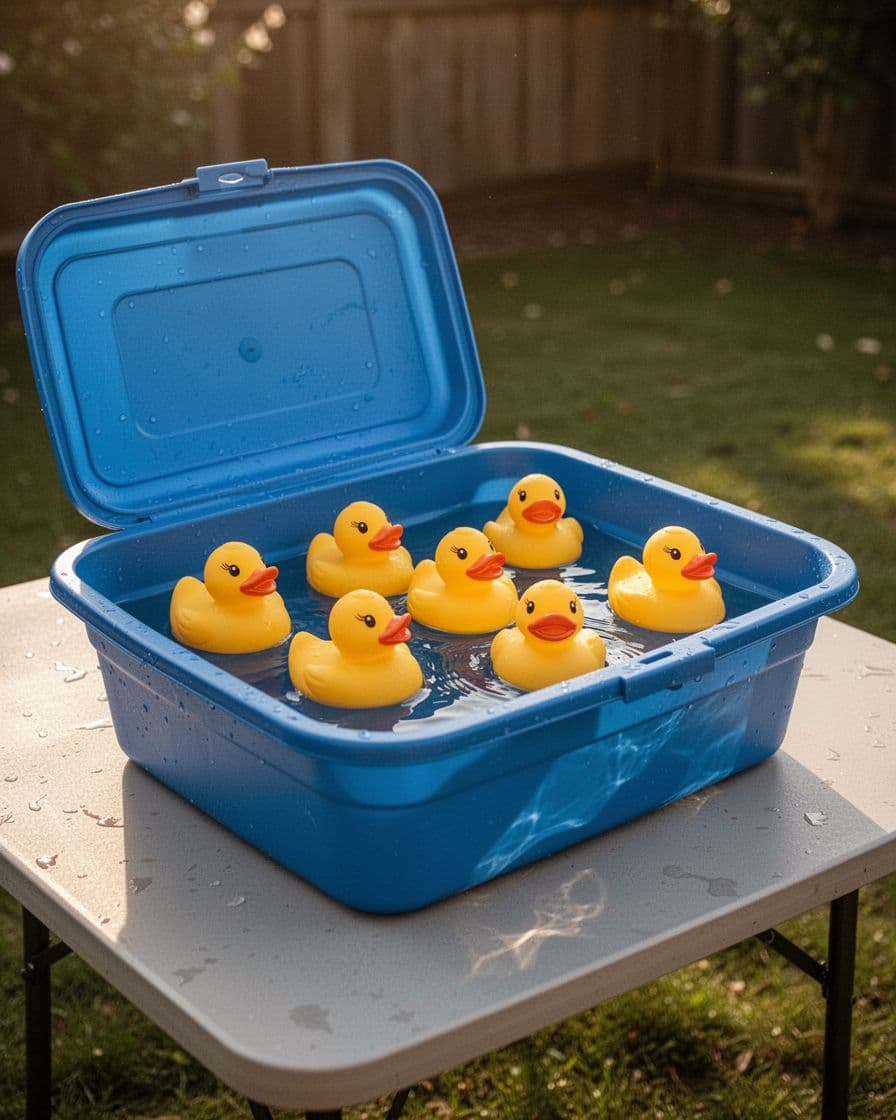 Duck pond games give younger children a calm station between active challenges. Fill a shallow plastic tub with a small amount of water, add floating rubber ducks, and let players pick one with a small slotted scoop.
Use colored ducks instead of written numbers if you want a setup that children can understand without reading. A matching color card or prize basket can tell you which reward each duck earns.
Keep the tub on a low, sturdy table and supervise the station closely. If your event includes several water games, follow CDC healthy swimming guidance, which covers drowning risks, illness prevention, and safer recreational water use.
Refresh the water when it becomes dirty, and keep hands out of mouths during play. Place a handwashing station nearby before snacks, since water play and shared toys can spread germs.
6. Milk Bottle Toss
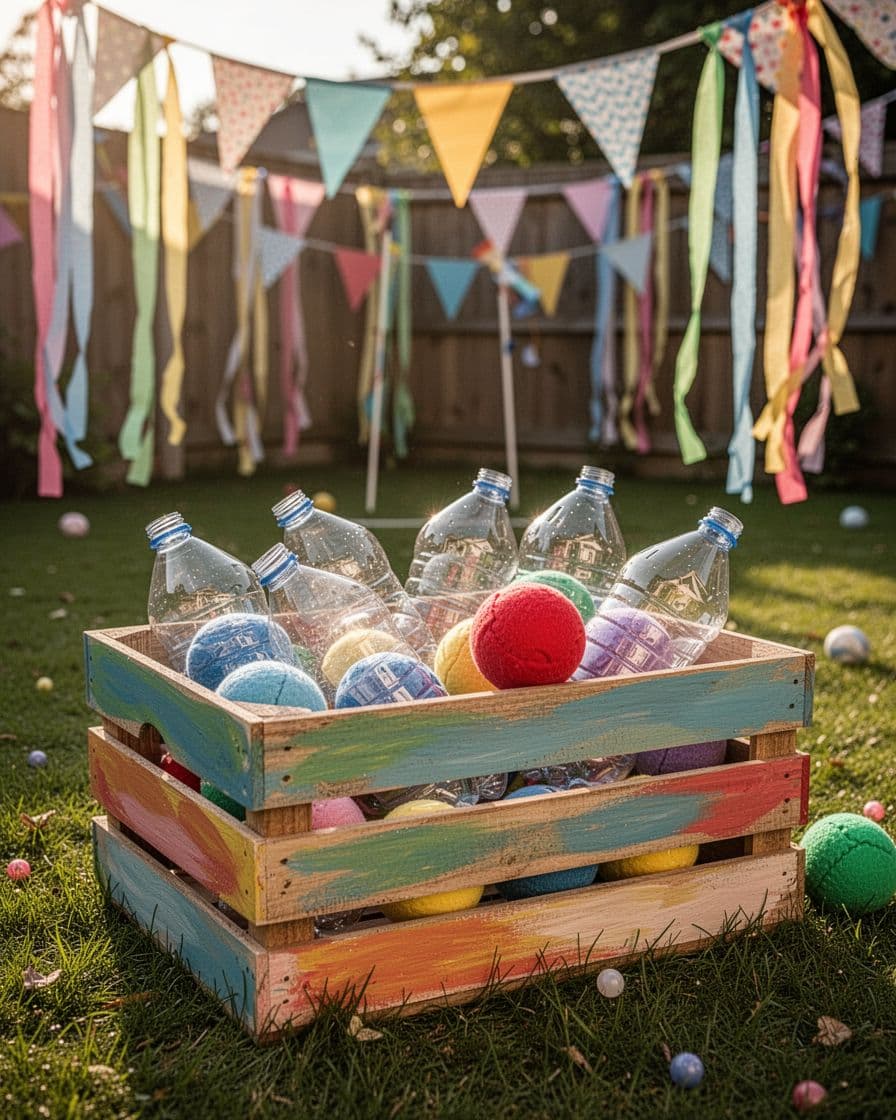 Milk bottle toss gives you the look of a county fair without heavy equipment. Arrange empty plastic bottles inside a painted crate, then ask players to throw soft balls through the openings or around the bottles.
Add a little sand to the bottom of each bottle if the wind keeps tipping them over. Leave enough space between the bottles so players can see their target and retrieve the balls without reaching into a crowded crate.
Use large plastic bottles with rounded edges and remove all caps before play. You can wrap the bottles in colored paper or fabric sleeves, but check the decorations often for loose pieces.
Set the throwing line with painter’s tape on the grass or a strip of rope. A closer line keeps the game friendly for younger players, while a farther line gives older guests a harder challenge.
7. Backyard Bottle Bowling
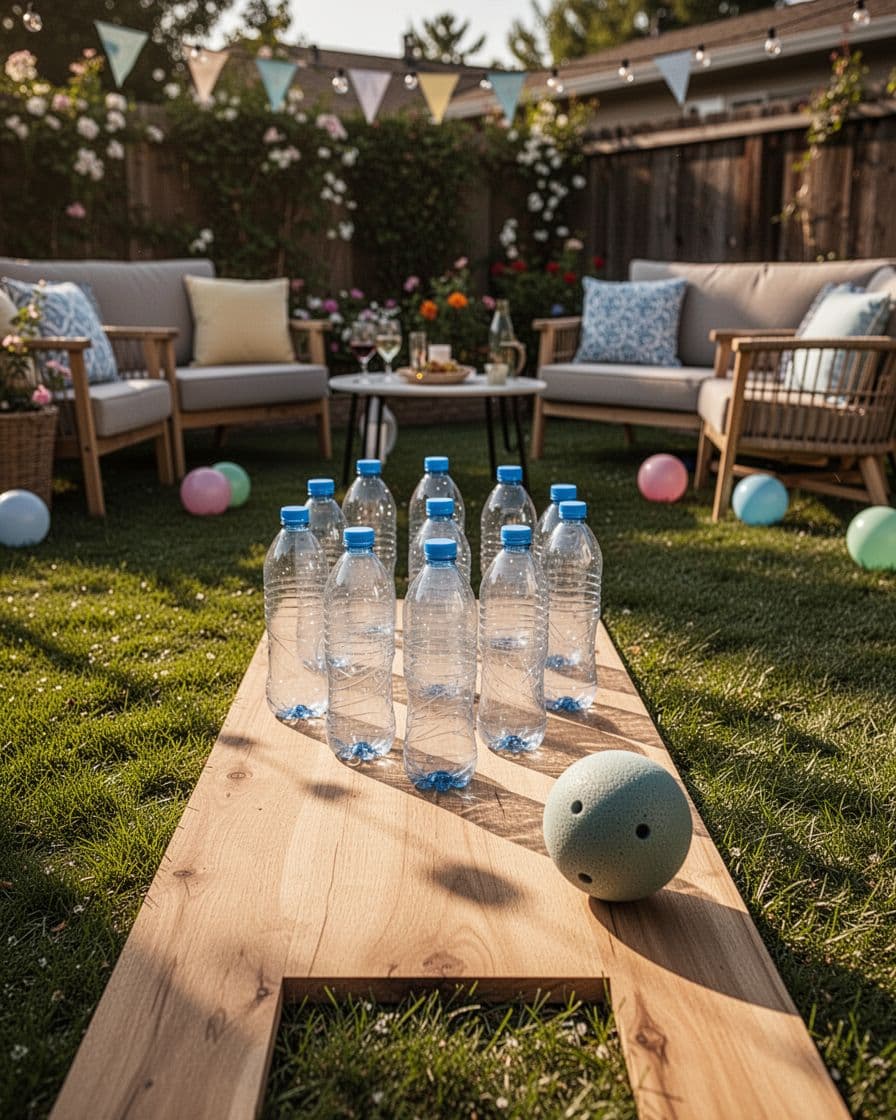 Backyard bottle bowling transforms recycled containers into a full game station. Fill lightweight plastic bottles with a little water, line them up like bowling pins, and roll a foam ball down a short wooden lane or smooth patch of grass.
Use a shallow cardboard ramp if you want a clear starting point for small children. The ramp also helps players roll the ball instead of throwing it toward nearby guests.
Paint simple stripes on the bottles with washable paint, or leave them clear for a clean, colorful look. Avoid glass bottles, heavy containers, and hard balls that could injure someone when the game gets busy.
Give each player two rolls per turn. That format keeps the line moving and gives players a second chance after a near miss.
8. Spin-the-Prize Wheel
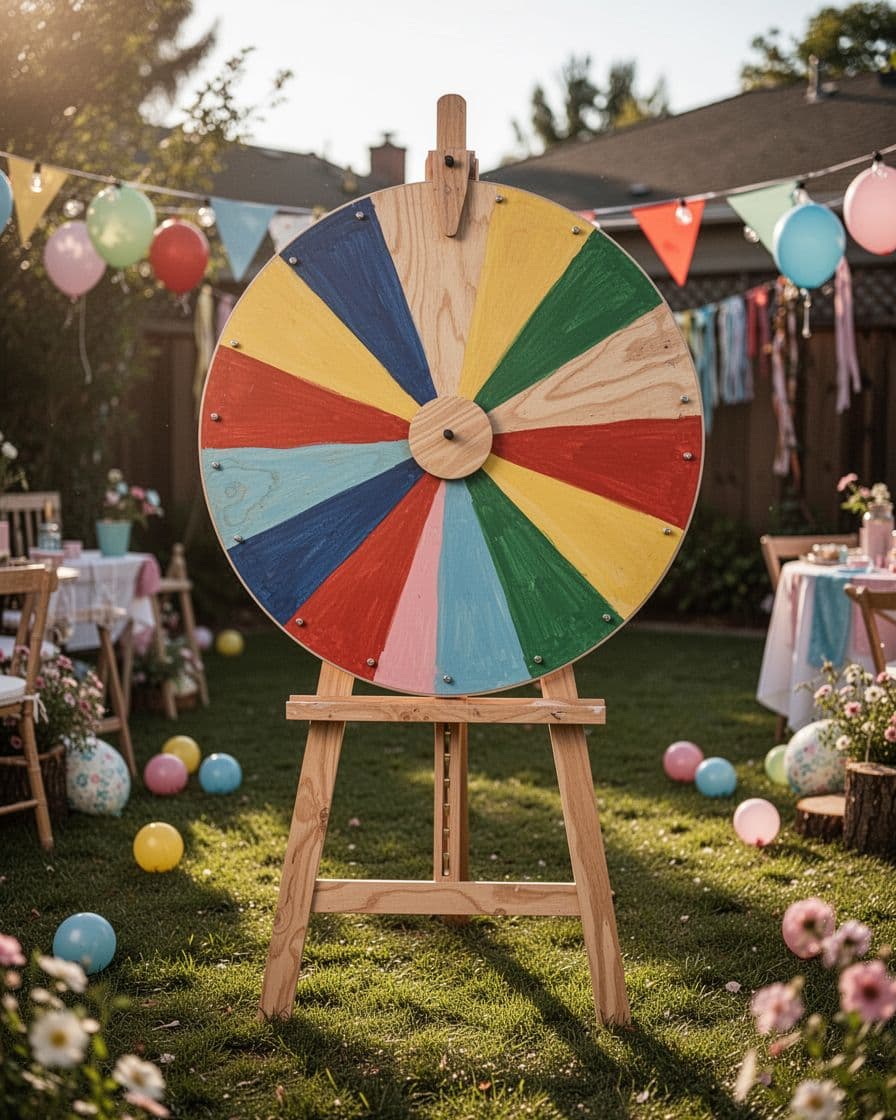 A homemade prize wheel creates a colorful centerpiece for your carnival. Cut a large circle from plywood or thick cardboard, divide it into blank colored sections, and mount it on a stand with a secure center bolt.
Add prizes later with removable stickers, clips, or a matching prize chart beside the wheel. This lets you change the rewards during the party without repainting the wheel.
Test the wheel before guests arrive to make sure it spins smoothly and stops without sharp edges. Keep the stand heavy enough that children can’t pull it forward or tip it over.
Offer small toys, stickers, pencils, or snack coupons as rewards. For younger children, choose prizes without small detachable parts and follow the age guidance on the CPSC toys safety page.
9. Magnetic Fishing Pond
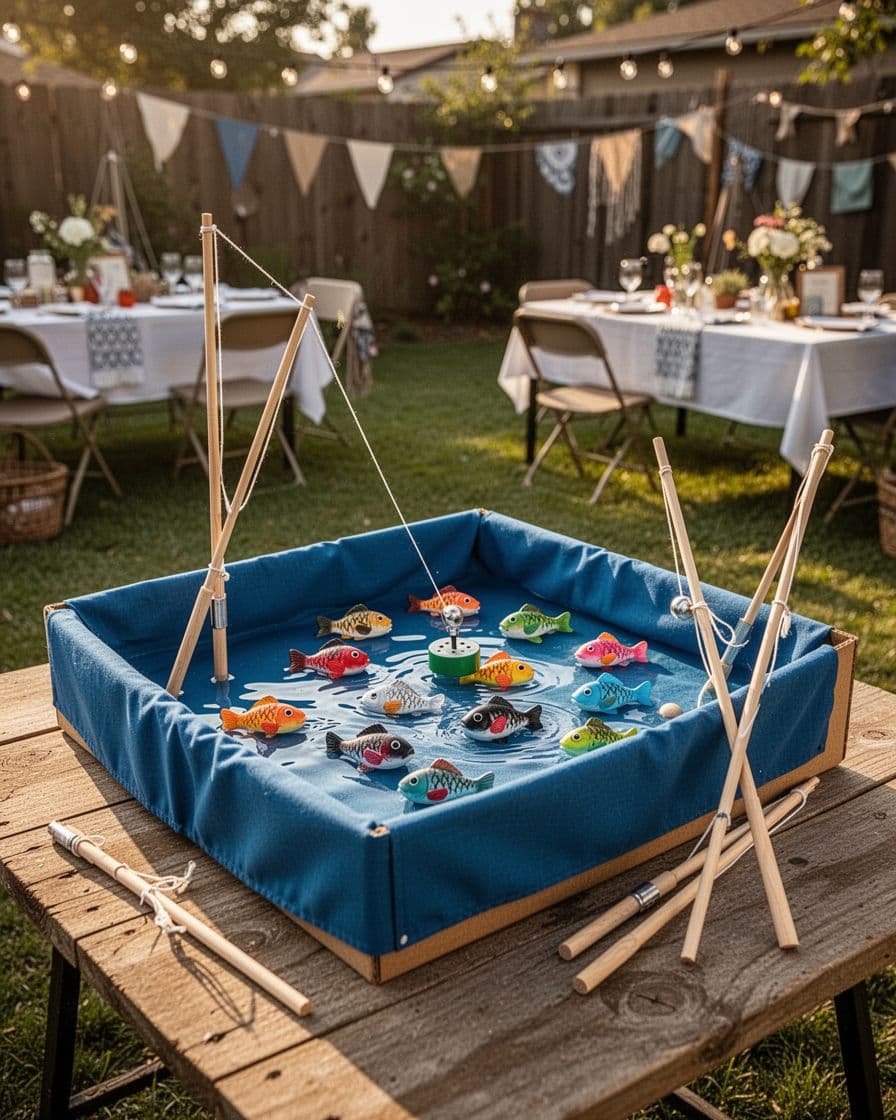 A magnetic fishing pond gives you a playful game that works indoors or outdoors. Fill a shallow box with blue fabric, add large toy fish with secure magnets, and place simple wooden rods beside the pond.
You can make the fish from felt, foam, or thick cardstock. Attach the magnets firmly, then tug on every piece before the party to check that nothing comes loose.
Keep the rods short and use rounded wooden ends. For a toddler-friendly version, replace magnets with large fabric loops and use a hook-free rod.
Let players catch one fish per turn, then match its color to a prize basket. This setup works well near a quiet seating area because the game creates less noise than knockdown stations.
10. Mini Golf Putting Challenge
A mini golf station gives older children and adults a slower challenge that still feels playful. Build a short plywood ramp with a raised edge, then place colorful plastic cups at the end as targets.
Change the difficulty by moving the cups or adding a gentle curve to the lane. You can also create a tunnel from a cardboard box, as long as the structure stays wide, stable, and free from sharp edges.
Use a child-sized plastic putter and a soft practice ball. Keep the putting lane away from other throwing games so players don’t cross into another station’s path.
Give each player three attempts to sink the ball. A small scorecard can work well for older guests, while younger children can play without keeping points.
11. Cup Toss With Ping-Pong Balls
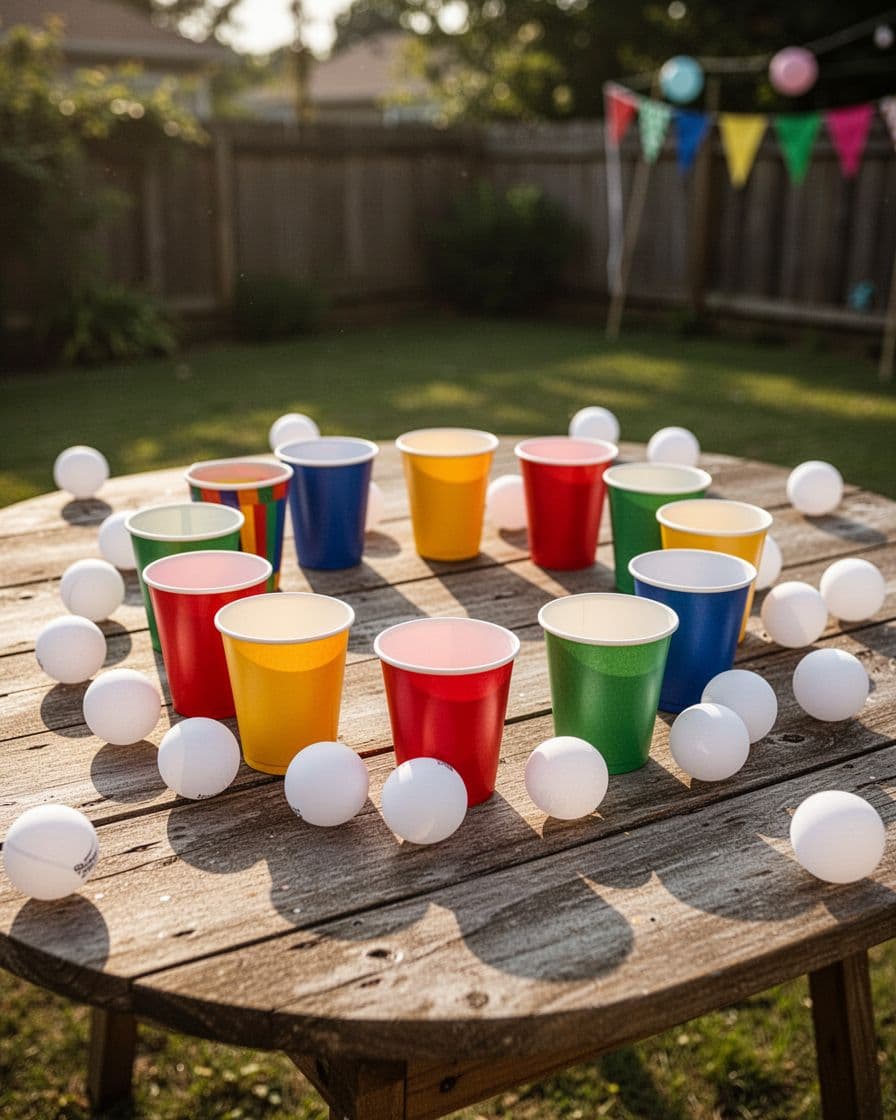 Cup toss fits on a small table, making it useful for patios, porches, and indoor parties. Arrange paper cups in rows, then let players bounce or toss soft ping-pong balls toward the openings.
Secure the cups with removable adhesive or place them inside a shallow tray. That small detail keeps the game intact when a ball hits the table.
Use large cups that children can see from their throwing line. Ping-pong balls can create a choking risk for very young children, so offer a different station to toddlers or use oversized soft balls instead.
Create an easy version with the cups close together. For older players, spread the cups apart and require a bounce before the ball can count.
12. Ladder Toss With Soft Bolas
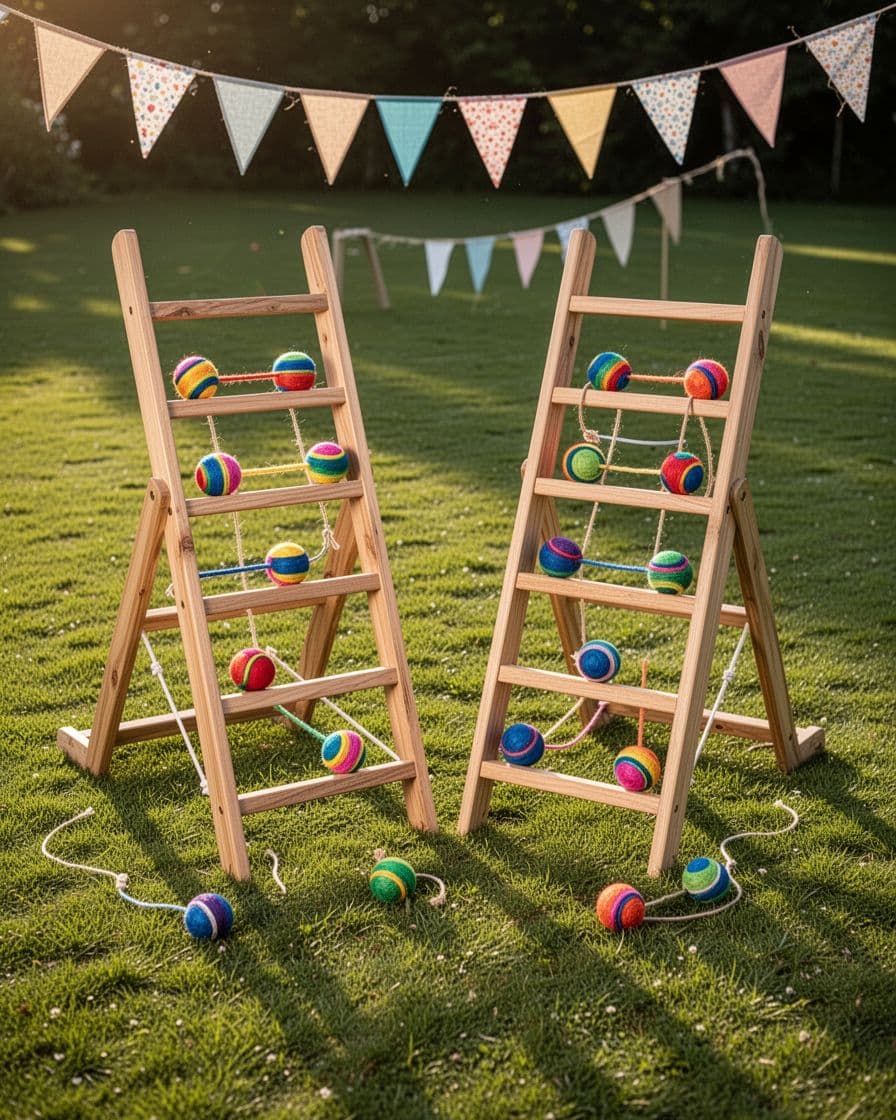 Ladder toss adds movement without requiring a large playing field. Set up a wooden ladder frame, then let players throw soft bolas toward the rungs and try to catch them across the bars.
Build the frame from smooth wood and check every joint before guests play. Choose fabric-covered bolas or soft rope versions so missed throws don’t create hard impacts.
Place the ladder away from walkways and seating. Mark a throwing line several feet in front of it, then keep players behind that line until the previous turn ends.
You can give each rung a different color rather than adding numbers. Players can aim for a color, while small children can toss from a shorter distance.
13. Sack Race Course
A sack race brings instant energy to an outdoor carnival. Lay out a short, flat course with colorful burlap or canvas sacks, then add a rope finish line that players can see from the starting point.
Mow the grass and remove stones, sticks, and garden tools before the race begins. Keep the course wide enough for one or two racers so players don’t collide when they wobble.
Use shorter races for younger children and longer races for older guests. You can also create a relay in which each player hops to a marker and returns the sack to the next person.
Skip this game on wet grass or uneven ground. A flat driveway can work too, but place a thick rubber mat or soft landing area near the finish line.
14. Backyard Obstacle Course
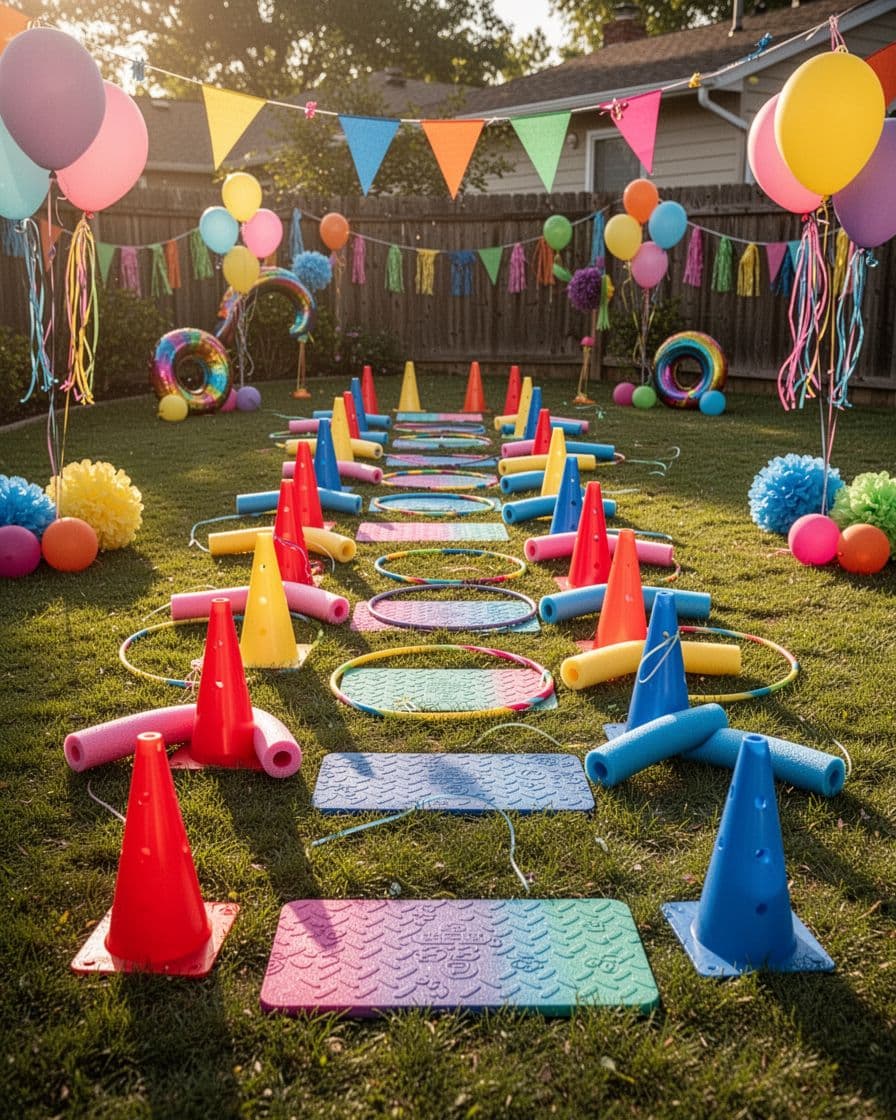 An obstacle course lets you combine several easy activities into one carnival challenge. Arrange cones, hula hoops, pool noodles, and stepping pads in a clear path that asks players to crawl, step, weave, or balance.
Leave generous space between each obstacle so players can move without rushing. Anchor pool noodles and light decorations so they don’t blow into the path during the event.
Choose equipment that bends or compresses instead of hard objects with sharp corners. Walk through the course before opening it, then remove anything that shifts, tips, or creates a trip hazard.
Give each player a set amount of time to finish. For younger guests, remove the timing and let them explore the course at their own pace.
15. Bucket Toss Challenge
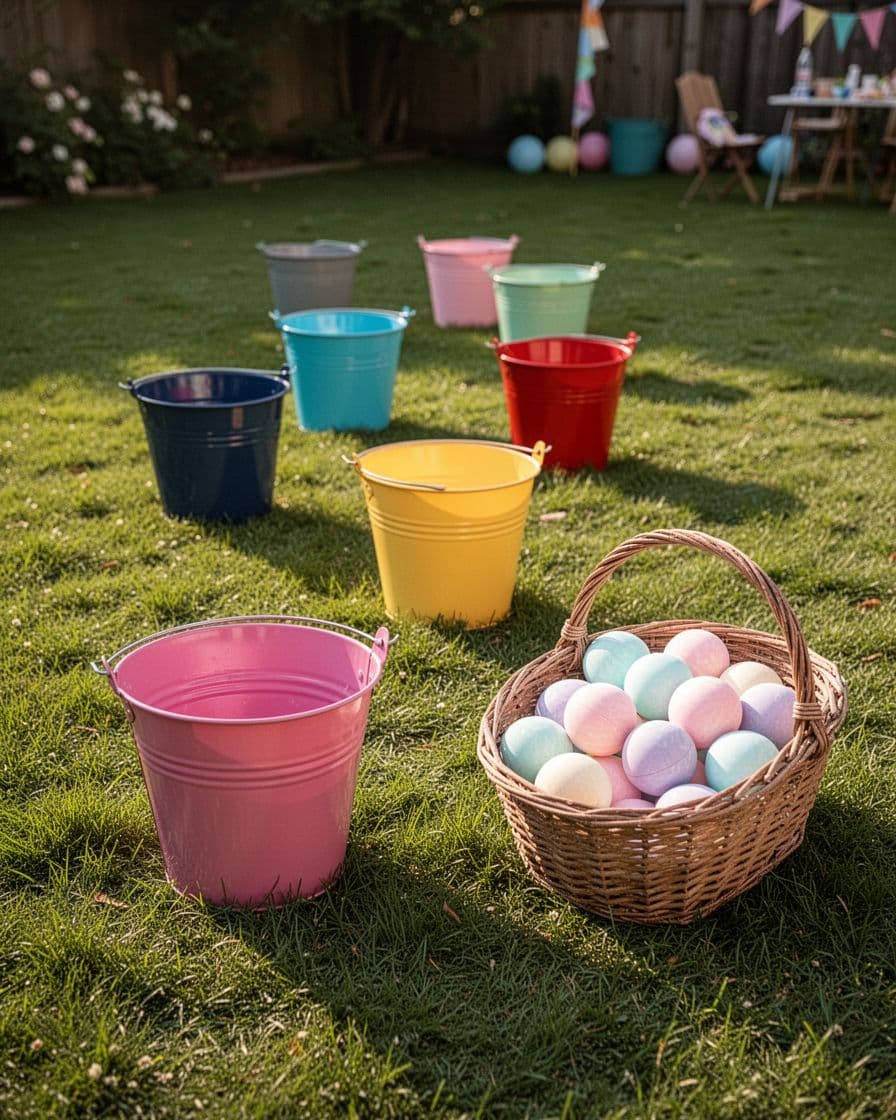 Bucket toss gives you a flexible game that needs only buckets and soft balls. Place the buckets in a row at different distances, then let players choose whether they want an easy or difficult target.
Use bright plastic buckets with wide openings. Secure them with a little sand or place them inside a wooden frame if the lawn slopes or the wind picks up.
Give the farthest bucket the biggest prize, but keep the reward system easy to understand. You can also let players move closer after every missed throw so the game stays welcoming for small children.
Gather the balls in a basket beside the throwing line. This keeps the play area tidy and helps guests see where they should wait.
16. Mystery Prize Boxes
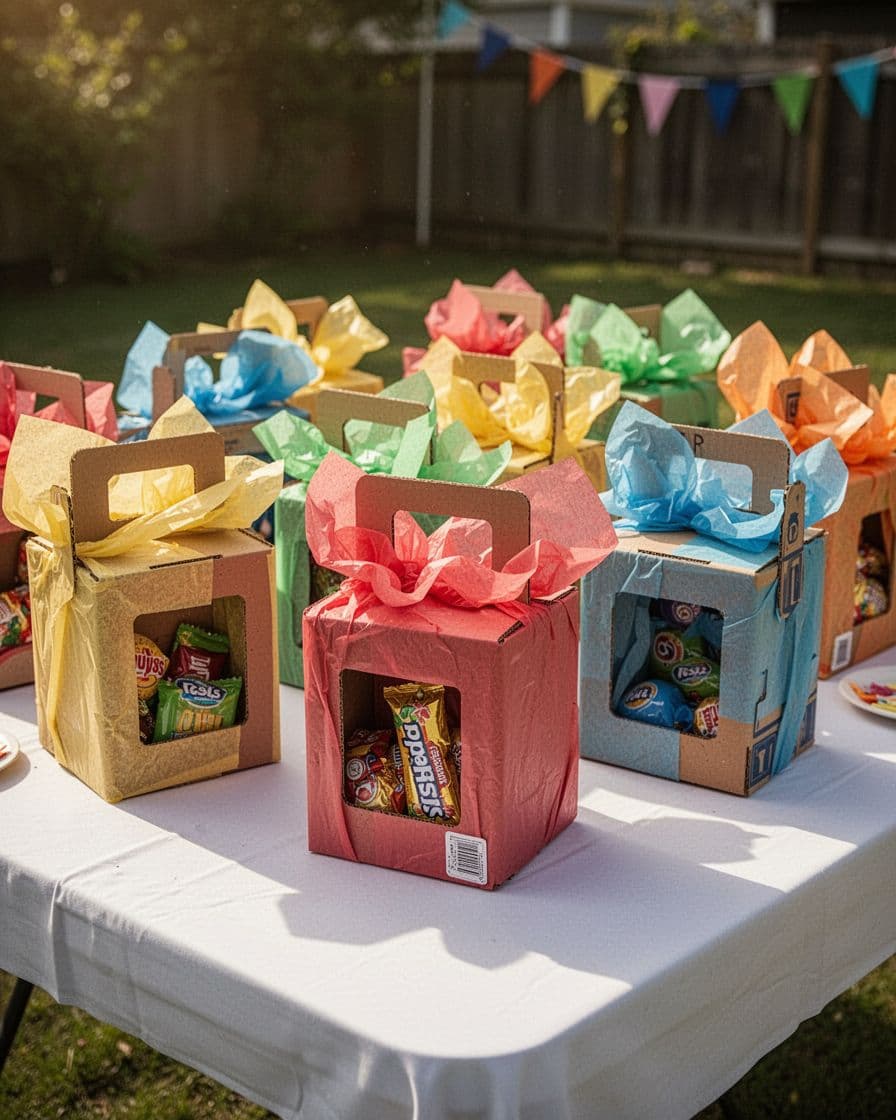 Mystery prize boxes add surprise without requiring a throwing target. Cover sturdy cardboard boxes with colorful paper, cut hand-sized openings, and hide a different prize or texture inside each one.
Use large, safe objects that children can feel without exposing sharp points or loose pieces. Good choices include soft fabric, oversized plastic toys, or sealed prize bags meant for the player’s age group.
Place the boxes on a table at a height that lets children reach comfortably. Keep the openings smooth, then reinforce the cardboard around each cut so the edges don’t bend or tear.
Let each player choose one box per turn. You can ask players to describe the texture before they look inside, which adds a sensory element without making the game difficult.
17. Treasure Hunt With Backyard Tokens
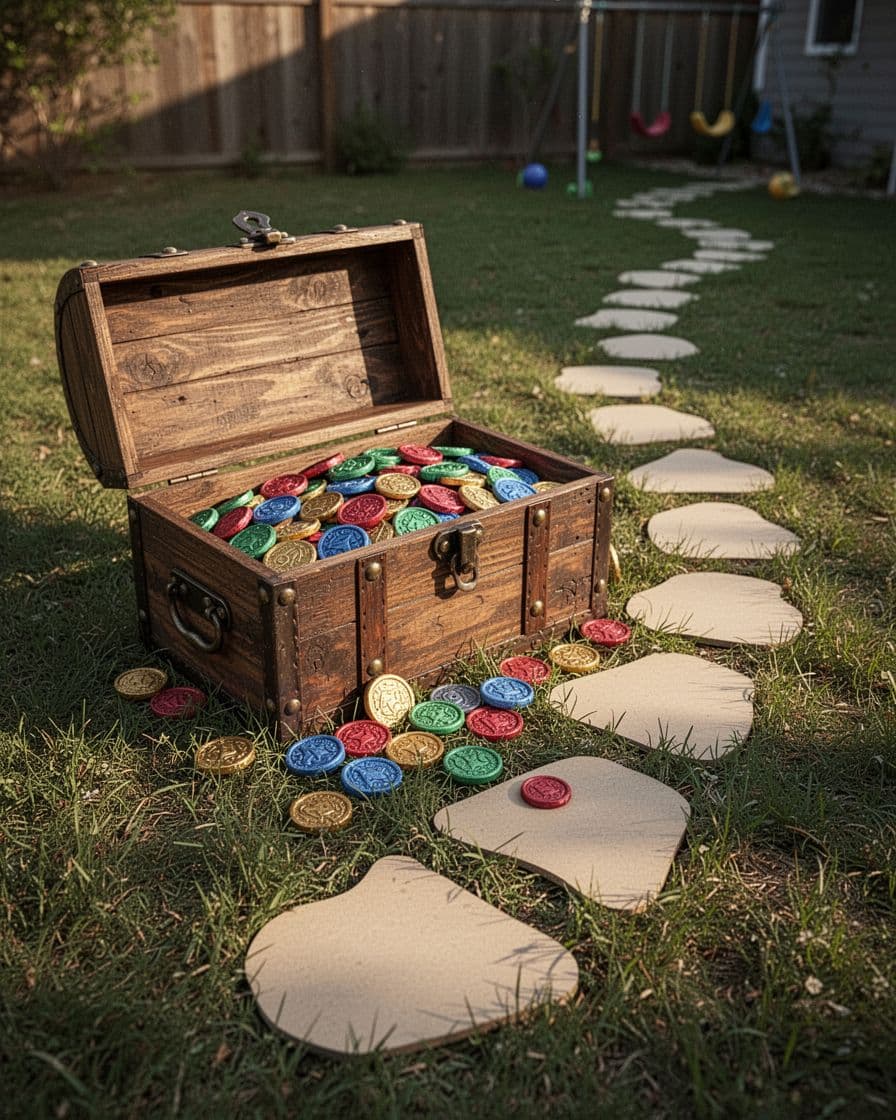 A treasure hunt turns your yard into a short adventure with a clear beginning and finish. Hide large colorful tokens along a path, then let players collect one token before trading it for a prize at the treasure chest.
Use colored shapes, pictures, or objects instead of written clues when preschoolers will play. Older children can follow simple picture clues that lead them from one safe spot to the next.
Avoid hiding tokens near driveways, ponds, thorny plants, or areas with fragile decorations. Keep the hunt within your view, and use oversized pieces that younger children can’t swallow.
For a party with mixed ages, create two routes with different difficulty levels. The short route can stay near the party table, while the longer route can include more turns and hiding places.
18. Clothespin Drop
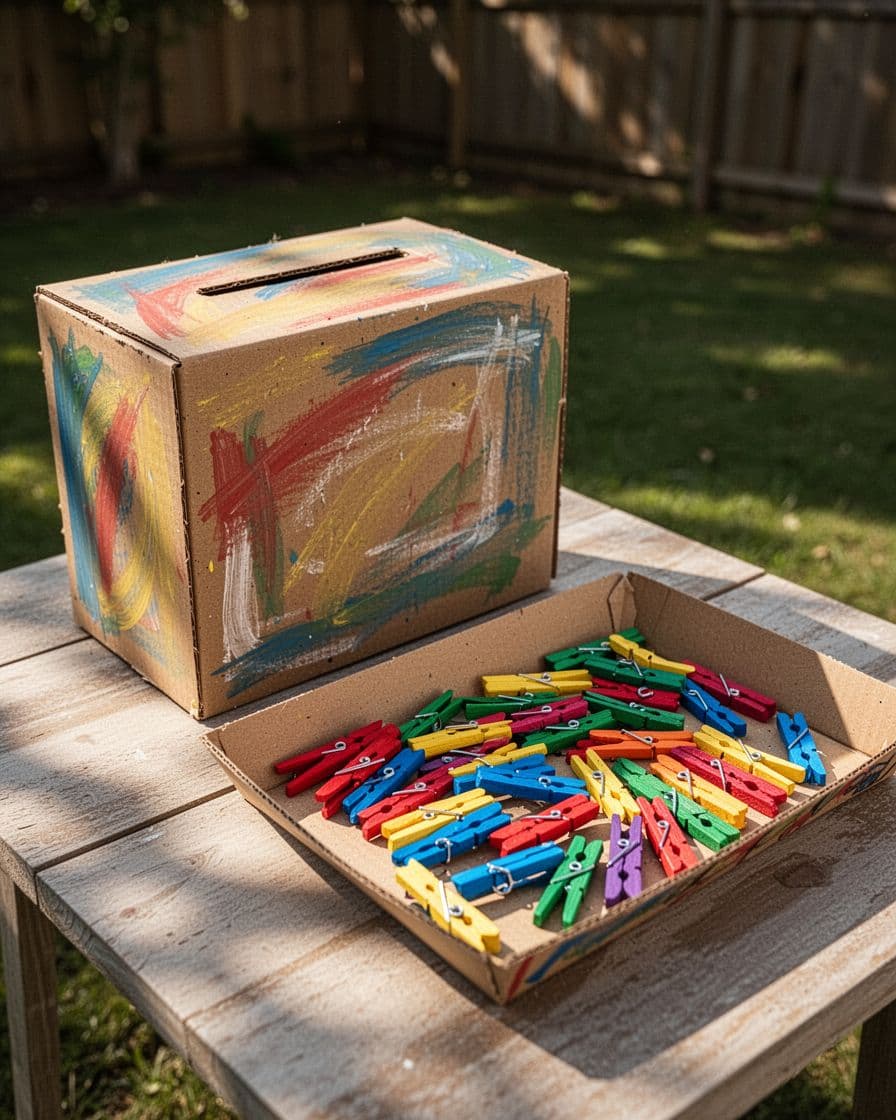 Clothespin drop tests patience and aim with a small tabletop setup. Place a narrow slot in the top of a decorated box, then ask players to hold a clothespin above it and release it without touching the sides.
Use a wide box and a large slot for younger children. Older players can use a smaller opening, stand farther away, or try to drop several clothespins in a row.
Sand the slot edges or cover them with tape before play. Check the clothespins for broken springs, splinters, or loose pieces after each round.
Keep this game away from children who may put the clothespins in their mouths. The CPSC small-parts rules provide a useful safety reference when you choose pieces for a children’s event.
Bring Your Homemade Carnival Together
Choose a mix of tossing games, active races, quiet table games, and prize stations so every guest finds something they enjoy. Save your favorite three ideas, gather the supplies in one box, and build the first game before your party day.