21 Bedroom Shelf Styling Ideas for a Cozy Space
Bedroom shelf styling works best when the display fits both the shelf and the way you use the room. A narrow ledge might need just a framed photograph and a small object. A deep built-in can hold books, covered storage, and a few larger pieces without looking crowded.
Start with the items you want to keep, then choose one color palette and a clear focal point. Vary the heights, leave visible space between groups, and make sure everyday items remain easy to reach. Those decisions create a more settled display than adding another ornament to fill a gap.
These 21 bedroom shelf styling ideas show how to arrange books, artwork, plants, lighting, and personal pieces. Use the suggested combinations as starting points, then adjust them to your shelf dimensions, existing furniture, and storage needs.
Some links in this article are affiliate links. If you purchase through them, I may earn a commission at no extra cost to you. The Amazon links open searches for similar items, not verified matches to the pictured pieces.
Before Styling: Check Size, Support, and Everyday Use
Empty the shelf and measure its usable width and depth. For stacked shelves, also measure the clear height between levels. Check the full footprint of an object, including a frame’s stand or a basket’s handles, rather than relying only on its front-facing dimensions.
Follow the shelf manufacturer’s installation instructions and load limits for your wall type and fixings. Count books, pots, frames, and storage contents in the total load. A visually light arrangement can still be heavy. Have uncertain installations checked before adding decor; a styling guide cannot establish a shelf’s safe capacity.
| Shelf condition | A useful starting arrangement | Check before adding more |
|---|---|---|
| Shallow picture ledge | One or two lightweight frames and a low accent | Frames fit securely within the usable depth and any retaining lip. |
| Single open shelf | One taller piece, a short book group, and a small bowl | Every base is fully supported and items do not project into a walking route. |
| Shelves with limited vertical clearance | Low baskets, horizontal books, or small frames | You can lift out the items without scraping the shelf above. |
| Deep built-in | Artwork at the back with books or a lower object in front | The front layer does not hide everything behind it. |
| Shelf used beside the bed | A reachable tray or book group with minimal extra decor | You can use everyday items without moving fragile objects. |
1. Warm Neutral Color Palette Shelves
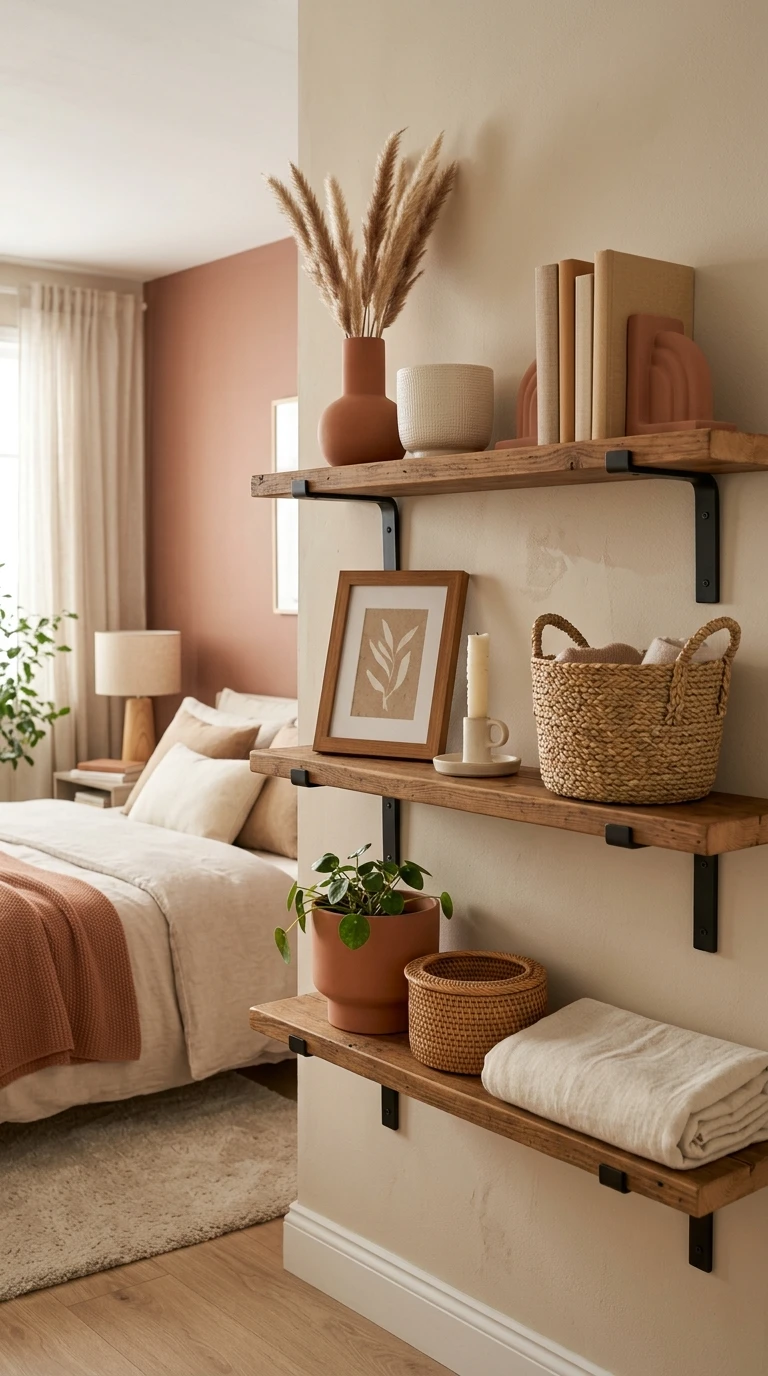
Build a warm neutral palette around a finish already in the room, such as an oak bed frame or a beige curtain. Add cream and one muted accent rather than introducing several different shades of beige that compete with each other.
Try a wood frame at the back, a low cream bowl in front, and a small woven basket toward the opposite end. Leave an open strip of shelf between the groups. The different heights make a quiet palette easier to read.
Make it work: View the objects against your actual wall in daylight and under your bedroom lighting. If everything blends together, add a darker frame or book spine for definition instead of buying more pale accessories.
2. Books + Decorative Object Layering
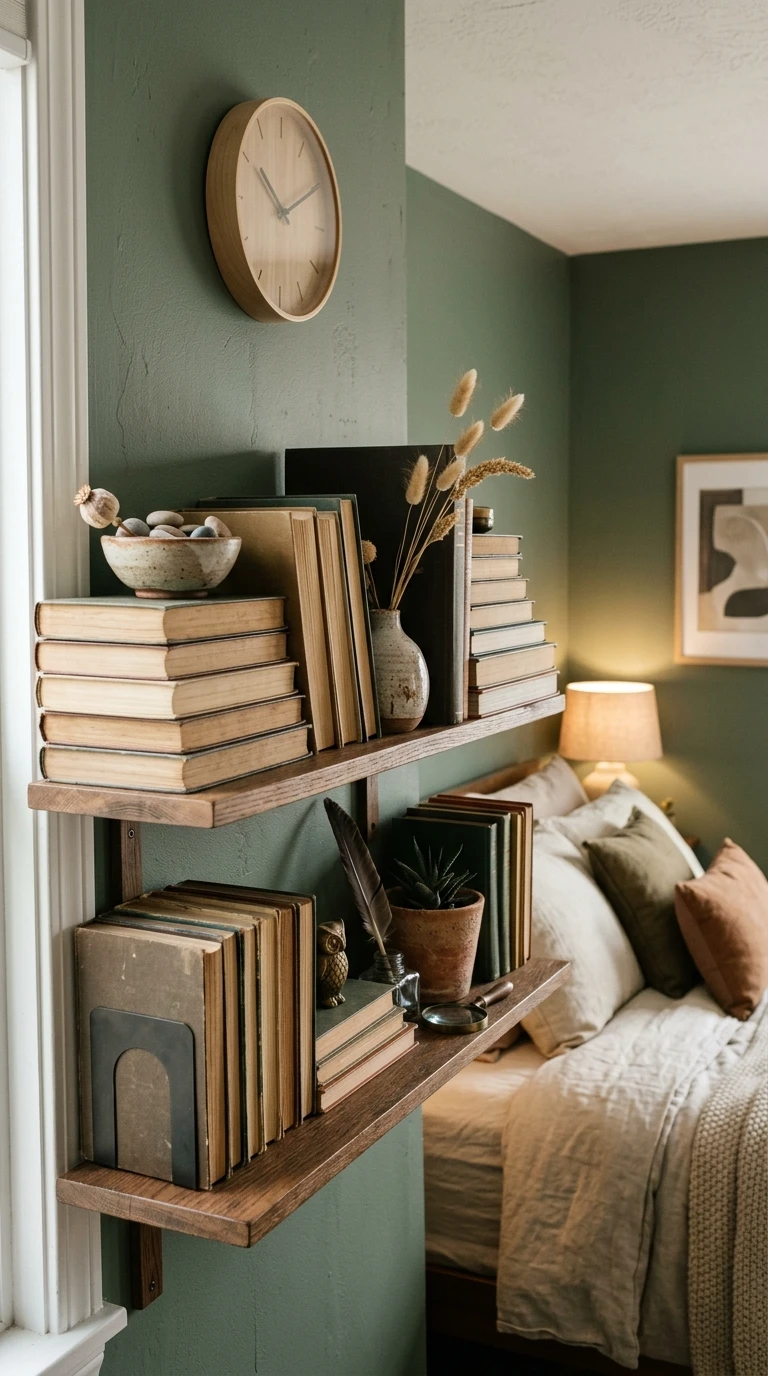
Use books you read or enjoy looking at rather than treating every shelf as a place for decorative book sets. Place a short upright group at one end with suitable bookends, then make a low horizontal stack elsewhere if the shelf can support it.
A small bowl can sit on a stable stack of similar-sized books. Keep heavier or fragile objects directly on the shelf, and avoid balancing a vase on an uneven pile. The top book should remain easy to remove if it is in regular use.
Adjust the depth: Check that book spines and page edges fit without overhanging. On a shallow ledge, choose a few front-facing covers instead of forcing full-size books into an unsuitable space.
3. Cozy Candle & Ambient Lighting Shelves
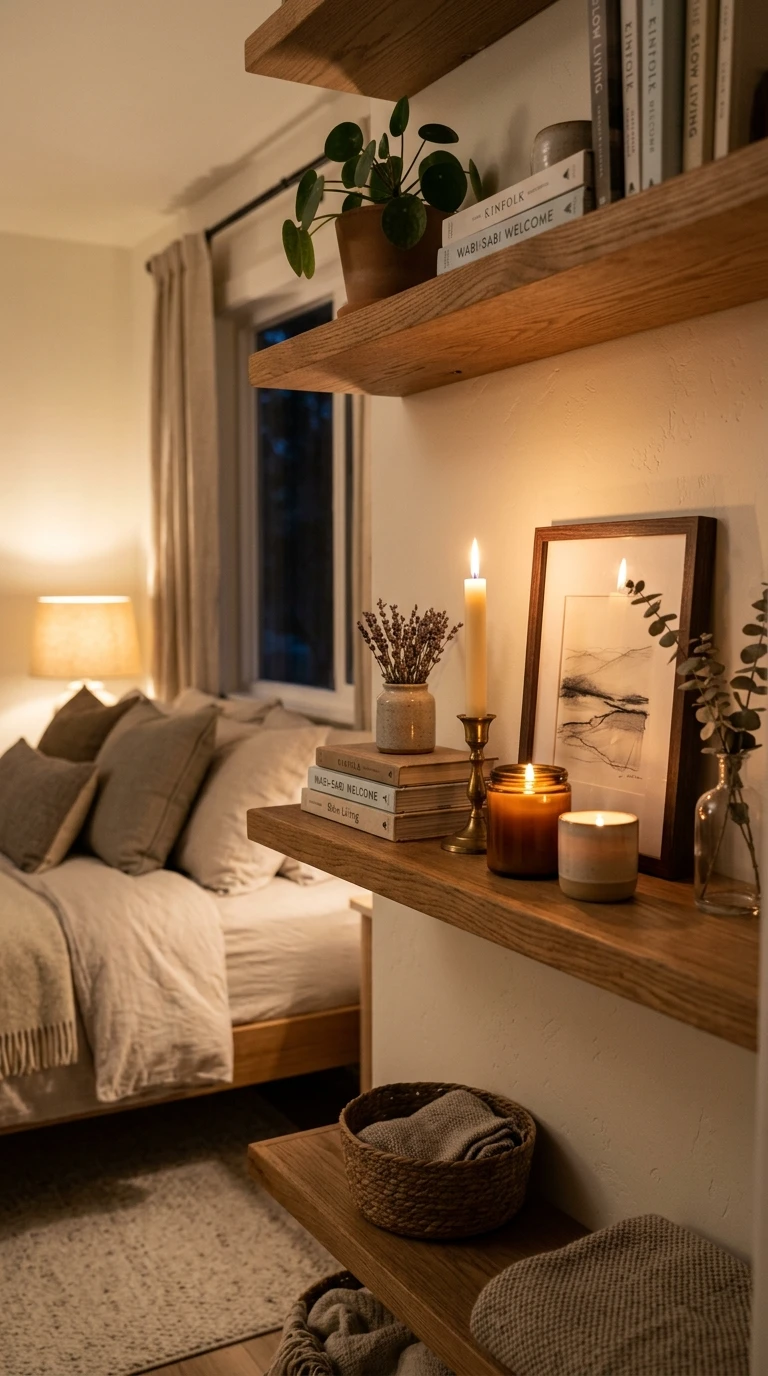
For a candle-like glow on bedroom shelves, use flameless LED candles. Group two different heights beside a ceramic object or frame so the arrangement still has shape when the lights are off. Timers are useful when the display is hard to reach.
A shelf is often close to books, curtains, and bedding, which makes an open flame a poor fit for this arrangement. The U.S. Fire Administration recommends considering battery-operated flameless candles. Keep any real candles in this display unlit.
Style the light: Use one illuminated group rather than lighting every object equally. Keep battery compartments accessible, and follow the product instructions rather than concealing lights in fabric or dried foliage.
4. Green Plant Filled Shelf Decor
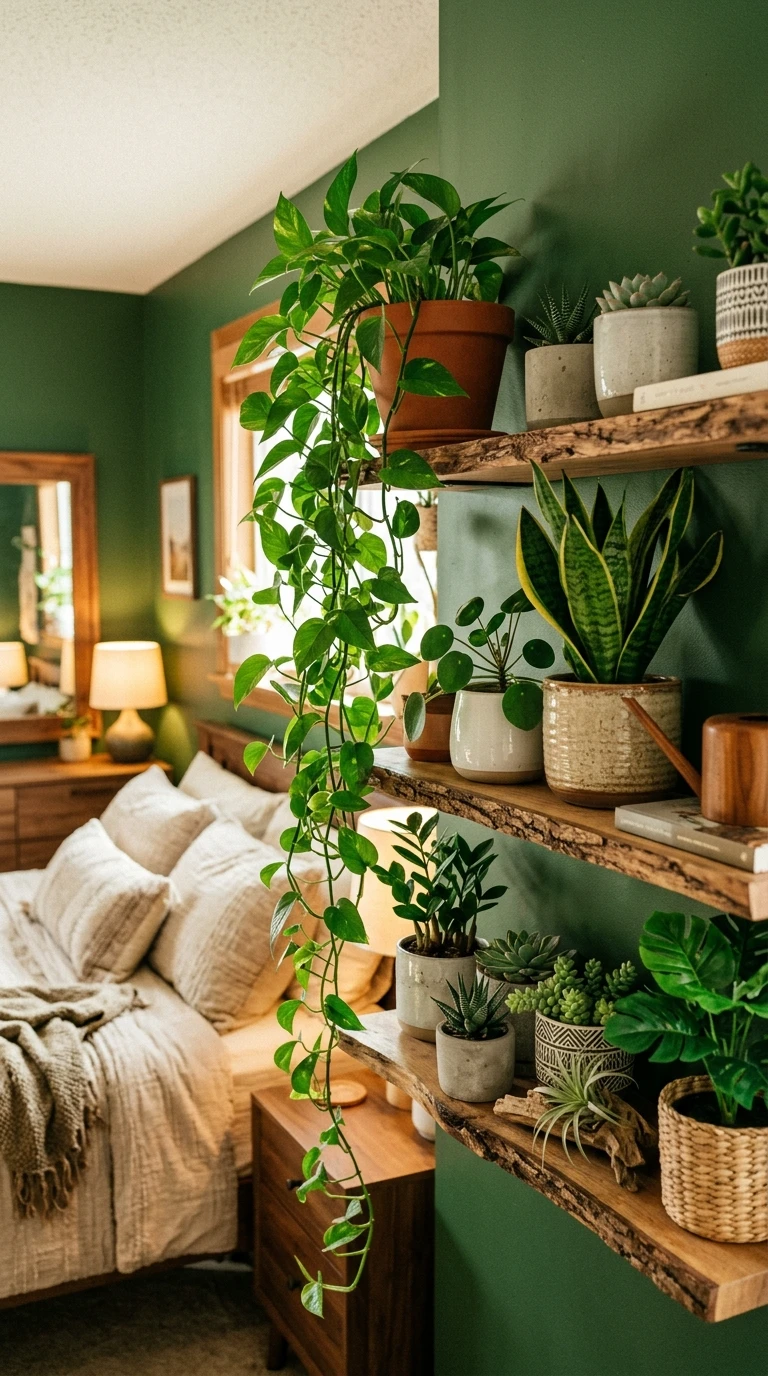
Choose a plant for the shelf’s actual light conditions before choosing its pot. A spot that looks bright from across the room may receive little usable light behind a bookcase side panel. University of Minnesota Extension’s indoor plant lighting guidance explains why matching plants to available light matters.
Place one upright plant beside a lower book group, or let a trailing plant soften one end of the display. Keep vines away from lighting, walkways, and drawer handles. A single plant is easier to maintain than a row of pots you cannot reach comfortably.
Protect the shelf: Remove the pot for watering, let excess water drain, and use a suitable protective saucer. If the position cannot meet a living plant’s needs, use faux greenery rather than assuming a low-maintenance plant needs no light.
5. Floating Shelf Gallery with Art Prints
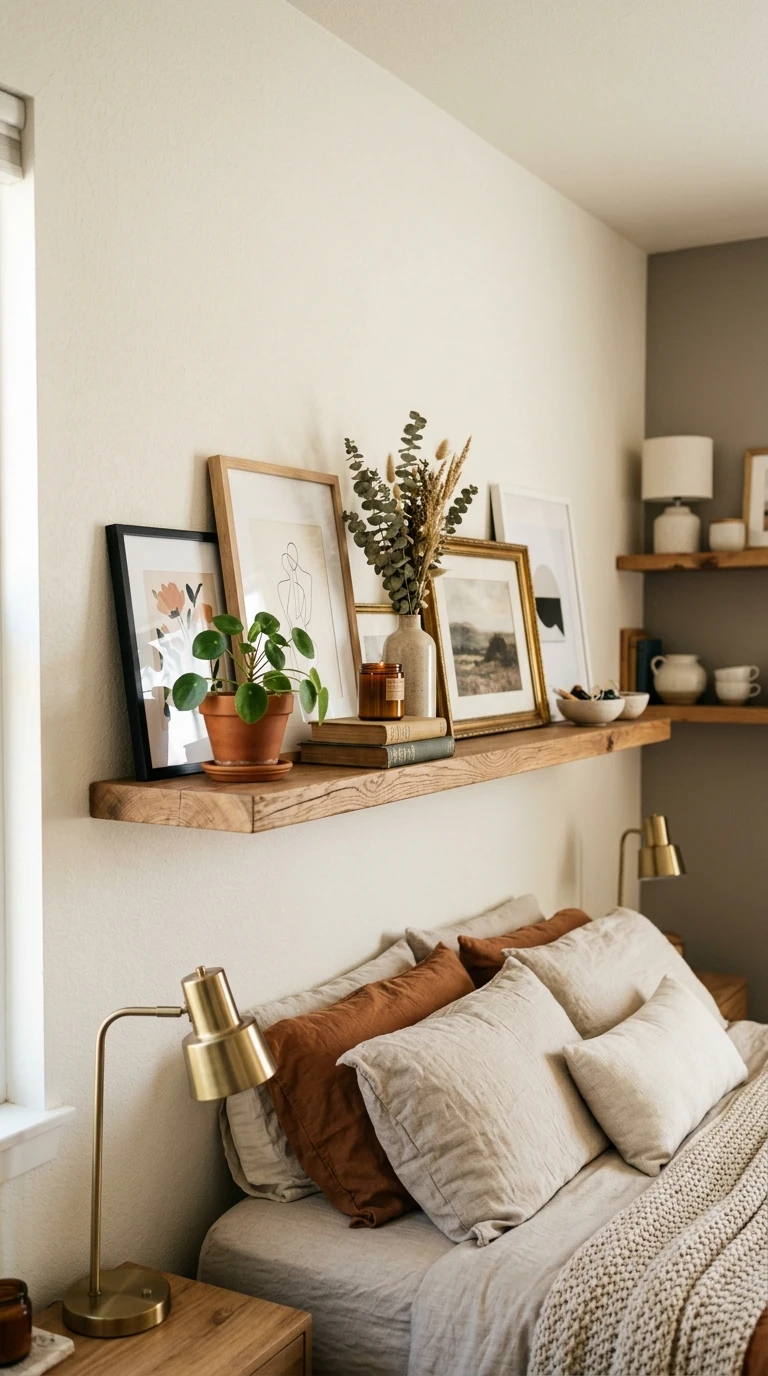
Choose one larger print as the focal point and one smaller frame to overlap it slightly. Keep the overlap to a plain part of the image or frame so both pictures remain readable. Repeating a frame finish already used in the room helps the display feel connected.
The frame’s base and stand must fit securely on the shelf. Use a ledge designed for displaying pictures, or follow appropriate securing instructions for the shelf and frames. A smooth shelf with a leaning frame is not automatically a stable picture ledge.
Edit the foreground: Add a single low bowl or box only if the depth allows it. If the shelf is shallow, the artwork can be the whole arrangement; it does not need a second layer of ornaments.
6. Japandi Inspired Calm Shelf Setup
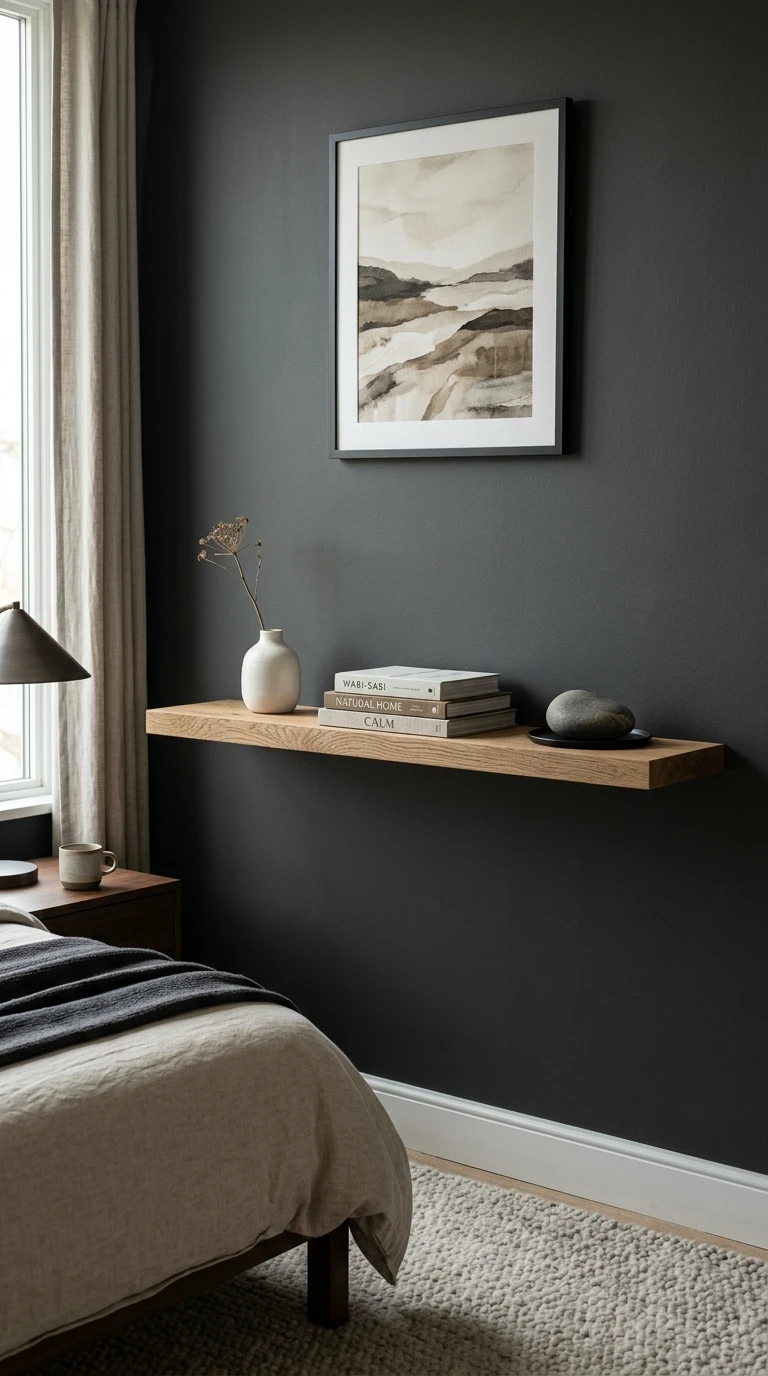
For a restrained Japandi-inspired display, choose a small group with simple shapes: a matte vase, a short row of books, and one wood accent. Let the shelf material remain visible instead of covering the surface from end to end.
Keep most objects within a limited palette, but vary their finish. A smooth vase beside textured wood creates interest without needing several colors. Place the tallest piece off-center and leave the next area open.
Avoid the common mistake: Minimal styling does not require replacing practical possessions with a matching decor set. Keep a useful box or the books you read, then simplify the surrounding objects.
7. Vintage & Thrifted Decor Shelf Mix
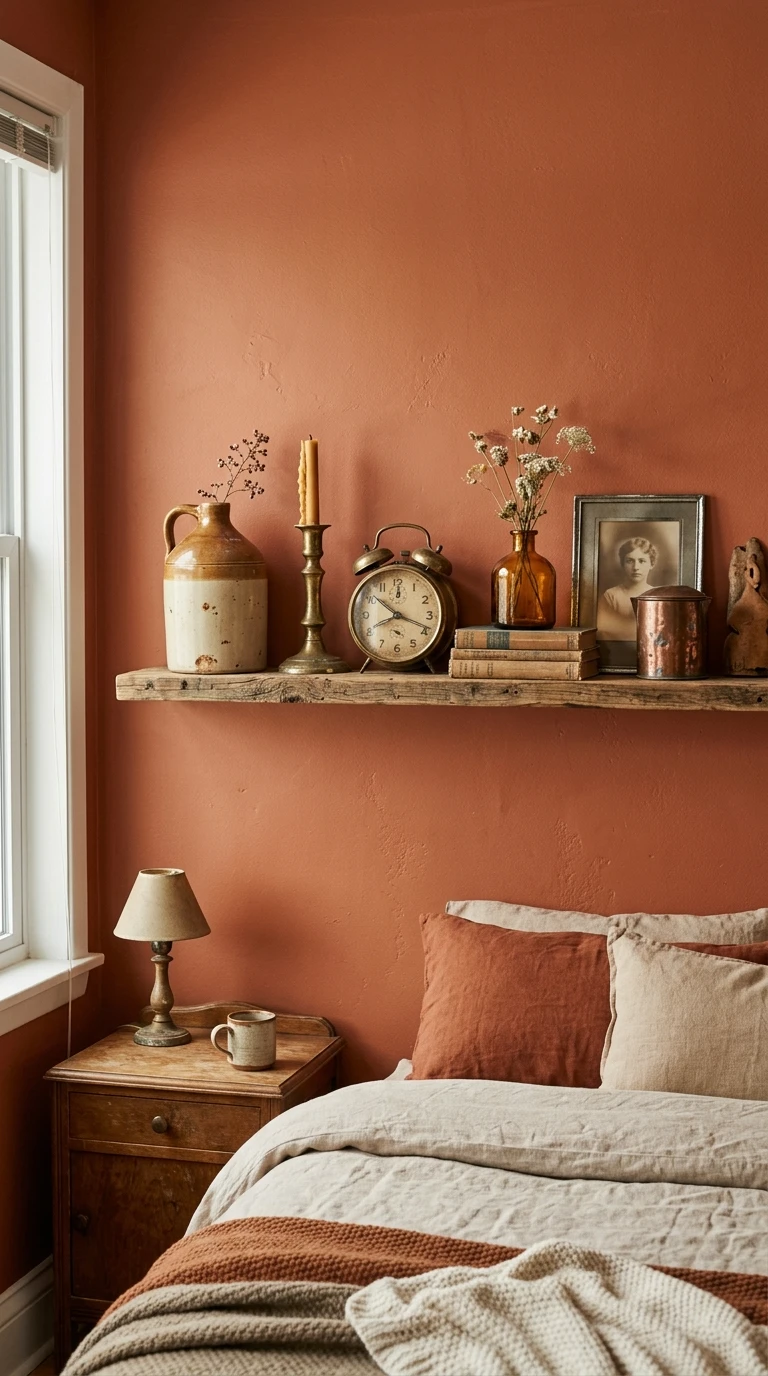
Choose one older piece with a distinct shape, such as a small jug or clock, and give it room to stand out. Pair it with a simpler frame or plain box instead of putting several detailed objects directly beside one another.
Connect mismatched finds with a repeated color or material. For example, a brown book cover can echo a wooden frame while a small brass detail repeats the tone of an older candlestick. The objects can differ in age without looking unrelated.
Check the condition: Inspect for loose parts, flaking finishes, or an unstable base before displaying a thrifted item. Keep delicate finds out of reach of frequent handling, and use candlesticks here as unlit decorative objects.
8. Symmetrical Shelf Styling for Balance
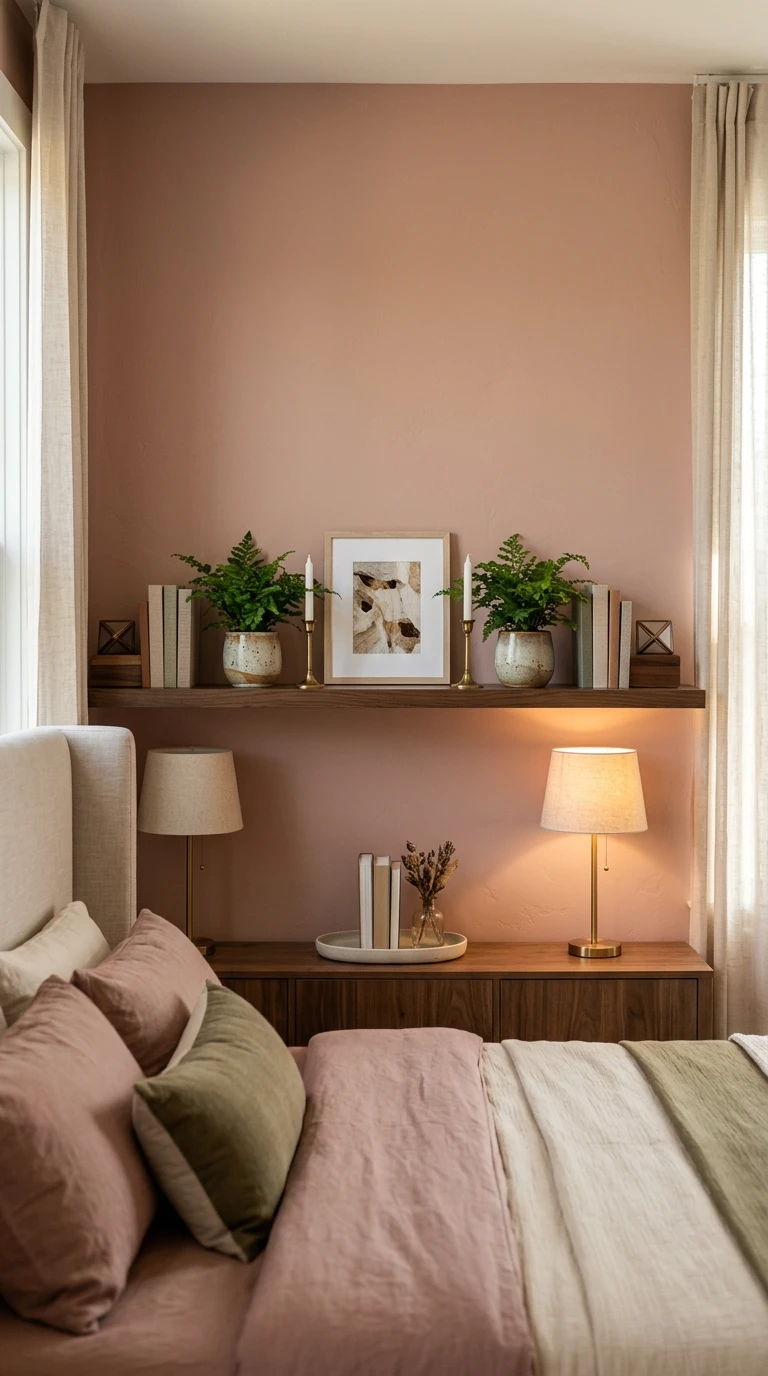
Start with one central picture or object, then place a similar-height piece on each side. The pair does not have to be identical, but the heights and widths should be close enough to create a balanced outline.
Keep the supporting objects lower than the center so the arrangement has a clear focus. This layout suits a shelf centered over a dresser or a pair of shelves flanking a wardrobe, where the furniture already creates a strong axis.
Leave practical space: If one end needs to hold everyday items, keep the symmetrical display within a smaller section. Visual balance is more useful than forcing the whole shelf into a mirror image that is awkward to use.
9. Asymmetrical Modern Shelf Design
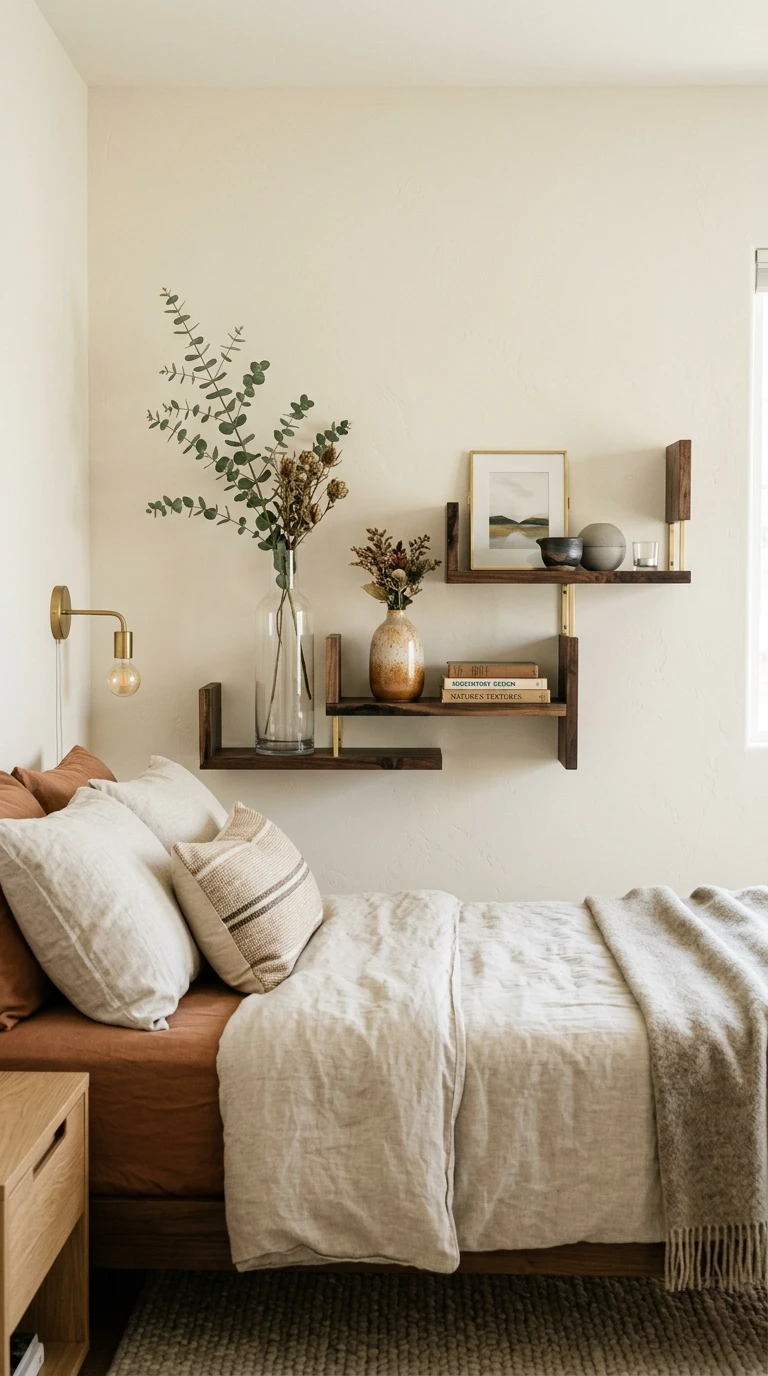
Balance a taller object on one side with a wider, lower group on the other. A slim vase can counter a short book stack and bowl because height and overall footprint contribute differently to how much attention a group attracts.
Place the tall piece first, then add the low group with a visible gap between them. Step back to the doorway and check the outline. If the tall side dominates, widen the lower group or reduce the height difference.
Use restraint: You do not need a third group simply because there is an empty patch. On a short shelf, two unequal groups can create a complete arrangement.
10. Layered Textures (Wood, Ceramic, Fabric)
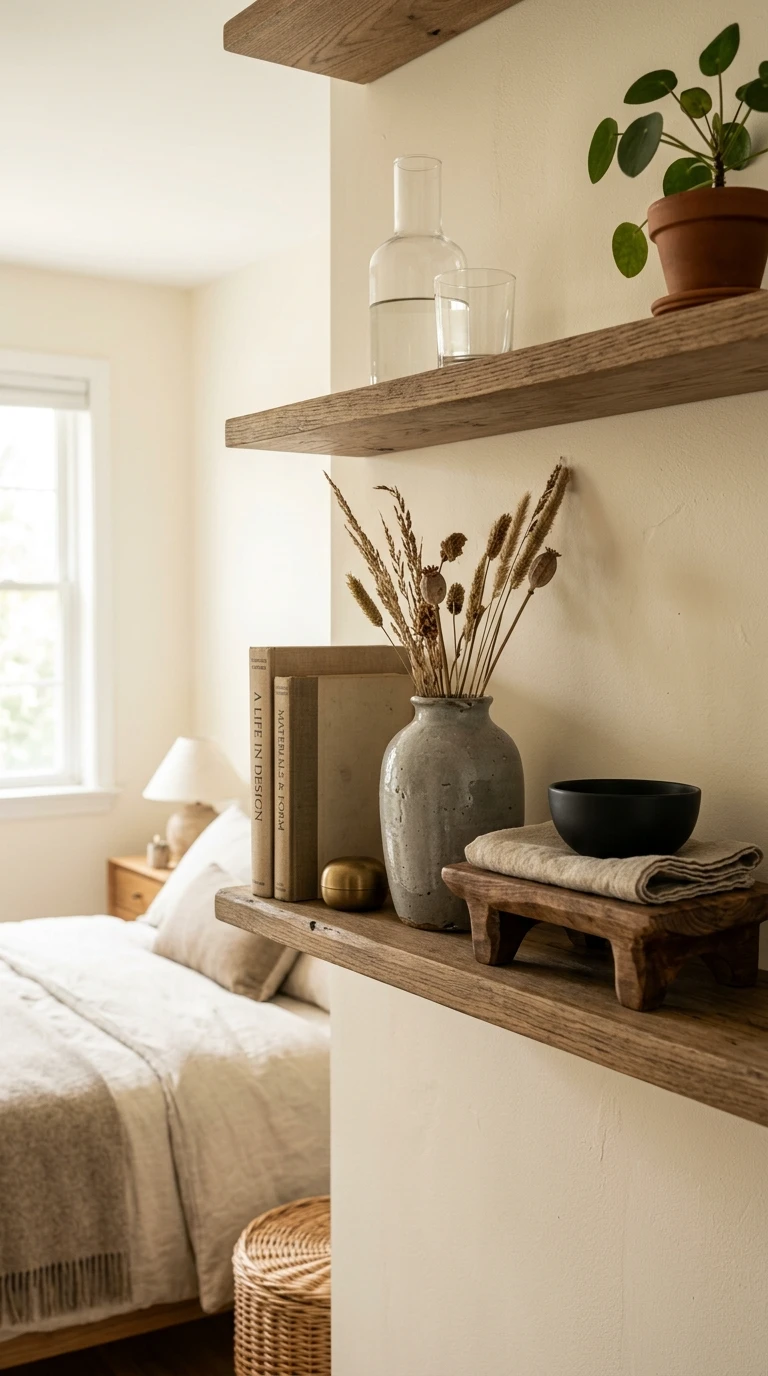
Choose two or three contrasting surfaces instead of collecting every natural texture in one place. A smooth ceramic vase, a woven basket, and a wood frame give enough variation for a small shelf.
Use the basket as the largest practical element, then let the frame and vase form a smaller display beside it. Keeping the colors related allows the different surfaces to stand out without making the arrangement busy.
Keep textiles useful: Fold a small cloth inside a basket or under an object only when it sits flat and does not affect stability. Loose fabric near lights or hanging over the shelf edge adds maintenance without improving the layout.
11. Personal Memory & Photo Shelf Display
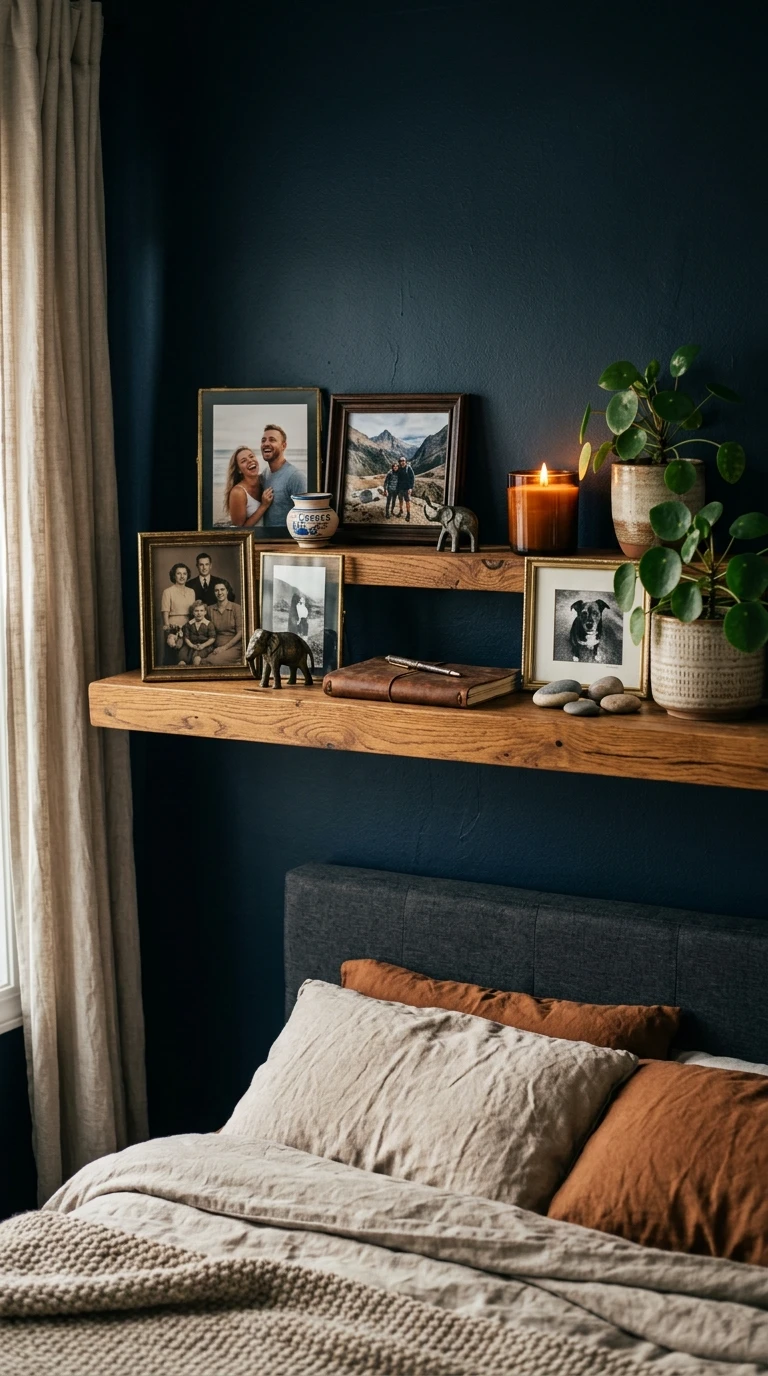
Choose a few photographs that you want to see daily and make one the main image. Put that frame at the back, then add a small souvenir or keepsake lower down so it does not cover the photograph.
Use frames with a shared finish if the photographs have very different colors. This provides a common outline without requiring every print to match. Store the rest in an album or rotate them rather than shrinking every photo to fit more onto the shelf.
Preserve access: If an item is irreplaceable or delicate, choose a protected position or display a copy. A shelf near a frequently opened window or a busy bedside area may be better suited to sturdier pieces.
12. Soft Boho Bedroom Shelf Style
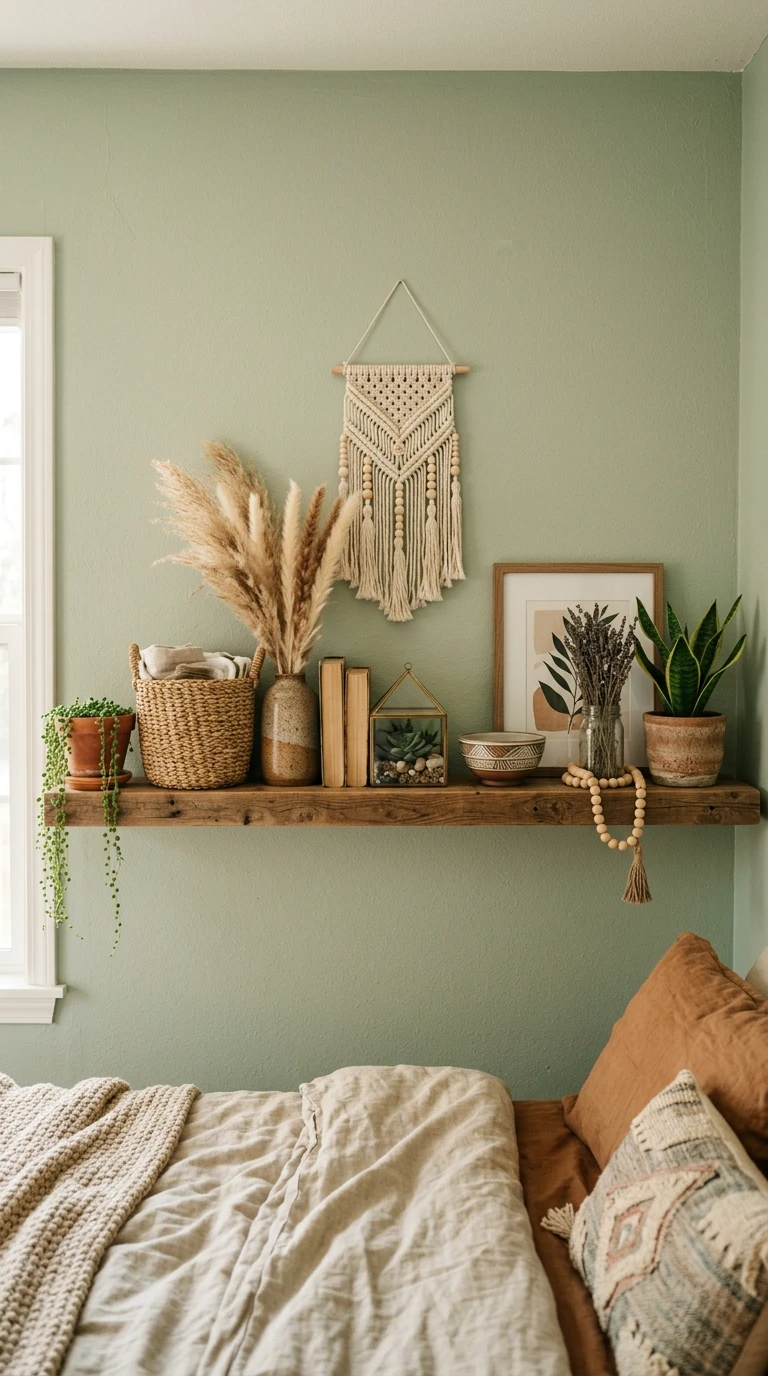
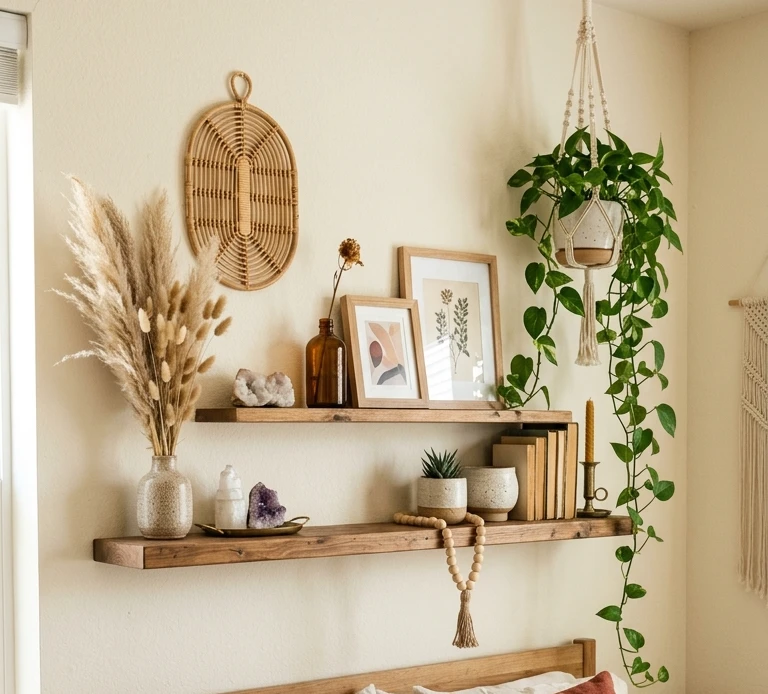
Use one woven object, one rounded ceramic piece, and a small touch of greenery as a starting combination. A warm cream, tan, and muted clay palette keeps these different materials connected.
Place a basket where it can actually be opened or lifted out. Add one decorative piece beside it, then use the wall behind the shelf for a textile accent if there is suitable space. The shelf itself does not need to carry every texture.
Control the spread: Long tassels, trailing plants, and dried stems can all extend beyond an object’s base. Choose one of those elements rather than letting several drape into the same area.
13. Moody Bedroom Shelf Styling with Dark Accents
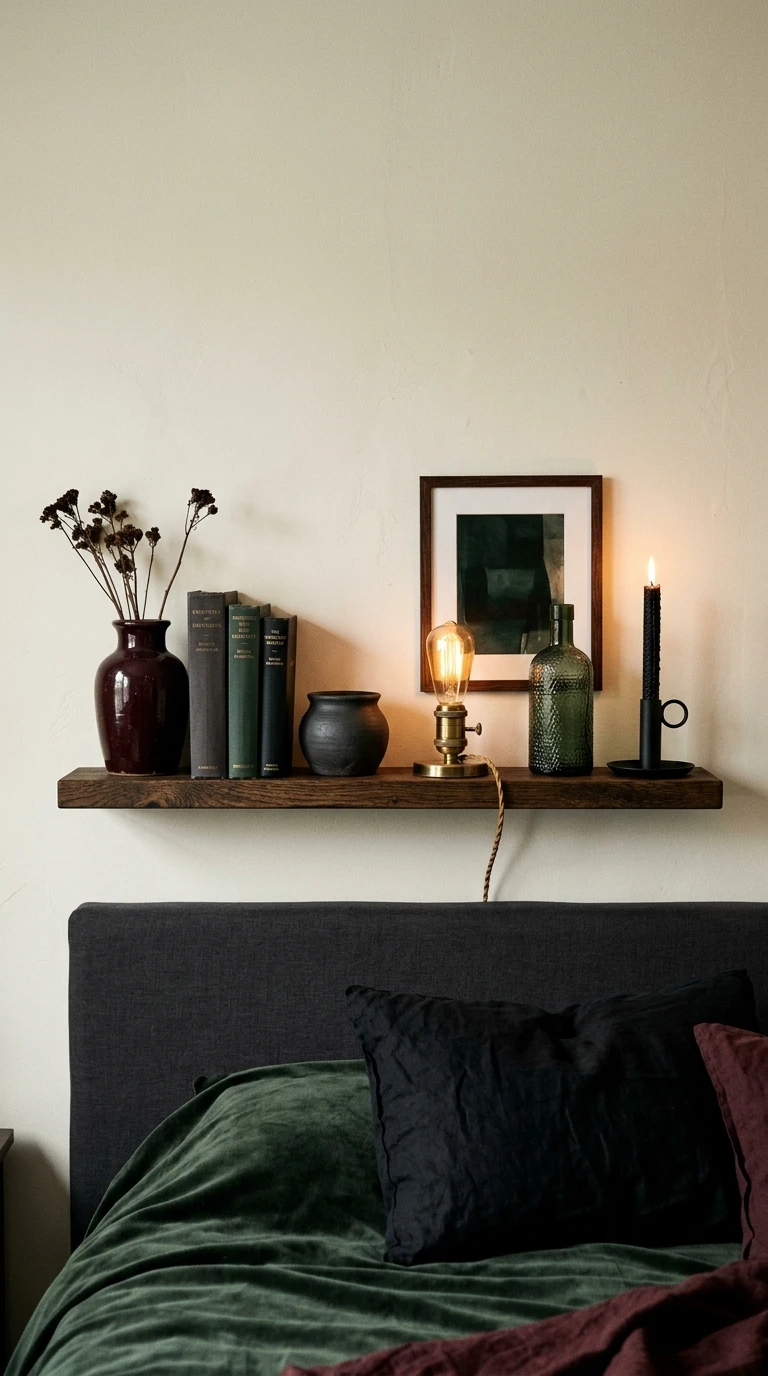
Dark accents need enough contrast to show their shapes. Pair a charcoal frame with a pale ceramic bowl, or place a deep green object against a lighter wall. Several black objects against a dark background can read as one indistinct mass.
Repeat the dark finish in two places, then use warm wood or a lighter book cover to separate them. Check the display with your evening lighting, since a bedroom shelf is often seen after daylight has faded.
Lighting choice: Use a suitable LED light or flameless candle for a small pool of light. Do not compensate for poor visibility by adding more dark decor; simplify the arrangement first.
14. Small Shelf Clutter-Free Minimal Setup
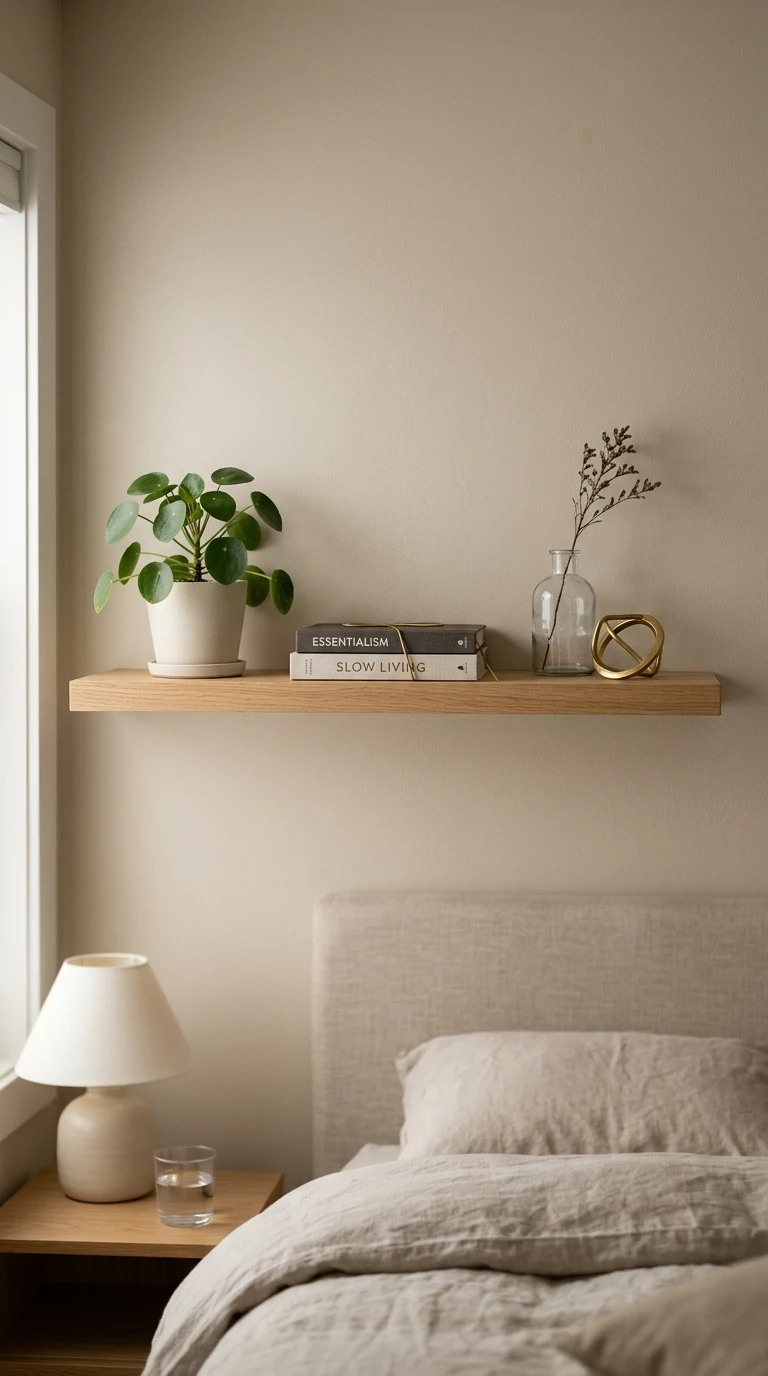
On a small shelf, begin with one useful item and one decorative item. A catchall bowl and a small frame may be enough. Add a third piece only if every object still has a stable base and can be lifted without moving the others.
Size matters more than a fixed object count. Three bulky pieces can crowd a shelf that could comfortably hold several slim books. Leave a clear gap rather than aiming to reach a particular number.
For a narrow ledge: A lightweight print with one low accent can provide the same height variation as a larger display. Choose shallow objects that fit; do not let a frame stand or vase base overhang the edge.
15. LED Backlit Shelf Glow Design
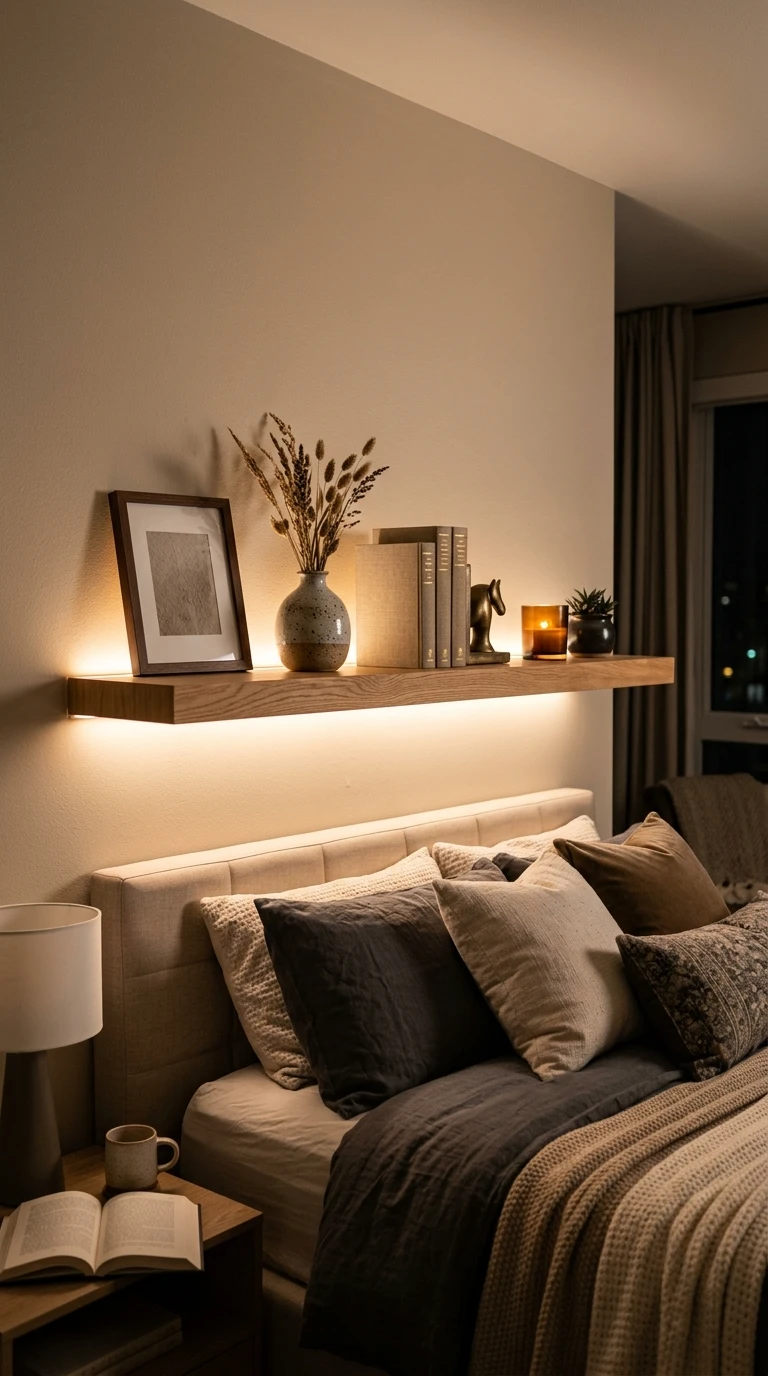
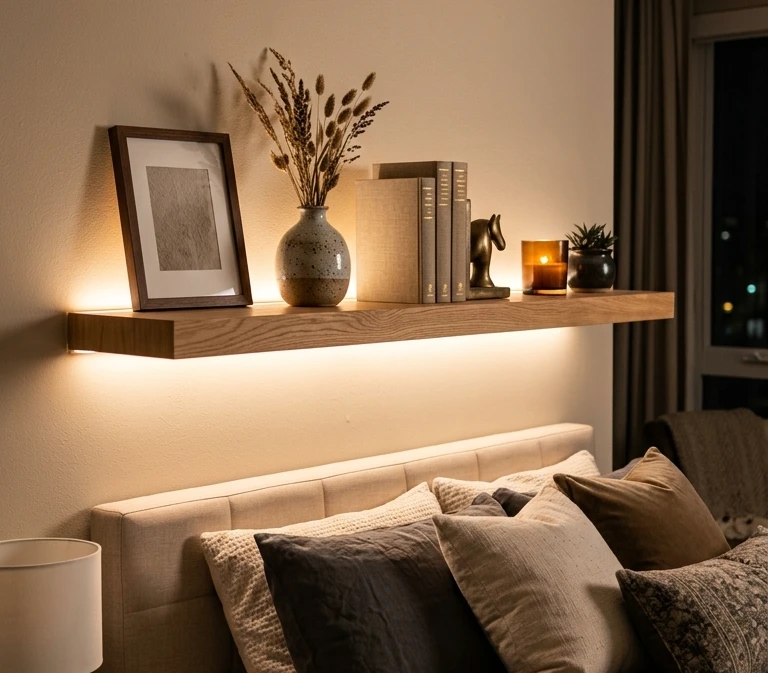
Position an LED strip so you see reflected light rather than the bright points of the strip itself. Test its location temporarily behind the rear edge or under the shelf lip before fixing it in place.
Choose lighting intended for the installation location and follow its instructions for mounting, ventilation, and power supply. Plan a neat cable route to the socket; do not trap leads behind brackets or cover a power unit with books or fabric.
Check it from bed: A light that looks soft while standing can create glare when you lie down. Adjust the position and brightness from that viewpoint before finalizing the arrangement.
16. Sculptural Decor Accent Shelves
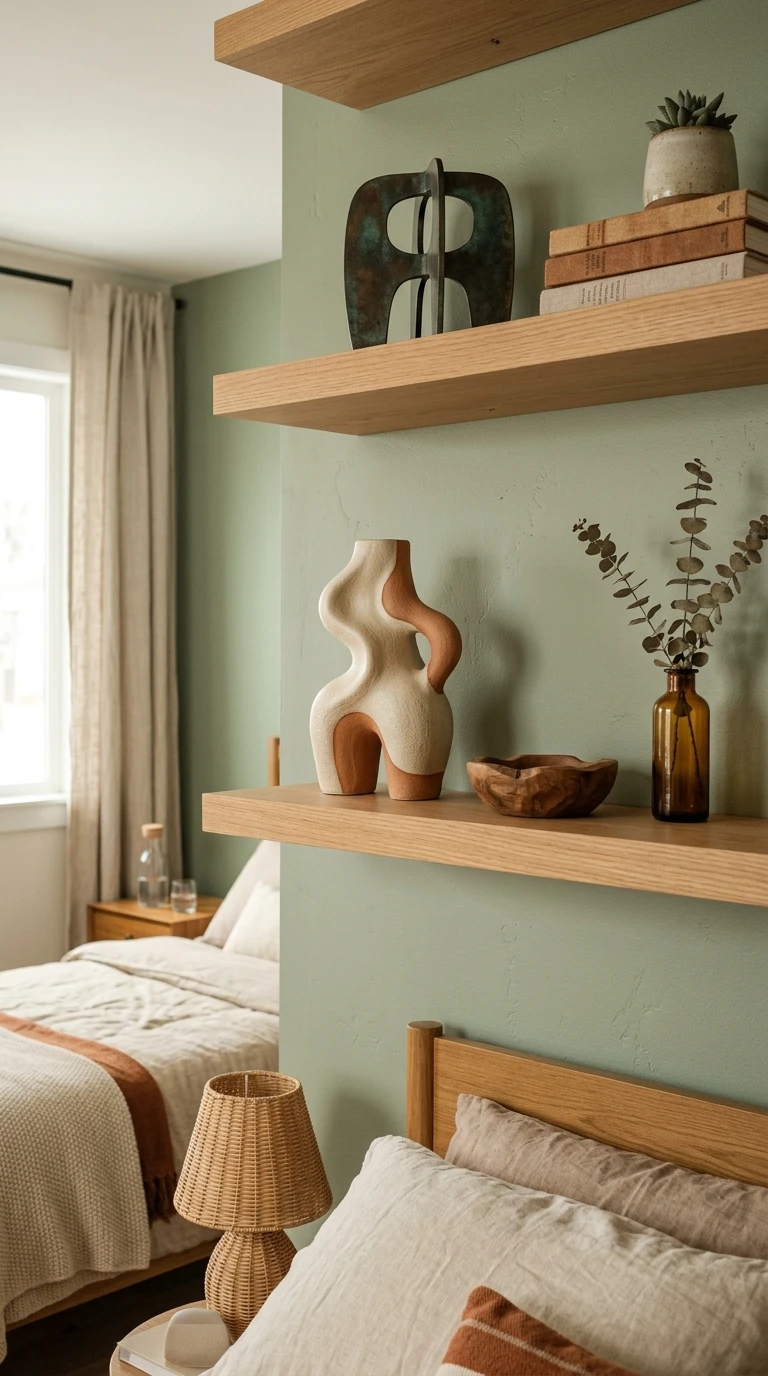
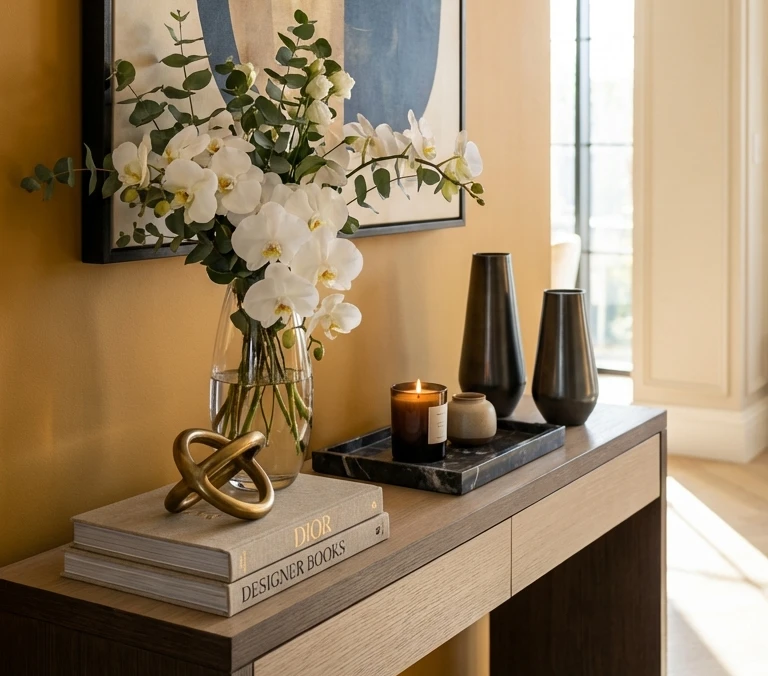
Give one sculptural object enough space for its outline to remain clear. A loop-shaped vase, low carved bowl, or small abstract form can be the focal point without needing several supporting ornaments.
Choose a background that contrasts with the piece. A pale sculpture reads clearly against a darker backing; a dark form can stand out on a light wall. Add a low book group only if it helps frame the shape rather than hiding it.
Check the footprint: An object can be tall and visually slender but still top-heavy. Keep the full base supported and avoid precarious positions near an edge or a frequently opened door.
17. Seasonal Shelf Styling (Rotate Decor)
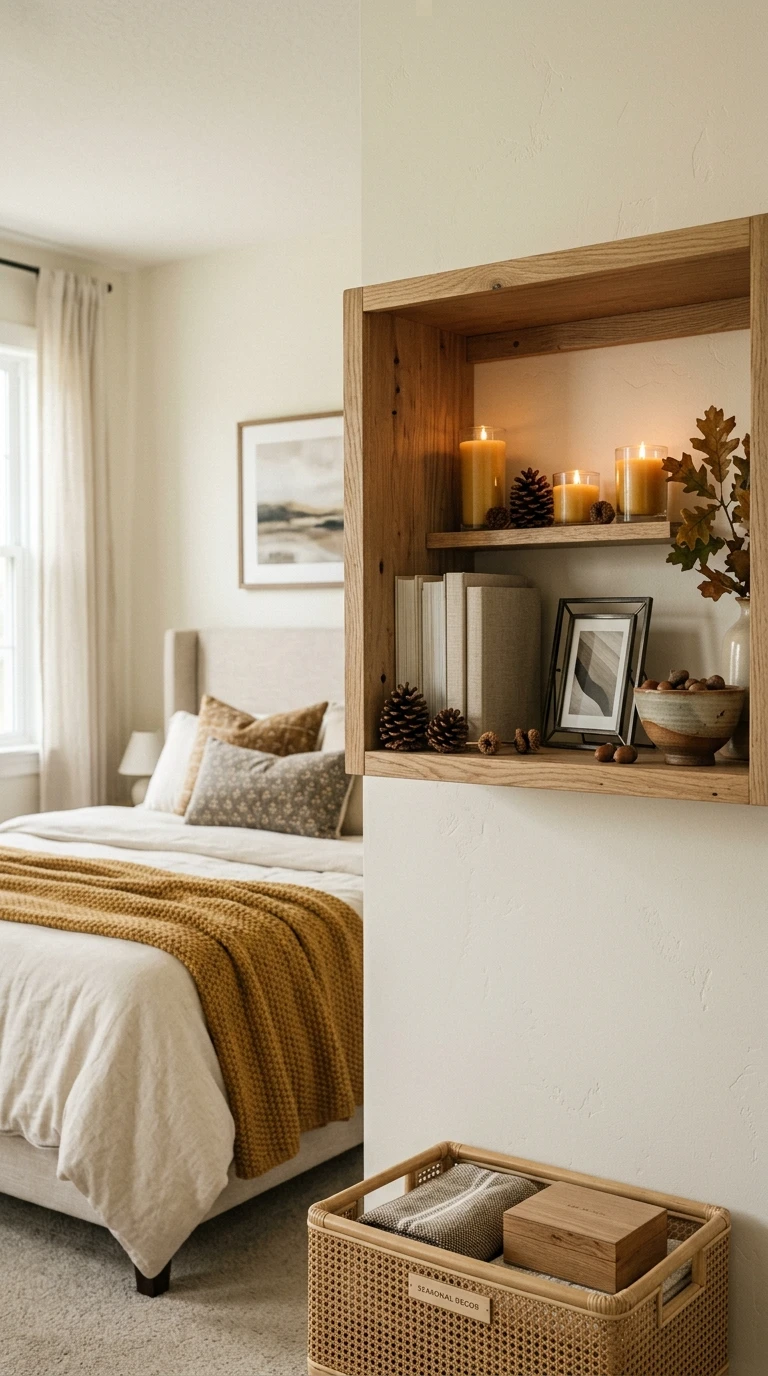
Keep the main arrangement consistent and change one or two smaller details. A familiar frame, basket, and vase can stay in place while a print, stem, or small ornament changes with the season.
Store seasonal accents together and choose pieces that fit the same spaces. If every refresh needs a new vase, stand, and backdrop, the system is becoming more complicated than the display needs.
Easy starting point: Use a botanical print in spring, a brighter book cover in summer, and a warm-toned object later in the year. Work with pieces you already own, and remove the previous accent before adding the next.
18. Corner Bedroom Shelf Styling Ideas
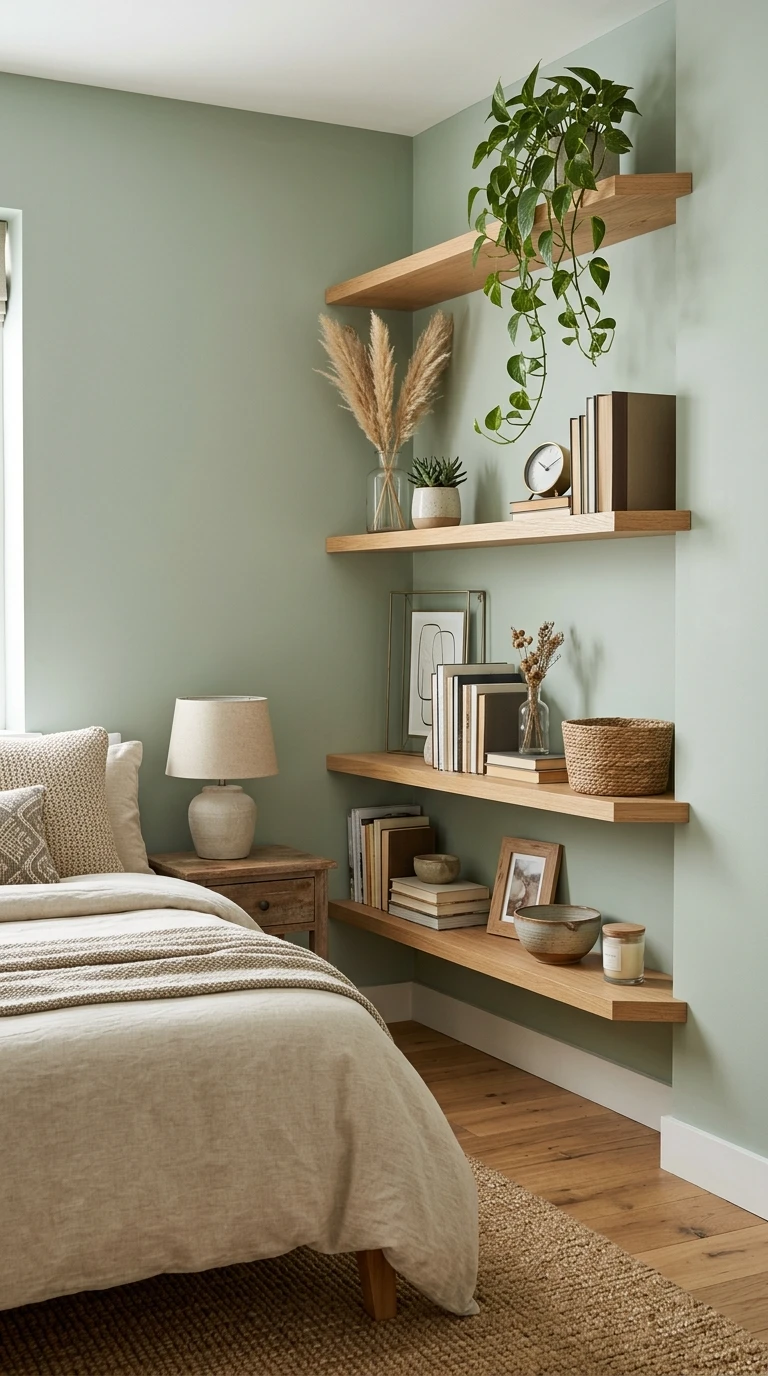
Use the corner as the backdrop to a small arrangement, but keep objects visible from the main part of the room. A piece pushed deep into the angle can disappear behind everything in front of it.
Place a taller narrow object toward the back and one lower piece on the more accessible edge, with both bases fully supported. For several corner shelves, vary which side holds the taller element instead of making one uninterrupted vertical column.
Before adding height: Check nearby curtains, wardrobe doors, and walking routes. Choose a compact plant or frame rather than a tall prop that catches on furniture or leaves no room to reach the shelf.
19. Built-In Shelf Styling with Cozy Layers
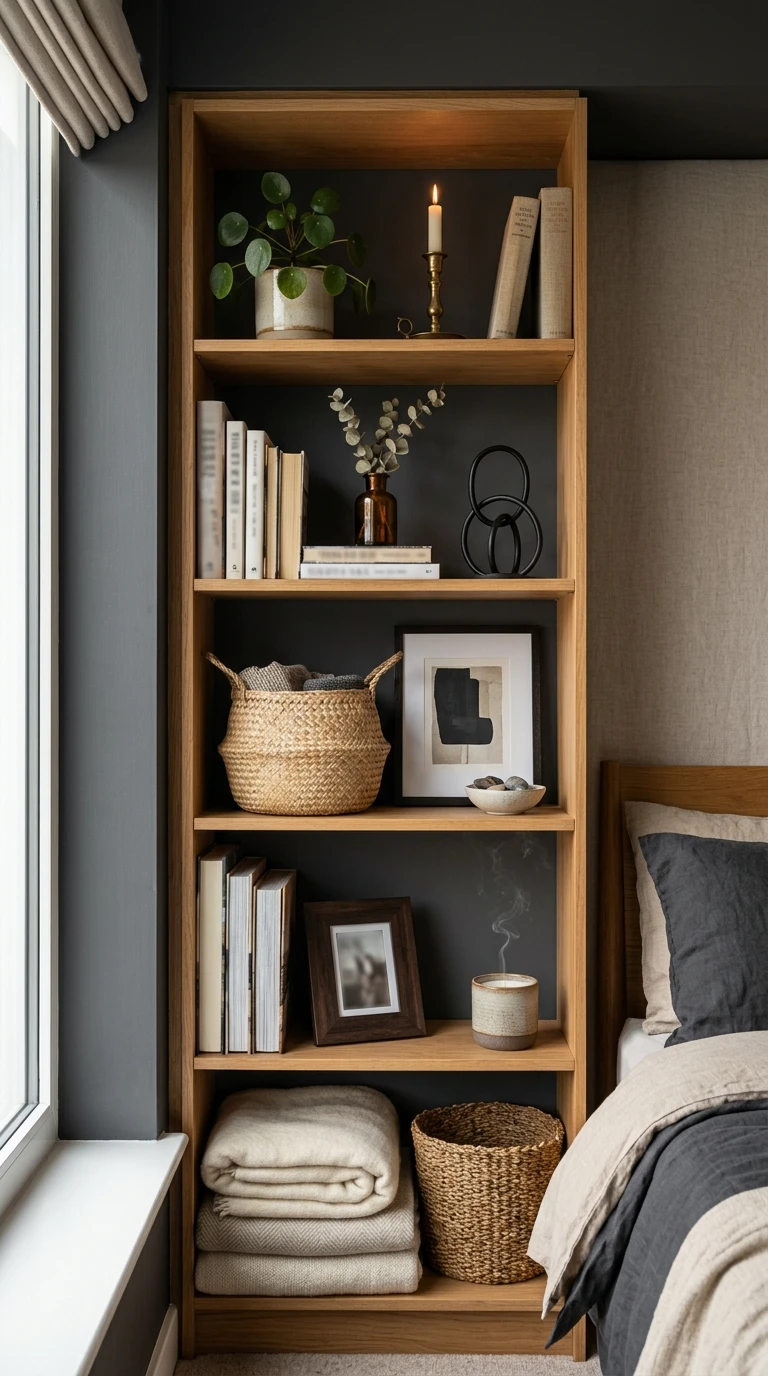
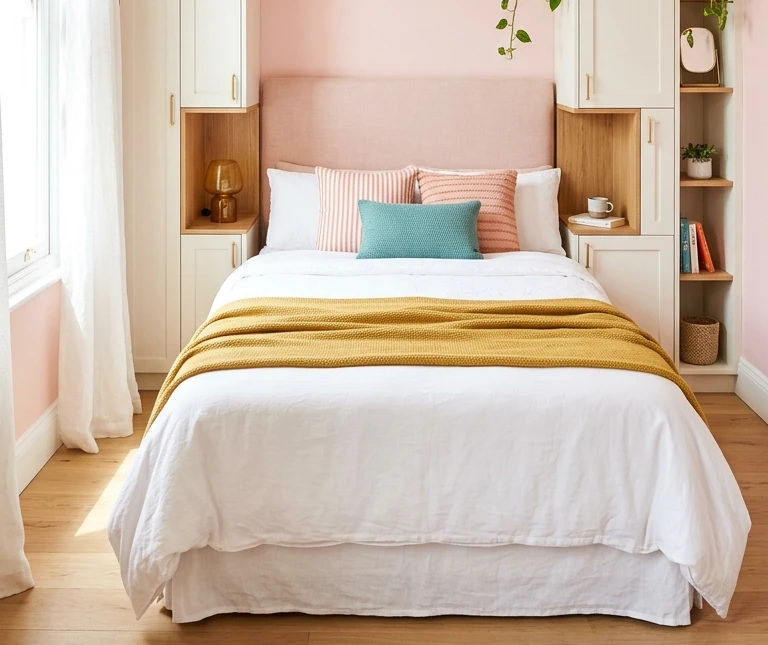
Treat a built-in as one overall composition rather than styling each compartment independently. Repeat a basket material or frame color across several sections, then vary the position so the repetition connects the shelves without forming a rigid grid.
Use lower, accessible compartments for frequently handled storage. Give display sections a mix of upright books, one horizontal group, and an object with open space around it. Some compartments can remain largely practical.
Reduce visual noise: Put small miscellaneous items in a suitable box or basket, then leave neighboring display space simpler. A built-in looks more settled when it has both storage areas and clear focal points.
20. Hygge Inspired Warm Comfort Shelf Look
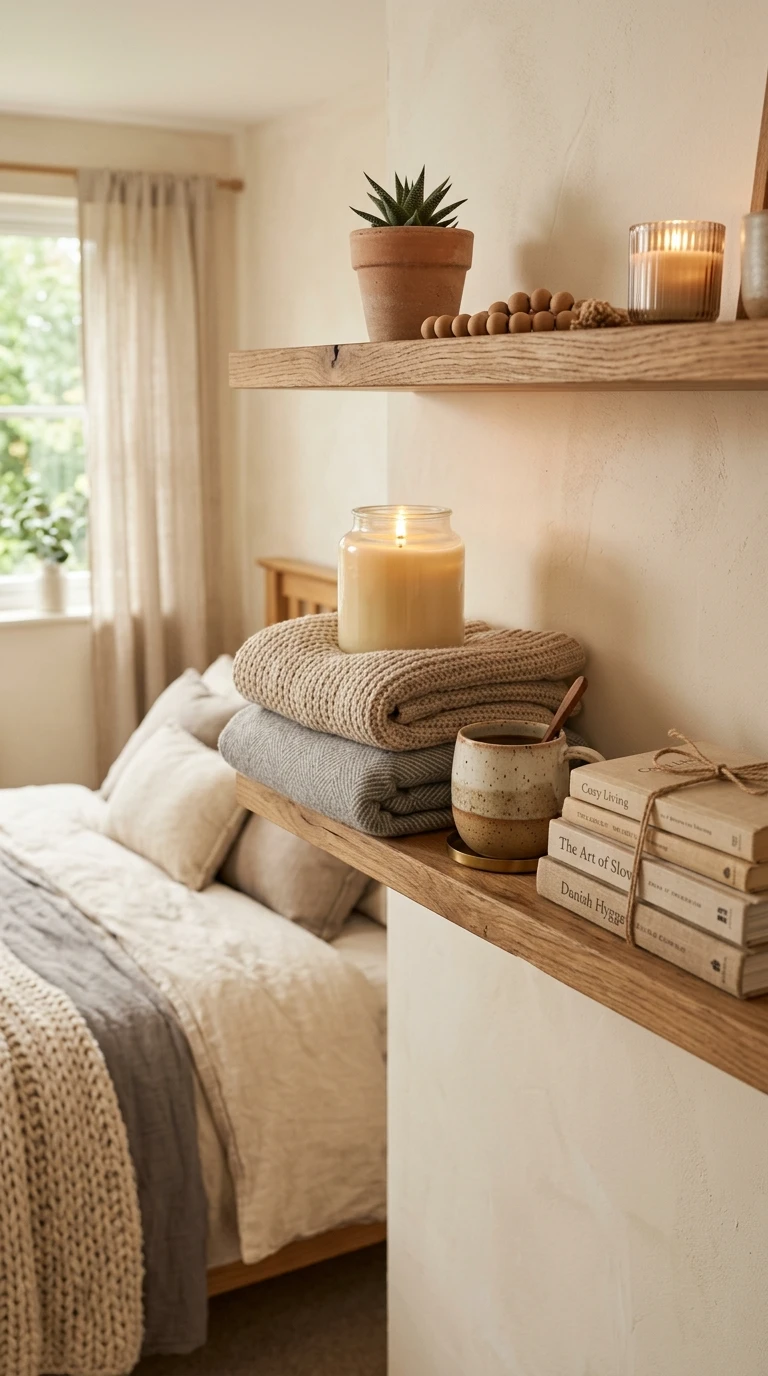
Create a shelf that supports a quiet evening routine: a favorite book, a small tray for glasses, and a soft LED glow. Keep the items you reach for near the front and reserve the back for a frame or other decorative piece.
If the shelf is deep enough, a small folded textile can sit inside a basket. Store a large throw somewhere it can be removed easily, rather than squeezing it beside fragile objects.
Keep comfort practical: Use flameless lighting and avoid balancing a filled mug on a crowded display. The arrangement should make the room easier to use, with no need to shuffle decor each night.
21. Earthy Organic Shelf Styling with Natural Materials
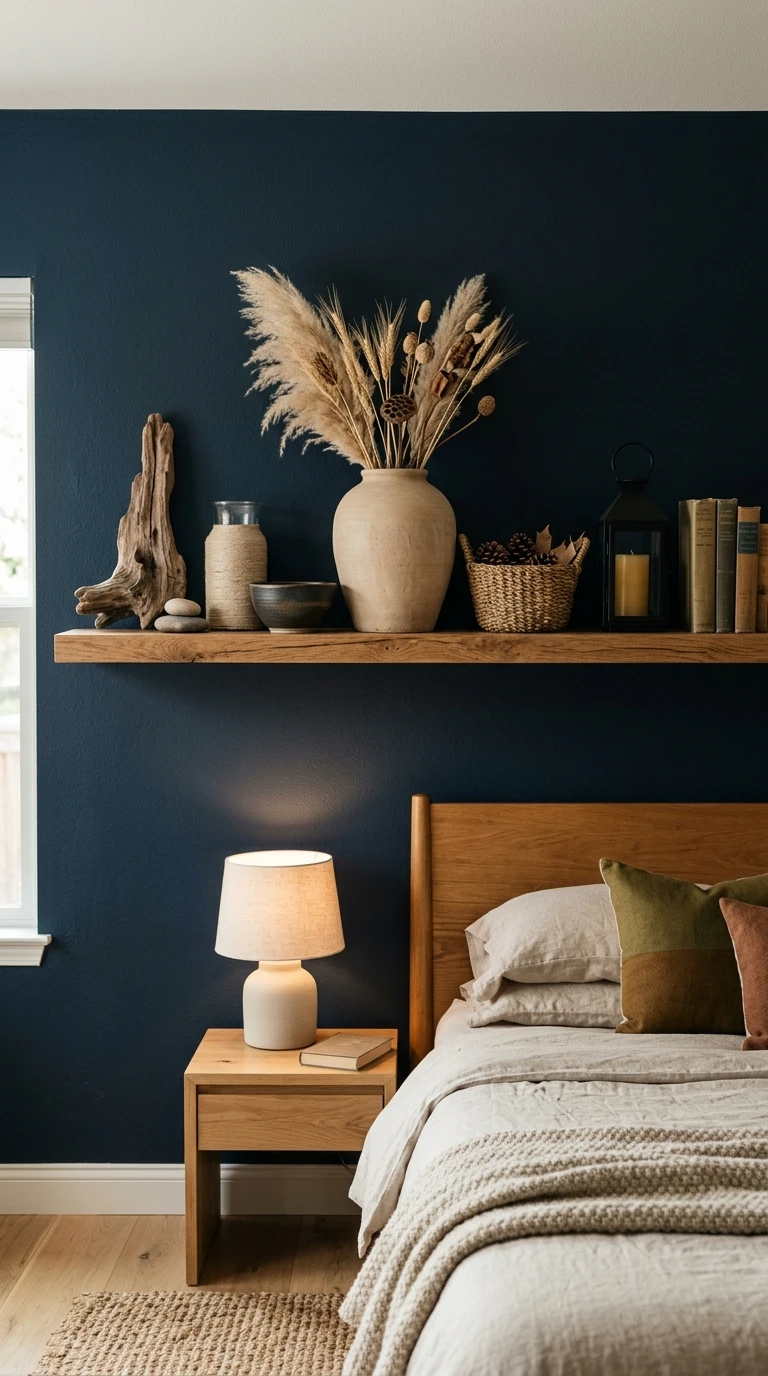
Use natural materials with different scales: a broad woven tray, a simple ceramic vessel, and one small wood accent. Keep the shapes distinct so the arrangement does not turn into a row of similarly sized brown objects.
Limit loose stones, dried stems, and small fragments to one stable container. A shelf is easier to clean when those details move as a group. Protect the surface beneath rough bases and confirm that any vessel holding water is suitable for that use.
Finish by editing: Remove one object and check the display again from the doorway. If the remaining pieces look clearer and still serve your needs, leave the space open.
A Worked Layout for a 90 cm Bedroom Shelf
Use this as a visual planning exercise, not an installation specification. The measurements describe an example display; they do not establish how much weight a shelf can carry. Adapt the arrangement to your shelf and follow its manufacturer’s limits.
For a shelf that is 90 cm wide and 20 cm deep, test a 25 cm-wide frame at one end and a 25 cm-wide book-and-bowl group at the other. The remaining 40 cm gives you space for a gap and clear margins at the ends. Use objects whose full bases and stands fit within the usable depth.
| Part of the arrangement | Example choice | What to check |
|---|---|---|
| Tall focal point | A frame around 25 cm high | The stand fits and the frame is suitably secured. |
| Low supporting group | Two books with a small, stable bowl | The bowl sits level and the books remain accessible. |
| Optional accent | One small object beside a group | It has a purpose and does not erase the open gap. |
| Empty space | A visible break between the groups | The shelf looks balanced from the doorway, not only close up. |
Lay out the objects on a table first if you are uncertain. Mark the shelf’s width and depth with removable tape on a suitable surface, then check the arrangement without repeatedly handling items at height.
How to Style Several Bedroom Shelves Together
Choose one repeated detail across the group, such as black frames or woven storage, then vary its position between levels. Put a tall object on the left of one shelf and a lower, wider group beneath it. This creates movement without requiring a new palette on every level.
Check the practical clearances as well as the overall look. You should be able to lift a basket out, remove a book, and water a plant without dismantling the display. Do not place decorative objects where they prevent a door, curtain, or drawer from working properly.
Common Shelf Styling Problems and Simple Fixes
| Problem | Likely cause | Adjustment to try |
|---|---|---|
| The shelf looks crowded | Too many separate objects with no gaps | Remove the smallest pieces and combine the remaining items into fewer groups. |
| The arrangement looks flat | Everything has a similar height | Use a taller frame or a lower book group to change the outline. |
| Dark objects disappear | Too little contrast with the wall or backing | Move one lighter piece beside them or simplify the dark group. |
| Items are awkward to use | Decor blocks books, boxes, or daily essentials | Give practical items a clear front-facing position and reduce the surrounding decor. |
| The shelf is difficult to clean | Loose fragments and many small pieces | Use a tray or container and keep only the details you want to maintain. |
Build the Display Around What You Want to Keep
Choose one of these shelf styles, gather a few pieces you already own, and test the arrangement before buying anything. Start with a clear focal point, add a lower supporting group, and leave room for both objects and everyday use.
The best bedroom shelf arrangement is one you can live with comfortably. Keep the books accessible, the lighting controlled, and the display simple enough to clean. Add another piece only when it solves a visible gap or meets a real need.