21 Creative DIY Bird Bath Ideas for Every Backyard and Garden Style
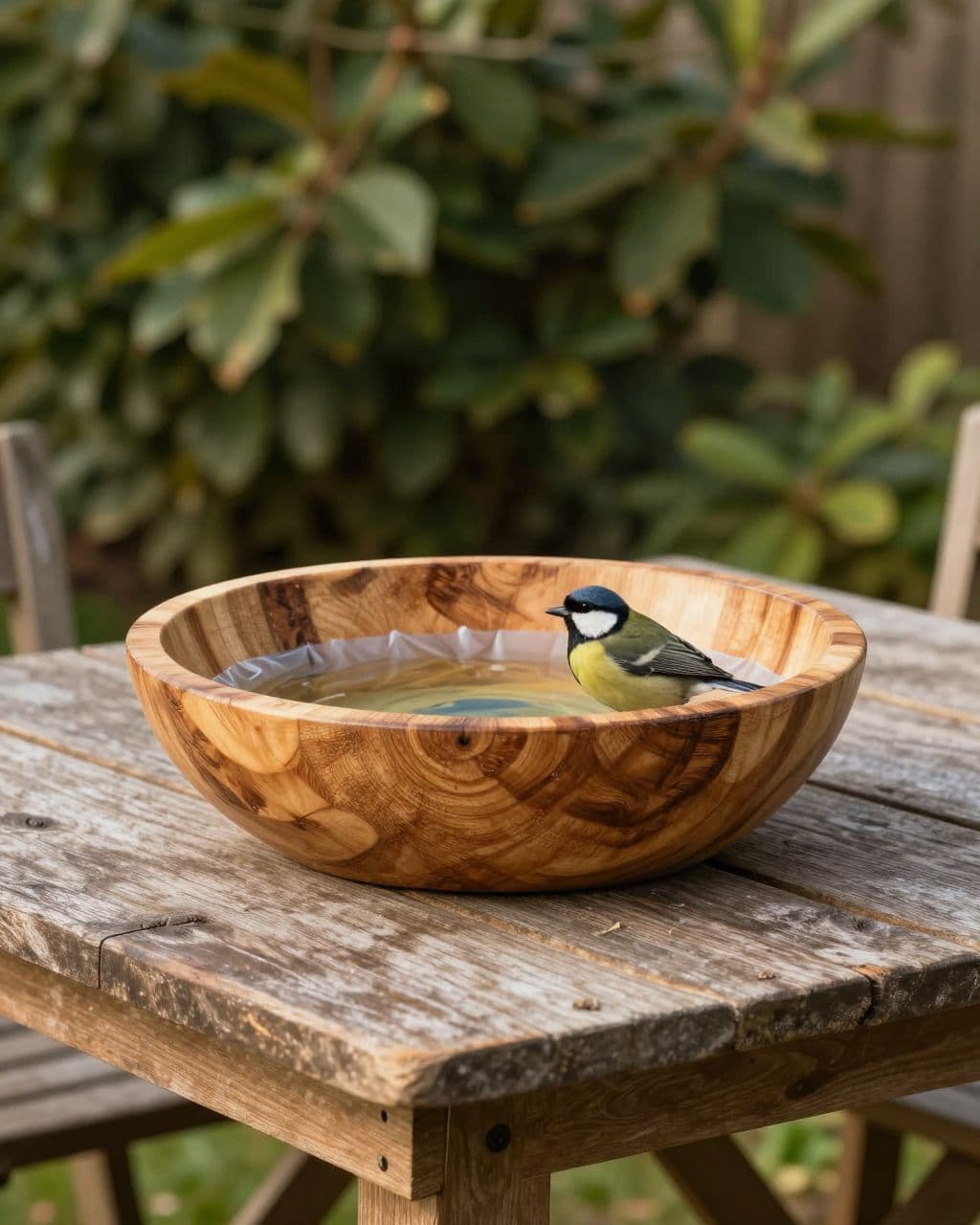
A DIY bird bath gives you a simple way to bring more movement, sound, and wildlife into your yard without buying a costly garden feature. These 21 ideas use saucers, bowls, stones, planters, and other everyday materials to help you create a safe water spot that fits your garden.
21 DIY Bird Bath Ideas for Your Backyard
1. Terracotta Saucer Bird Bath
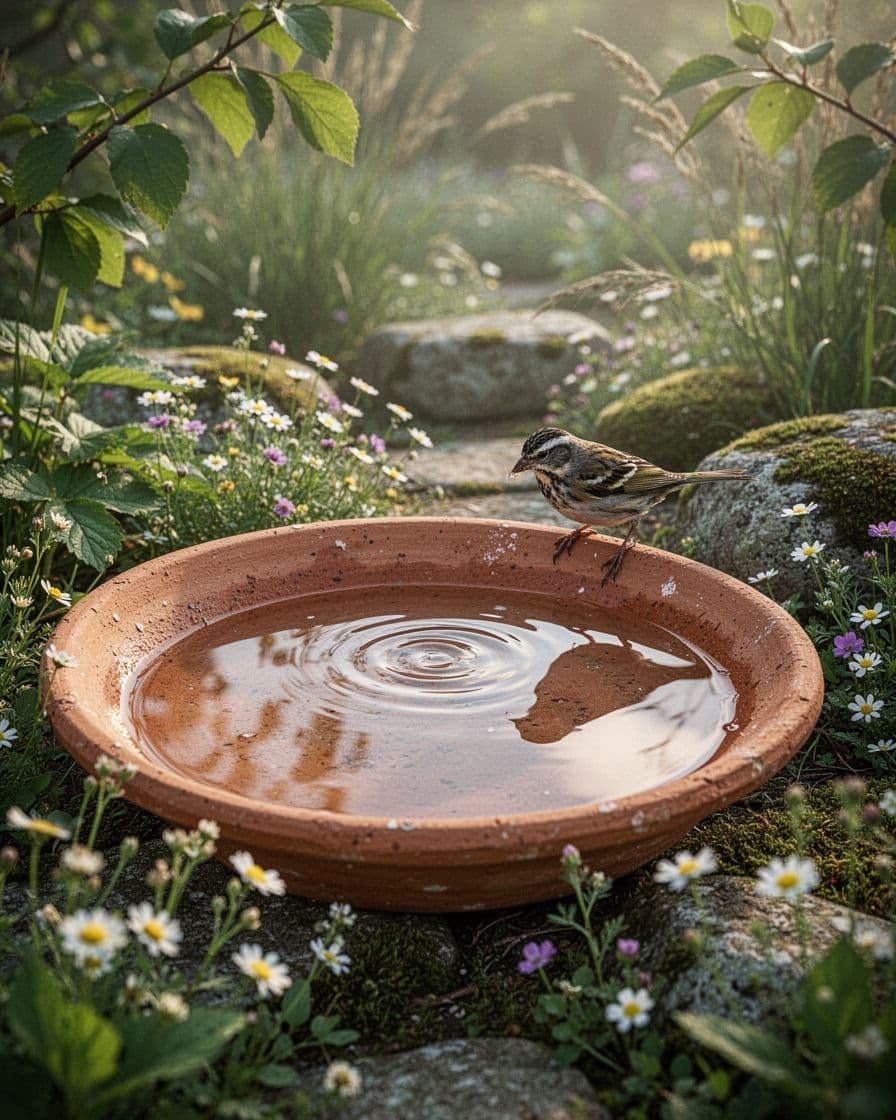
A terracotta saucer makes one of the easiest DIY bird baths for a small backyard. Place it on a short brick pedestal, then add a few smooth stones so birds can stand in the water without slipping.
Choose a saucer with a wide, shallow shape rather than a deep flowerpot tray. Keep the water around 1 to 2 inches deep, which matches guidance from Sacramento Audubon’s bird bath tips.
The warm clay color also works well with cottage gardens, Mediterranean plants, and natural stone paths. Set the bath near shrubs, but leave enough open space for birds to spot cats and other predators.
2. Planter Saucer Bird Bath
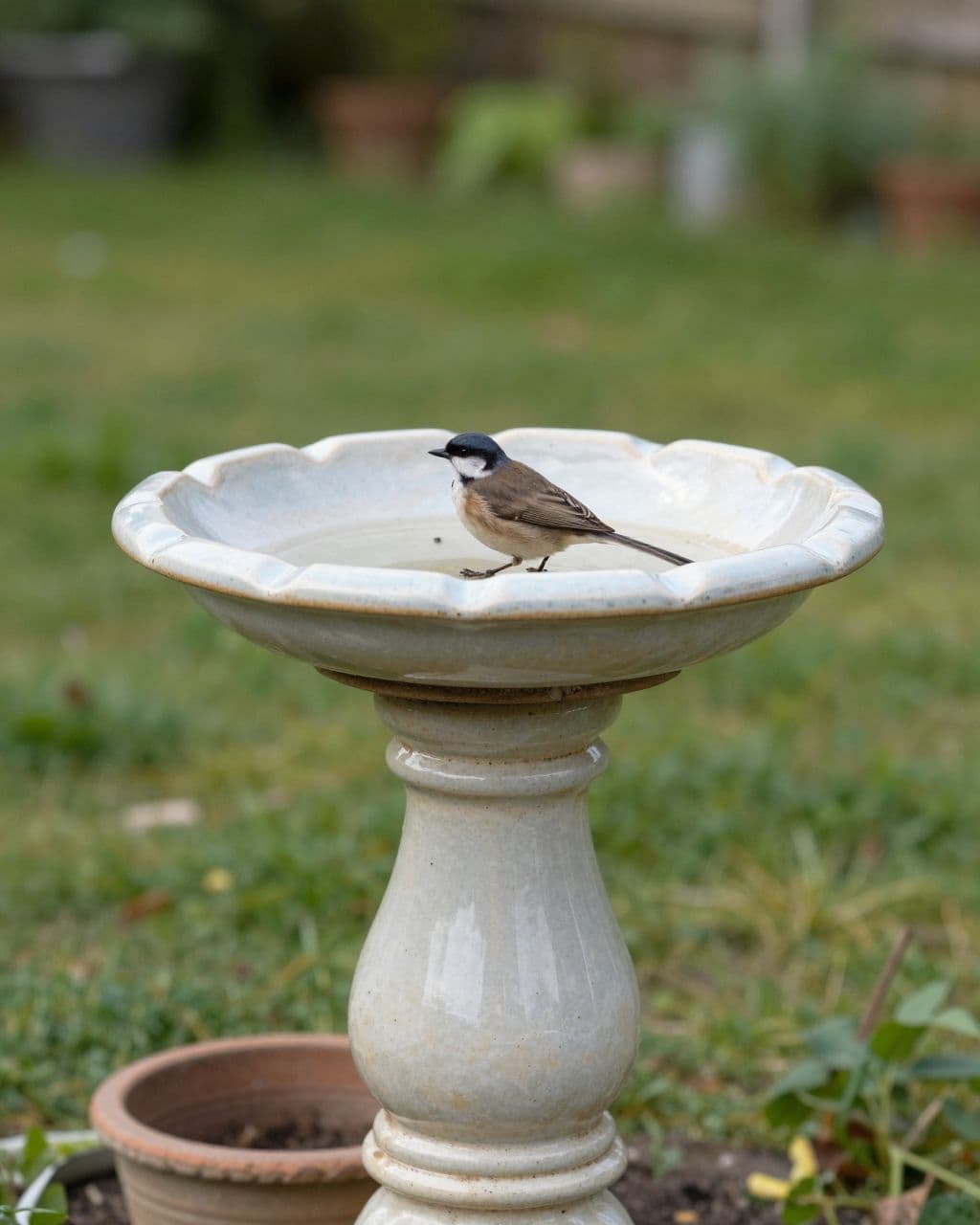
Turn an overturned flowerpot into a steady pedestal for a glazed ceramic saucer. The pot raises the basin to a comfortable height while the wide saucer gives smaller birds room to bathe and drink.
Choose a heavy pot that won’t tip when wind or squirrels push against it. You can also place a flat paver under the pot to create a more stable base on soil or mulch.
A light-colored saucer makes the water level easier to see. Add two or three flat pebbles near the center, then change the water often so the surface stays fresh.
3. Repurposed Metal Tray Bird Bath
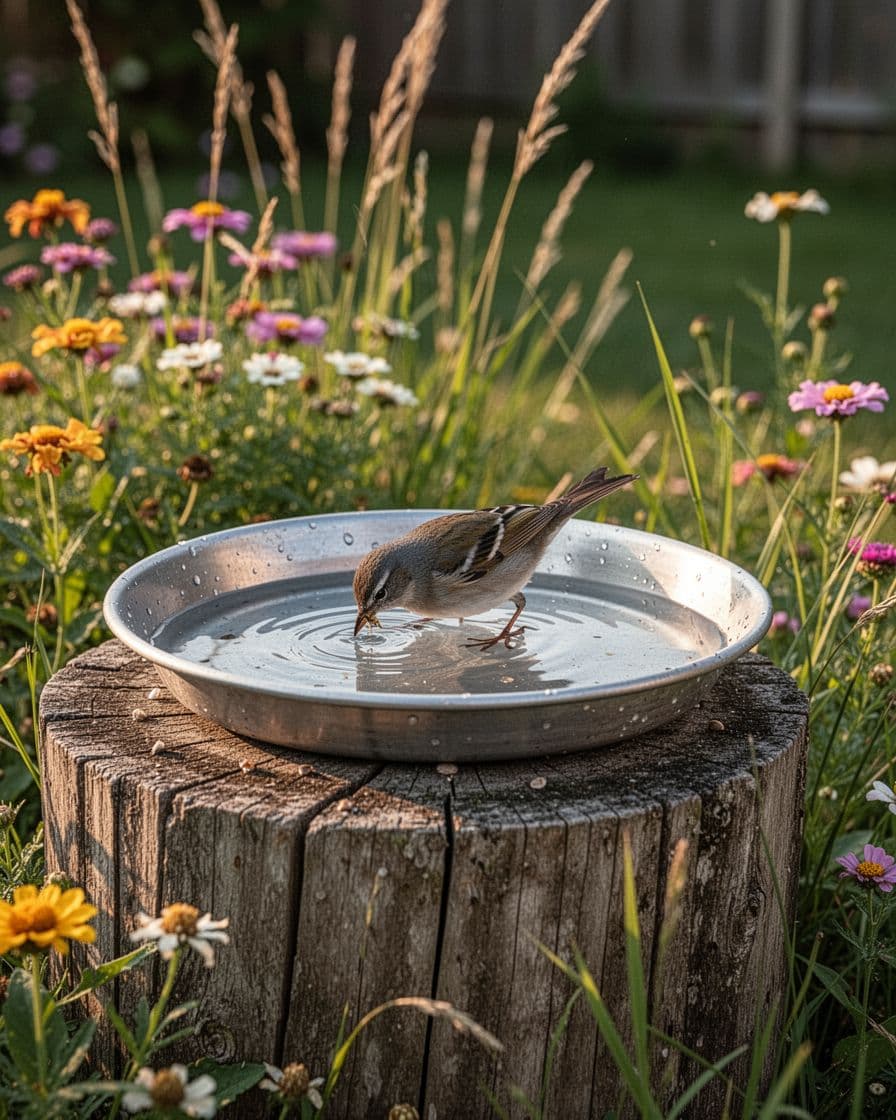
A shallow metal serving tray can become a useful bird bath when you place it on a sturdy wooden stump. This design gives you a chance to reuse a tray that no longer matches your kitchen or has a few cosmetic marks.
Pick a tray with a smooth surface and no sharp edges. Avoid trays with loose paint, peeling coatings, or exposed rust that could flake into the water.
A weathered stump gives the bath a relaxed woodland look. Surround it with grasses and low flowers, but keep the basin easy to reach when you need to empty and scrub it.
4. Concrete Stepping Stone Bird Bath
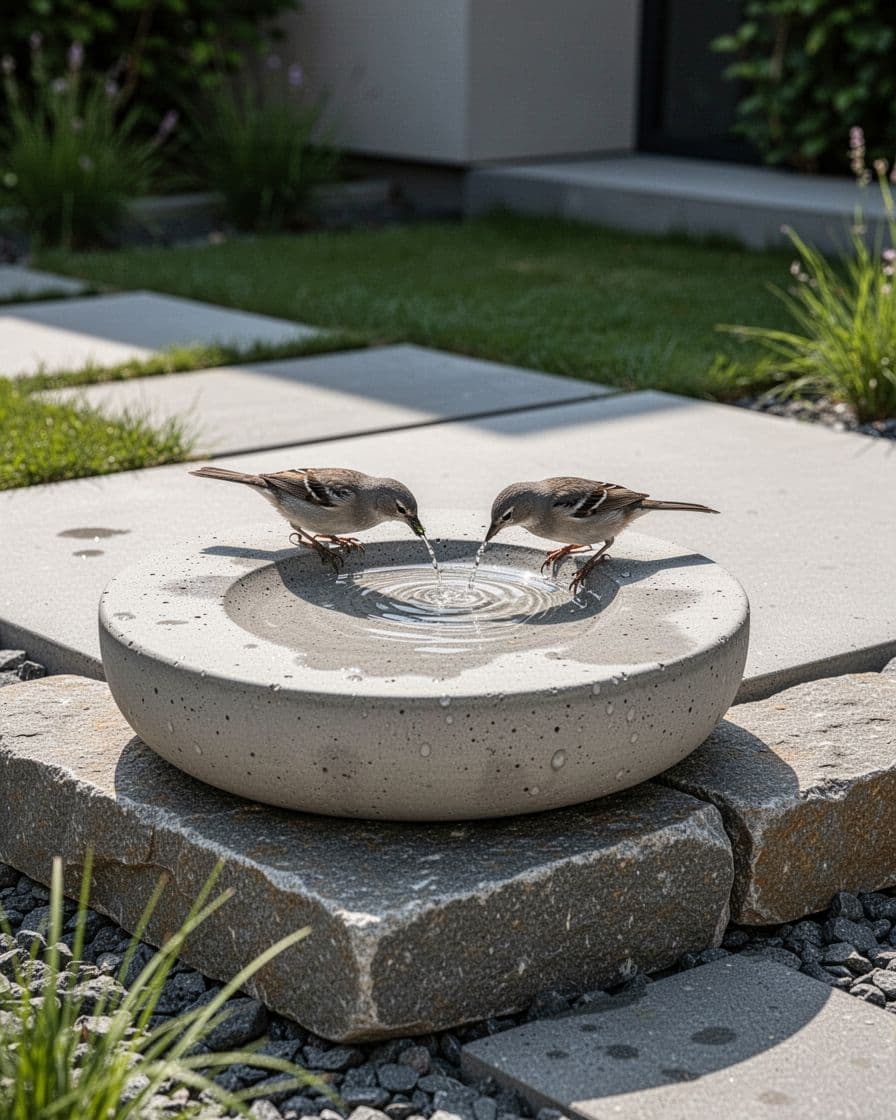
Use a broad concrete stepping stone as the base for a modern DIY bird bath. Choose a stone with a shallow recessed center, or pair a flat stone with a low concrete bowl that sits securely on top.
The gray surface suits gravel gardens, black planters, and simple green planting. Its weight also gives the bath strong wind resistance compared with a lightweight plastic dish.
Place the stone on a level area before adding water. If the basin feels too deep, raise the bottom with clean, flat stones that sit firmly and leave visible footholds.
5. Leaf-Shaped Hypertufa Bird Bath
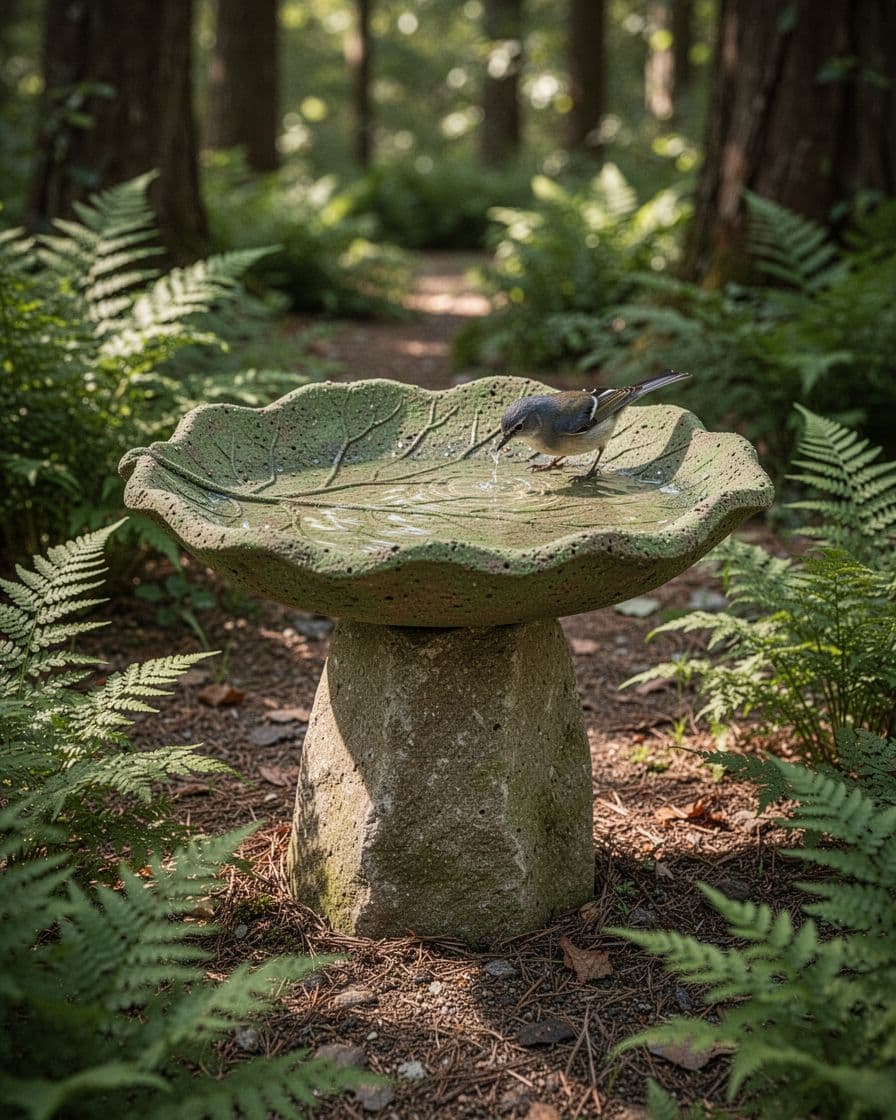
A leaf-shaped hypertufa basin brings an organic detail to a woodland garden. Its uneven edge and natural texture help the bath blend with ferns, moss, pebbles, and low-growing ground covers.
You can make the basin with a large leaf mold and a cement-based mix, or buy a leaf-shaped planter and convert it into a water dish. Choose a design with a smooth inner surface so you can clean it without trapping dirt in deep grooves.
Place the basin on a short stone pedestal where you can see it from a window. The raised position also keeps the water away from some ground debris and makes daily water changes easier.
6. Recycled Glass Dish Bird Bath
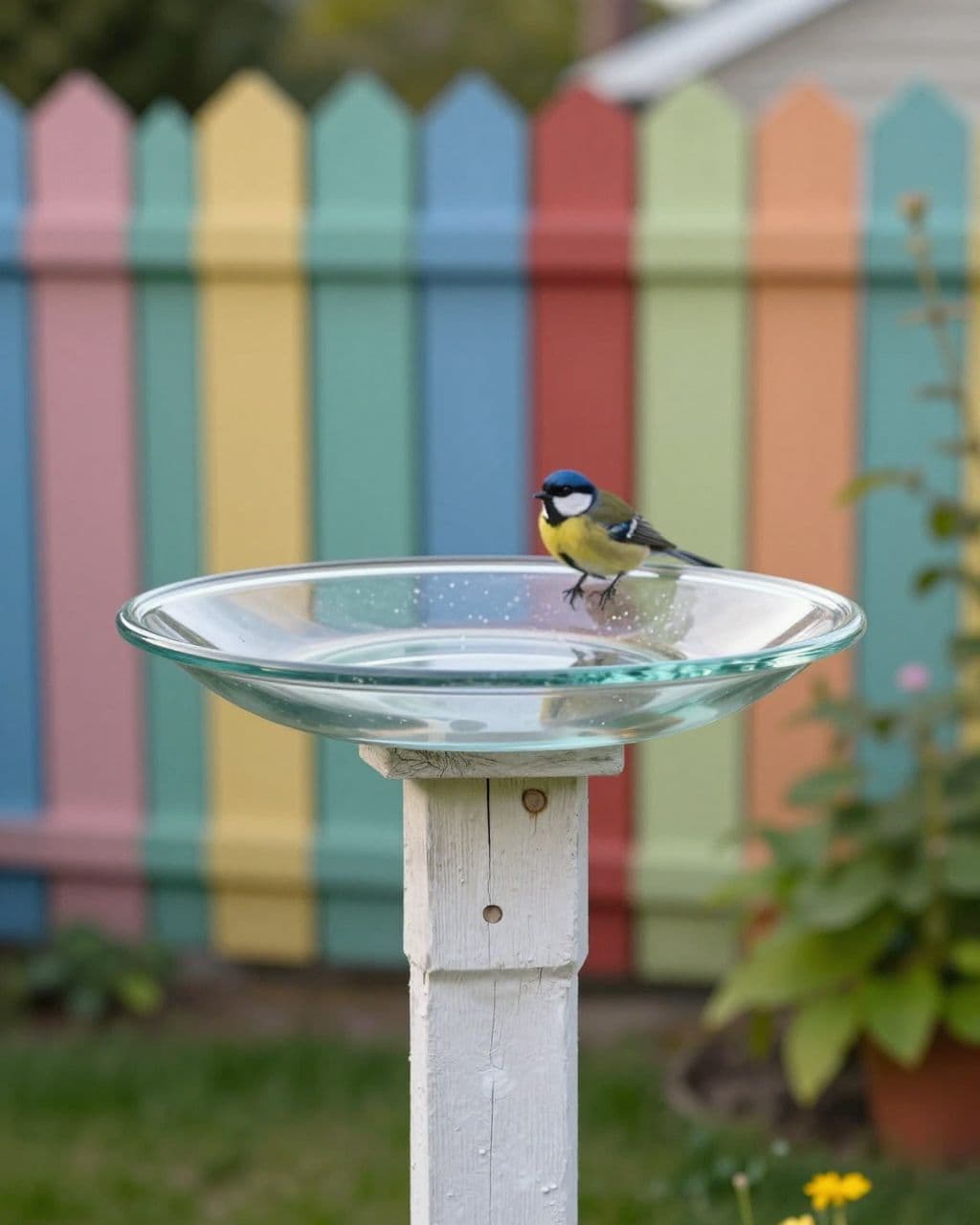
A thick recycled glass dish creates a bright, colorful focal point in a cottage backyard. Mount it on a painted wooden post, or place it on a wide plant stand that gives the dish a level surface.
Choose strong glass without chips or hairline cracks. Clear glass can look slippery, so add a few large pebbles that give birds secure places to stand.
This DIY bird bath works well near colorful flowers because sunlight can bring out the tones in the glass. Keep the dish in partial shade if possible, since cooler water stays more comfortable during hot weather.
7. Ground-Level Stone Bird Bath
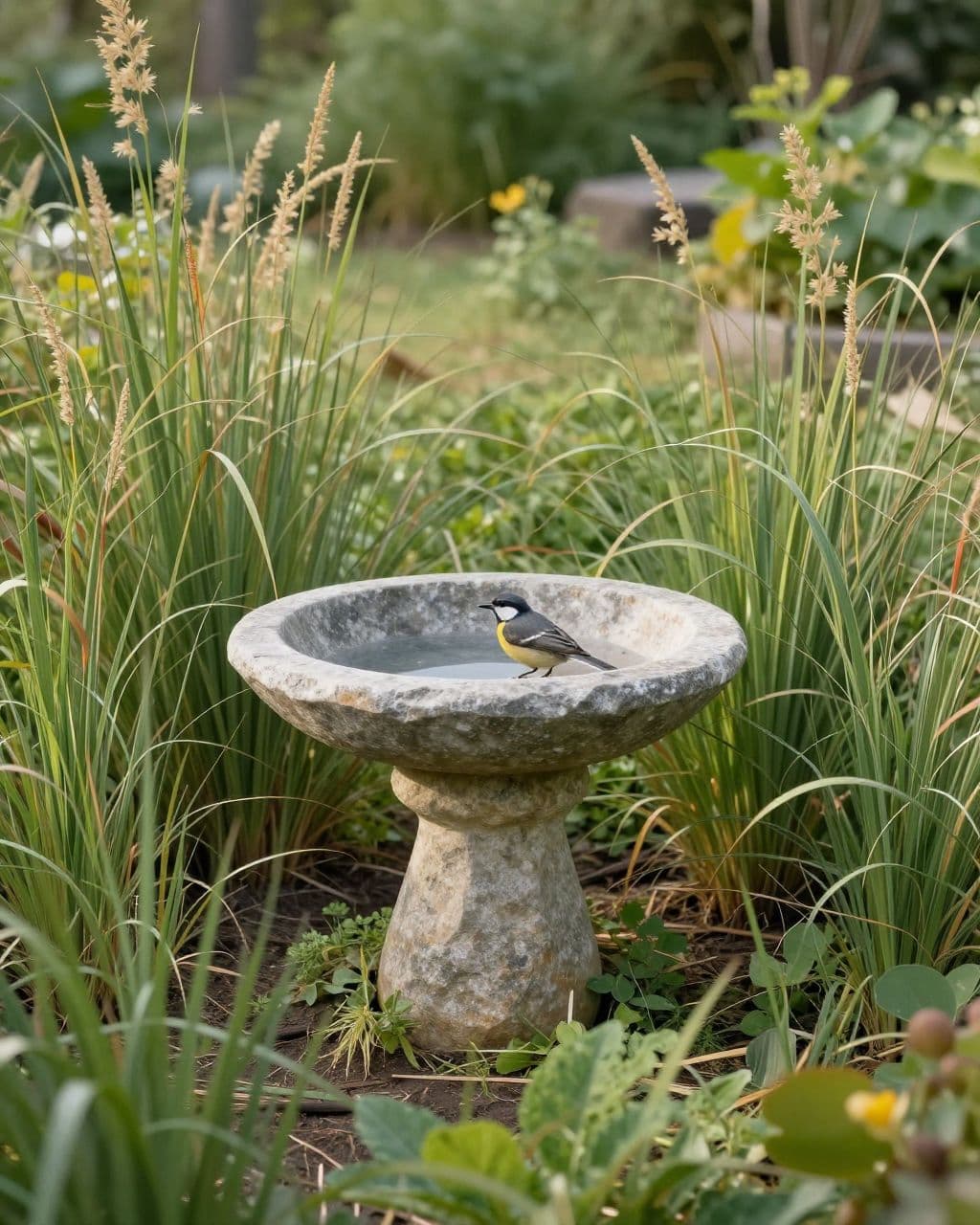
A ground-level stone bowl gives your yard a natural wildlife garden look. Set it among native grasses, low plants, or smooth river stones so it feels like part of the planting rather than a separate ornament.
Ground-level baths can work well for birds and other small wildlife that prefer low water sources. Pick a basin with a gently sloped interior and a rough surface that offers steady footing.
Keep the area around the bowl open enough for you to inspect it. You also need a clear view of the water so you can remove leaves, refill the basin, and clean the surface often.
8. Rustic Wooden Bowl Bird Bath
A wooden bowl adds warmth to a rustic backyard, but you need a waterproof liner to protect the wood. Use a removable plastic or glazed insert that fits inside the bowl without sharp edges or loose sections.
Place the lined bowl on a garden table, a wide stump, or a stable low stand. Keep the basin low enough for easy cleaning, since wood can collect algae and dirt around its rim.
The natural grain pairs well with wicker furniture, cedar planters, and informal flower beds. Add light-colored stones inside the liner so birds can find secure footing.
9. Coastal Ceramic Bird Bath
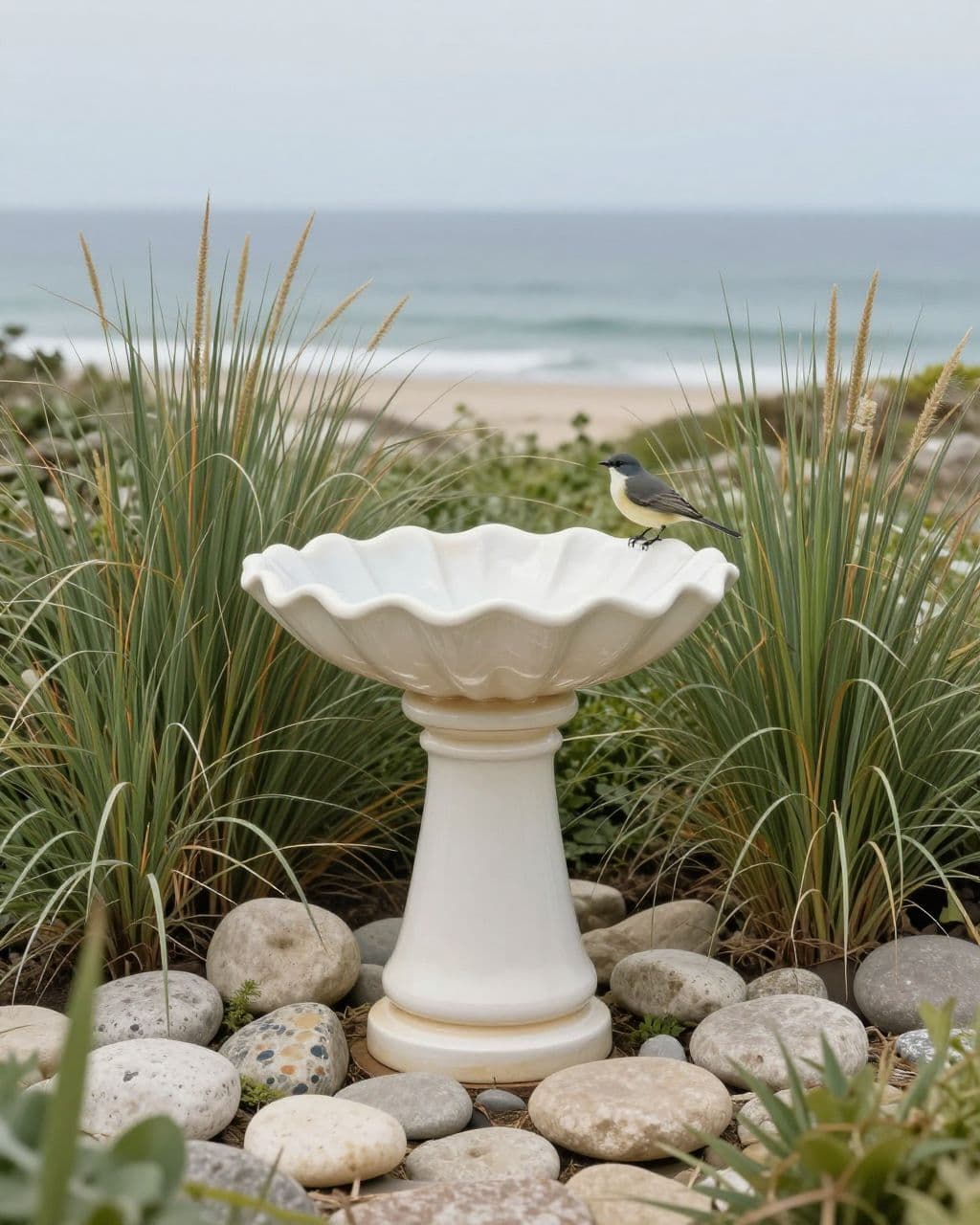
A seashell-shaped ceramic bowl suits a coastal garden filled with ornamental grasses and pale gravel. Choose a shallow bowl in white, sand, pale blue, or soft gray to keep the water feature connected to the surrounding palette.
Set the bowl on a simple pedestal that can support its full weight. Ceramic becomes heavier when filled, so test the stand before you place the bath near a walkway or seating area.
Use smooth stones to create a gradual change in depth. Audubon’s bird bath guidance recommends shallow water and suggests adding rocks or slate to create safer places for birds to stand.
10. Stacked River Stone Bird Bath
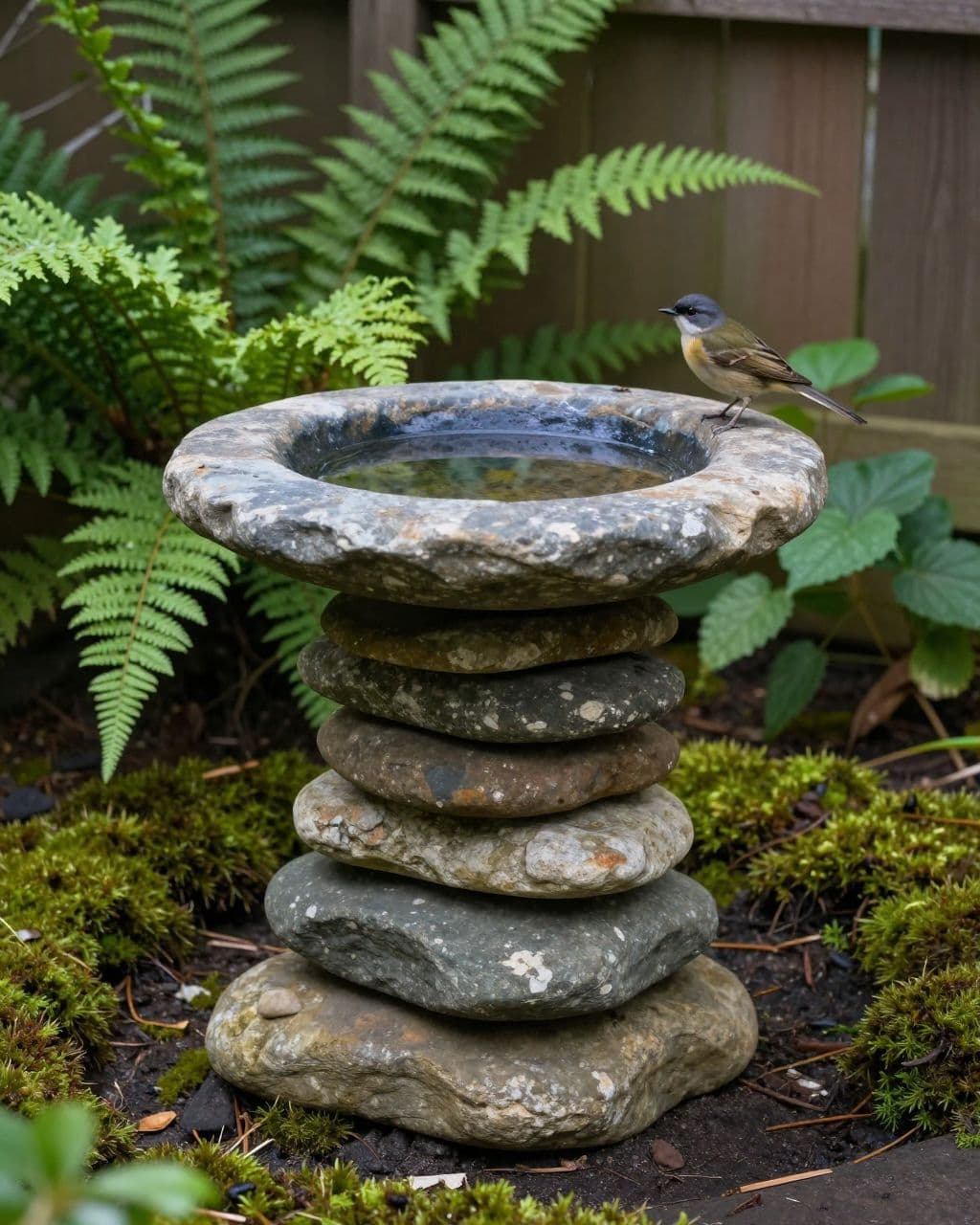
Stack flat river stones to create a low base for a shallow dark bowl. The irregular stone layers bring texture to a shaded garden corner and work especially well beside ferns, moss, and woodland shrubs.
Choose stones with broad, stable faces so the stack doesn’t wobble. You can secure the layers with outdoor masonry adhesive if you want a permanent structure.
Keep the bowl separate from the stones when you clean it. That design lets you lift the basin, pour out old water, and scrub the inside without disturbing the base.
11. Vintage Enamel Basin Bird Bath
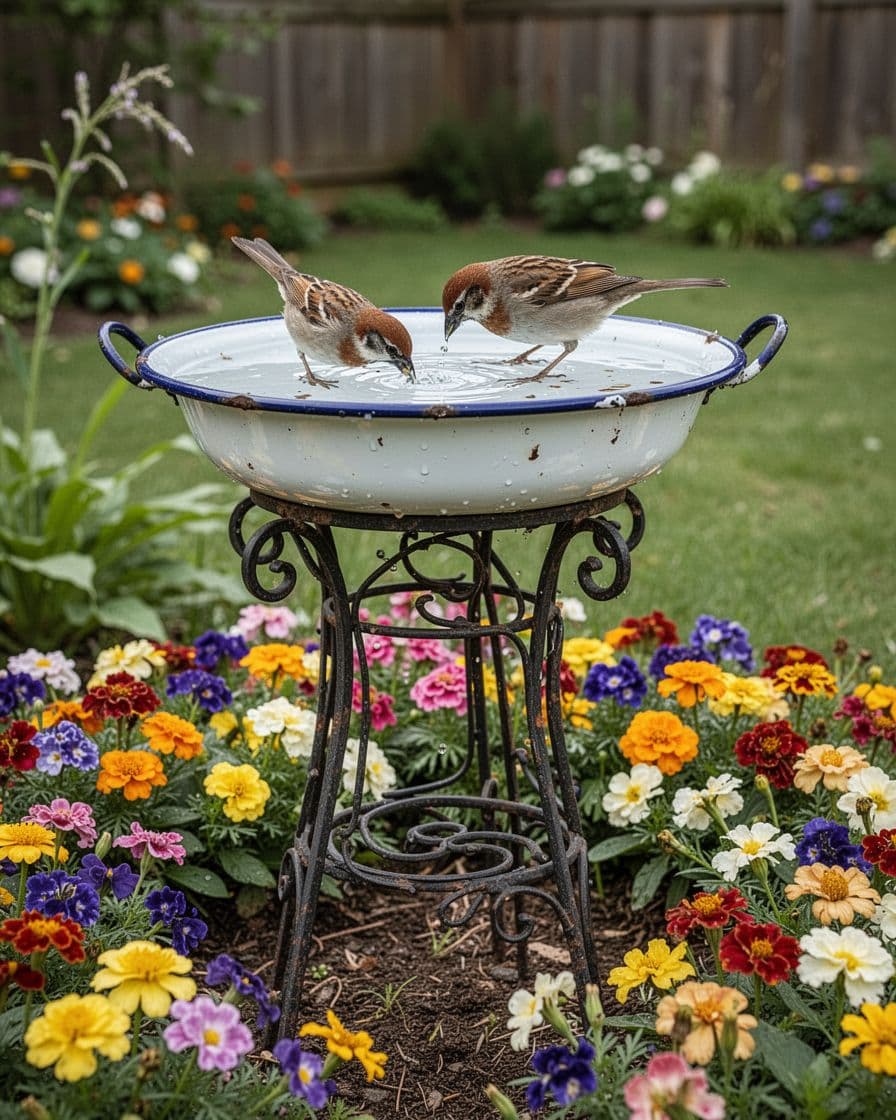
A vintage enamel basin gives your garden a farmhouse or cottage feel. Place it on a wrought iron plant stand, a small outdoor table, or a wide pedestal that supports the basin without covering its rim.
Inspect the enamel before you use the basin. Skip pieces with exposed metal, peeling coating, or sharp chips, since birds need a safe surface for their feet and drinking area.
The white enamel also makes leaves and debris easy to spot. Position the bath beside flowers rather than directly beneath a tree, where falling leaves and droppings can make the water dirty faster.
12. Upcycled Kitchen Bowl Bird Bath
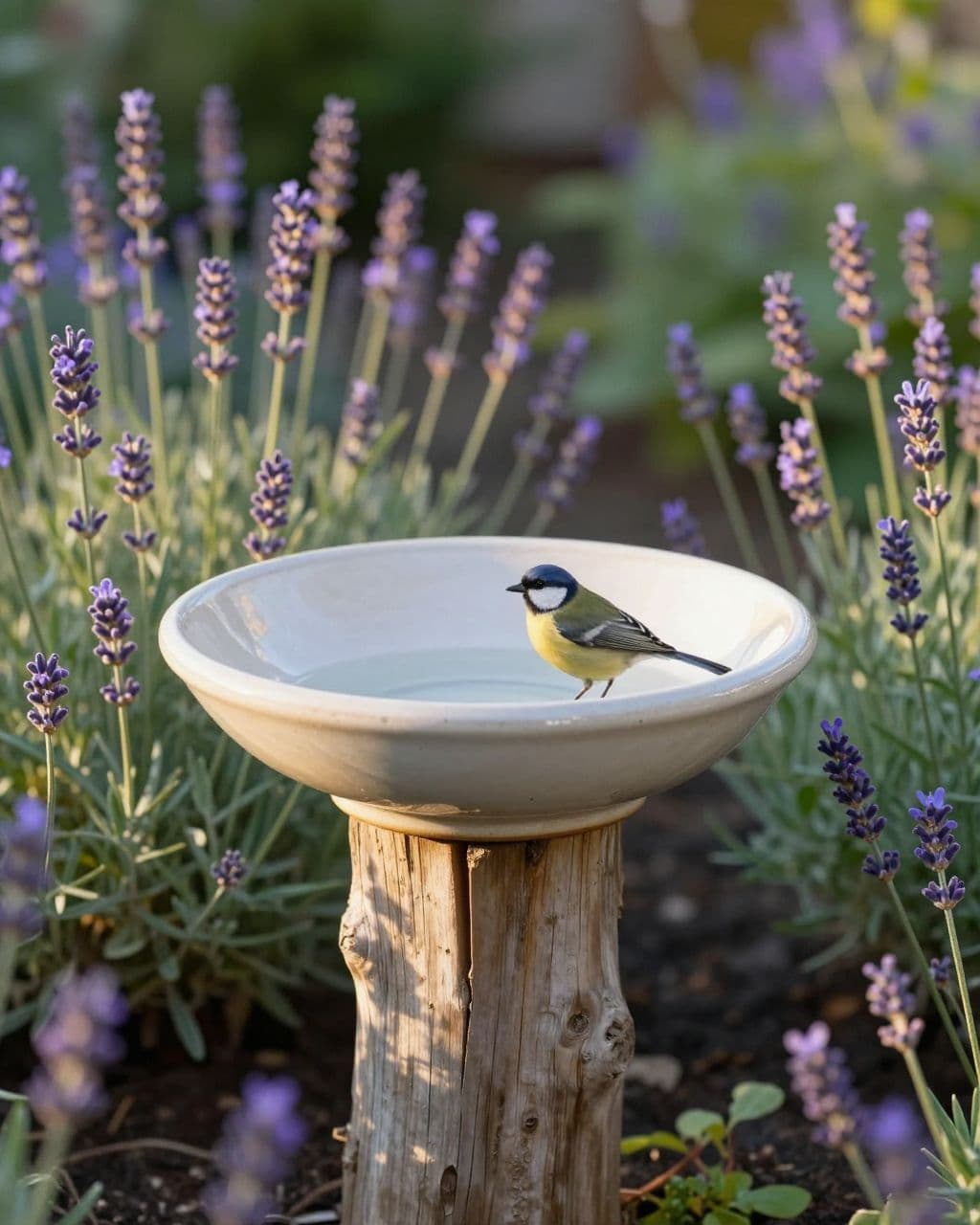
An unused kitchen bowl can become a compact bird bath with almost no visual changes. Choose a shallow ceramic bowl with a wide rim, then place it on a short stump or a heavy outdoor stand.
Avoid bowls with deep sides, narrow openings, or smooth slopes that give birds little room to perch. A few large stones can raise the floor and create a dry resting point above the water.
A ceramic bowl blends into a pollinator garden without competing with lavender, salvia, or daisies. Because the bowl lifts off the ground, you can keep it visible from a window and refill it before the water runs low.
13. Blue Mosaic Tile Bird Bath
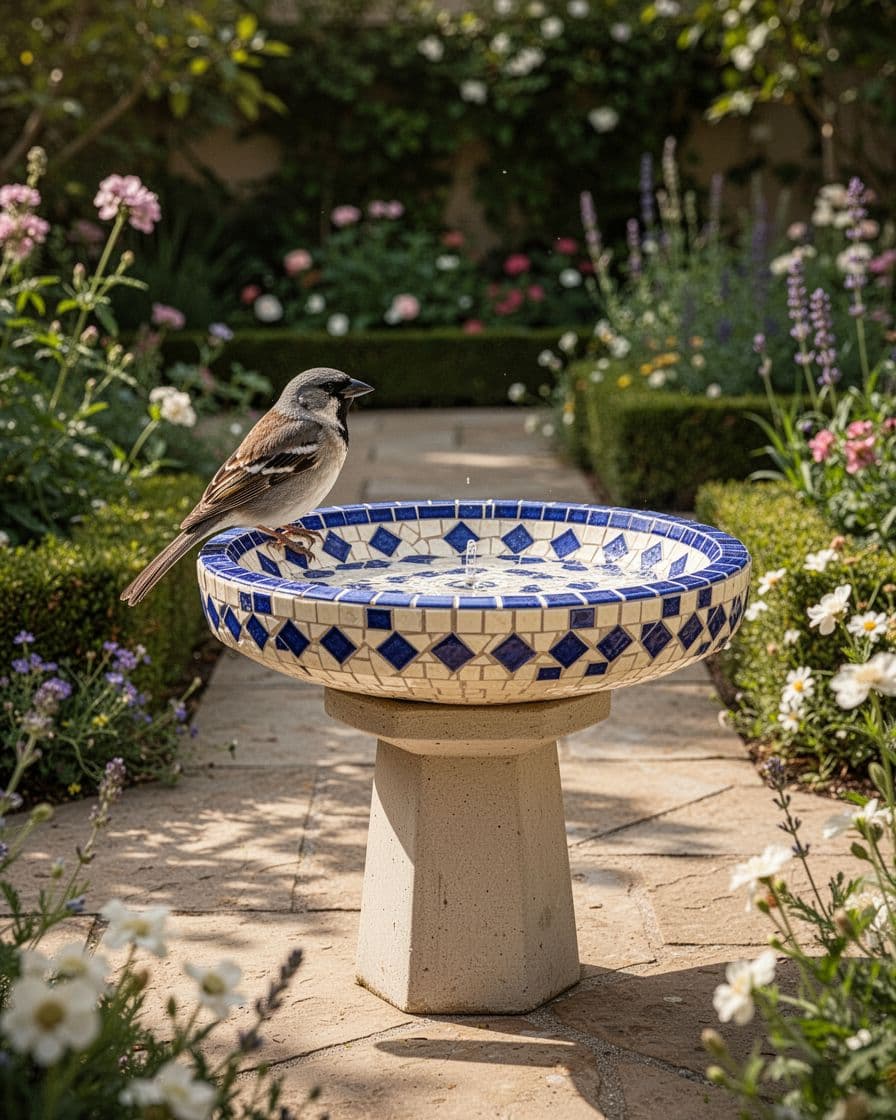
A blue and cream mosaic basin adds color to a patio garden or sunny courtyard. Start with a sturdy shallow bowl, then cover the outer surface with outdoor tile pieces and grout made for exterior use.
Keep the inside smooth and easy to wash. If you add tiles inside the basin, use pieces with rounded edges and secure every tile so birds don’t encounter loose fragments.
The blue surface can make the water feature look cool and fresh beside terracotta pots. Place the bath where you can appreciate the pattern, but avoid a spot that receives strong heat all day.
14. Hanging Bowl Bird Bath
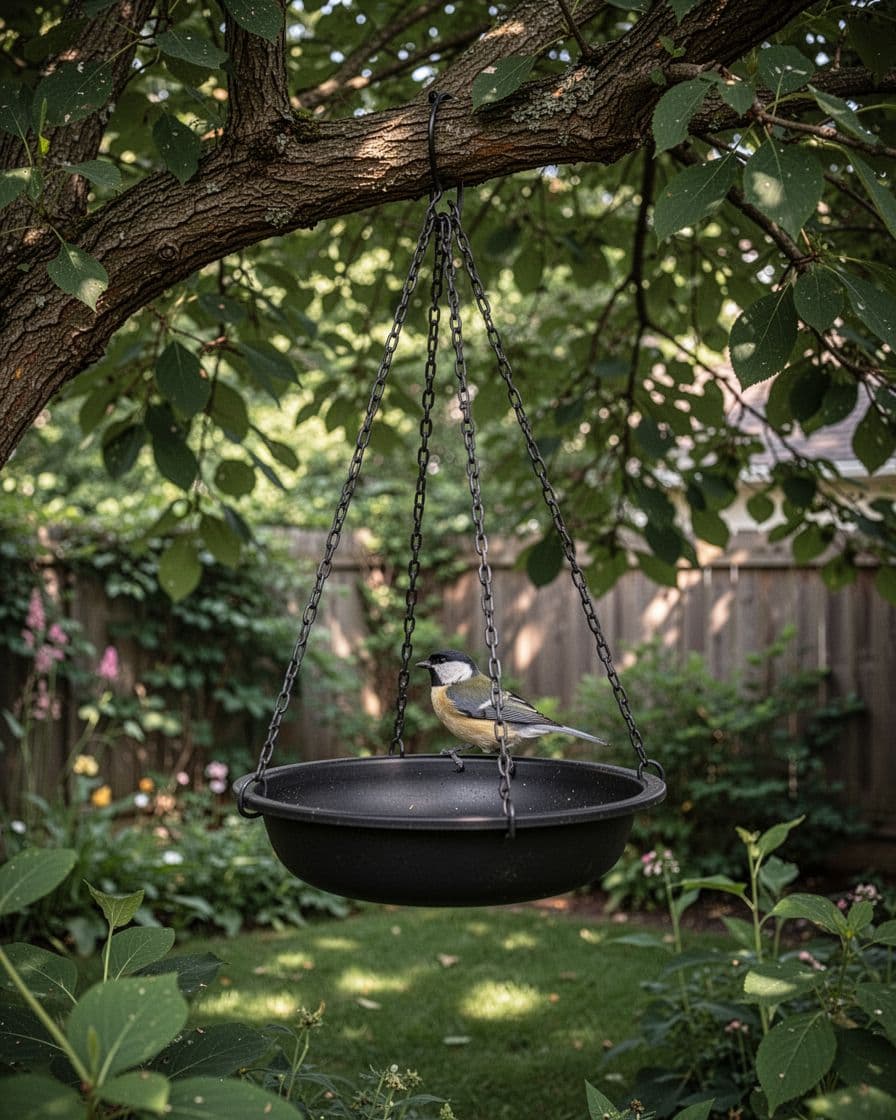
A hanging bowl bird bath works well when you have limited ground space. Suspend a shallow bowl from three equal-length chains so the rim stays level when you fill it.
Use a branch or overhead support that can carry the bowl, chains, and water without bending. Check the attachment points often, especially after storms or strong wind.
The bowl should move only slightly when birds land on the edge. If it swings too much, shorten the chains or choose a wider, heavier basin that gives the bath more balance.
15. Balcony Saucer Bird Bath
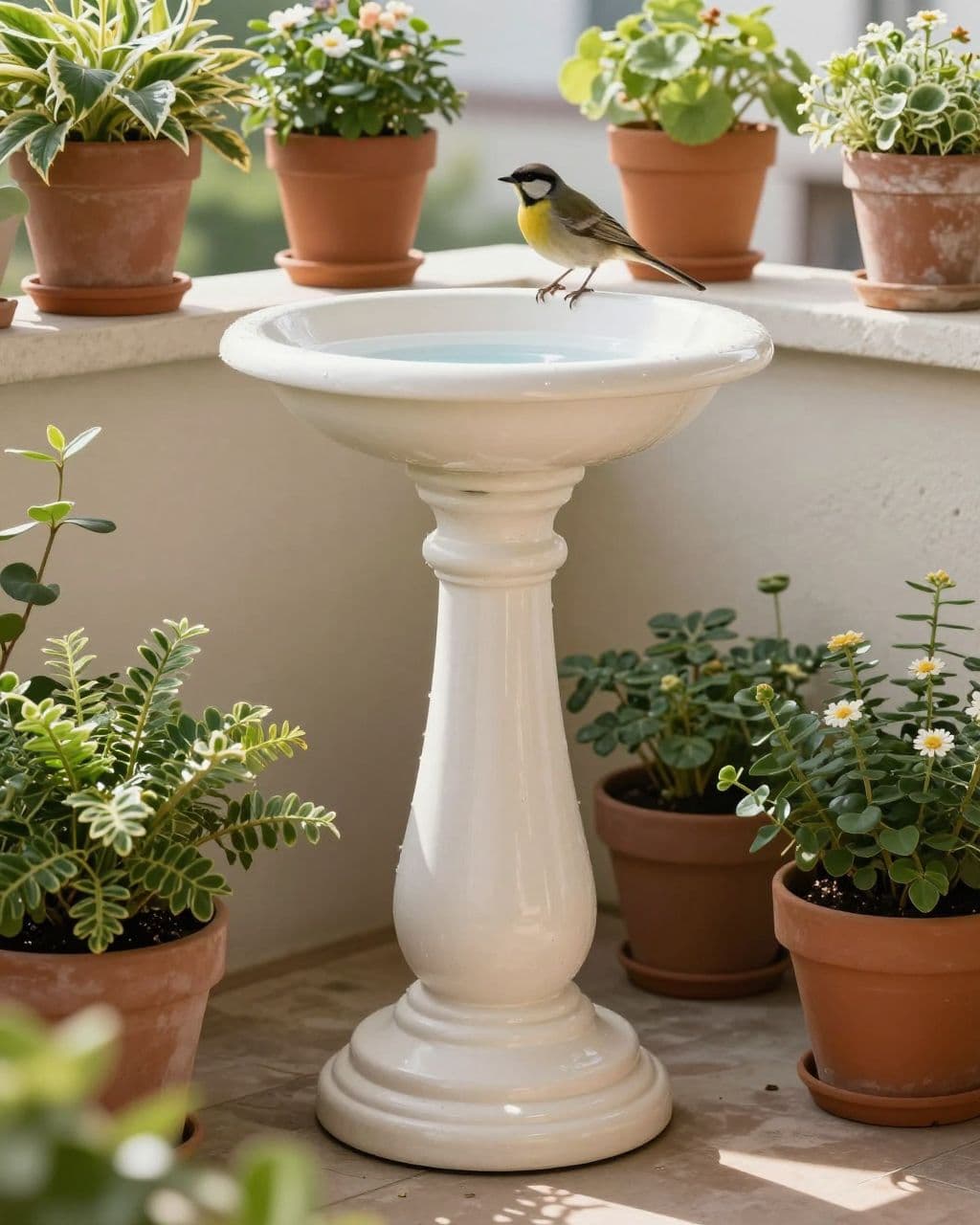
A shallow saucer can bring a small bird bath to an apartment balcony or compact deck. Place it on an upside-down plant pot, a heavy outdoor stool, or a wide shelf that keeps the water basin secure.
Select a container that stays well inside the railing. You need to prevent spills onto lower balconies, walkways, furniture, and electrical items.
Choose a partly shaded spot near potted plants, while leaving some open space around the bath. Refresh the water often because small containers heat up and dry out quickly in direct sun.
16. Copper Bowl Bird Bath
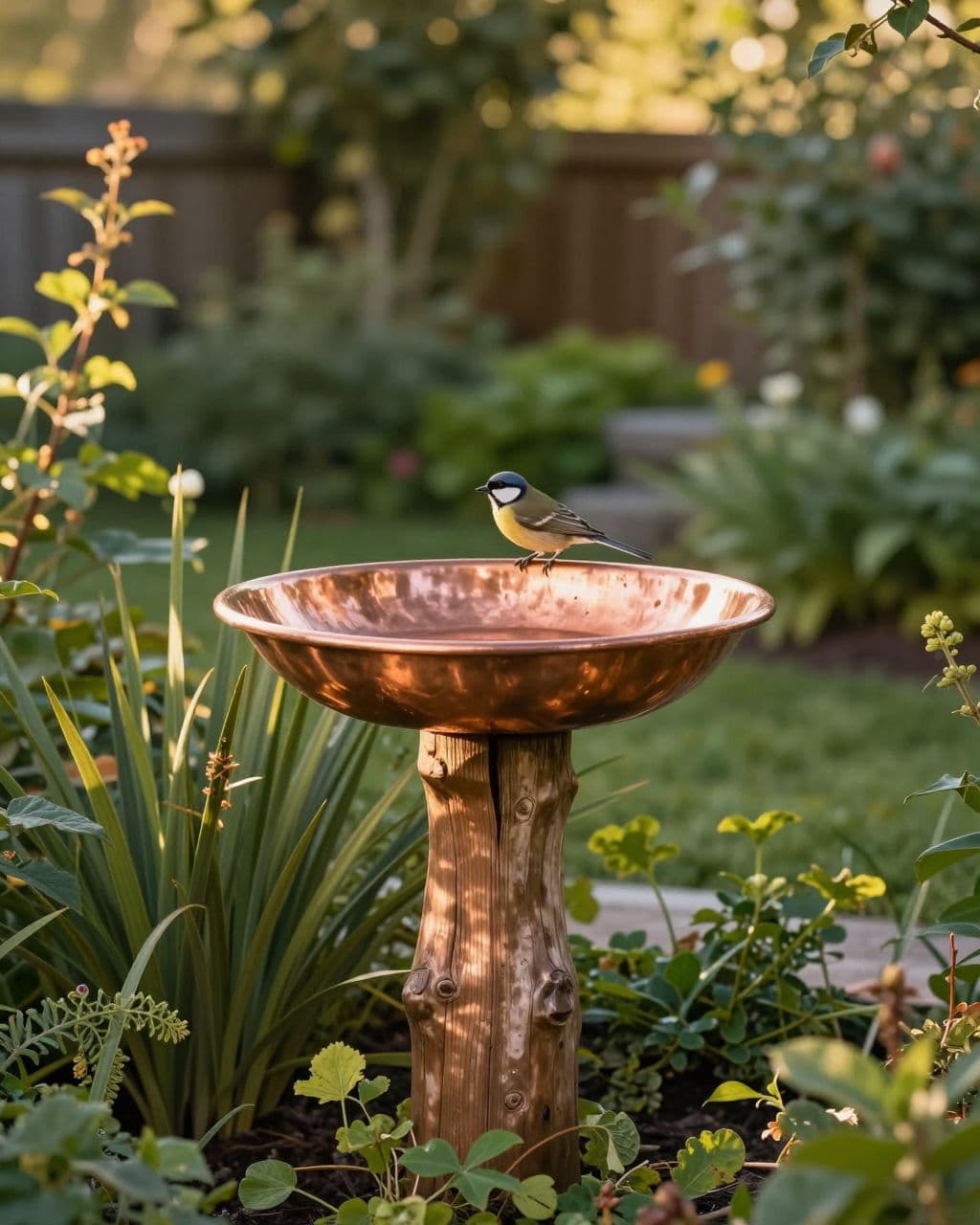
A copper-colored bowl adds a warm metal accent to a leafy backyard. Pair it with a reclaimed wood column, a stone plinth, or a dark metal stand to give the basin a clear visual anchor.
Choose a bowl with a shallow shape and a stable rim. If the metal surface feels slick, add flat stones that stay in place when birds move across them.
Copper tones suit gardens with ornamental grasses, brick edging, and warm-toned flowers. Keep the bowl away from areas where falling branches could dent it or knock it from its stand.
17. Minimalist Slate Bird Bath
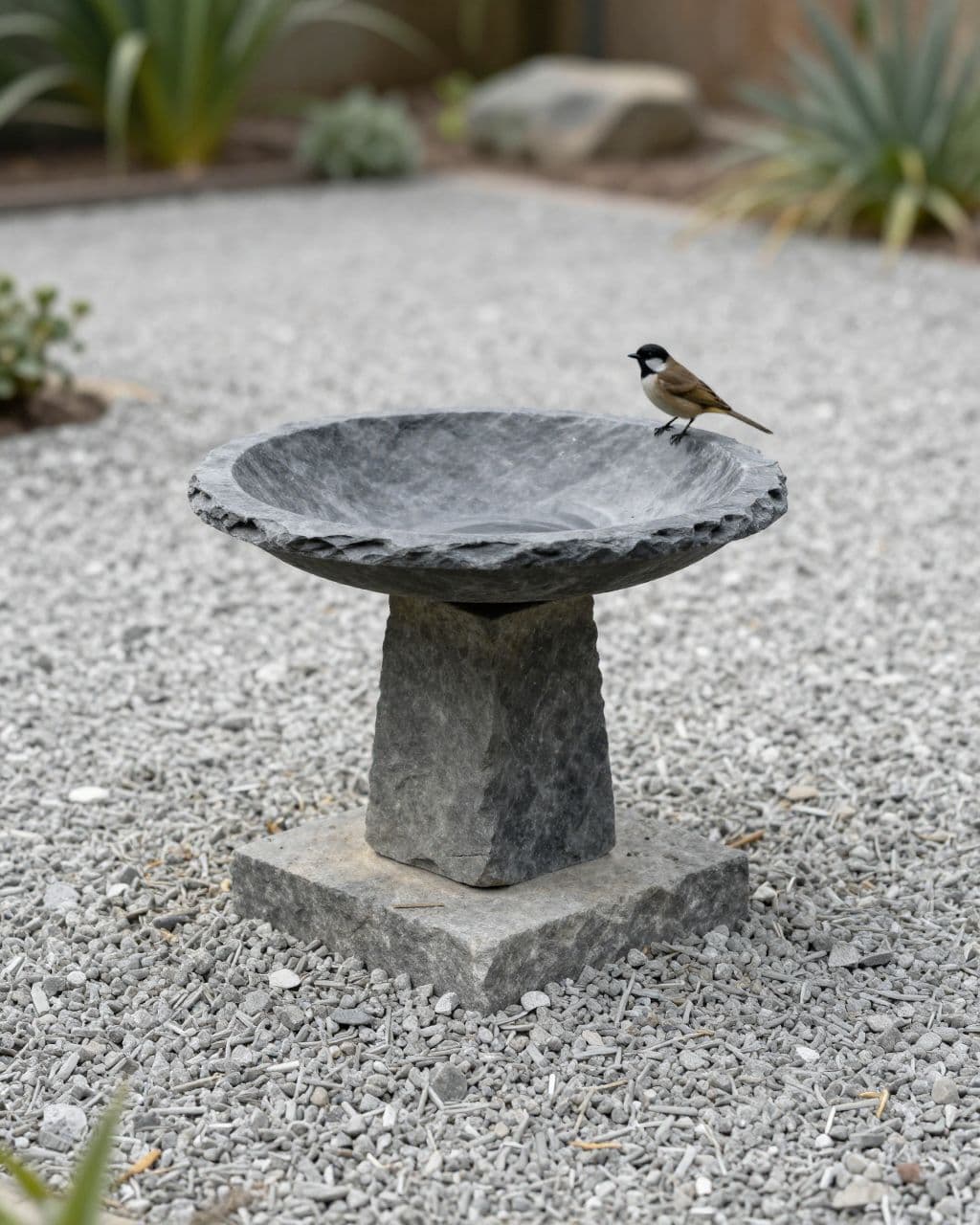
A wide slate dish on a low stone block creates a clean, minimalist DIY bird bath. Its dark surface contrasts with pale gravel and green plants, so the basin feels intentional without adding a lot of decoration.
Choose a thick piece of slate with no sharp cracks or unstable corners. Set it on a level block, then test the basin with a small amount of water before you fill it.
This design fits modern gardens, narrow side yards, and simple patios. Leave a dry border around the water so birds have a firm place to land and move toward the basin.
18. Blue Saucer on a Terracotta Pot
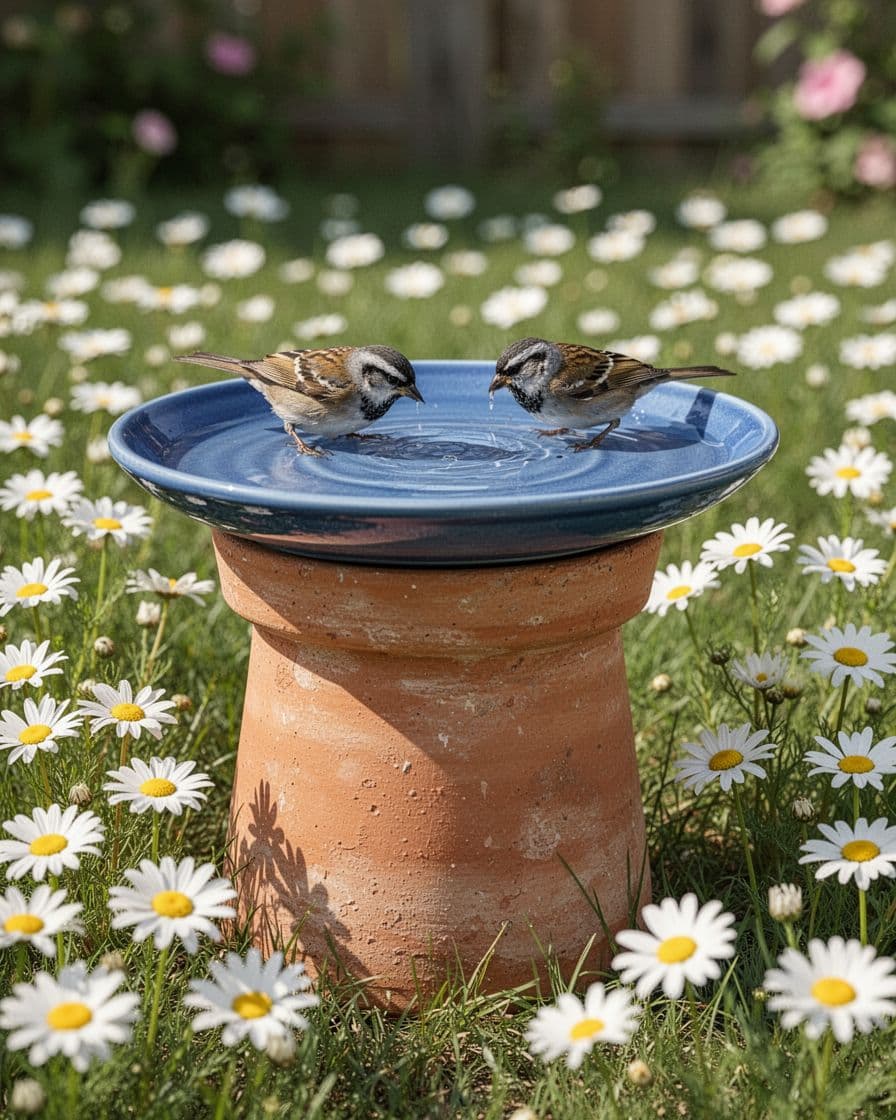
A blue saucer on a terracotta pot creates a cheerful cottage garden detail. The cool blue bowl stands out against the warm clay pedestal, especially when you place it near white daisies or soft green foliage.
Use a saucer with a broad base so the rim doesn’t flex or crack under pressure. Secure the saucer to the pot with outdoor adhesive if you want a more permanent bath.
Keep the water shallow and add a few pebbles for grip. The Connecticut Audubon bird habitat handout also highlights shallow, gently sloping surfaces that help birds stand safely.
19. Pathside Stone Planter Bird Bath
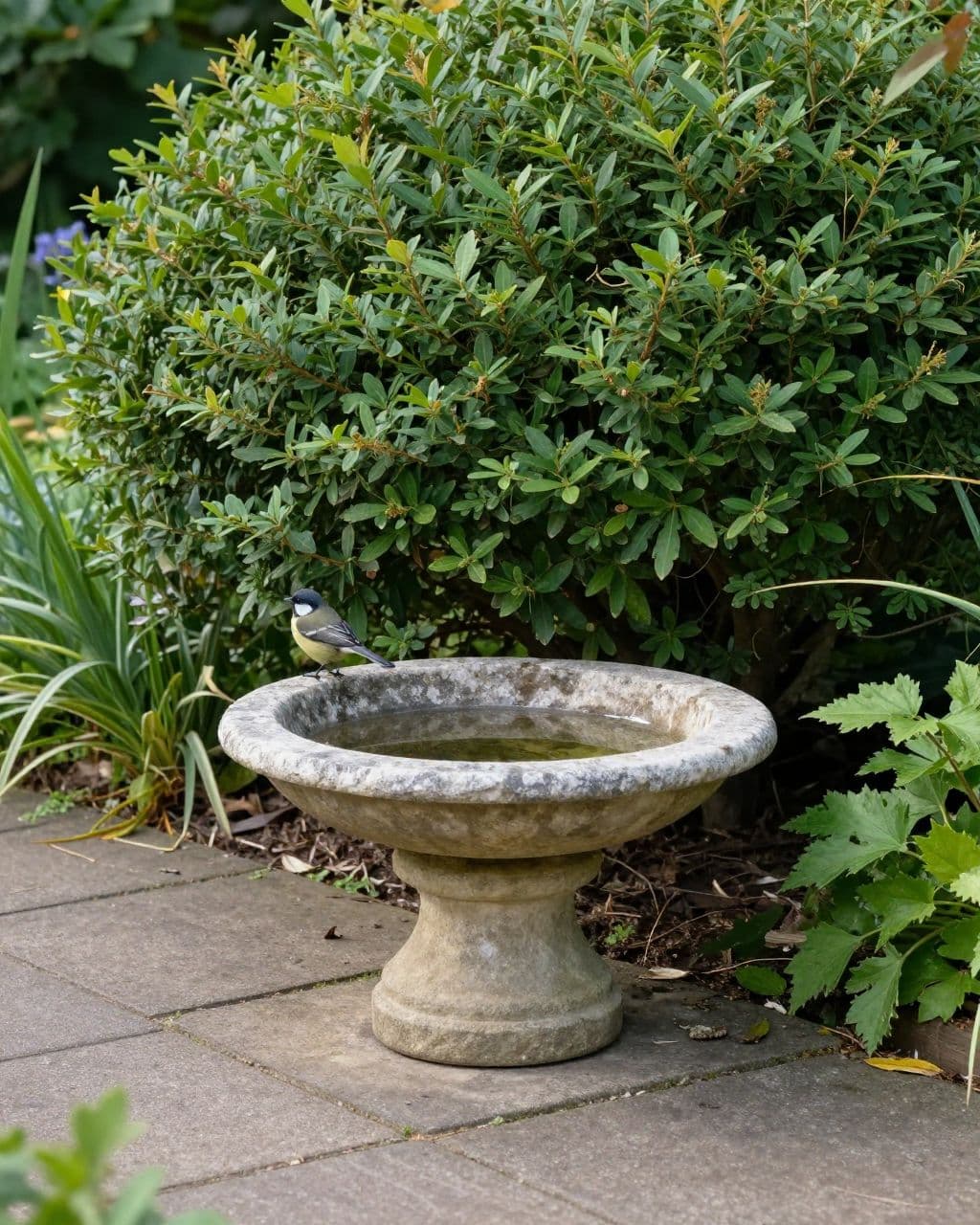
A shallow stone planter beside a garden path gives you a bird bath that feels connected to the rest of the yard. The location makes it easy to notice when the water needs changing, while nearby shrubs provide useful cover.
Leave a clear space around the basin so birds can see approaching cats and other threats. A partly shaded position also helps the water stay cooler during warm afternoons.
Choose a planter with a wide interior and a low rim. If the basin holds more than 2 inches of water, add stones or a raised insert to reduce the depth.
20. Concrete Bowl on a Cedar Post
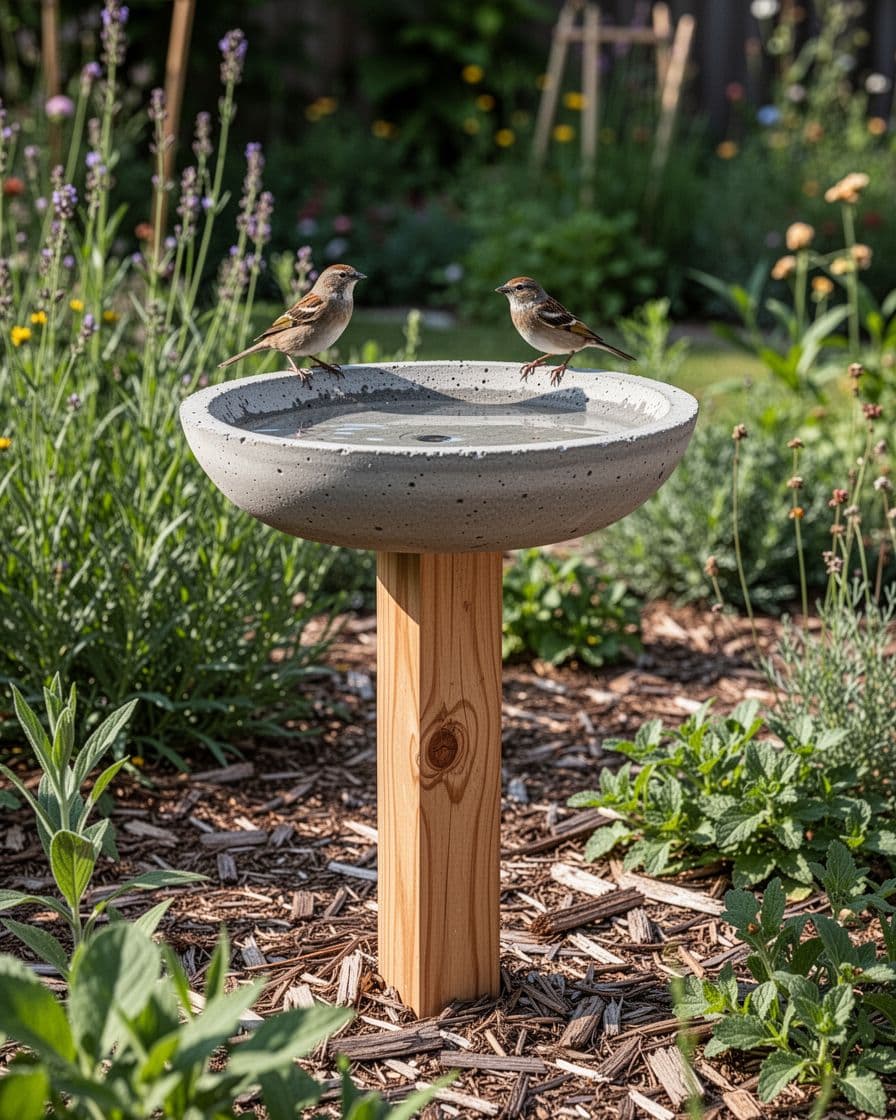
A concrete bowl on a cedar post gives you a classic raised bird bath with a strong, natural profile. The design fits native plant beds because the wood and concrete echo the colors and textures around them.
Use a post with a broad, buried base so the bath stays upright in wet soil and heavy wind. Set the bowl level, then check the structure again after the ground settles.
Raised baths offer a clear view from nearby windows. Keep the bath close enough to shrubs for quick cover, but leave an open gap so birds can watch the surrounding yard.
21. Handmade Clay Bowl Bird Bath
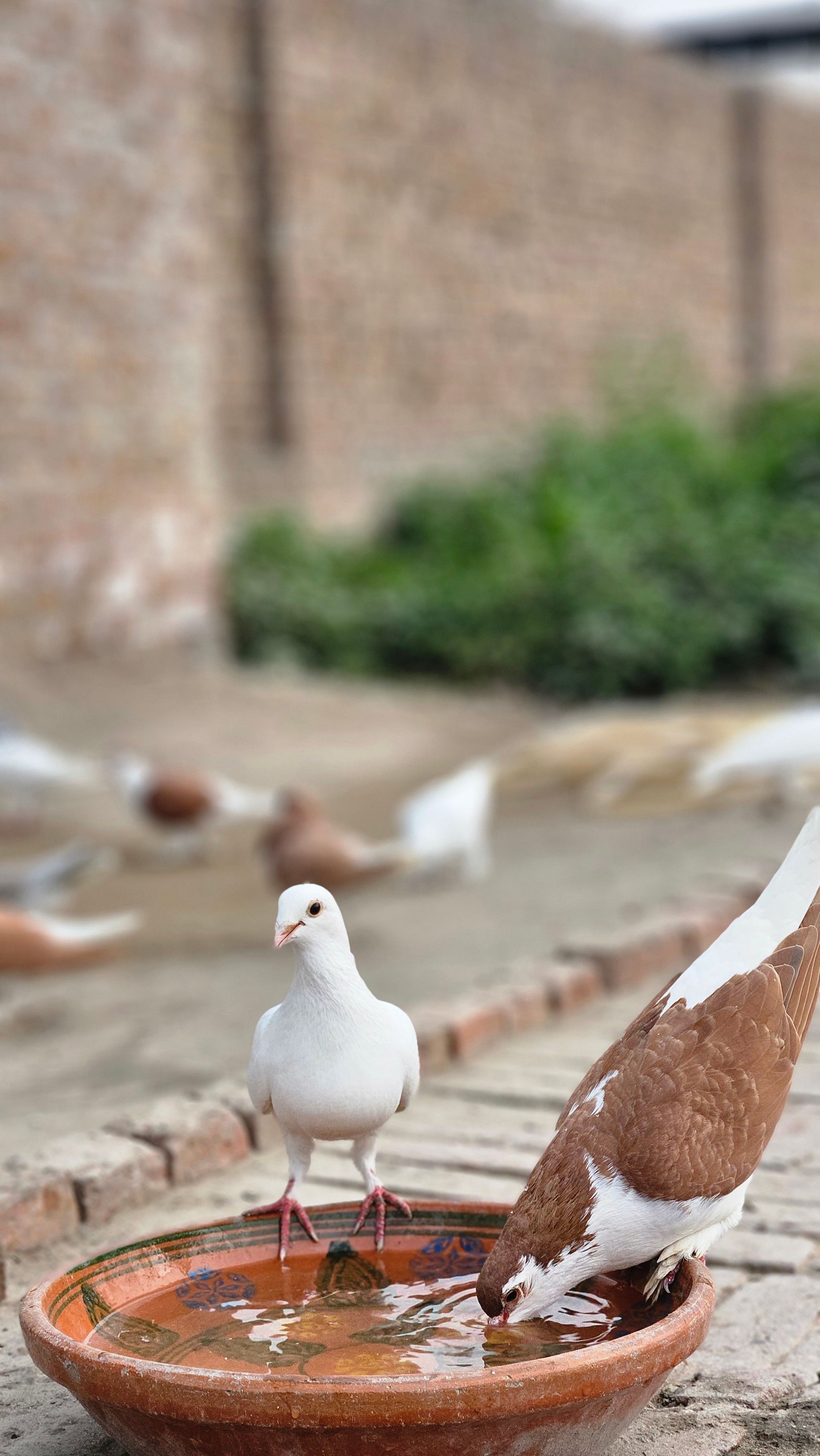
A handmade clay bowl gives you a soft, natural finish that works in a small courtyard or pebble garden. Set the bowl directly among smooth stones, or raise it slightly on a low ceramic base.
Choose a fired bowl with a sealed interior and a rim that feels smooth to the touch. Unglazed clay can absorb water, so a sealed surface makes cleaning easier and helps the basin hold water longer.
Place the bath where you can reach it every day. Audubon’s birdbath cleaning guidance recommends regular rinsing and scrubbing with a mixture of nine parts water and one part vinegar, without synthetic soaps or cleansers.
Keep Your DIY Bird Bath Fresh and Safe
Your favorite design will work best when you keep the basin shallow, stable, and clean. Refresh the water often, scrub away algae and debris, and keep a few flat stones inside when birds need more secure footing.
Choose one idea that suits your space, gather a shallow container and a sturdy base, then place your finished bird bath where you can enjoy the activity from a window or garden seat.