
19 Beautiful DIY Creek Bed Ideas for Drainage That Protect Your Yard
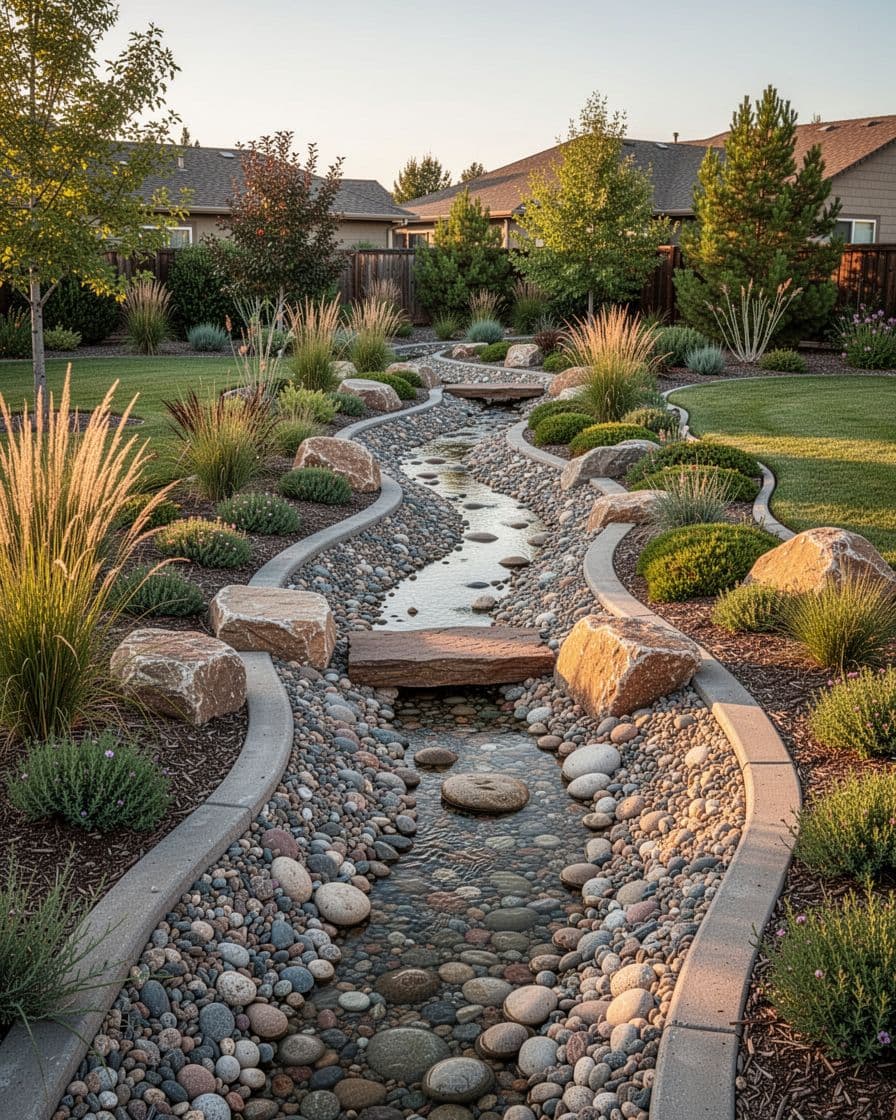
A DIY creek bed for drainage gives stormwater a clear path through your yard while adding texture, shape, and planting space. These 19 ideas show you how to pair rock, gravel, grading, and plants for a creek bed that looks like part of the landscape.
19 DIY Creek Bed Ideas for Drainage
1. Winding Rock-Lined Creek Bed
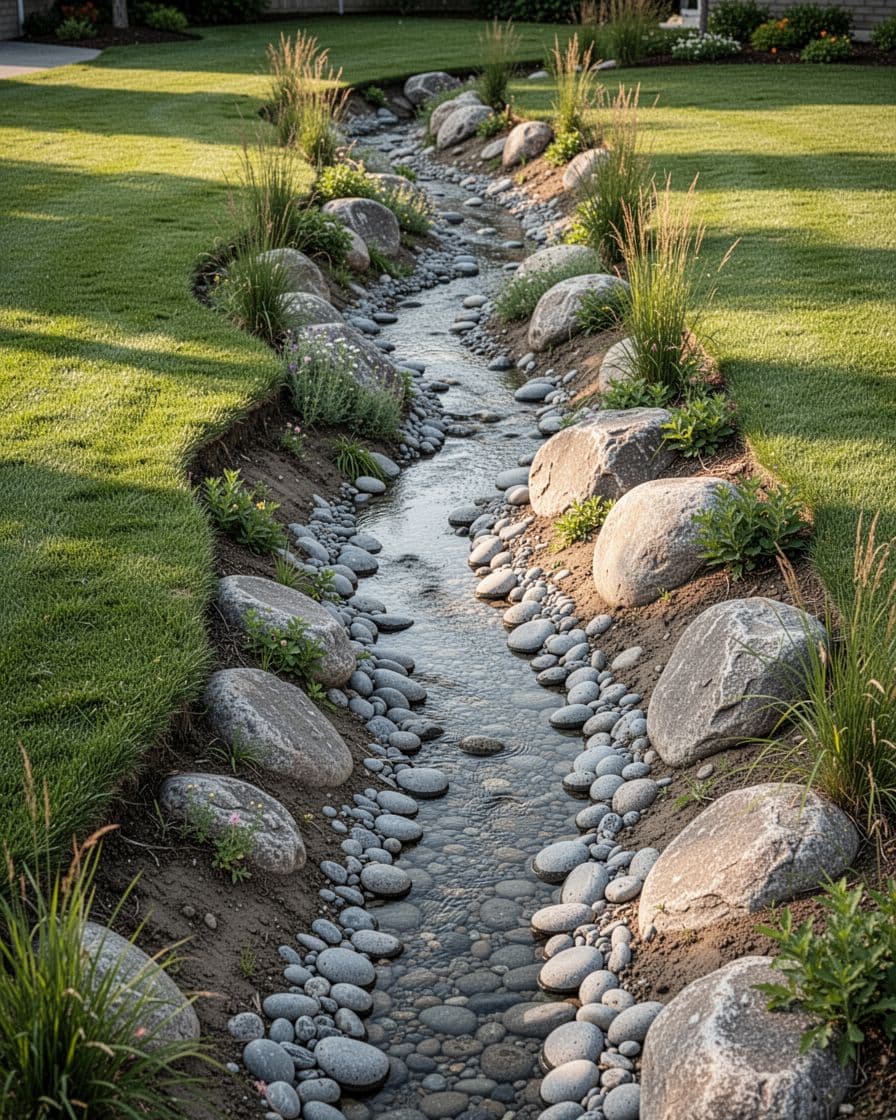
A winding creek bed follows a gentle curve through the lawn and gives runoff a natural route away from your house. Smooth gray river rocks create the main channel, while larger boulders anchor the bends and keep the design from looking too tidy.
Keep the center lower than the edges so water stays in the channel during heavy rain. Add low grasses along the border, but leave enough open space for you to remove leaves and check for washouts.
A broad curve also slows water better than a narrow, straight trench. However, avoid sharp turns because fast runoff can cut into the outside edge and move soil into the lawn.
2. Downspout Runoff Channel
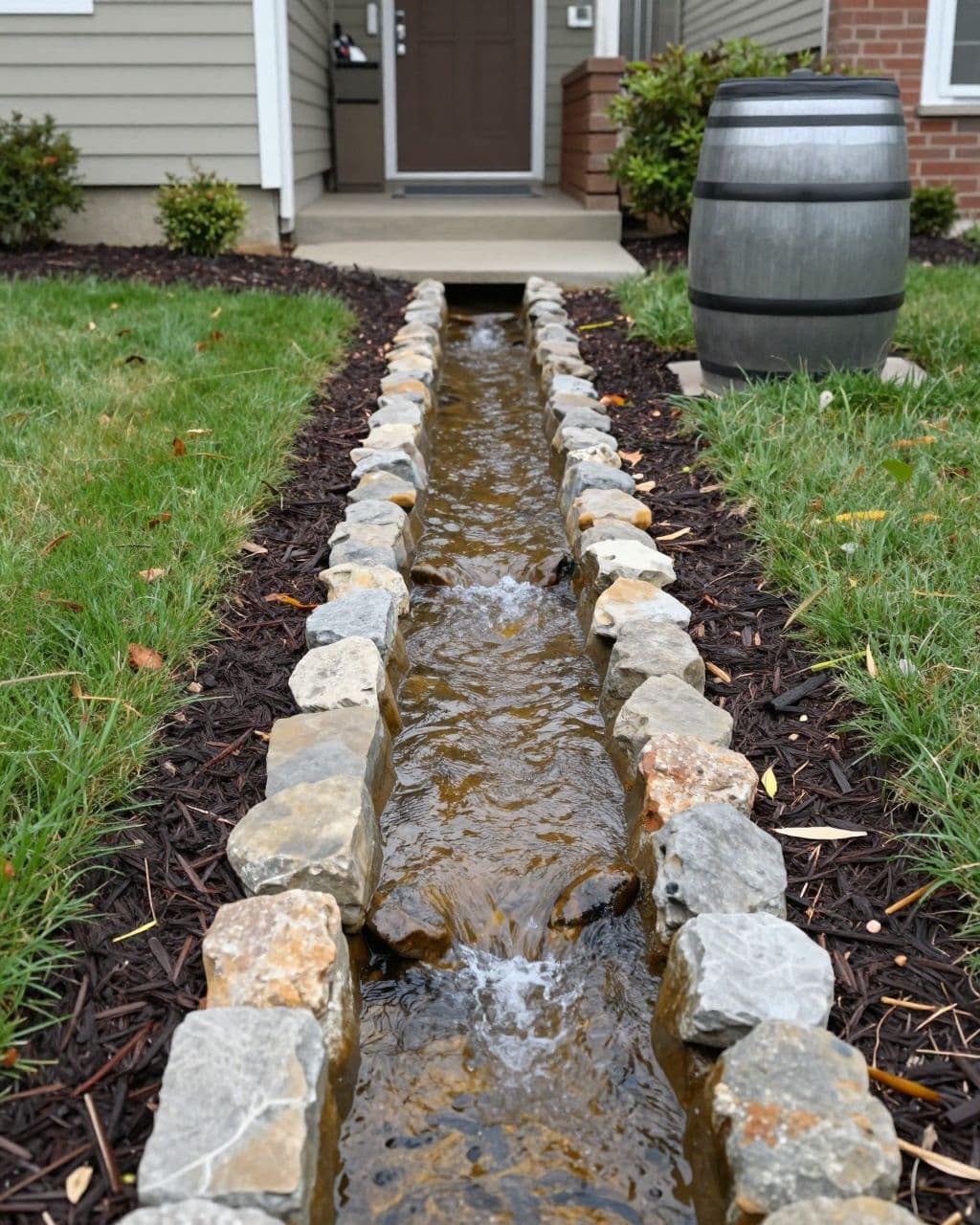
Start your creek bed beneath a downspout when roof runoff creates puddles near the foundation. A stone-lined channel can carry water across the yard toward a lower planting area, a gravel basin, or another approved outlet.
Place a downspout extension beneath the rock so water enters the creek bed instead of splashing against the first stones. Keep the finished channel pointed away from the foundation, and leave several inches of foundation visible above the soil.
Ground around a house should slope away from the foundation. The PNNL foundation grading guide describes a slope of about one-half inch per foot for the first 10 feet, when site conditions allow.
3. Sloped Side-Yard Creek Bed
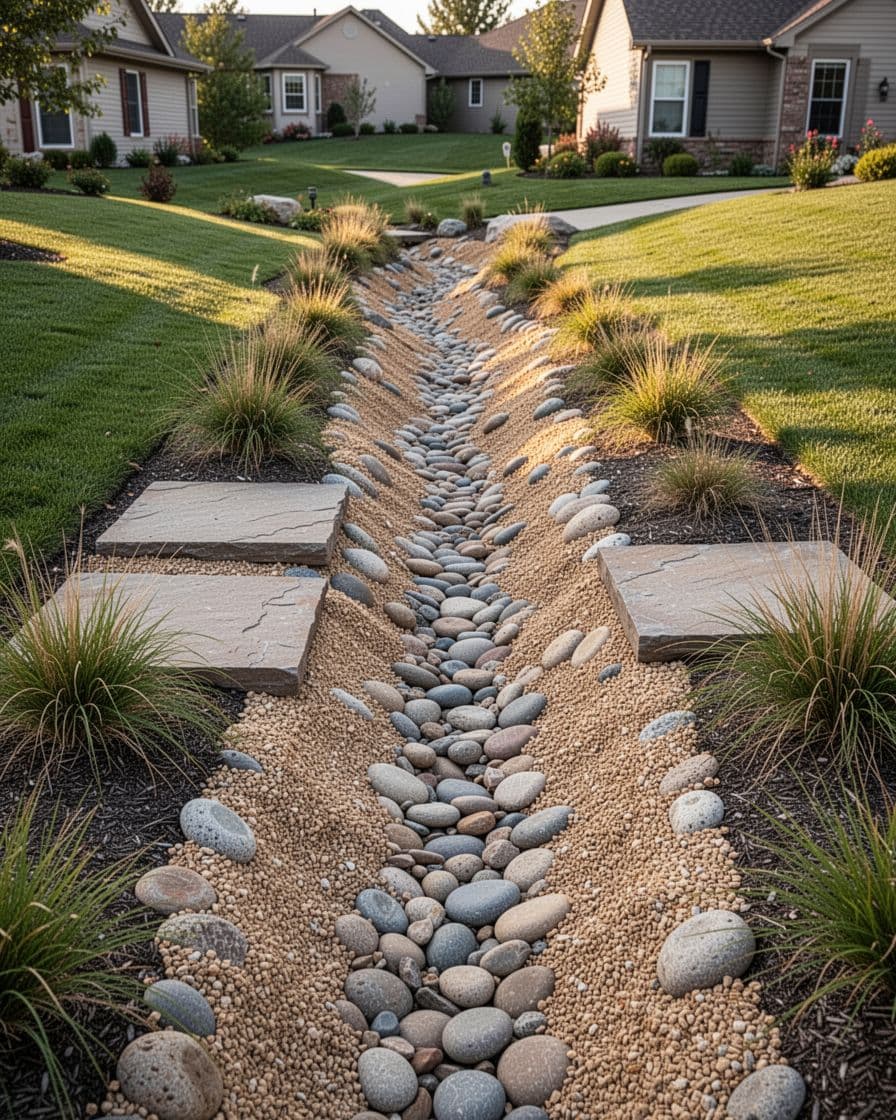
A sloped side yard already gives water a direction, so your creek bed can follow the existing grade instead of forcing a new route. Layer tan gravel beneath rounded river stones to create a soft transition between the channel and the surrounding grass.
Use flat stones as stepping points where you need to cross the side yard. Set each stone firmly into the gravel so it sits level and doesn’t wobble when the ground becomes wet.
Fast water can scour a sloped channel, so place larger stones at changes in grade. Plants with strong roots also help hold the soil along the upper edges, especially where rain reaches the creek bed from a driveway or roof.
4. Rock-Lined Catch Basin
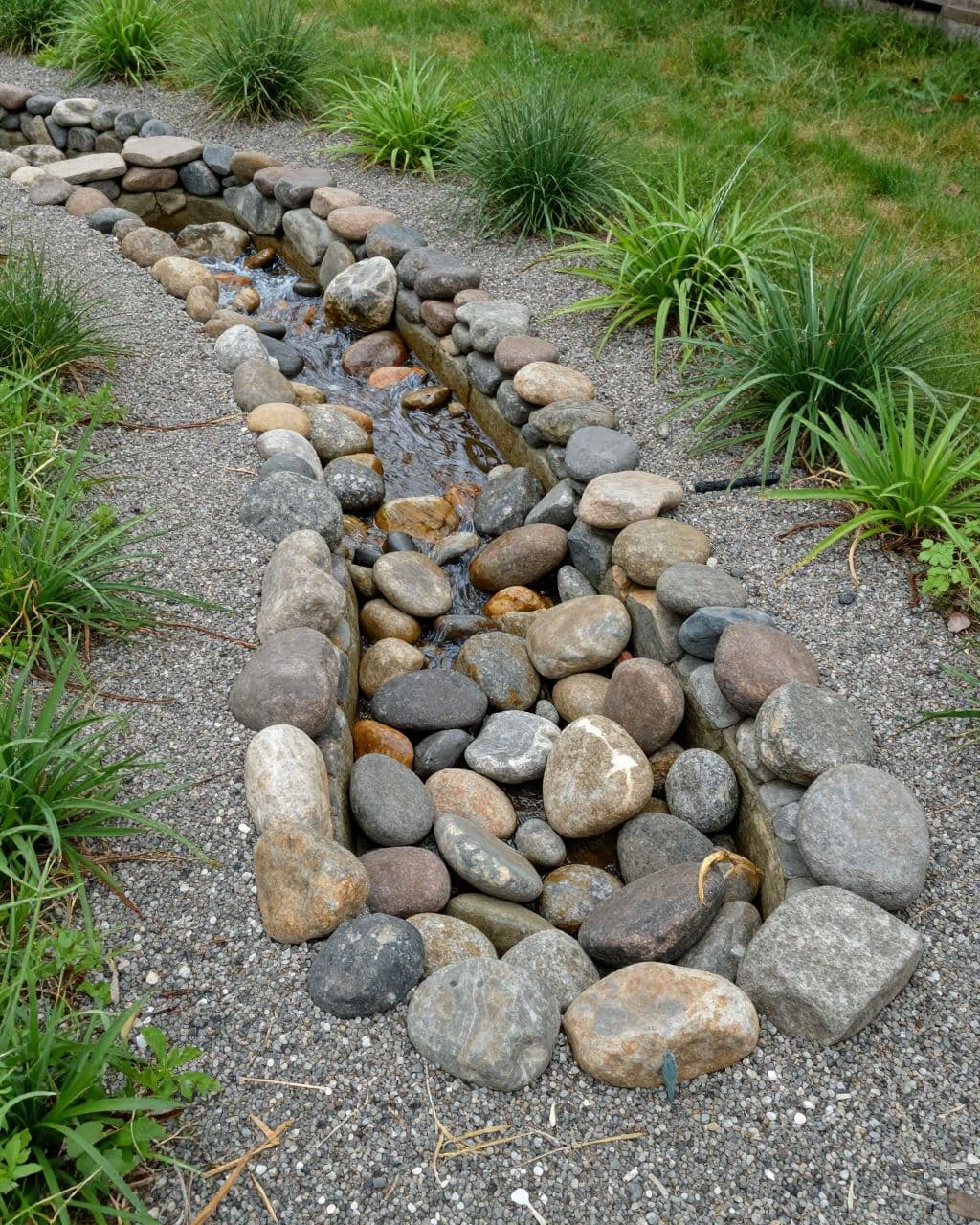
A catch basin gives runoff a place to collect before it spreads into the soil. Build the lower end wider and slightly deeper than the main channel, then line it with cobbles and crushed gravel.
The basin works well at the bottom of a slope or where several small drainage paths meet. Use rounded stones around the edge and larger rocks in the center to break up the force of incoming water.
Check the basin after major storms because leaves and sediment can fill the low spot. Remove debris before it blocks the channel, and watch for standing water that lasts longer than your soil can handle.
5. Creek Bed Garden Border
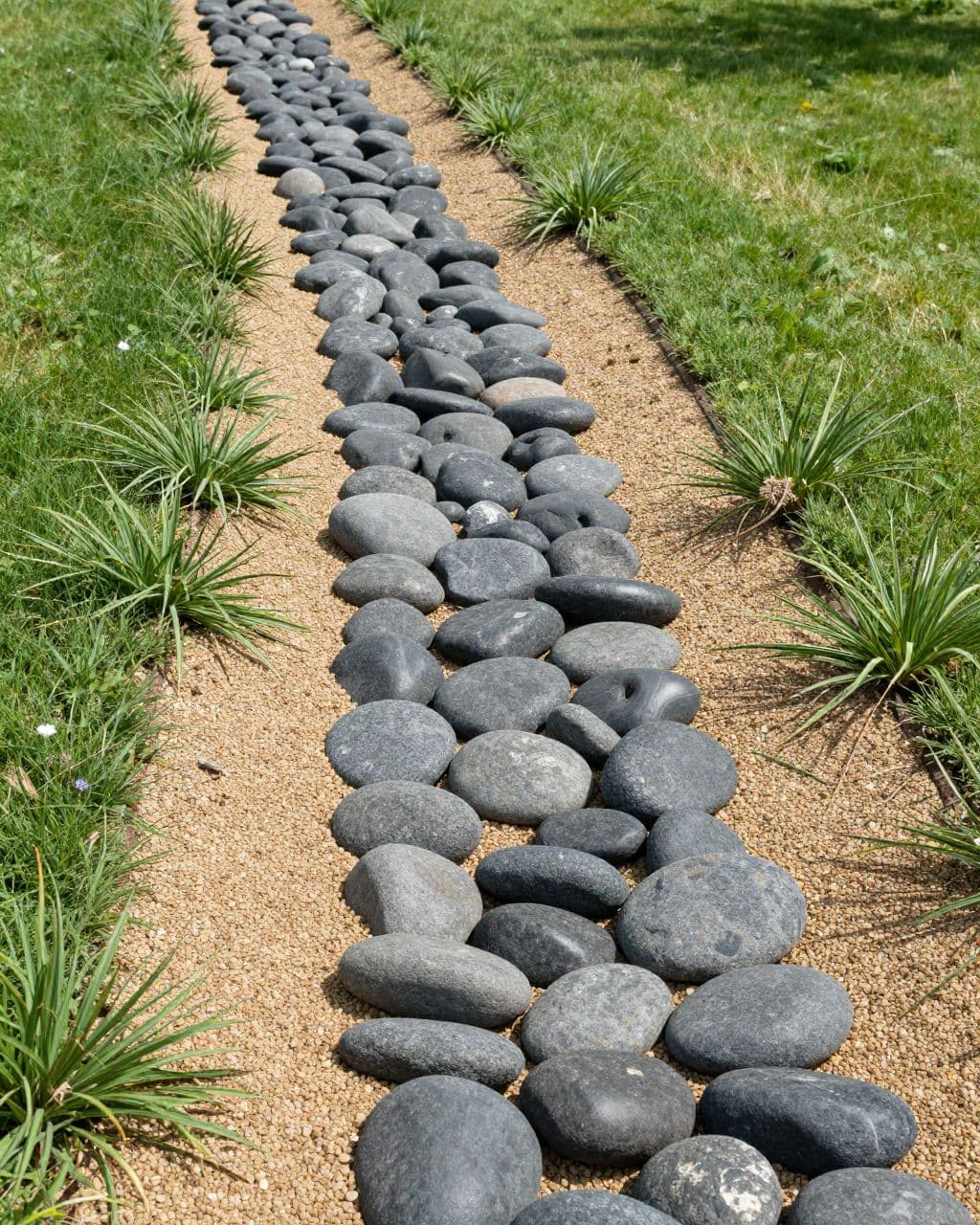
Use a dry creek bed as a border between your lawn and flower beds when you want drainage to look intentional. A narrow ribbon of dark gray rock beside warm tan gravel creates a clean edge without adding a hard wall.
Keep the channel lower than both planting areas so water moves through the center. A shallow curve feels more natural than a rigid line, and it gives you room to widen the bed near low spots.
Choose plants that can handle occasional wet soil near the creek edge. Place drought-tolerant plants farther away, where the ground drains faster and stays drier between storms.
6. Narrow Walkway Drain
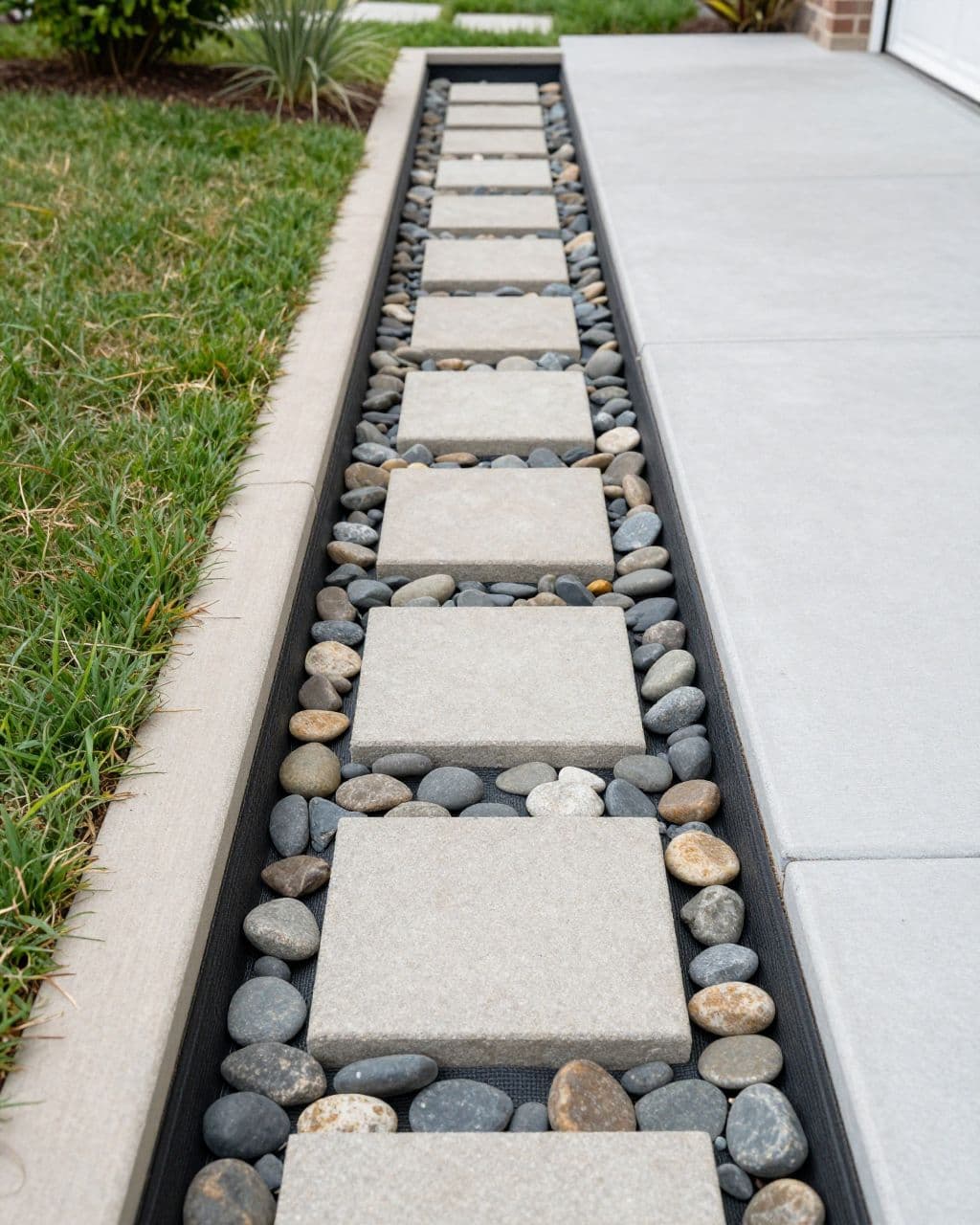
A narrow creek bed fits beside a walkway when your side yard has little extra space. The shallow channel carries water along the path while the stepping stones let you move between the front and back of the property.
Line the trench with landscape fabric that allows water to pass but limits soil movement. Cover the fabric with gravel and river rock so sunlight doesn’t break it down and weeds have less room to grow.
Leave a clear walking width beside the stones. Keep loose gravel out of the walkway because it can roll underfoot and make the path harder to use.
Before you dig, call 811 and wait for utility markings. Keep the channel outside marked utility corridors, since Virginia Cooperative Extension’s rain garden guidance also warns homeowners to avoid underground utilities and foundations.
7. Woodland Creek Bed
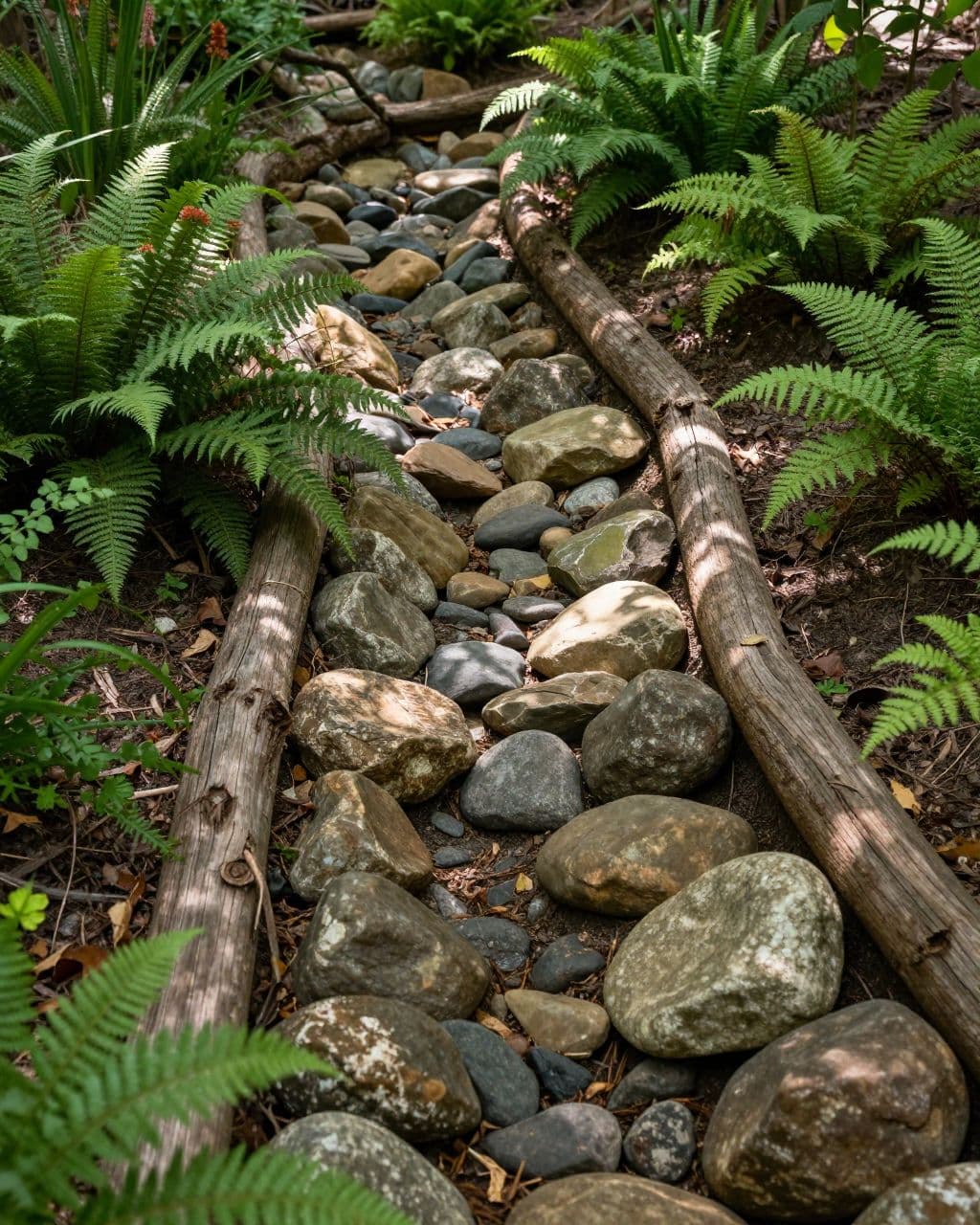
A woodland-style creek bed uses irregular local stones, fallen branches, and shade plants to create a loose forest-floor look. Ferns soften the edges, while mossy groundcover helps the channel blend beneath trees.
Place the largest rocks where the creek bed changes direction or drops slightly. Smaller stones can fill the gaps, but avoid packing every inch with gravel because a little open soil gives plants room to spread.
Keep wood edging outside the strongest flow path. Heavy water can shift branches and send them into a culvert, drain, or narrow section of the channel.
8. Modern Linear Creek Bed
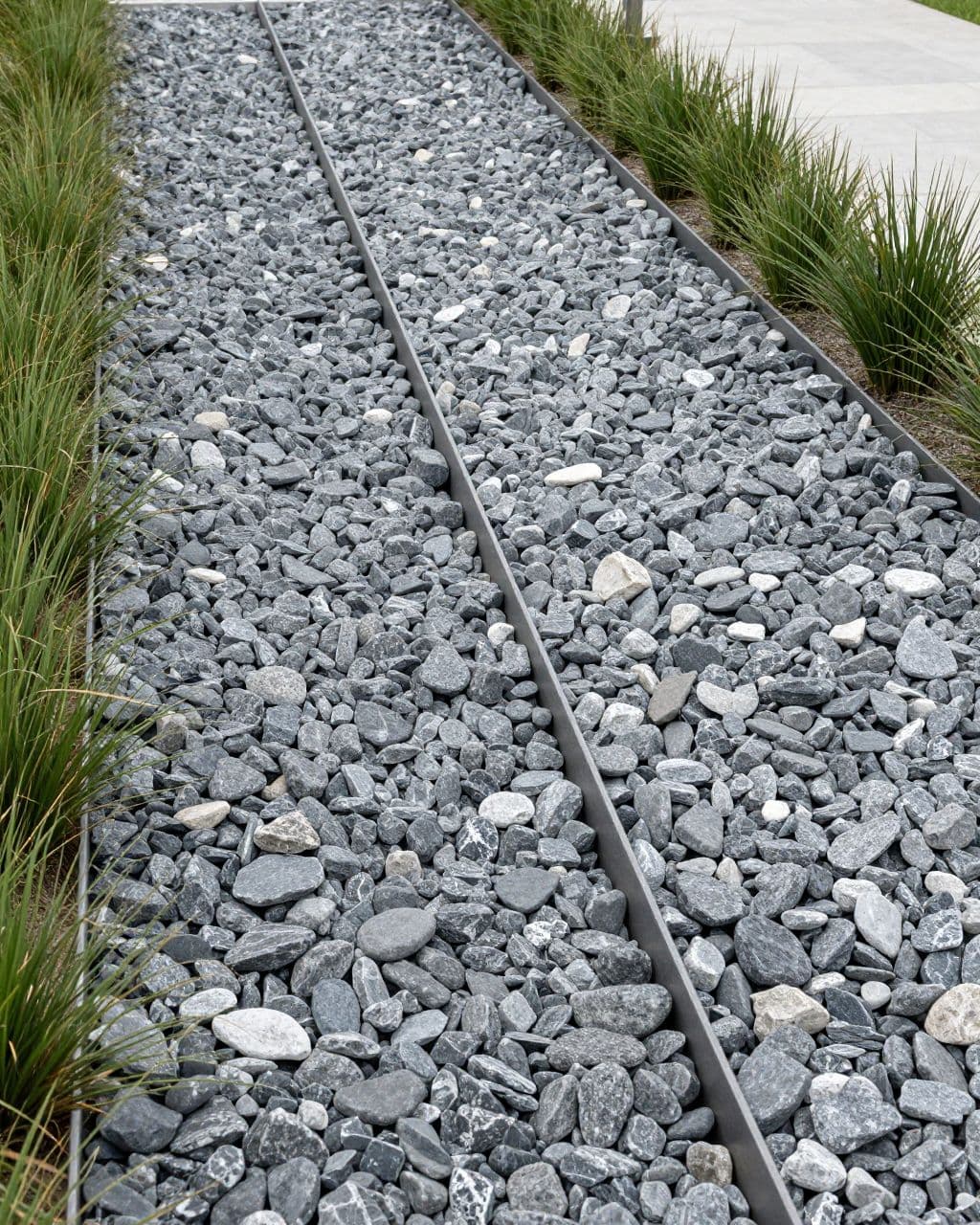
A modern creek bed uses a crisp line, charcoal stones, pale gravel, and restrained planting. Steel edging gives the sides a sharp finish, while sparse ornamental grasses keep the layout from feeling bare.
This style fits a contemporary yard with concrete paths, square patios, or simple fencing. Keep the bed shallow and wide rather than deep and narrow, especially when you want the rockwork to read as a designed feature.
Use one main stone color and one accent color for a calm composition. Place larger rocks in small groups instead of scattering them evenly across the entire channel.
9. Creek Bed Into a Rain Garden
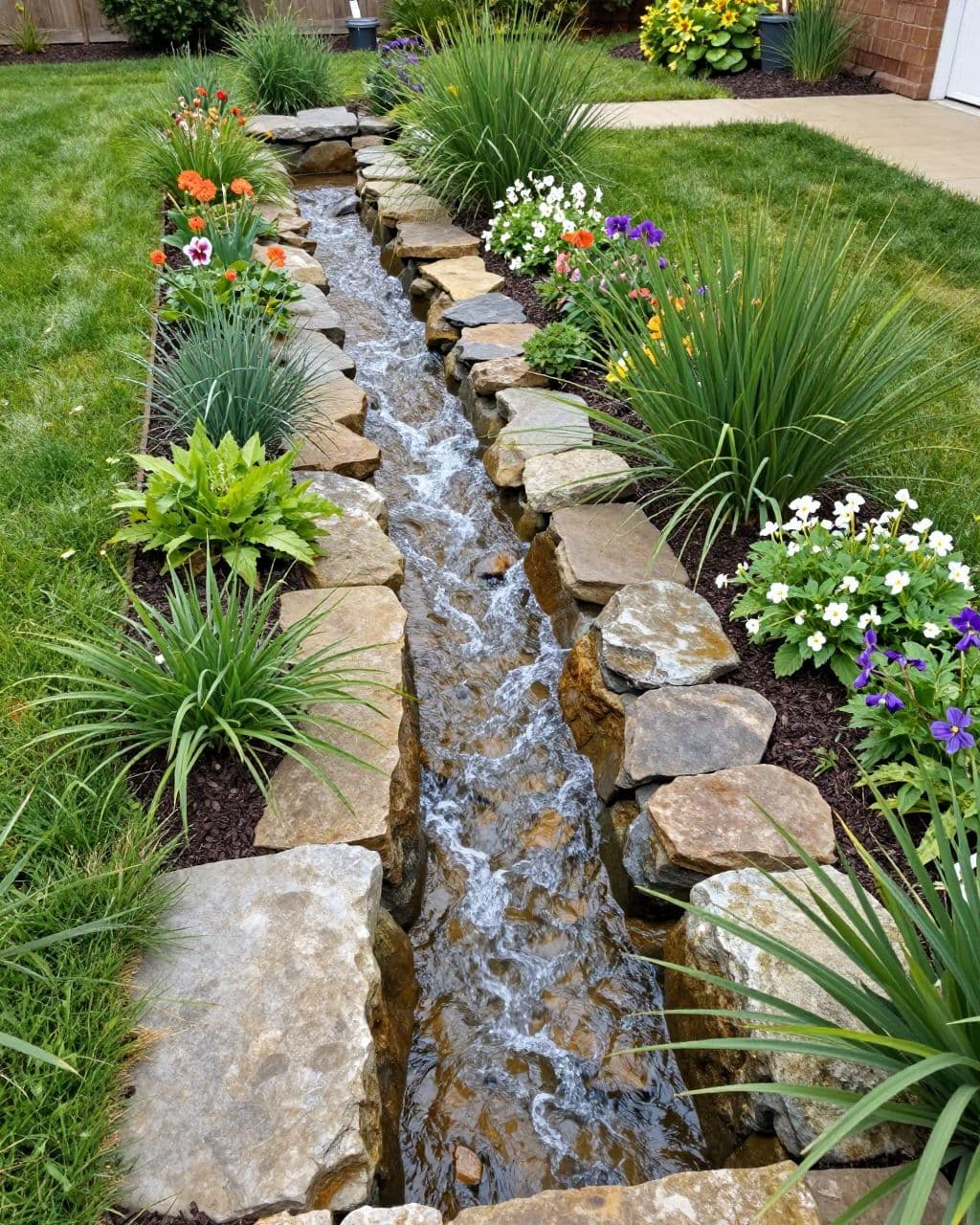
Let your creek bed end in a rain garden when your yard has a suitable low area that can absorb runoff. The rock channel guides water into a shallow planted basin, where soil and roots help hold moisture after a storm.
Choose native plants that tolerate both wet periods and dry weather. The EPA’s rain garden guide explains how these planted areas can reduce stormwater runoff from roofs and other hard surfaces.
Keep the rain garden away from the foundation and septic areas. You also need enough space for water to soak into the ground without creating a new wet spot beside a path, shed, or neighbor’s property.
10. Driveway Runoff Channel
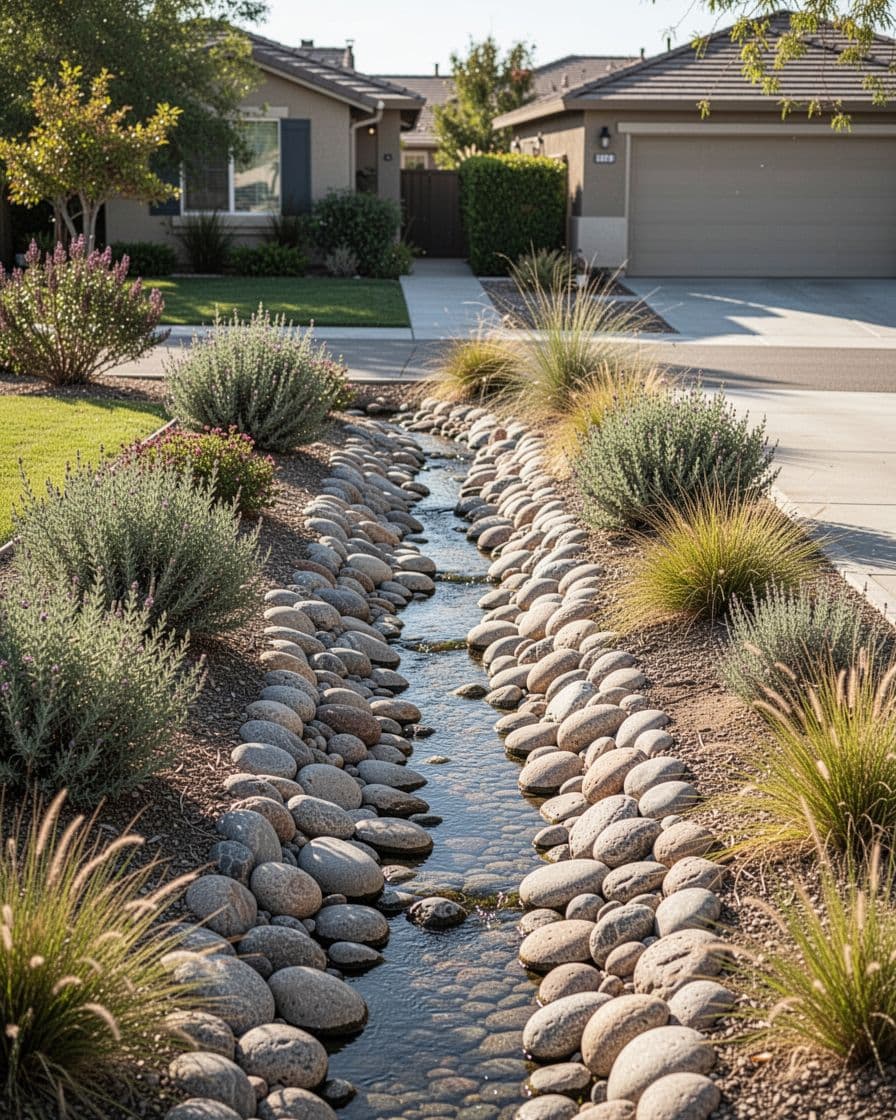
A driveway runoff channel catches water that flows across concrete or asphalt during rain. Place the creek bed along the lower edge of the driveway, where it can collect water without blocking vehicles or pedestrians.
Use larger stones near the driveway edge because moving water can push small gravel onto the pavement. A wide gravel shoulder also helps soften the transition and gives you space to sweep displaced stones back into place.
Keep the outlet stable and directed toward an area that can handle the added water. Local rules may limit where you can send stormwater, so check your city, county, or homeowners association requirements before connecting the channel to a street drain.
11. Creek Bed With Footbridge
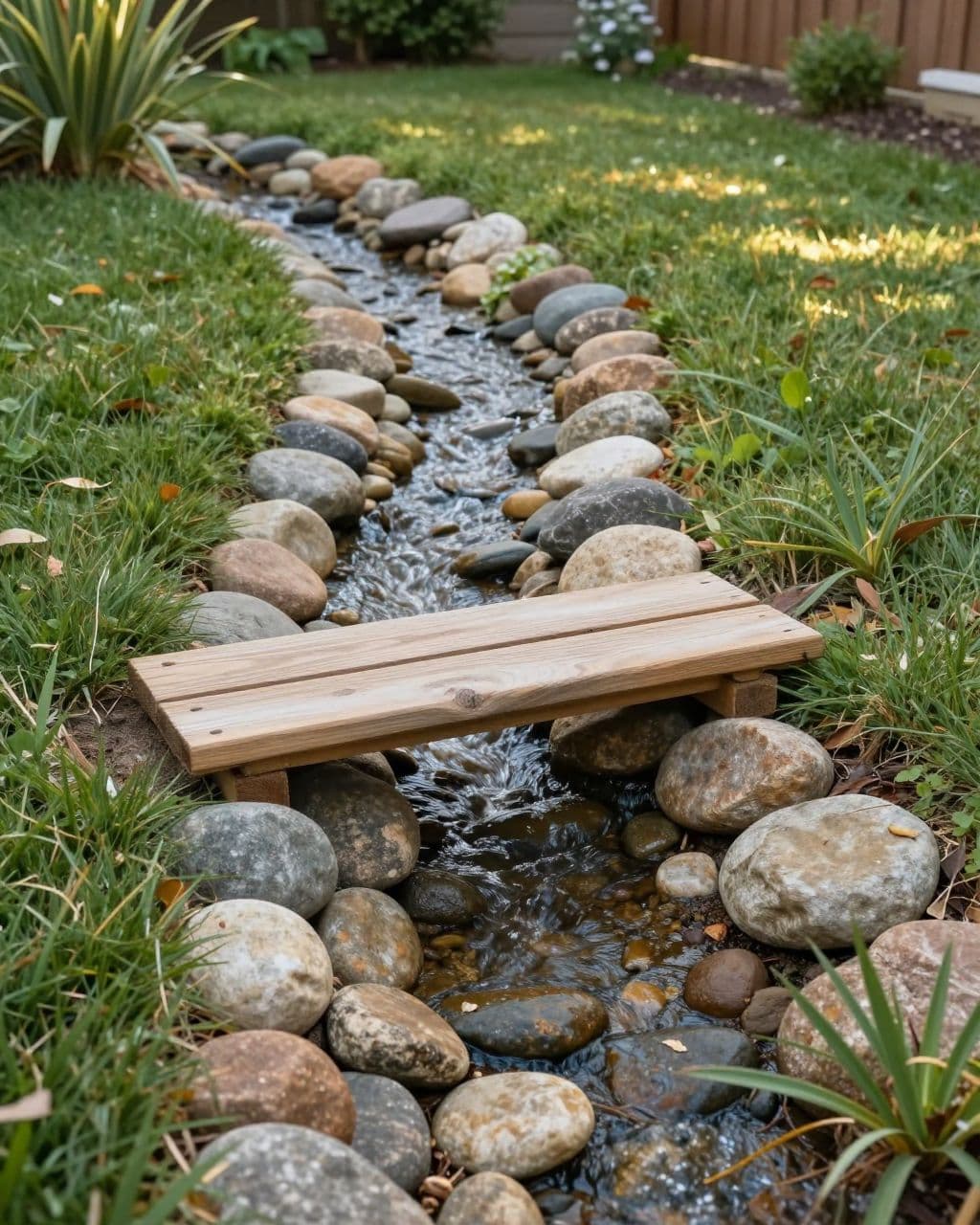
A small footbridge lets your drainage feature cross a garden path without interrupting the flow. Two sturdy wood planks create a simple rustic crossing, while rounded stones make the creek bed feel wider beneath it.
Set the bridge supports outside the main channel so they don’t trap branches or leaves. Anchor the ends on compacted gravel or firm stones, and keep the walking surface level.
Avoid placing a bridge where water rises over the top during normal storms. If the channel carries strong flow, use a wider crossing or move the path to a higher section of the yard.
12. Boulders That Slow Water
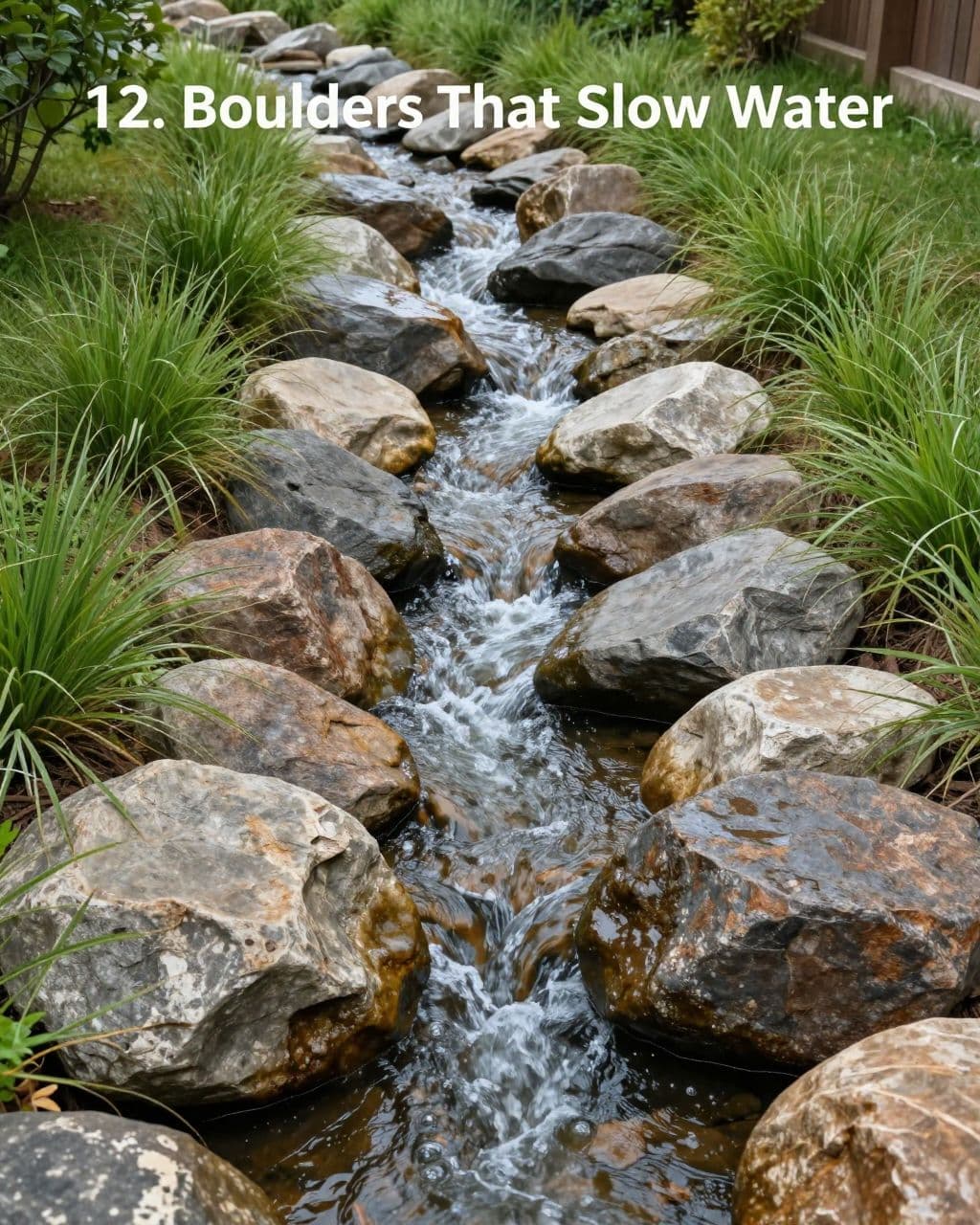
Large boulders break up fast runoff and help keep soil from washing through the channel. Set them in staggered positions so water moves around each stone instead of rushing in one straight line.
Bury about one-third of each large rock below the gravel surface. This placement helps the boulders stay in place when the channel fills and makes them look rooted in the landscape.
Put the biggest stones near the inlet, outlet, and steeper sections. Smaller river rocks work well between them, but they need a firm base so the first heavy storm doesn’t move them downhill.
13. Budget Gravel Creek Bed
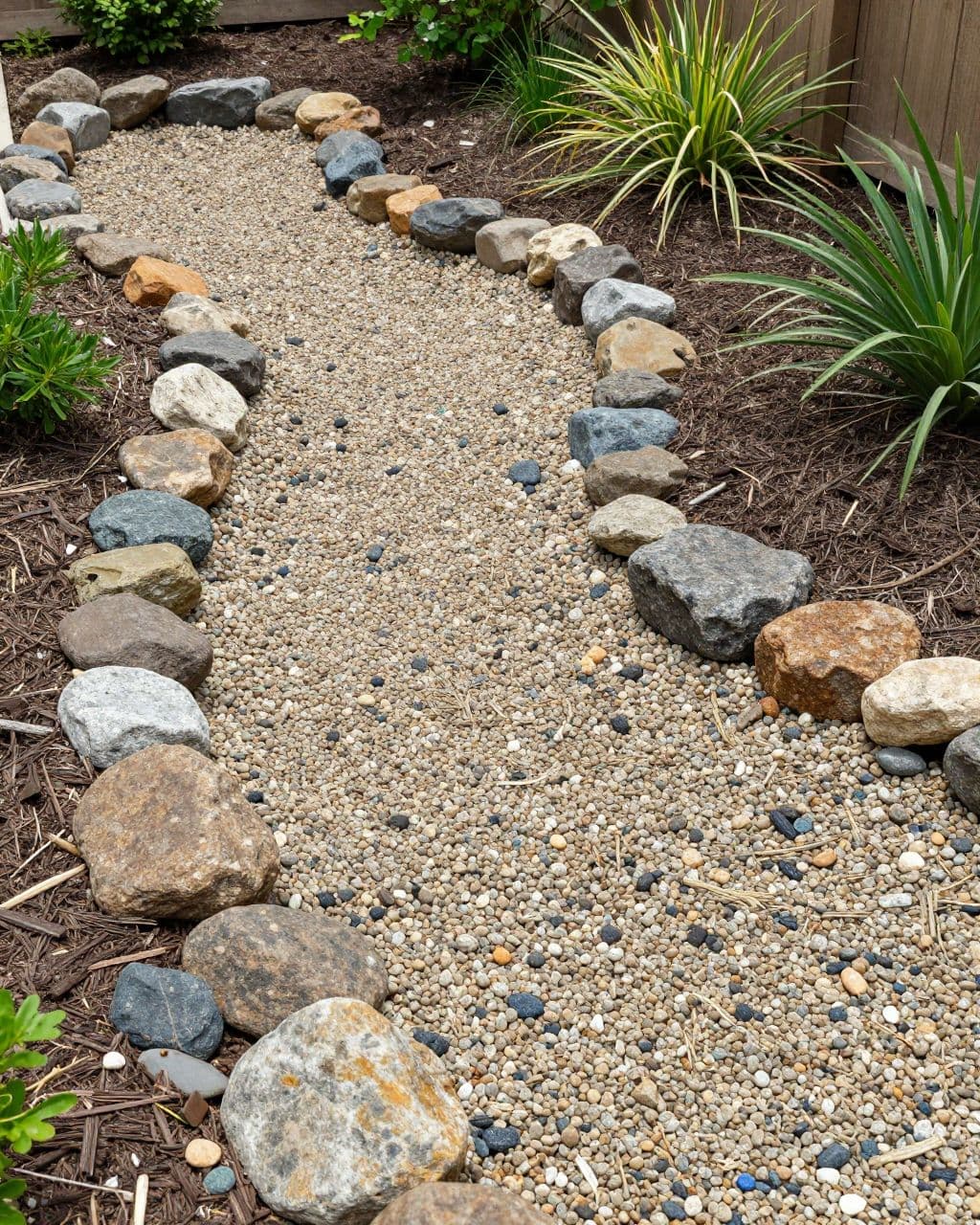
A budget creek bed can rely on pea gravel, local fieldstone, and a few larger rocks instead of expensive decorative stone. The mixed sizes create a natural texture while keeping the material cost under control.
Use the largest stones where water enters the bed or changes direction. Save smaller gravel for the quieter middle sections, where it can fill gaps and create a smooth surface.
Measure the channel before buying materials so you don’t guess at the volume. Landscape suppliers often sell stone by weight, while garden centers may sell it in bags, so compare the total coverage rather than the package price.
14. Drainage Beneath a Gate
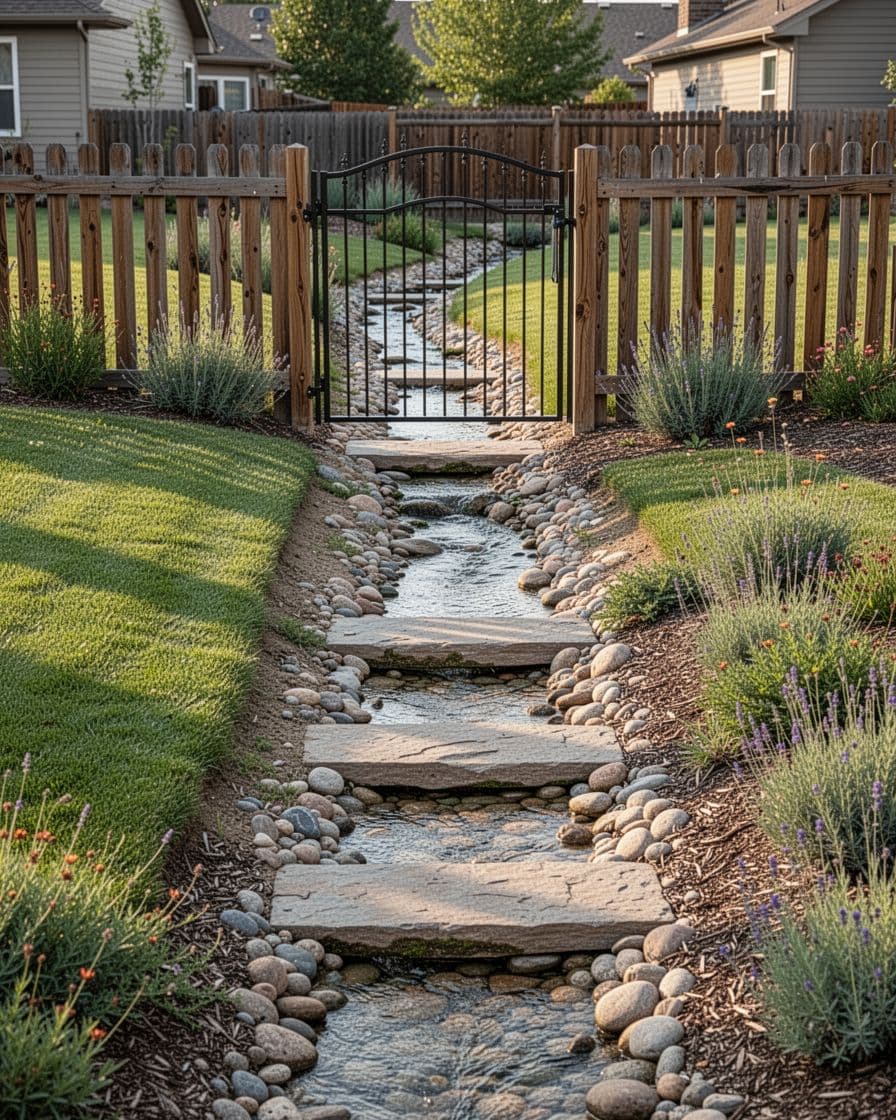
Run a shallow creek bed beneath a fence gate when water needs to pass between two sections of your yard. Flat crossing stones create a firm base under the gate, while the open channel keeps runoff moving during storms.
Leave enough clearance for the gate to swing freely. Gravel that sits too high can rub against the bottom edge, and stones that shift into the hinge area can stop the gate from opening.
Shape the channel so both lawns drain toward the center. Add groundcover along the edges, but keep plants trimmed away from the gate hardware and the main flow line.
15. Dark Stone Creek Bed Beside a Deck
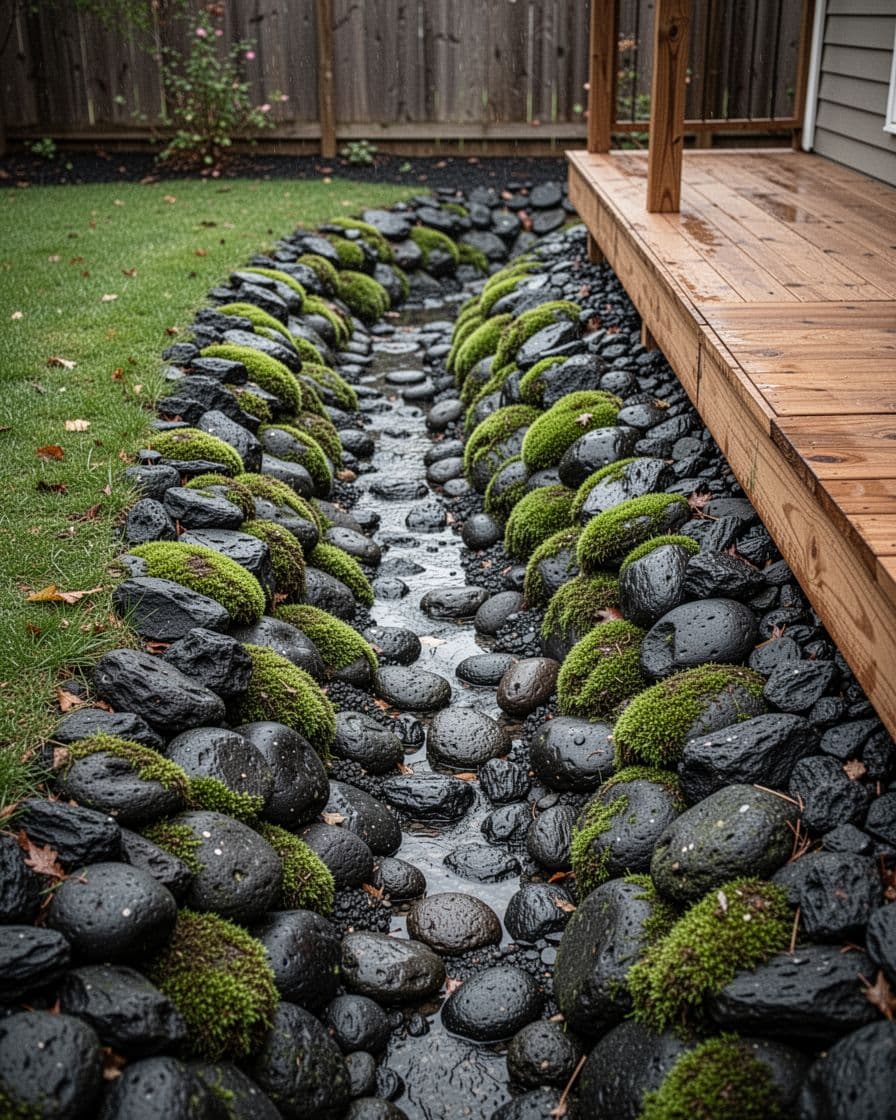
Dark basalt creates a moody creek bed beside a shaded deck. Its charcoal color pairs well with weathered wood, green moss, and simple planting, so the drainage feature feels connected to the outdoor living area.
Use lighter gravel in a thin inner layer if you want the channel to show more clearly. The contrast helps you see the slope and spot leaves or sediment after rain.
Keep the creek bed far enough from the deck supports to prevent soil erosion around posts. Water should travel beside the structure, not beneath it or toward its footings.
16. Small Dry Waterfall
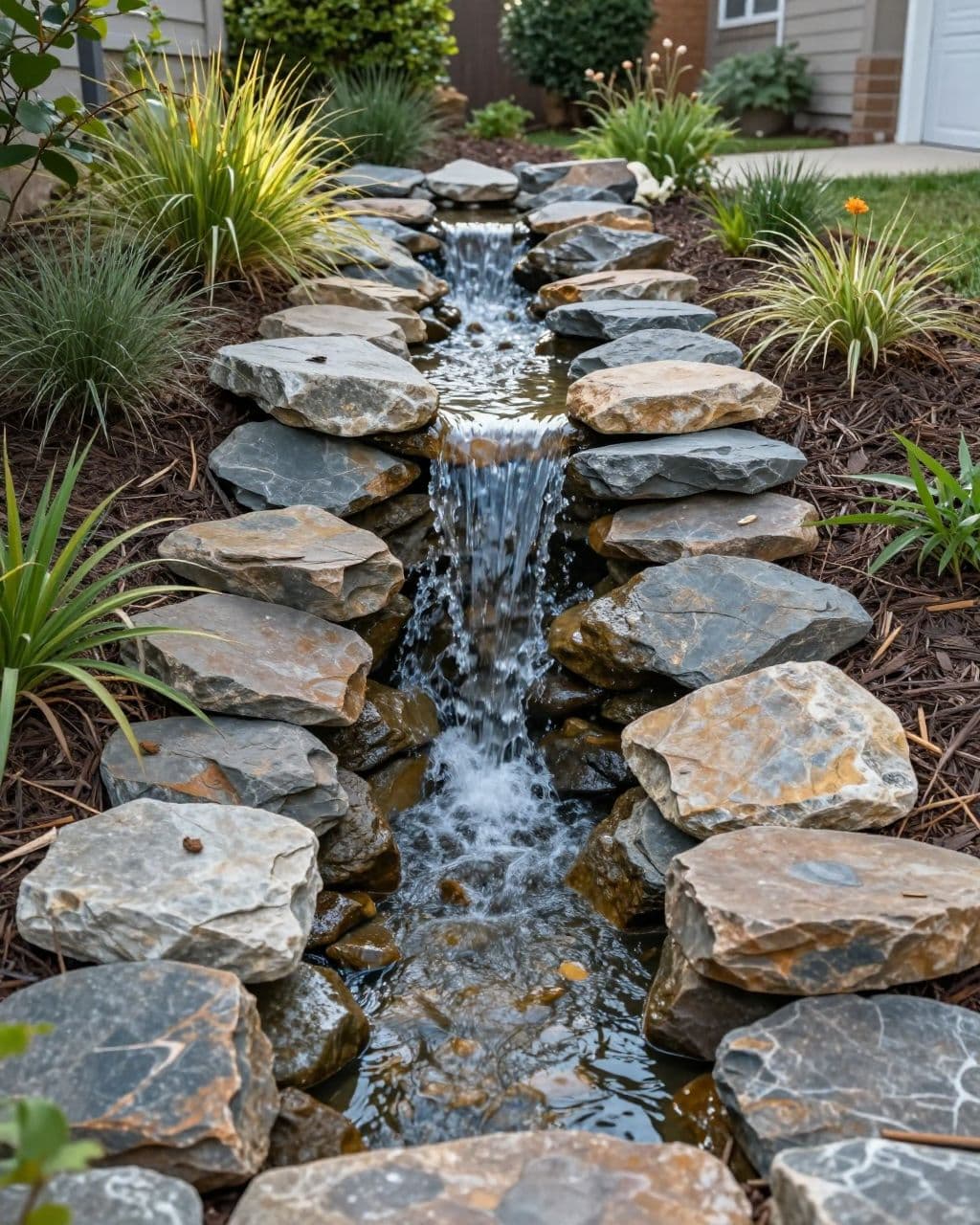
A small dry waterfall adds a short drop where your yard changes height. Flat layered stones create the ledge, while the channel below receives and spreads the water.
Build the drop in stages instead of making one tall wall. Each small step slows runoff and reduces the force that reaches the bottom of the creek bed.
Set the flat stones into compacted gravel and check that they don’t rock under pressure. Add a wider bed of larger stones below the drop because water lands with more force at that point.
17. Garage-Side Drainage
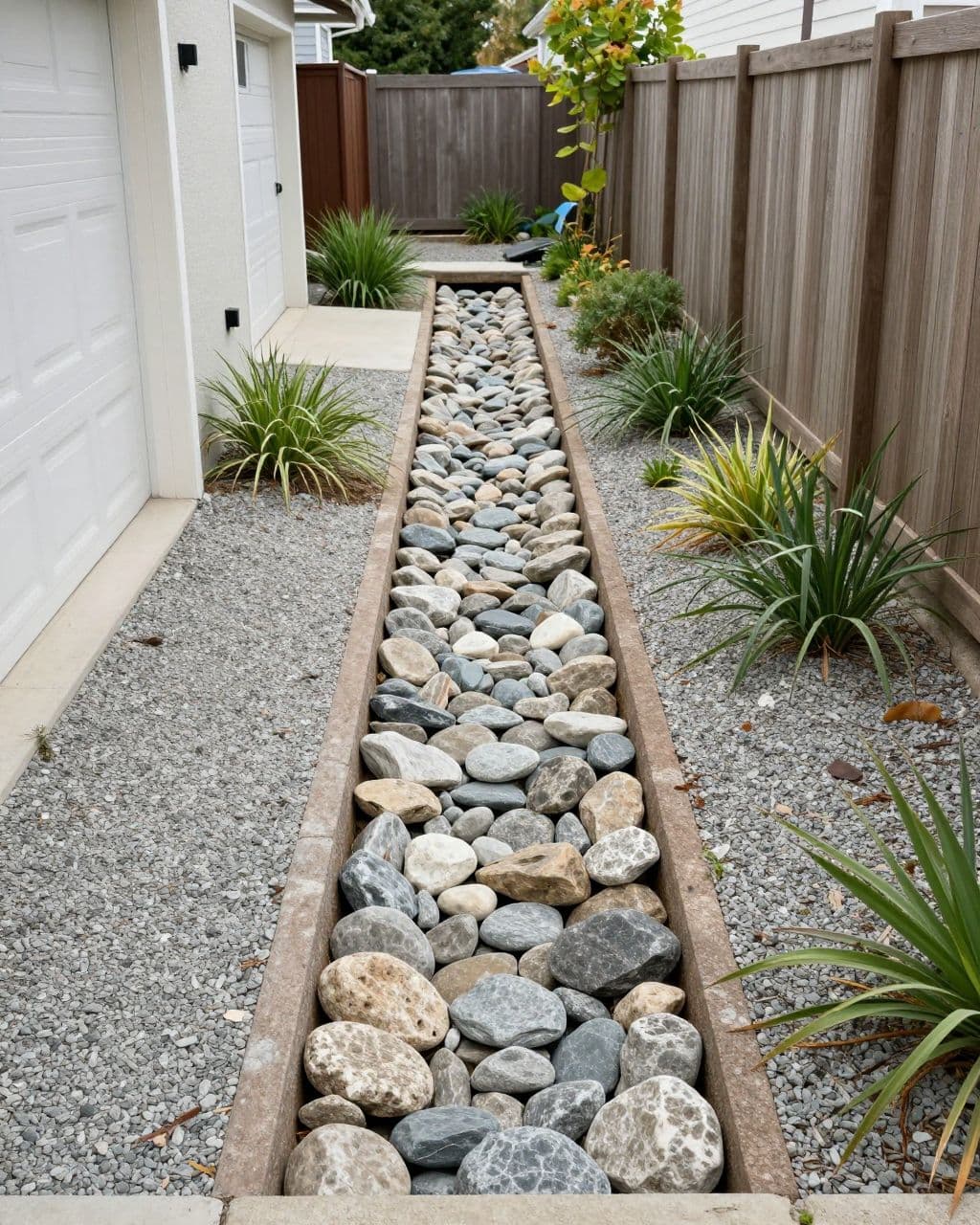
A garage-side creek bed works in a narrow corridor where roof runoff and hard paving send water toward one wall. Clean river rock keeps the channel open, while shade-tolerant plants soften the fence and garage edges.
Keep the channel lower than the garage slab and point it toward a safe outlet. You need enough room to inspect the wall, clear debris, and maintain siding without stepping into loose stones.
A narrow bed benefits from a simple shape. Avoid adding too many rocks or plants because crowded edges make it harder for water and tools to pass.
18. Wide Infiltration Swale
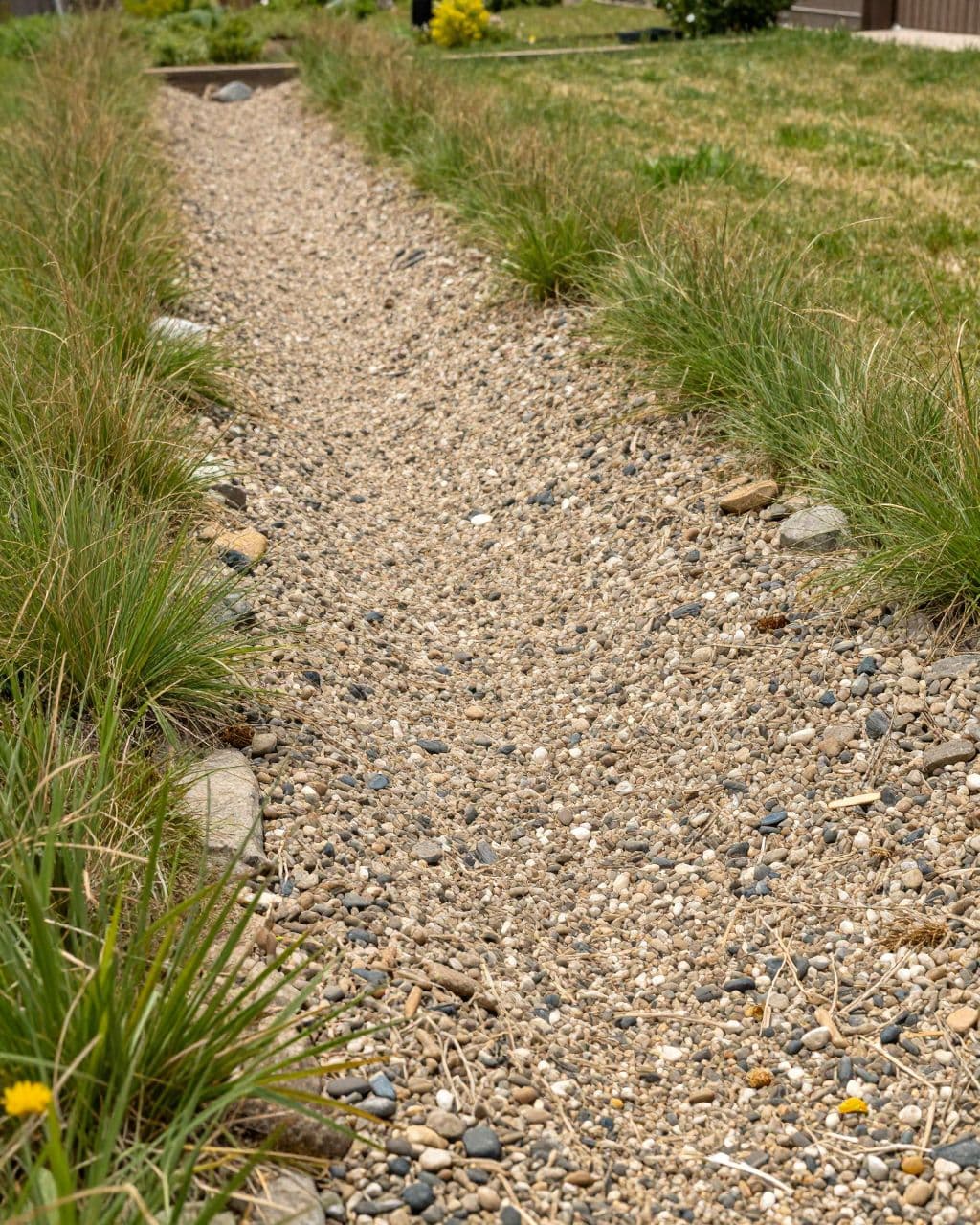
A wide infiltration swale spreads runoff across a shallow area instead of forcing all the water through a narrow trench. Rounded stones thin into gravel, and prairie grasses help the broad shape blend into an open lawn.
This design works best on a gentle slope with soil that absorbs water. Avoid placing it where water already sits for long periods or where the ground stays saturated near a foundation.
You can use a wide swale as the final section of a longer creek bed. The Oregon State University guide to home rain gardens explains how planted drainage areas can slow runoff, reduce erosion, and help water soak into the ground.
19. Finished Low-Maintenance Creek Bed
A finished creek bed looks natural when the stones, plants, and curves match the rest of your yard. Smooth river rock forms the channel, fresh mulch frames the plants, and native flowers add color without filling the drainage path.
Keep the center open so you can see where water travels. Trim plants that spread into the channel, remove leaves before they pile up, and replace stones that move after heavy rain.
For a broader plan, the USDA NRCS home drainage guide covers rain gardens and dry creek beds as ways to slow, spread, and sink runoff on your property.
Conclusion
Choose a creek bed shape that matches your yard’s natural slope, then use rock size, planting, and a stable outlet to guide water without creating new erosion. Save your favorite idea, mark your proposed route, call 811 before digging, and plan the first section so water moves away from your foundation.