27 Indoor Games for Kids That Make Staying Inside More Fun
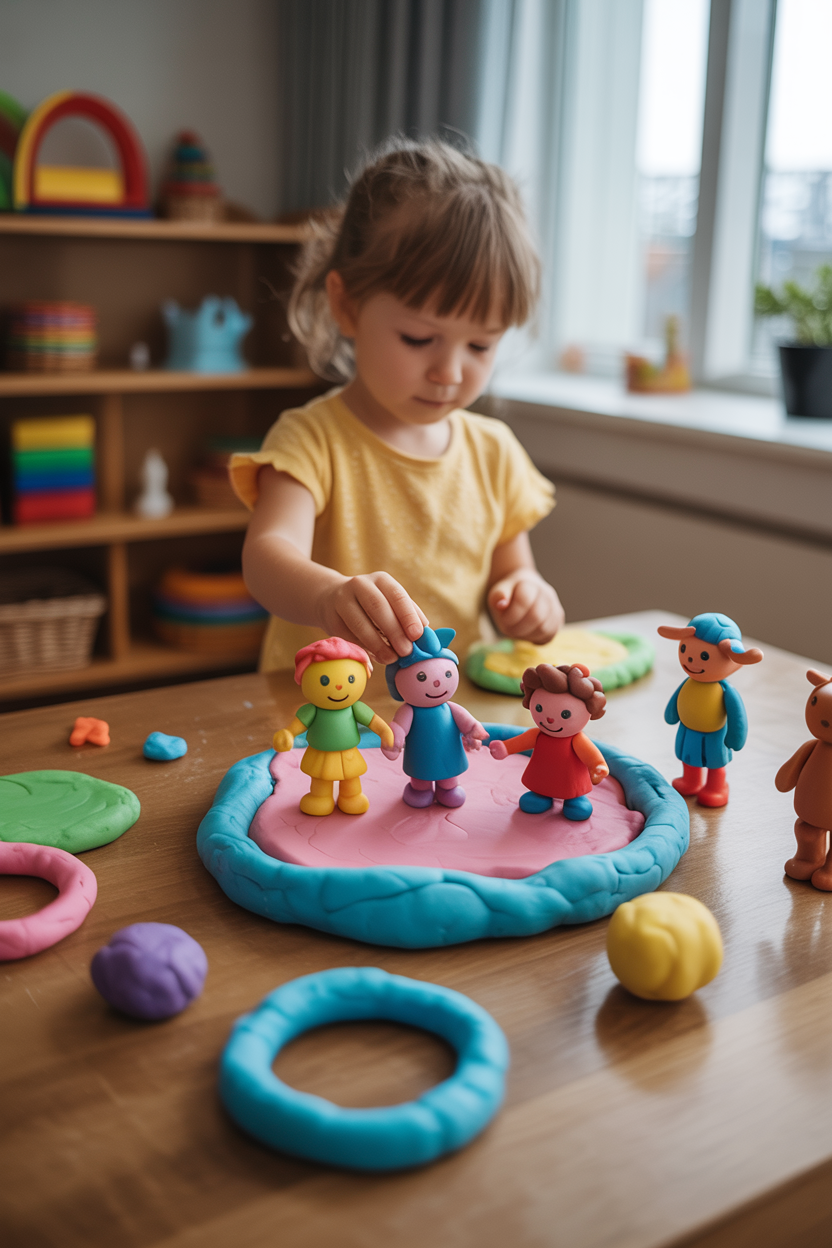
Rainy afternoons, school breaks, long weekends, and those “I’m bored” moments all have one thing in common: eventually, someone starts looking for something to do.
You don’t need a huge playroom or a closet full of expensive toys to keep kids entertained indoors. Some of the best indoor games use things you already have around the house, such as paper, tape, pillows, cardboard, cards, plastic bottles, or even a few kitchen supplies.
There are also several ideas that work beautifully for siblings, cousins, playdates, and family afternoons.
So the next time everyone is stuck inside, skip the frantic search for another screen-time activity and try one of these indoor games instead.
Games That Get Kids Moving
When children have too much energy and nowhere to go, a little movement can completely change the mood of the room.
1. Turn the Living Room Into a Color Hunt
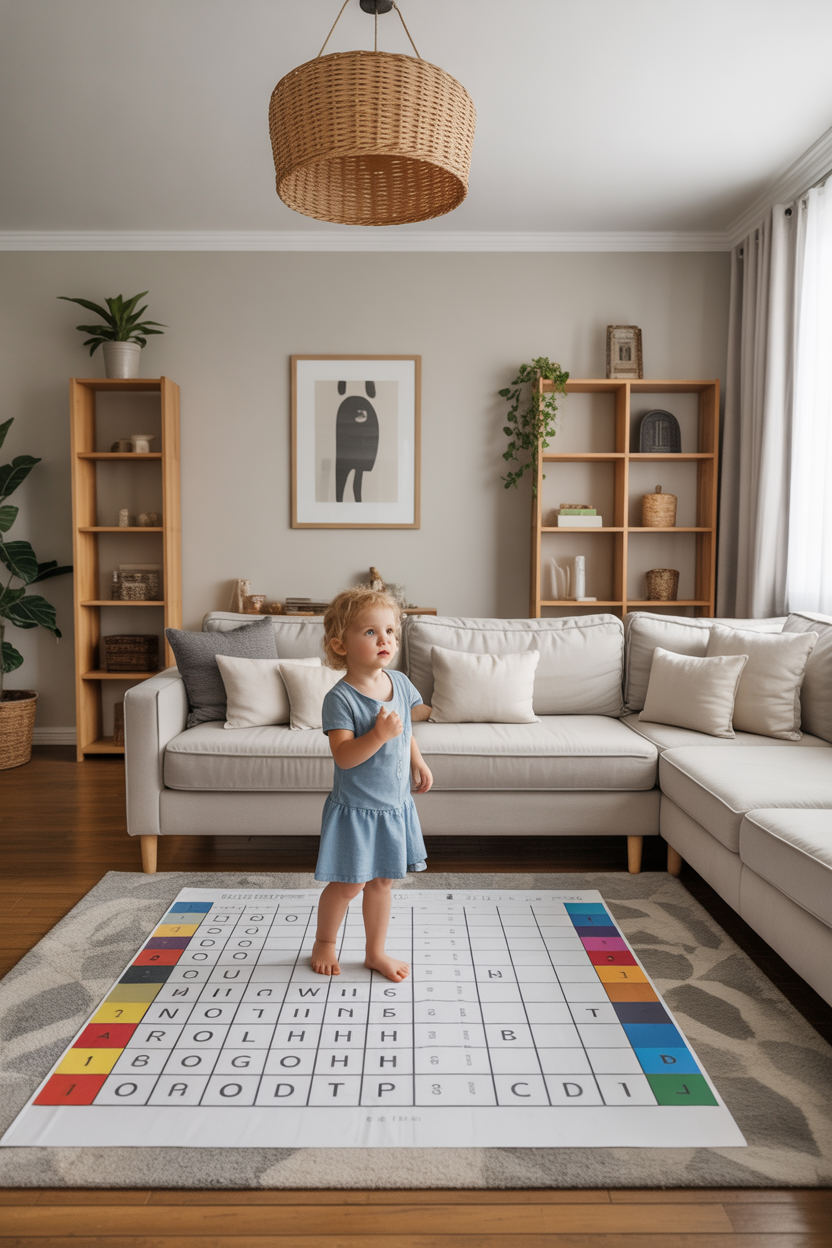
Choose a color and give the kids a short amount of time to find objects around the house that match it.
They can bring their discoveries back to a designated starting point before the timer runs out.
For younger children, keep the colors simple and give them plenty of time.
Older kids can make the challenge harder by using letters instead of colors or requiring a certain number of objects.
To keep the game safe, establish which rooms and objects are off-limits before the hunt begins.
2. Bring a Classic Chase Game Indoors
Choose one child to be the “wolf” and have the others stand at the opposite end of the room.
The children call out the familiar question, and the wolf gives a number that determines how many steps they can take forward.
When the wolf announces that it is time for dinner, everyone races back before being caught.
You don’t need a large room for this game, but clear away furniture and anything children could trip over.
For younger kids, use smaller steps and keep the chasing area compact.
3. Turn the Floor Into a Hopscotch Course
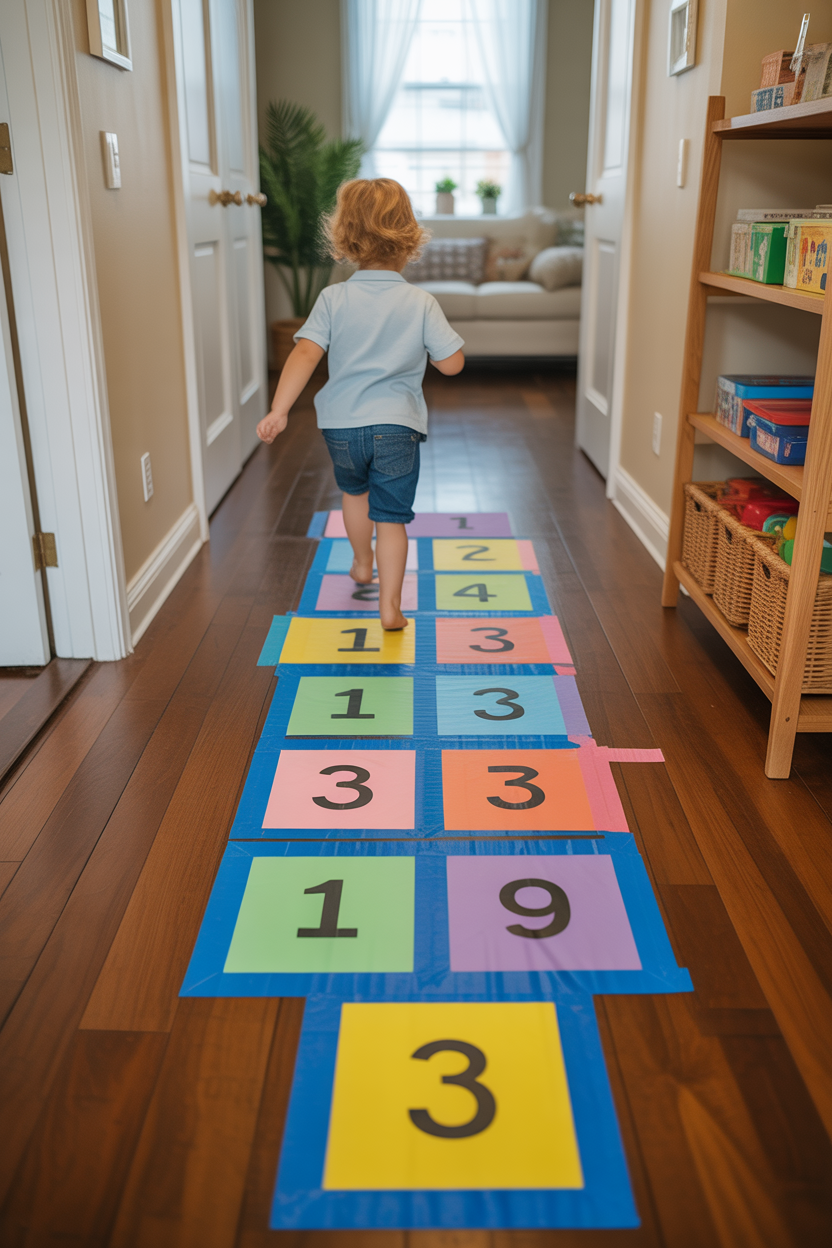
Painter’s tape can transform a hallway or open floor into an indoor hopscotch grid.
Number each square and let children take turns hopping through the sequence while following the usual one-foot and two-foot patterns.
You can make the game more educational by asking children to say each number aloud as they move.
For older kids, replace numbers with letters, simple math problems, or movement instructions.
Painter’s tape is preferable to permanent markers because it can be removed easily when playtime is over.
4. Build a Living-Room Obstacle Course
Use pillows, cushions, chairs, cardboard boxes, tape lines, and other safe household items to create a path around the room.
Children might crawl under a chair, step across pillows, balance along a taped line, and finish with a small jumping challenge.
You can add a “floor is lava” rule for an extra layer of imagination.
Change the obstacles depending on the children’s ages and abilities rather than making the course unnecessarily difficult.
For younger children, focus on simple movements and plenty of open space.
5. Have a Freeze-Dance Party
Turn on music and let everyone dance until the sound suddenly stops.
The moment the music pauses, everyone has to freeze exactly where they are.
Instead of eliminating children who move, younger kids can simply earn a silly point or perform a funny dance move before the next round.
Older children may enjoy the traditional elimination format.
Choose a safe area with enough room for everyone to move without bumping into furniture.
6. Turn Musical Chairs Into a Mini Party
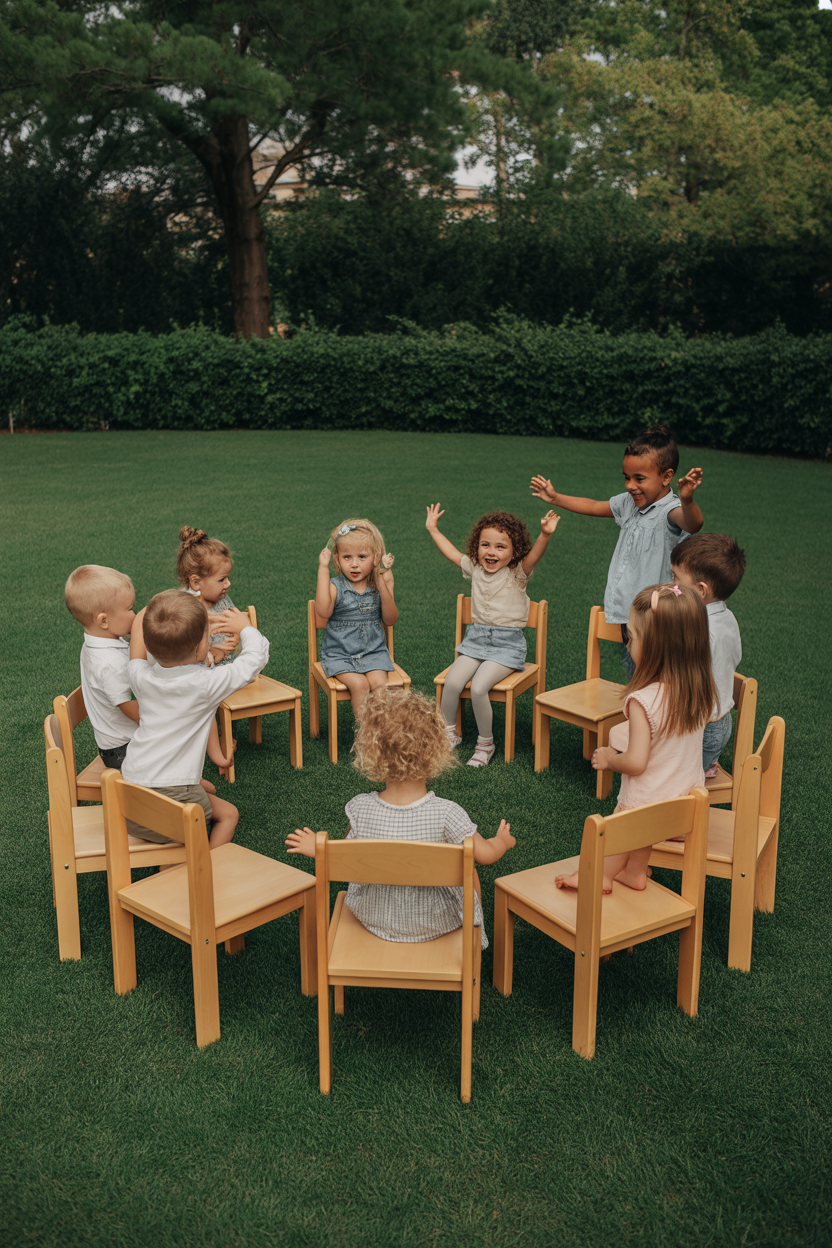
Arrange chairs in a circle with one fewer chair than the number of players.
Kids move around the chairs while music plays, then race to find a seat when the music stops.
Remove one chair and continue until there is one remaining player.
For younger children, consider letting eliminated players become the music helpers or cheerleaders so they don’t have to sit out for long.
You can also play cooperatively by challenging the group to fit everyone onto fewer and fewer chairs.
7. Keep a “Hot Potato” Moving
Have children sit in a circle and pass a soft ball or other safe object while music plays.
When the music stops, whoever is holding the object is out or receives a playful challenge before rejoining.
Use a plush toy or soft ball rather than a hard object when younger children are playing.
The game is simple enough for preschoolers but can become surprisingly frantic with older kids.
Games That Turn Ordinary Materials Into Play
Some of the best rainy-day activities begin with a quick trip through the recycling bin or craft drawer.
8. Race Homemade Paper Airplanes
Give each child a sheet of paper and let them design and decorate their own airplane.
Once everyone has finished, create a starting line and see whose plane travels the farthest.
You can run several rounds and encourage children to change the shape of their planes between attempts.
This turns a simple craft into a miniature experiment because kids can see how different folds affect distance and flight.
For a calmer version, judge the planes on creativity, design, and decoration instead of distance.
9. Build Something With Marshmallows and Pretzels
Give children marshmallows and thin pretzel sticks and challenge them to build structures.
They might create houses, towers, bridges, animals, or completely imaginary inventions.
The materials naturally encourage children to think about balance and how different pieces connect.
For younger kids, provide a simple challenge such as “build the tallest tower.”
Older children can work in teams and design structures that have to support a small toy or object.
10. Shape a Play-Dough World
Set out several colors of play dough and give children a theme to work with.
They could create an imaginary zoo, a miniature town, a family of animals, their favorite foods, or characters from a made-up story.
Rather than giving them a specific object to copy, let the activity become an open-ended creative challenge.
You can also introduce colors, shapes, counting, and simple storytelling while they work.
This makes play dough especially useful when children need something engaging but not overly energetic.
11. Paint a Picture of Something They Dream About
Give each child paper or a small canvas and ask them to paint something they would love to experience, become, build, or visit.
One child might paint a future house while another creates a picture of outer space or an imaginary animal.
The activity gives children room to express ideas that don’t always come up during ordinary conversation.
Display the finished artwork afterward to turn the activity into a small family art gallery.
For younger children, keep the prompt simple: “Paint something that makes you happy.”
12. Make a Mini Indoor Band
You don’t need real musical instruments to create a band.
Turn pots and pans into drums, use empty containers as shakers, or stretch rubber bands over a sturdy box to create a pretend string instrument.
Let the children choose a band name and create a short performance.
This works particularly well for siblings because they have to listen to one another and find a rhythm together.
Keep the volume manageable by establishing a few “quiet songs” between the louder performances.
13. Create a Swirling Sensory Bottle
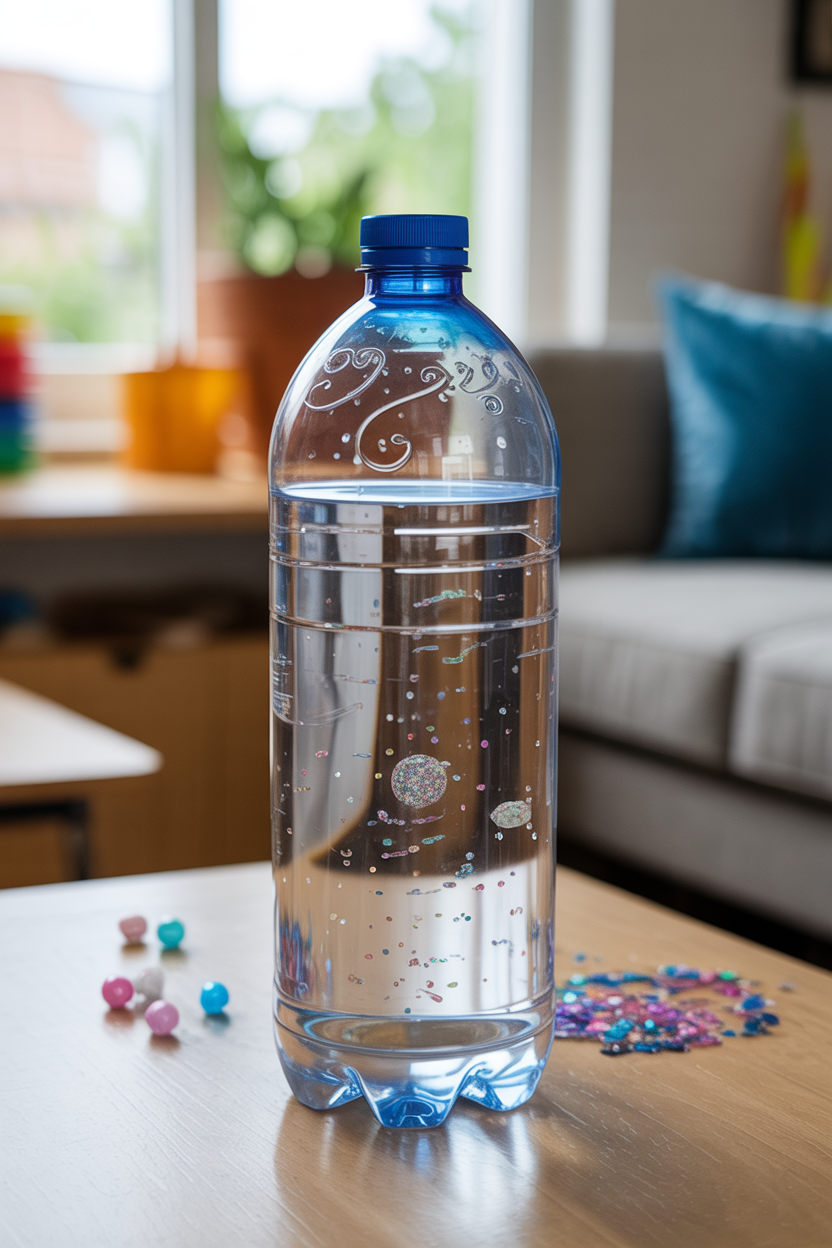
Fill a clear plastic bottle with water and add glitter, sequins, beads, or other small decorative pieces.
Secure the lid extremely well before letting children shake the bottle and watch everything swirl before slowly settling.
The movement can be fascinating to watch and makes the bottle useful as a quiet sensory activity after more energetic games.
You can also talk about floating, sinking, and how the glitter moves through the water.
For younger children, adults should prepare and seal the bottles and supervise them during use.
Classic Games for Quieter Indoor Afternoons
When everyone has calmed down, bring out activities that rely more on thinking, guessing, and remembering.
14. Play a Kid-Friendly Matching Memory Game
Lay pairs of picture cards face down and let children take turns turning over two cards at a time.
If the pictures match, the player keeps the pair; otherwise, both cards go face down again.
You can use a commercial matching game or make your own cards with drawings or family photographs.
Younger children can play with fewer pairs, while older kids can handle a larger grid.
The game quietly works on memory, concentration, and visual attention while still feeling like play.
15. Let Kids Guess a Mystery Person
Use a guessing game where one player has a mystery character and the others ask yes-or-no questions to identify them.
You can use the traditional game format or create your own version with family members, cartoon characters, animals, or fictional heroes.
Ask questions about appearance, personality, clothing, or other recognizable characteristics.
For a family version, using photographs can make the game feel more personal.
Keep the number of possible identities manageable for younger players so they don’t become frustrated.
16. Go Fish Around the Kitchen Table
Deal cards to the players and let them ask one another for specific cards they need to complete pairs or sets.
If the person doesn’t have the requested card, the player draws from the deck according to the version you’re using.
The simple rules make this a good choice for children who are learning to take turns.
Younger players may need help remembering what they have already asked for.
For older children, add a points system for completed sets.
17. Play a Family-Photo Bingo Game
Create bingo cards using photographs of relatives instead of numbers.
Call out family members one at a time while children cover the matching photograph on their cards.
The first player to complete the required row wins.
This can be especially fun during family gatherings because younger children get to practice recognizing relatives they may not see regularly.
For a non-family version, use photographs of pets, favorite characters, teachers, or familiar objects.
18. Stop the Bus With Words
Give every player a sheet of paper divided into categories such as names, animals, foods, places, or objects.
Choose a letter, then give everyone a short amount of time to write one answer for each category beginning with that letter.
Players compare their answers afterward and award points according to the agreed rules.
You can make the game easier by using familiar categories or harder by adding unusual ones.
It’s a particularly good rainy-day option for school-age children because it combines vocabulary, speed, and friendly competition.
Games That Encourage Imagination
Not every indoor activity needs a winner.
Sometimes the best game is one that gets children inventing characters, stories, and worlds together.
19. Let Everyone Play Pretend
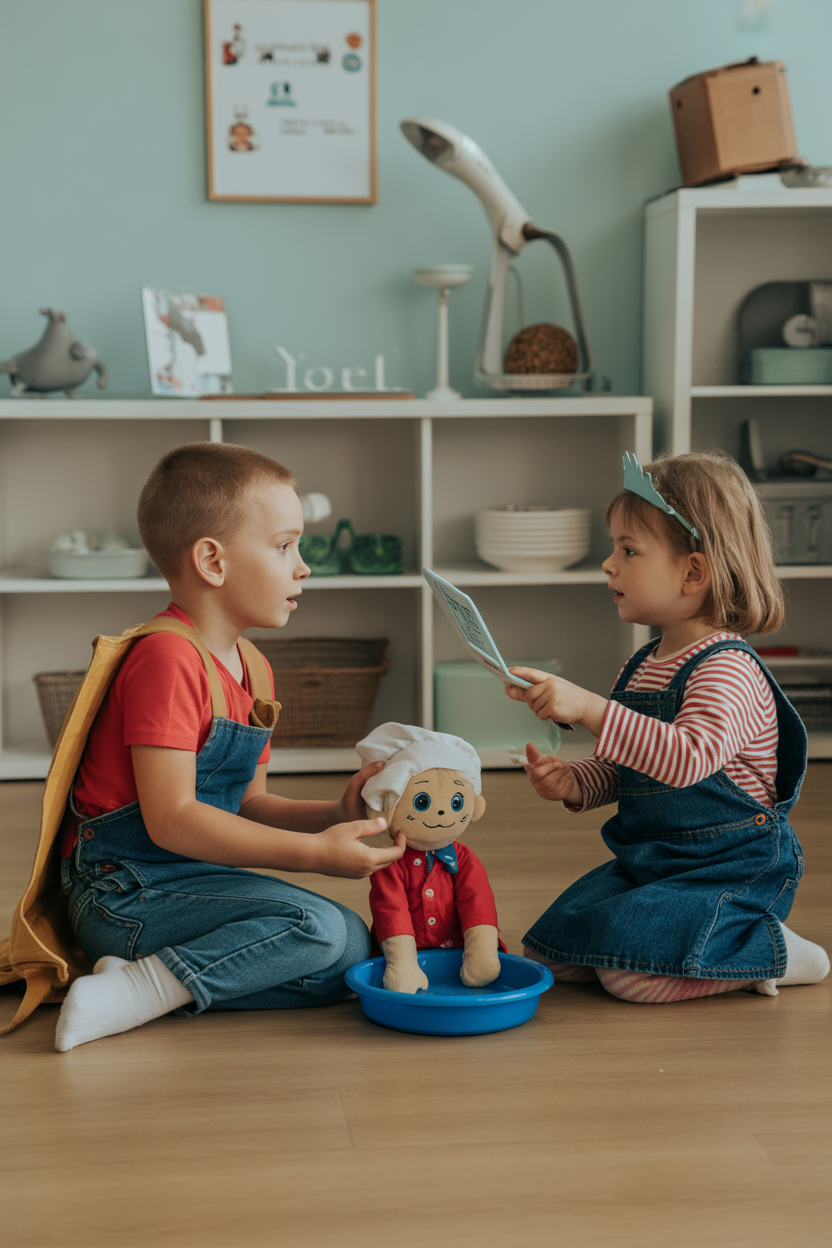
Give children a simple scenario and let them decide who they want to be.
They could become astronauts exploring a new planet, veterinarians caring for stuffed animals, restaurant chefs, superheroes, or characters running a magical hotel.
Don’t over-direct the story.
Give them a starting point and let their own ideas take over.
For siblings, add a few props such as blankets, cardboard boxes, toy dishes, or old hats to make the imaginary world more convincing.
20. Act Out a Mystery Character
Turn pretend play into a guessing game by having one child silently act out a character or role.
The other players have to figure out what the child is pretending to be.
Younger kids can choose obvious roles such as a cat, firefighter, or astronaut.
Older children can use more complicated characters or situations.
This combines imagination with observation and gives shy children a way to participate without having to speak much.
Games That Let Kids Practice Coordination
These activities add a little physical challenge without requiring children to leave the house.
21. Play a Mini Indoor Ping-Pong Match
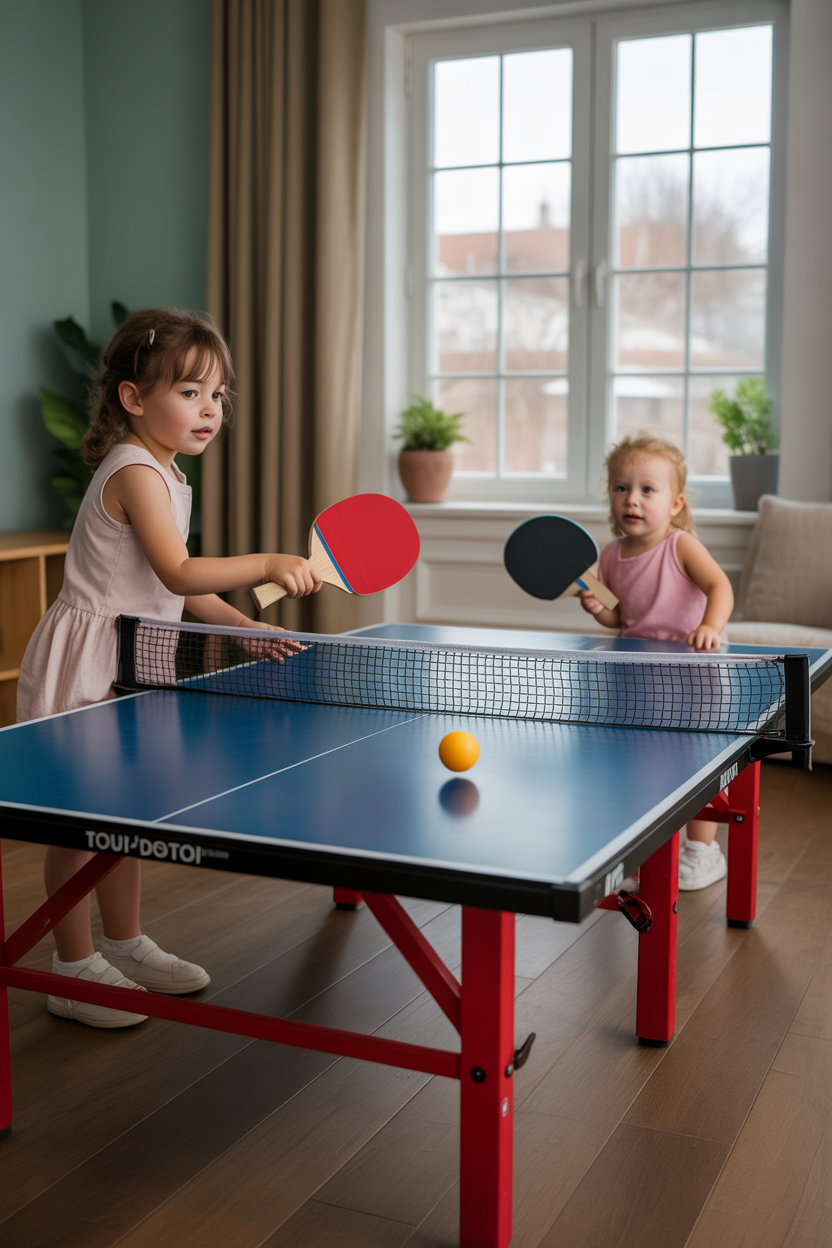
If you have a table-tennis setup, bring out the paddles and create a simple tournament.
Children can play singles or doubles depending on the number of players.
For younger children, don’t worry too much about formal scoring; keeping the ball in play can be the entire challenge.
If you don’t have a full table, use a low table and create a temporary center line with painter’s tape.
Make sure there is enough open space around the table before starting.
22. Try an Indoor Hockey Challenge
Turn rolled-up socks into soft pucks and use cardboard tubes or lightweight sticks as hockey sticks.
Laundry baskets, boxes, or taped goal lines can become the targets.
Divide children into teams or let them compete one-on-one.
Because the equipment is soft and homemade, the activity can work in a family room when there is enough open floor space.
Set clear boundaries and remove breakable objects before the game begins.
23. Have a Hula-Hoop Challenge
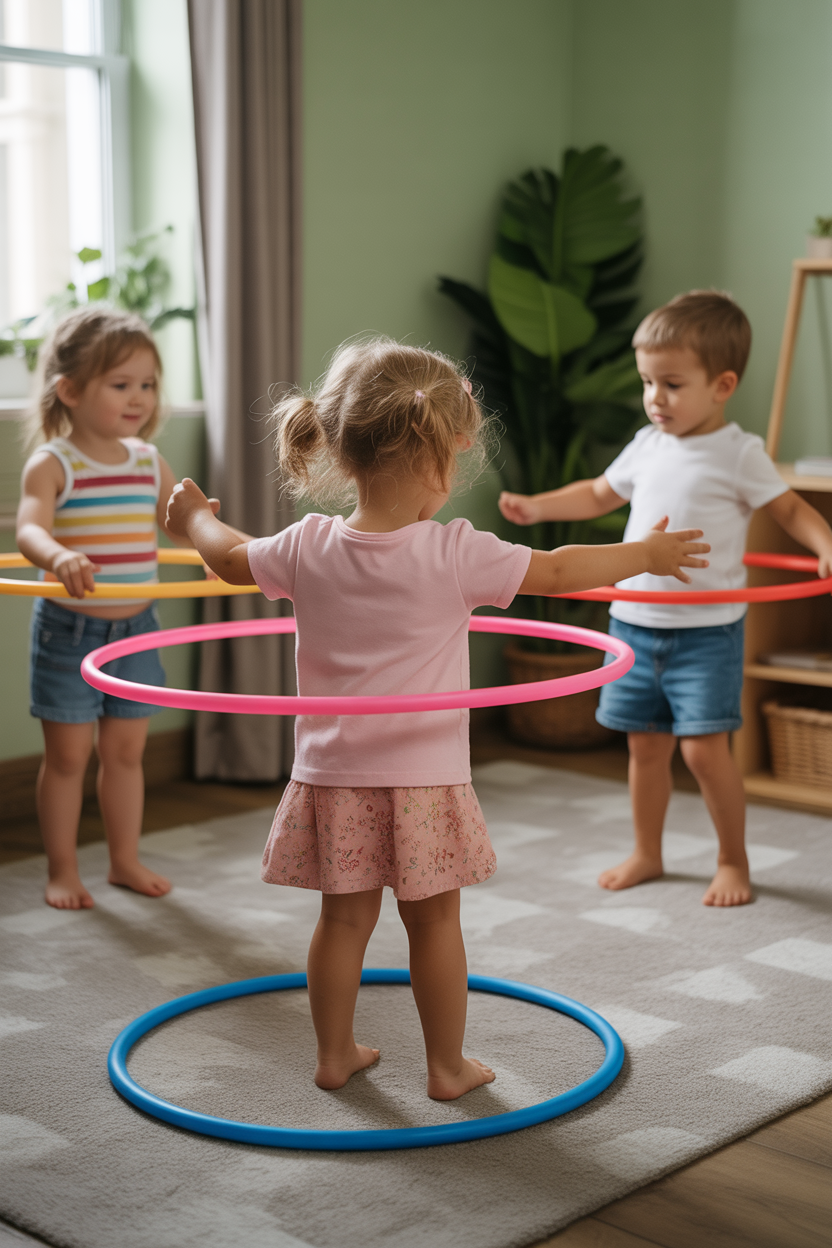
Give children a hoop and see how long they can keep it moving.
Once everyone has mastered the basic motion, add variations such as trying it on an arm, passing it around the body, or seeing who can perform the longest continuous spin.
You can also turn it into a cooperative challenge where children try to beat their own previous time.
For younger children, simply exploring how the hoop moves can be enough.
Use a clear area without furniture nearby so children have room to move safely.
24. Set Up a Ring-Toss Target
Create lightweight rings from paper plates by cutting out their centers.
Place a bottle, cone, or other stable target at a short distance and have children try to land the rings over it.
Start close to the target and gradually move the throwing line farther away.
You can award different point values for different distances.
This makes it easy to adjust the challenge for different ages without changing the basic game.
Turn Treasure Hunting Into an Indoor Adventure
A little searching can make an ordinary house feel completely different.
25. Organize an Indoor Treasure Hunt
Hide several objects around a safe area of the house and give children clues or a list of things to find.
You can hide toys, photographs, colored objects, socks, paper shapes, or small household items.
For younger children, use pictures instead of written clues.
Older kids can follow riddles that lead them from one location to the next.
Add a timer if you want a competitive version, or have the whole group work together to find everything before the clock runs out.
26. Create a Timed Hunt Challenge
Take the basic searching game and add a countdown.
Choose a color, letter, category, or specific object and give children a limited amount of time to find as many matching things as possible.
You can change the challenge each round so the game stays interesting.
For example, one round might ask for blue objects, another for things beginning with “B,” and another for items that are soft.
Make sure children know they should only collect objects that adults have approved for the game.
Games That Combine Play With Learning
A good indoor game doesn’t have to feel educational to build useful skills.
27. Turn the Afternoon Into a Mini Skill Challenge
Combine several short games into one indoor activity session.
Start with a memory round, move into Stop the Bus, follow it with a paper-airplane experiment, and finish with a treasure hunt.
This works particularly well when children have different interests because no single activity has to keep everyone’s attention for an hour.
You can also let the children choose the next challenge after completing each round.
The result feels more like a home adventure than a list of educational exercises.
How to Choose the Right Indoor Game
The best activity depends on what the children need at that particular moment.
When Kids Have Too Much Energy
Choose Freeze Dance, Musical Chairs, Hopscotch, an obstacle course, indoor hockey, hula hooping, or a treasure hunt.
Give them space to move before switching to a quieter activity.
When You Need Something Quiet
Try memory games, Guess Who, Go Fish, Stop the Bus, play dough, painting, or the sensory bottle activity.
These are especially useful after lunch, before bedtime, or when younger children are resting nearby.
When Several Ages Are Playing Together
Choose games that can be adjusted easily.
Treasure hunts, obstacle courses, pretend play, paper airplanes, ring toss, and Freeze Dance can all be made simpler or harder depending on who is participating.
When You Have Almost No Supplies
Start with Grandma’s Footsteps, Freeze Dance, Pretend Play, Hot Potato, Guess Who, Stop the Bus, or a simple color hunt.
Many of these require nothing more than space and imagination.
When You Want a Creative Afternoon
Try play dough, painting, paper airplanes, marshmallow construction, bottle sensory toys, or starting a homemade band.
These activities give children something tangible to create rather than simply asking them to follow rules.
Make Indoor Play Feel Fresh Again
Children don’t necessarily need a brand-new toy every time they’re bored.
Sometimes changing the way they use ordinary household objects is enough to make an afternoon feel completely different.
A hallway becomes a hopscotch course.
A pile of pillows becomes an obstacle course.
A few sheets of paper become airplanes, artwork, or a word game.
Even a handful of family photographs can become bingo cards or a guessing challenge.
Keep a few favorite games in rotation, but change the rules or themes when the children start losing interest.
A treasure hunt can become a color hunt, a paper-airplane race can become a design competition, and pretend play can turn into a full family story.
The best indoor games aren’t necessarily the most elaborate ones.
They’re the activities that get children moving, thinking, creating, laughing, and spending time together without making parents organize an entire production.
So the next time bad weather keeps everyone inside, pick one idea, clear a little space, and let the game begin.