16 Stylish Live Edge Dining Table Decor Ideas You’ll Love
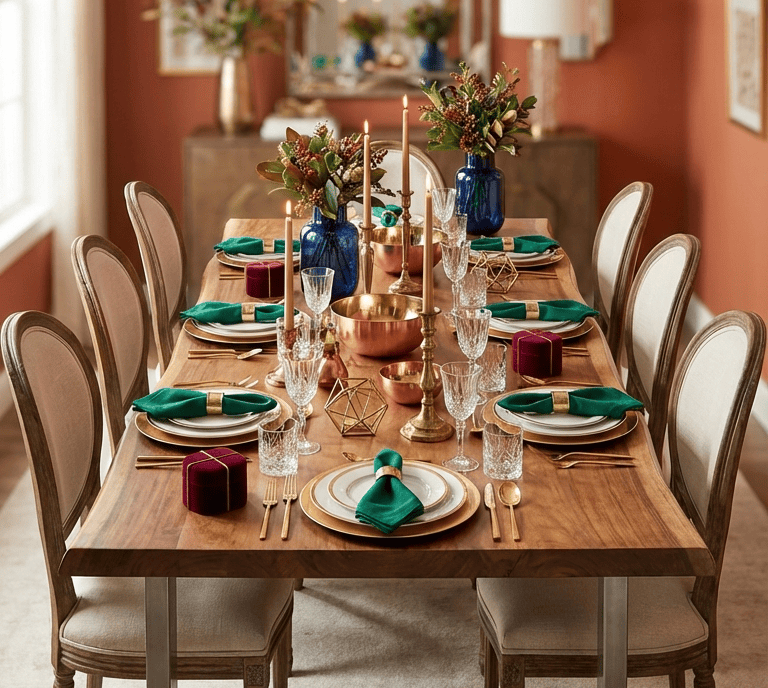
Live edge dining tables are nature’s artwork brought indoors. Each piece is absolutely unique, preserving the tree’s natural contours and organic beauty in functional furniture.
These stunning tables make bold statements on their own, which means decorating them requires a thoughtful touch. The goal is enhancing their natural beauty, not competing with it.
The raw, organic edge paired with polished surfaces creates beautiful tension between refined and rustic. It’s this balance that makes live edge tables so captivating and versatile.
Let’s explore some gorgeous ways to style live edge dining tables that celebrate their natural character while creating inviting spaces.
1. Let the Live Edge Wood Speak for Itself (Minimal Décor)

Sometimes the best decor decision is restraint. A stunning live edge table deserves to be the star, with minimal accessories competing for attention.
Keep the surface mostly clear, perhaps adding just a single sculptural object or small plant. Let guests appreciate the wood grain, natural edge, and craftsmanship.
This minimalist approach works beautifully in modern or Scandinavian-inspired spaces where clean lines and natural materials take center stage.
Minimal styling tips:
- One statement centerpiece maximum
- Clear the table completely between meals
- Let the wood grain be the pattern in the room
- Use transparent or low-profile accessories only
Hey there! Some links on this page may be affiliate links which means that, if you choose to make a purchase, I may earn a small commission at no extra cost to you.
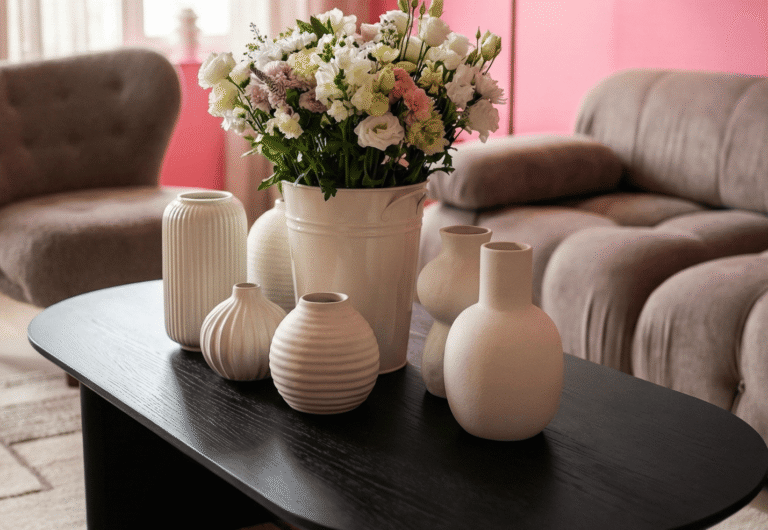
2. Low Profile Ceramic Bowl Centerpiece

A simple ceramic bowl in neutral tones or organic shapes complements live edge wood without overwhelming it. Keep the profile low so the table edge remains visible.
Fill the bowl with seasonal fruit, leave it empty to showcase its form, or use it for keys and everyday items. The handcrafted quality of ceramics pairs beautifully with natural wood.
Choose earthy glazes or matte finishes that feel as organic as the wood itself. The pairing creates layered natural beauty.
3. Contrast with Cool Metallic Accents

Cool metals like brushed steel, pewter, or silver create striking contrast against warm wood tones. The juxtaposition feels modern and intentional.
Metal candlesticks, serving pieces, or even chair frames bring contemporary edge to the organic table. The temperature contrast keeps the look from feeling too rustic.
This combination works perfectly for industrial or modern farmhouse aesthetics, balancing raw and refined elements beautifully.
4. Neutral Runner or Linen

A neutral table runner in linen, cotton, or burlap protects the wood while adding soft texture. Choose colors that complement rather than compete with the wood tone.
Natural linen in cream, oatmeal, or soft gray works with any wood species. The organic fabric texture harmonizes with the live edge’s natural character.
Run it down the center to frame the live edge on both sides, or place it diagonally for unexpected visual interest.
| Styling Approach | Visual Impact | Wood Visibility | Best Style |
| Minimal Decor | Low (wood is star) | Maximum | Modern, Scandinavian |
| Ceramic Centerpiece | Medium | High | Organic modern, Rustic |
| Metallic Accents | Medium-High | High | Industrial, Contemporary |
| Neutral Runner | Medium | Medium-High | Farmhouse, Transitional |
5. Greenery or Eucalyptus Garland
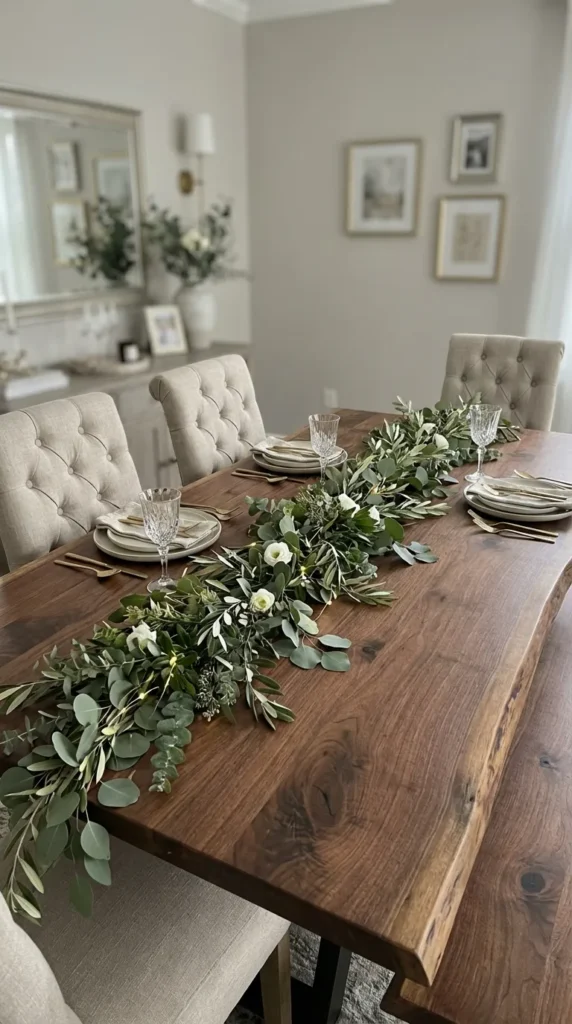
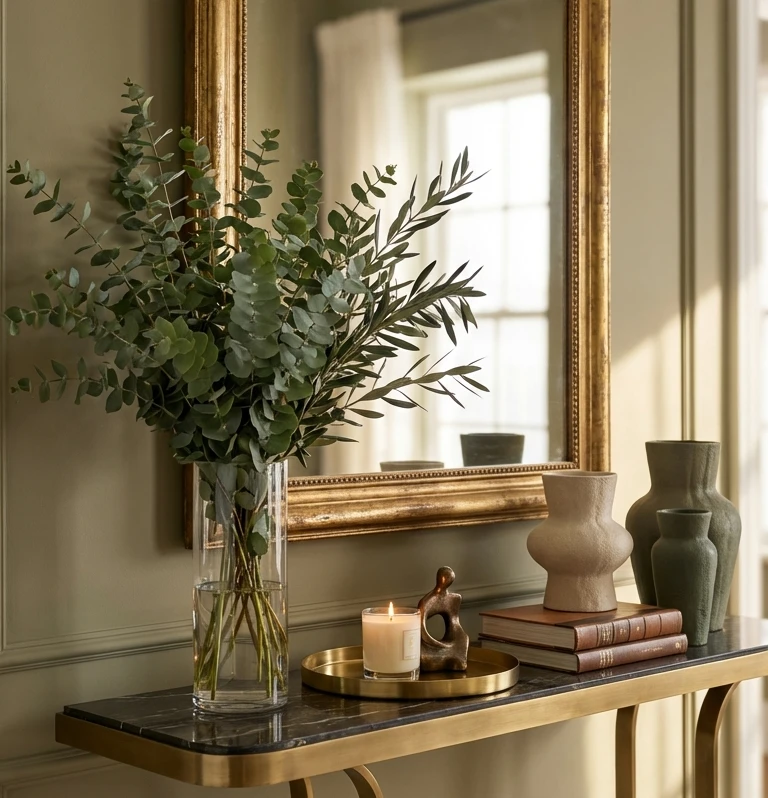
Fresh greenery draped casually along the table celebrates the wood’s natural origins. Eucalyptus, olive branches, or mixed foliage create organic beauty.
The greenery doesn’t need to be formal or structured. Let it drape naturally, echoing the organic quality of the live edge itself.
This approach works beautifully for gatherings and entertaining, bringing life and freshness that complements the wood’s earthy character.
6. Pendant or Sculptural Lighting Above the Table

Dramatic pendant lighting draws eyes upward while illuminating the table’s beautiful wood grain. Choose fixtures that complement the organic aesthetic.
Linear pendants work beautifully over long live edge tables, while sculptural pieces add artistic interest. Wood, metal, or natural fiber fixtures each bring their own character.
The right lighting makes the wood grain and natural edge even more visible and beautiful, especially during evening meals.
Lighting considerations:
- Hang 30-36 inches above the table surface
- Choose fixtures half to two-thirds the table width
- Warm bulbs (2700K) enhance wood tones
- Consider adjustable height or dimmers
7. Upholstered Chairs to Soften the Look

Upholstered dining chairs in soft fabrics balance the table’s organic ruggedness. The contrast between hard wood and plush seating creates inviting comfort.
Neutral upholstery in linen, velvet, or leather complements without competing. The softness makes the dining experience more comfortable and welcoming.
This pairing prevents the space from feeling too rustic or masculine, adding refinement while maintaining the natural aesthetic.
8. Mixed Wood and Metal Base Design

Live edge tops on metal bases create beautiful material contrast. Black steel, hairpin legs, or industrial frames bring contemporary edge to organic wood.
The metal base feels modern and light, preventing the substantial wood slab from overwhelming spaces. It’s a perfect marriage of natural and industrial.
This combination works in lofts, modern farmhouse spaces, or anywhere mixing materials creates layered, interesting design.
9. Bench Seating on One Side for Communal Feel

A wooden or upholstered bench on one side creates casual, communal dining. The bench complements the table’s organic nature while encouraging closer seating.
Benches work especially well with live edge tables because both celebrate natural, unfussy beauty. The pairing feels cohesive and intentionally relaxed.
This configuration is perfect for families or people who love hosting casual gatherings where conversation flows easily.
10. Glass Accents or Tabletop Elements
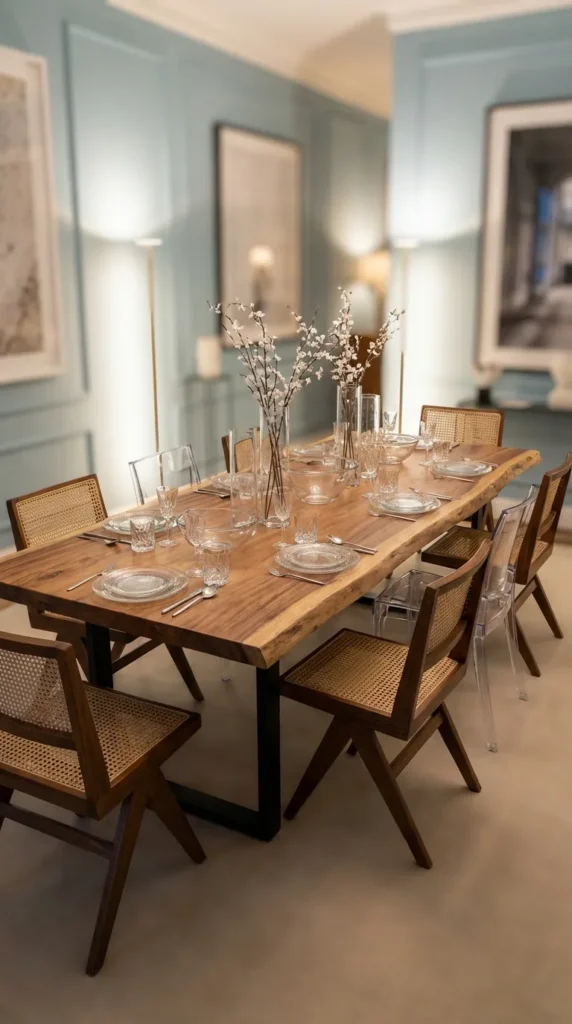
Clear glass vases, serving pieces, or even transparent chairs let the live edge remain the focal point. Glass adds refinement without visual weight.
The transparency creates lightness that balances the solid wood’s substantial presence. It’s particularly effective in smaller spaces where heavy furniture could overwhelm.
Glass catches light beautifully, adding sparkle and reflection that makes the entire table arrangement feel more dynamic.
11. Multi Toned Wood Features

If your live edge table features varied wood tones or spalting, celebrate this natural character through your decor choices. Pull accent colors from the wood’s natural palette.
Mixed wood tones in the table can be echoed through varied wood chairs or accessories in complementary species. The layered wood creates rich, organic depth.
This approach honors the wood’s natural variations rather than trying to coordinate everything to one single tone.
| Design Element | Effect on Wood | Practical Benefit | Style Compatibility |
| Upholstered Chairs | Softens, balances | Comfort | Most styles |
| Metal Base | Modernizes | Lighter visual weight | Industrial, Modern |
| Bench Seating | Complements | Space-saving, casual | Farmhouse, Rustic |
| Glass Accents | Showcases | Doesn’t compete | Modern, Transitional |
12. Live Edge Table with Epoxy Resin Inlays
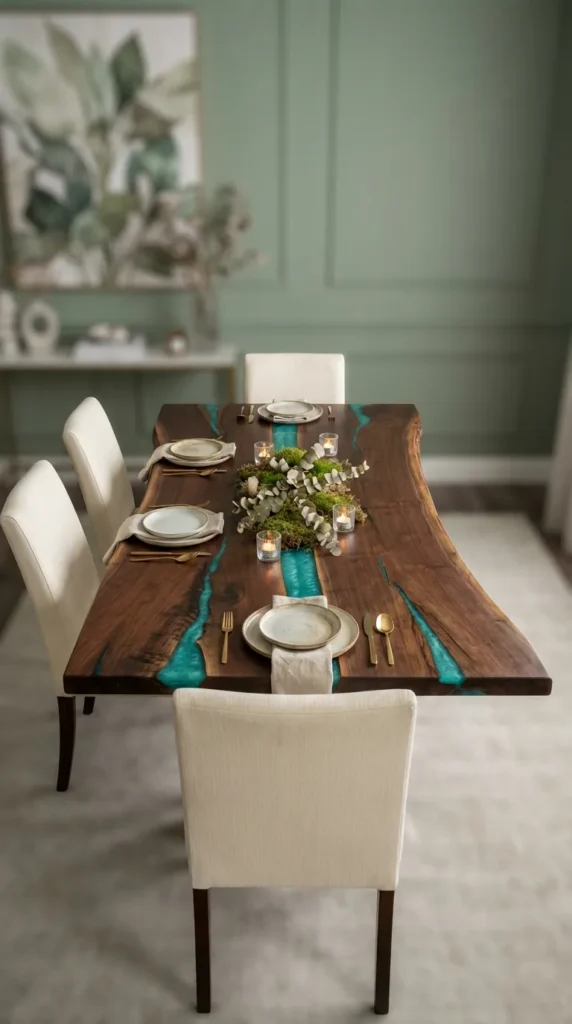
Epoxy resin filling natural cracks or voids creates striking color contrast and artistic interest. The resin protects while adding contemporary design element.
Clear resin shows the wood’s depth, while colored resin (often blue or turquoise) creates dramatic river-like effects. Each piece becomes truly one-of-a-kind.
Style these statement tables simply to let the resin artistry shine. Minimal accessories work best with these already dramatic pieces.
13. Pair with a Textured Rug Beneath
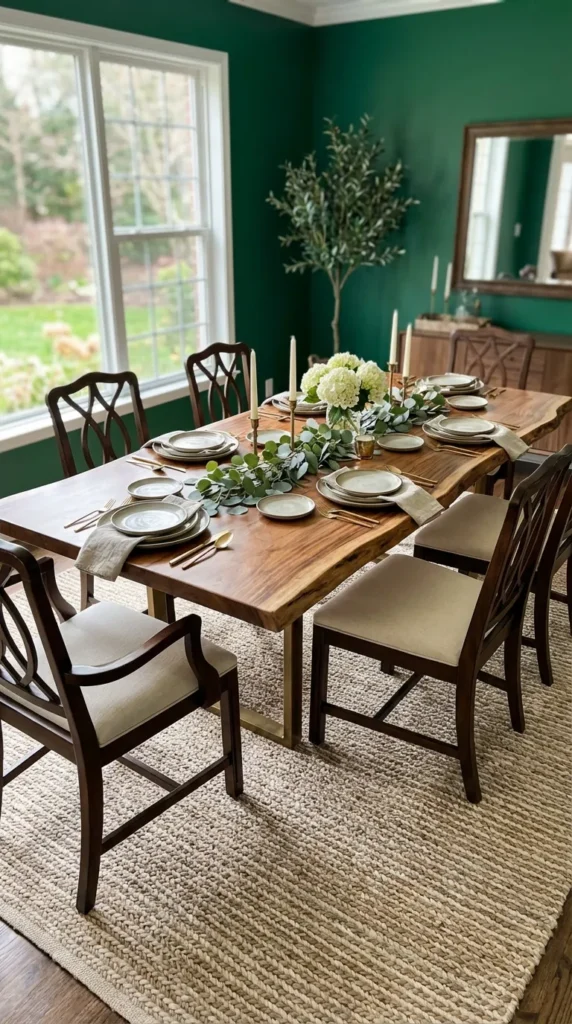
A textured area rug grounds the live edge table and adds another layer of natural material. Jute, sisal, or wool rugs complement wood’s organic nature.
The rug should extend at least 24 inches beyond the table on all sides so chairs remain on the rug when pulled out. This creates a cohesive dining zone.
Choose neutral tones that won’t compete with the wood’s natural beauty. The texture adds interest while maintaining earthy, organic aesthetic.
14. Monochrome Interior Palette (Black & White or Neutrals)
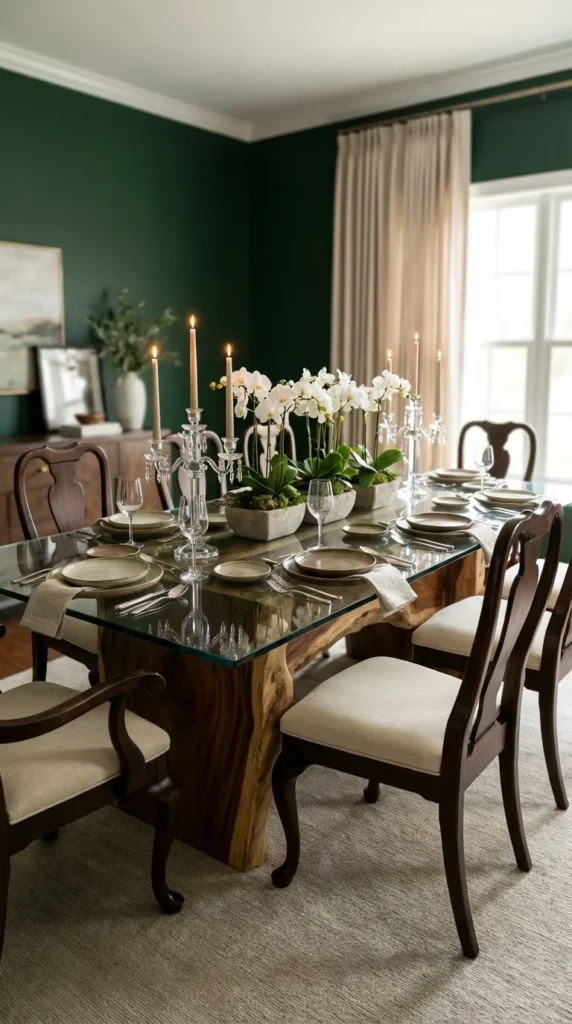
A monochrome backdrop makes live edge tables stand out dramatically. Black and white or all-neutral palettes let the wood’s color and grain take center stage.
The restrained color palette creates gallery-like setting where the table becomes art. Clean walls and simple decor amplify the wood’s natural beauty.
This approach works beautifully in modern or minimalist spaces where each element is chosen deliberately for maximum impact.
Creating monochrome harmony:
- Paint walls crisp white or soft greige
- Choose black or white dining chairs
- Use neutral textiles throughout
- Let wood tone be the only warm color
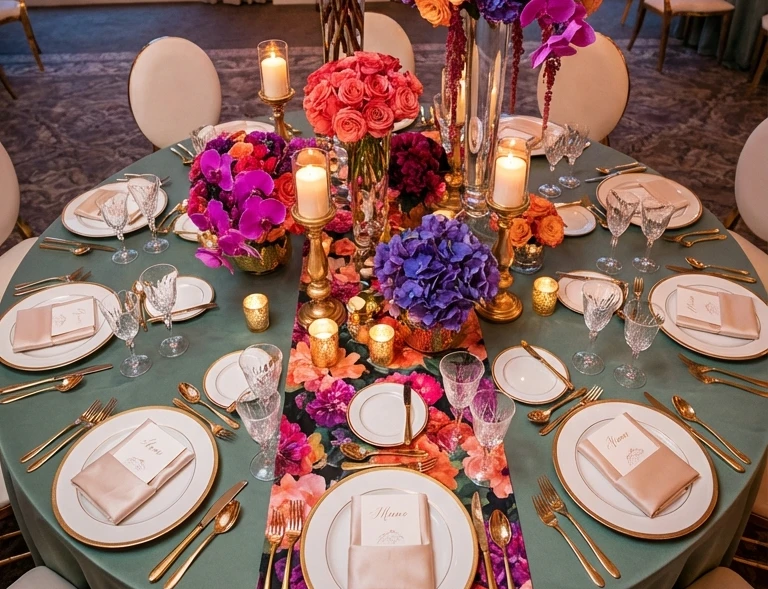
15. Warm Metallic or Jewel Tone Décor Accents
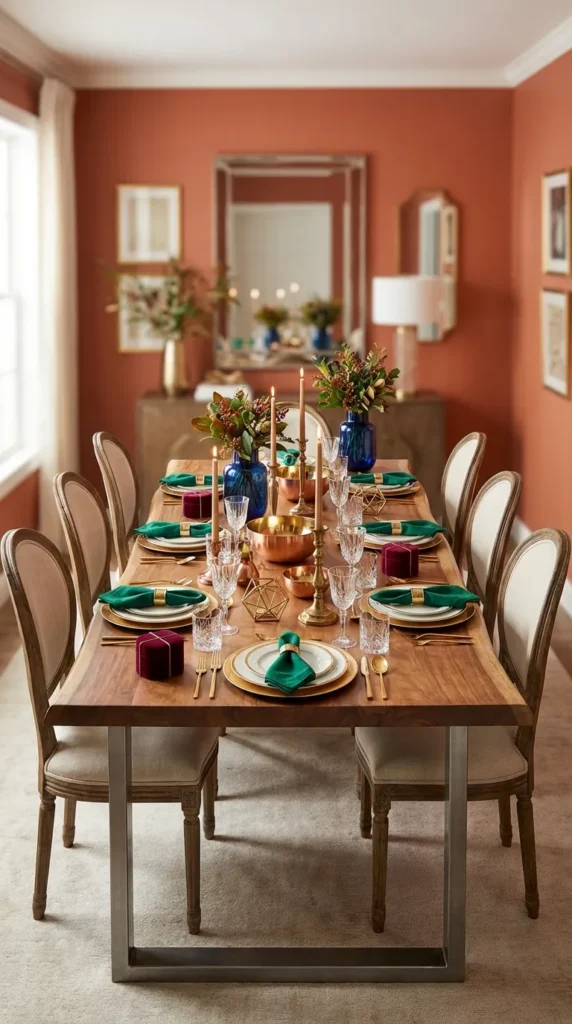
Warm metals like brass, copper, or gold enhance wood’s natural warmth. Small touches through candlesticks, hardware, or serving pieces add subtle luxury.
Jewel tones like emerald, sapphire, or deep burgundy create rich contrast against neutral wood. These saturated colors feel intentional and sophisticated.
Use these accent colors sparingly through napkins, small vases, or decorative objects. The pops of color enliven the space without overwhelming the wood.
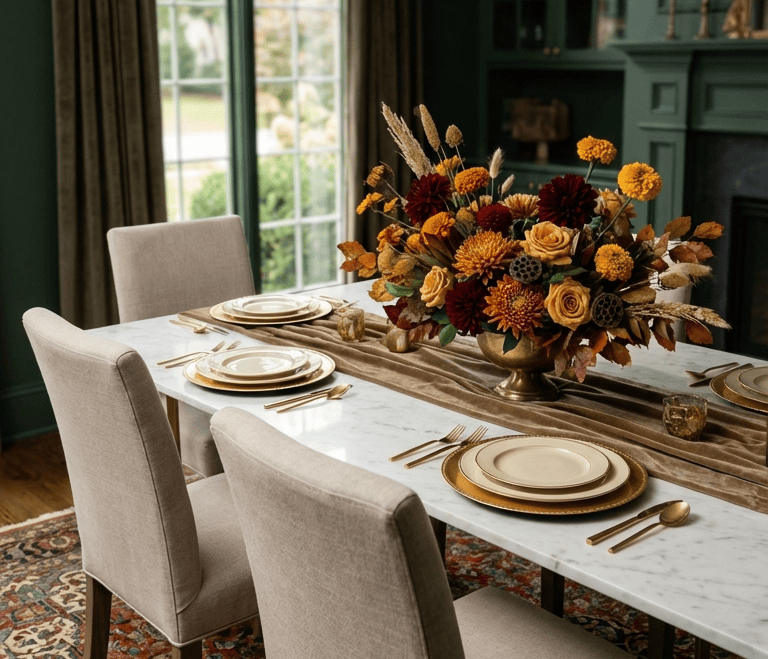
16. Seasonal Styling Changes (Swap Linens, Candles, or Foliage)

Rotate seasonal elements to keep your live edge table feeling fresh throughout the year. The table itself remains constant while accessories reflect the seasons.
Spring might bring pastel linens and tulips, summer could feature bright colors and fresh herbs, fall introduces rich textures and warm tones, while winter brings evergreens and candles.
This approach keeps the space feeling loved and current without requiring major changes. The live edge table anchors the room while seasonal touches bring variety.
Seasonal rotation ideas:
- Spring: Fresh flowers, light linens, pastel accents
- Summer: Bright colors, fresh fruit displays, lightweight fabrics
- Fall: Warm textiles, branches with leaves, pumpkins
- Winter: Evergreens, candles, rich textures
Which styling approach will help you showcase your live edge dining table’s natural beauty while creating a warm, inviting space for gathering and sharing meals?