The Complete Beginner’s Guide to Home Decorating
You just moved into a new place. Or maybe you’ve been staring at the same beige walls for three years and finally decided: enough. Either way, you want your home to feel like yours. But where do you even begin?
Most decorating guides tell you to “find your style” and then jump straight to throw pillows. That’s not a guide. That’s a mood board with instructions.
This guide is different. It walks you through every real decision, in the right order, so nothing gets skipped and nothing gets wasted. By the end, you’ll have a clear, practical roadmap for decorating any room with confidence.
Start with the Room’s Purpose, Not the Decor
Before you buy a single thing, ask yourself one question: How do I actually use this room?
This sounds obvious. It isn’t. Most beginners start by browsing products or copying a look they saw online. Then they end up with furniture that looks great in photos but doesn’t work for real life.
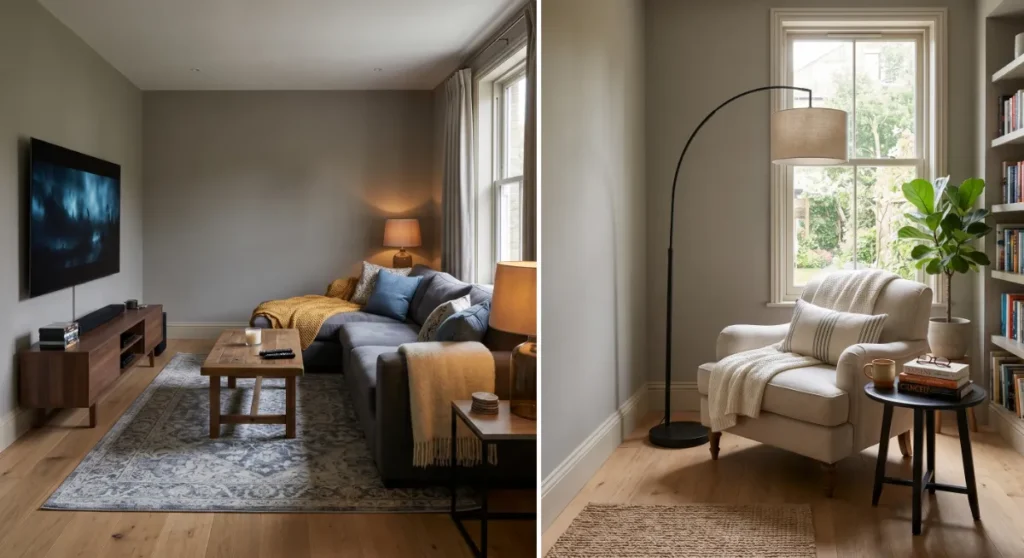
A living room used for family movie nights needs different seating than one used mainly for quiet reading. A dining space where you host dinner parties needs a larger table than one where you eat solo most nights.
- Write down the main activities that happen in the room. Be honest about what you actually do, not what you wish you did.
- Identify who uses the room and how often. Kids, pets, and guests all change the equation.
- Note what the room currently lacks. Too little storage? No good reading light? Not enough seating? This becomes your shopping list.
Only after this step should you think about aesthetics. Function shapes form. Every good designer starts here.
Find a Style Direction (Without Getting Lost on Pinterest)
Knowing your decorating style gives every future decision a filter. Without it, you end up with rooms that feel like a furniture store floor sample.
You don’t need to pick one rigid style and stick to it forever. What you need is a dominant direction. Think of it as the 80% rule: roughly 80% of your room leans toward one aesthetic, and 20% introduces personality through contrasting pieces.
Common decorating styles for beginners:
- Modern: Clean lines, minimal clutter, neutral tones, functional furniture. Good starting point if you don’t know where to begin.
- Scandinavian: Light woods, white walls, cozy textures. Simple and livable.
- Traditional: Symmetry, warm colors, classic furniture silhouettes. Feels timeless and familiar.
- Transitional: A blend of modern and traditional. The most flexible style to work with.
- Bohemian: Layered textiles, plants, eclectic pieces, rich colors. Works well when you have a mix of items you love but that don’t obviously match.
PRACTICAL TIP
Save 20 to 30 room photos you genuinely like. Look at what they have in common: wood tones, color temperature, furniture shapes, and how bare or layered the surfaces are. That overlap is your style direction.
Video Credits: Kristen McGowan
Choose a Color Palette That Works Across Your Home
Color is the thread that ties a home together. When your palette is inconsistent from room to room, the whole house feels fragmented even if individual rooms look fine on their own.
The goal is to choose a small set of colors that work throughout your home. You don’t have to paint everything the same shade. You just need the colors to have a family resemblance.
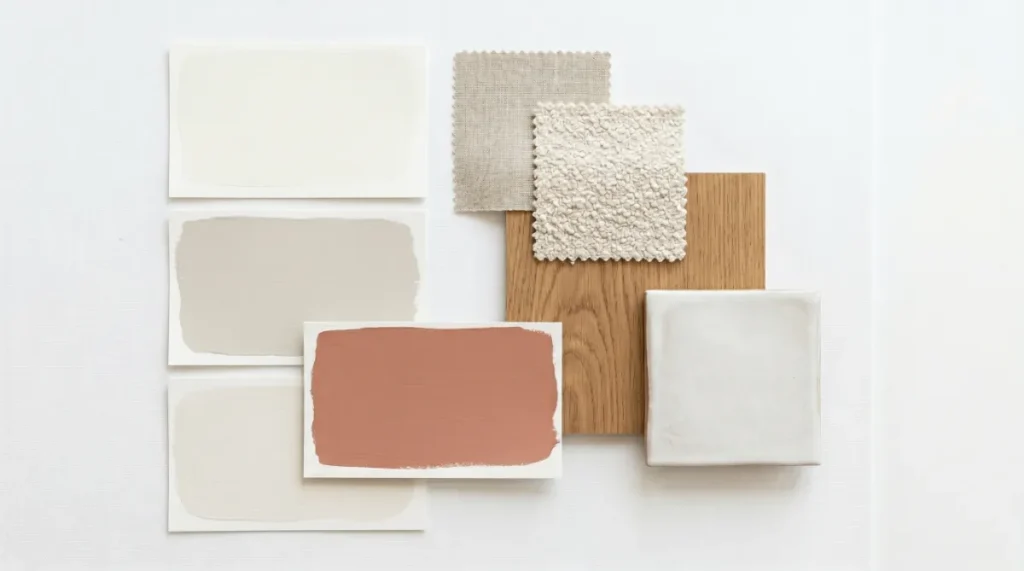
How to build a whole-home color palette:
Step 01
Base Color
Choose a neutral that covers most of your walls. Warm whites, soft grays, and greige tones work for almost any style and provide a versatile backdrop for the rest of your design.
Step 02
Secondary Color
Select one deeper or warmer tone for an accent wall, cabinetry, or large furniture pieces. This adds depth to the room without overwhelming the space.
Step 03
Accent Color
Introduce a single bold or rich tone used in small doses: a rug, cushions, vases, or artwork. This is where personality lives and where you can truly make the room feel like yours.
Once you settle on this three-color structure, choosing furniture, textiles, and decor becomes dramatically easier. You’re no longer asking “does this work?” with everything. You’re just checking it against a short list.
PRACTICAL TIP
Before committing to a wall color, buy sample pots and paint at least two large patches (12 inches by 12 inches) on different walls. View them at different times of day. Colors shift dramatically under morning light versus evening lamplight.
Get Furniture Right: Size, Placement, and Proportion
Furniture mistakes are the most expensive decorating mistakes to fix. Most beginners get tripped up on two things: pieces that are too small for the room, and layouts that hug the walls.
The most common furniture mistakes:
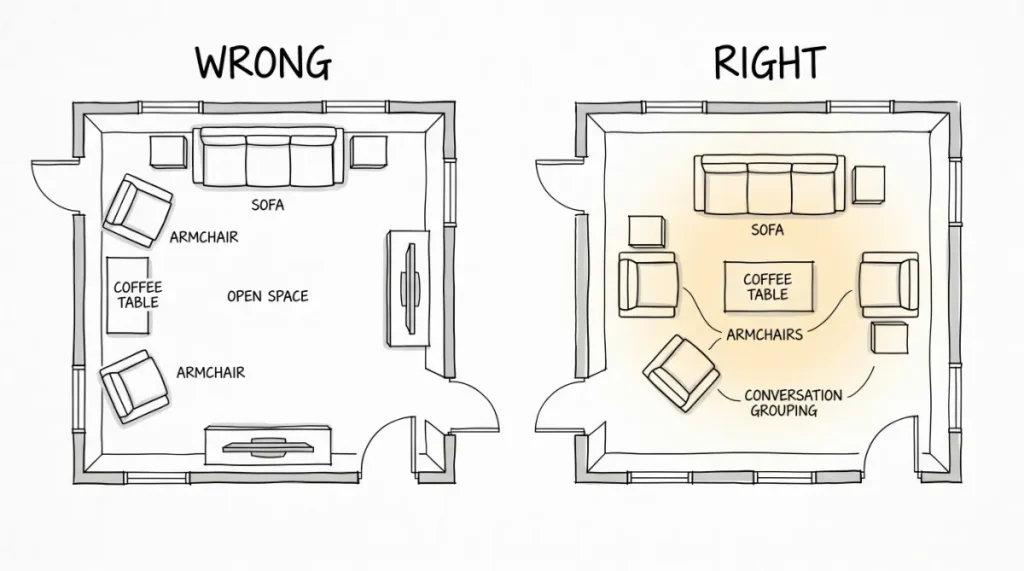
- Pushing all furniture against the walls. This makes a room feel like a waiting room. Pull seating toward the center to create a conversation zone.
- Buying a sofa before measuring. A sofa that fits in the store may not fit through your door, down your hallway, or in your room the way you imagine.
- Choosing pieces that are too small. A loveseat in a large living room looks like doll furniture. Scale up more than you think you need to.
- Ignoring traffic flow. You should be able to move through the room without squeezing between pieces. Leave at least 30 to 36 inches of walkway wherever people pass regularly.
Before you buy anything:
Measure the room and sketch a rough floor plan on graph paper or use a free tool like RoomSketcher. Then mark out furniture footprints with tape on the floor before purchasing. It takes 15 minutes and saves you from a very expensive mistake.
BUDGET NOTE
Invest in your biggest pieces (sofa, bed, dining table) and save on smaller items (accent chairs, side tables, decor). Quality on the big stuff pays off over years. Budget finds on accessories keep the look fresh without committing too much money.
Layer Your Lighting Like a Pro
Lighting is the most underestimated element of decorating. You can have perfect furniture and a beautiful color palette. If your lighting is wrong, the room will feel flat and uncomfortable.
Professional designers always layer three types of light in every room:
- Ambient light: The overall brightness of the room. Usually comes from overhead fixtures or ceiling lights. This is your base layer.
- Task light: Focused light for specific activities. Reading lamps, under-cabinet kitchen lights, a desk lamp. Functional and necessary.
- Accent light: Light that highlights architectural features or decor. Picture lights, floor lamps aimed at a wall, candles. This is what creates atmosphere.
A room with only overhead lighting feels institutional. Add a floor lamp, a table lamp, and one or two accent sources, and the same room feels warm and considered.
Always use dimmable bulbs where possible. The ability to lower light levels in the evening changes how a room feels completely.
Video Credits: Eric Wang
Use Rugs to Anchor and Define Spaces
A rug does more work in a room than almost any other single piece. It defines zones in open-plan spaces. It adds warmth and texture. It pulls disparate furniture pieces into a cohesive grouping.
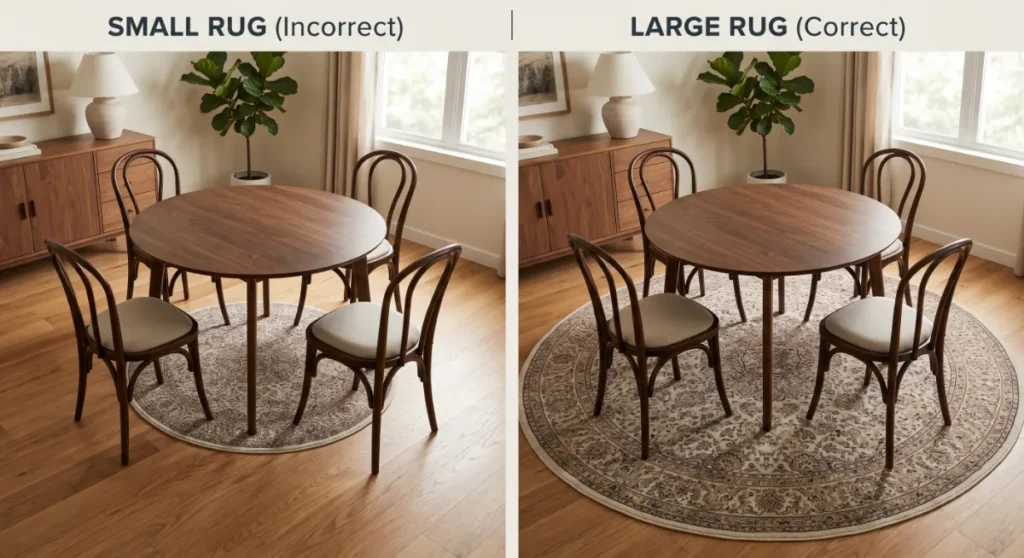
The most common beginner mistake with rugs is buying one that is too small. A rug that sits only under the coffee table, with sofas floating off it, looks like a postage stamp in a large room.
Basic rug sizing rules:
- In a living room: at minimum, the front legs of every sofa and chair should sit on the rug. Ideally the whole seating group sits on it.
- In a bedroom: the rug should extend at least 18 to 24 inches beyond the sides and foot of the bed.
- In a dining room: the rug should be large enough that chairs stay on it even when pulled out from the table.
Window Treatments: The Most Overlooked Element
Most people add curtains at the very end as an afterthought. This is a mistake. Window treatments affect both the light quality and the perceived size of a room.
Two rules transform the look of any window:
- Hang curtains high and wide. Mount the rod 4 to 6 inches above the window frame (or higher, even close to the ceiling). Extend the rod 6 to 12 inches beyond the window frame on each side. This makes windows look taller and wider than they are.
- Make sure curtains are long enough. They should either just graze the floor or pool slightly. Curtains that hang at window-sill height or mid-calf look like they were cut too short.
For light control, consider two layers: a functional blind or shade close to the glass, and decorative curtain panels over it. This gives you flexibility and looks more finished than either alone.
BUDGET TIP
IKEA LENDA or similar simple linen-look panels hung high and wide look more expensive than they are. The hang matters more than the fabric on a budget.
Add Finishing Touches That Make a Room Feel Complete
This is where most decorating guides spend 80% of their time. In reality, finishing touches only work when the foundation is solid. If your layout, lighting, and color are right, the accessories almost handle themselves.
That said, here’s how to approach the final layer without overdoing it:
The grouping rule:
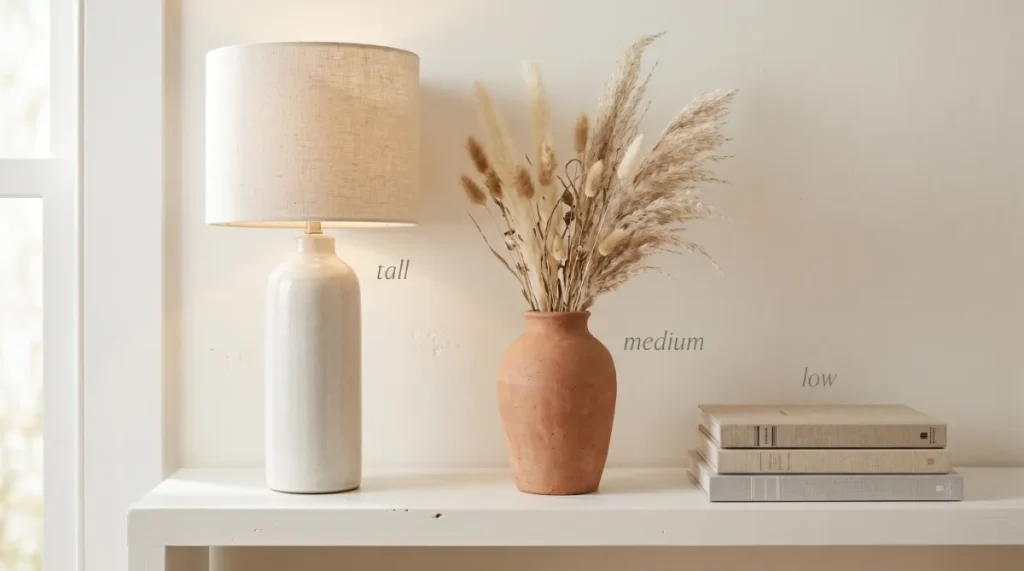
Decor almost always looks better in odd numbers. A group of three objects on a shelf reads as intentional. Two objects reads as placeholder. One object reads as forgotten.
Vary the heights within any grouping. Tall, medium, short. This creates visual rhythm without any design training required.
What to put on surfaces:
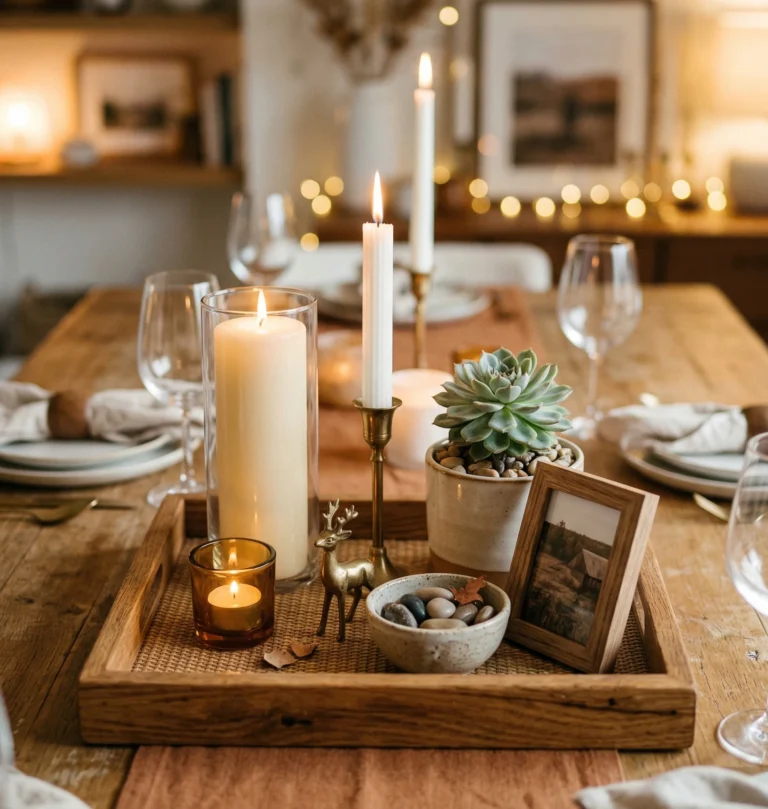
- Something organic: a plant, dried stems, a branch, stones
- Something with texture: a woven basket, a ceramic vase, a linen book stack
- Something personal: a photo, a souvenir, an object with a story
- Something with height: a tall lamp, a candlestick, a sculptural piece
You do not need all four in every vignette. Two or three is often better.
Wall art:
Hang art at eye level, not at the ceiling. The center of any artwork should sit roughly 57 to 60 inches from the floor. This is the standard used by museums and it works in every home.
For a gallery wall, lay the arrangement out on the floor first. Take a photo. Then transfer it to the wall. Far fewer holes, far less frustration.
Five Beginner Mistakes to Avoid
These come up in almost every first-time decorating project. Knowing them in advance saves real money and real frustration.
Mistake 1: Decorating room by room with no whole-home plan
Each room ends up in a different style and color family. The house feels like four different apartments stacked together. Decide on your whole-home palette and dominant style before decorating any single room.
Mistake 2: Buying everything at once
It feels efficient. It rarely is. When you rush to fill a room, you end up with pieces you settle for rather than pieces you love. Buy the big things first. Live with the space. Add the rest gradually.
Mistake 3: Following trends instead of your own taste
Trends exist to sell furniture. Bouclé sofas and limewash walls look everywhere right now. In five years, they’ll look dated. Buy what genuinely appeals to you, and your home will feel current for longer.
Mistake 4: Underestimating how much paint changes a room
Paint is the highest return-on-investment change you can make to any room. A fresh coat in the right color will do more than almost any piece of furniture. Do not skip it to save money, and do not rush the color choice.
Mistake 5: Overdecorating
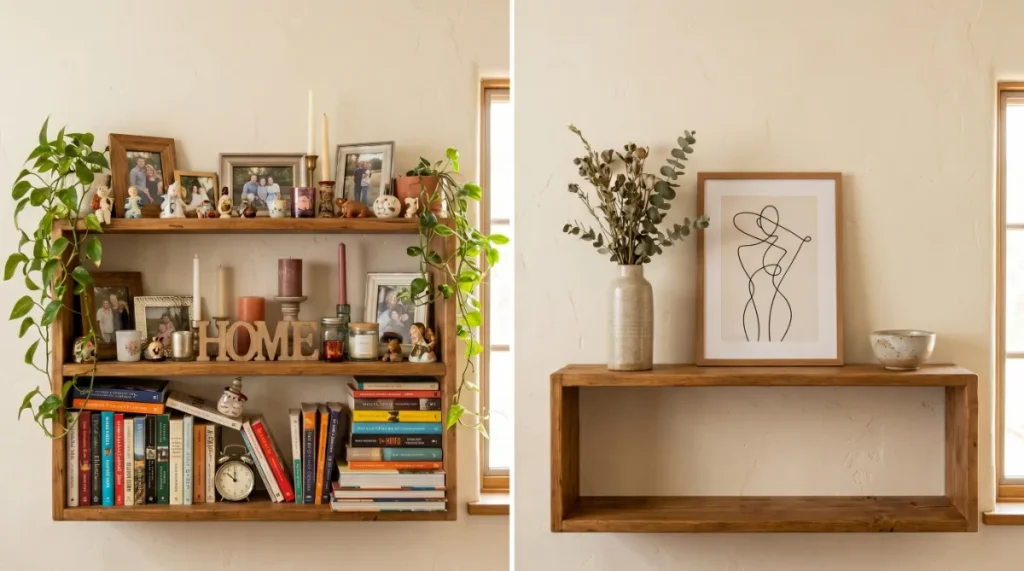
More decor does not equal more style. Every surface covered, every shelf packed, every wall filled. It looks cluttered and costs more. Leave breathing room. Negative space is not empty. It is rest for the eye.
Frequently Asked Questions
Where should a complete beginner start when decorating a home?
Start with your biggest, most-used room and work through it completely before moving on. Define how you use the space, measure everything, choose your color direction, and only then start purchasing. Doing one room well builds confidence faster than spreading effort across every room at once.
How do I decorate on a tight budget?
Spend the most on your largest investment pieces: the sofa, the bed, the dining table. These get used every day and need to last. Save on accessories, art, and soft furnishings where secondhand and budget sources work just as well. Thrift shops, Facebook Marketplace, and IKEA have all produced genuinely beautiful rooms in the right hands.
What is the best color to start with when decorating?
A warm white or off-white is the safest starting point for most beginners. It works with almost any style, makes spaces feel larger and lighter, and gives you maximum flexibility as you add furniture and decor. Benjamin Moore’s White Dove and Sherwin-Williams’ Alabaster are both widely used for good reason.
How do I make a small room look bigger?
Use light colors on walls and ceilings. Hang curtains high and wide. Use mirrors to reflect light. Choose furniture with exposed legs rather than pieces that sit directly on the floor. Avoid overcrowding. One or two well-chosen pieces in a small room look better than four pieces competing for space.
How long does it take to decorate a room properly?
Longer than most people expect. A well-decorated room is often the result of months of slow, considered additions. Give yourself at least three to six months for a major room. The rooms that look most pulled-together were not done in a weekend. They were refined over time.
The Honest Bottom Line
There is no single right way to decorate a home. But there is a logical order. Get the function right first. Commit to a color direction. Choose furniture at the right scale. Layer your lighting. Then add personality one piece at a time.
Decorating is not a one-time event. It’s an ongoing relationship with the space you live in. The best homes are the ones that get better slowly, as the people in them figure out what they actually love.
Start with one room. Do it properly. See how that feels. Then move on.