24 Wedding Floral Centerpieces That Create a Romantic Ambience
There is a reason flowers have been at the heart of weddings for centuries. They speak the language of love, beauty, and celebration without needing a single word.
The right floral centerpiece does not just decorate a table, it transforms the entire atmosphere of the room.
A beautifully arranged centerpiece sets the emotional tone the moment guests walk in. It tells them something about the couple, the mood of the evening, and the care that went into every detail of the day.
Whether you dream of tall, dramatic arrangements that command attention from across the room or low, intimate clusters that encourage conversation and closeness, there is a floral style here that will bring your wedding table vision to life.
These 24 ideas are filled with inspiration, practical guidance, and the kind of details that turn a beautiful centerpiece into something guests will still be talking about long after the last dance.
1. Tall Rose Arrangements in Glass Vases
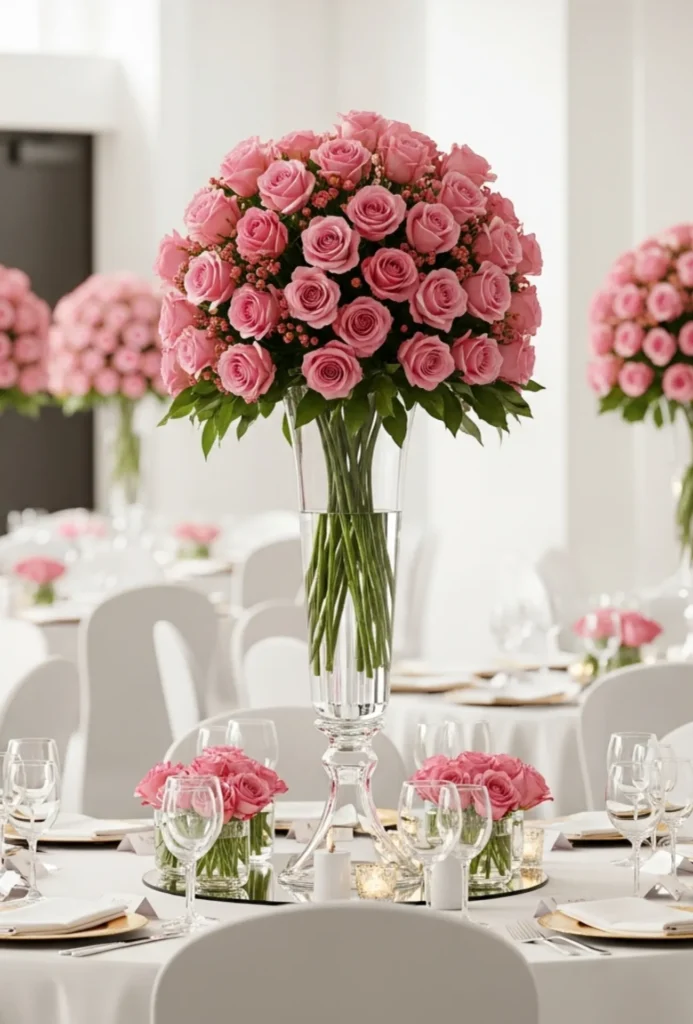
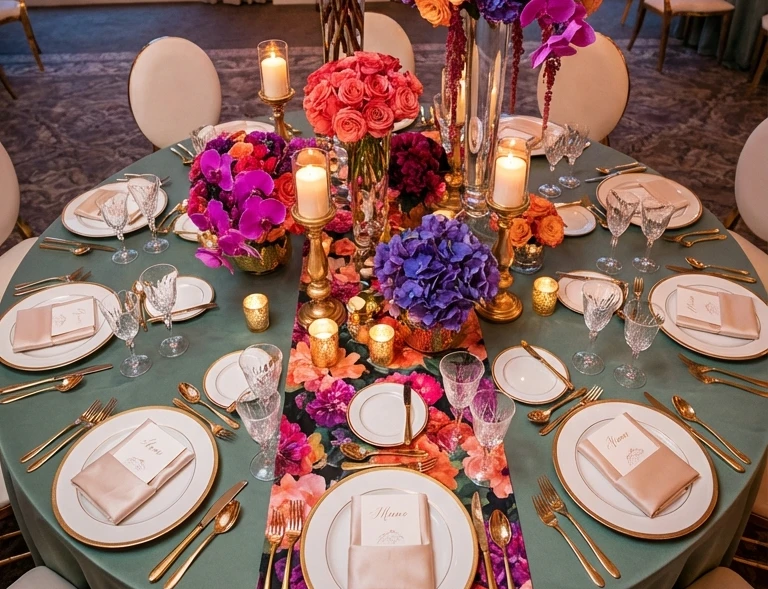
Few centerpieces command a room quite like a tall, lush rose arrangement rising from a clear glass vase. The height creates drama and elegance and the roses themselves carry all the romantic symbolism a wedding table could ask for.
The glass vase is a deliberate choice. It allows the stems to be part of the display, especially beautiful when the stems are clean and the vase is filled with crystal-clear water, and it keeps the arrangement feeling light and airy rather than heavy despite the dramatic height.
Choose roses in a palette that honors the overall wedding color story. All-white arrangements feel classic and timeless, blush and ivory feels soft and romantic, deep red feels bold and passionate, and dusty rose with hints of coral feels modern and warm.
- Use at least three rose varieties within the same color family for depth and visual interest
- Include garden roses alongside standard roses for a more textured, layered look
- Ensure tall arrangements are weighted correctly at the base so they cannot tip
- Add a few reaching stems of eucalyptus or ruscus at the top to soften the silhouette
2. Garden Style Mixed Blooms with Greenery
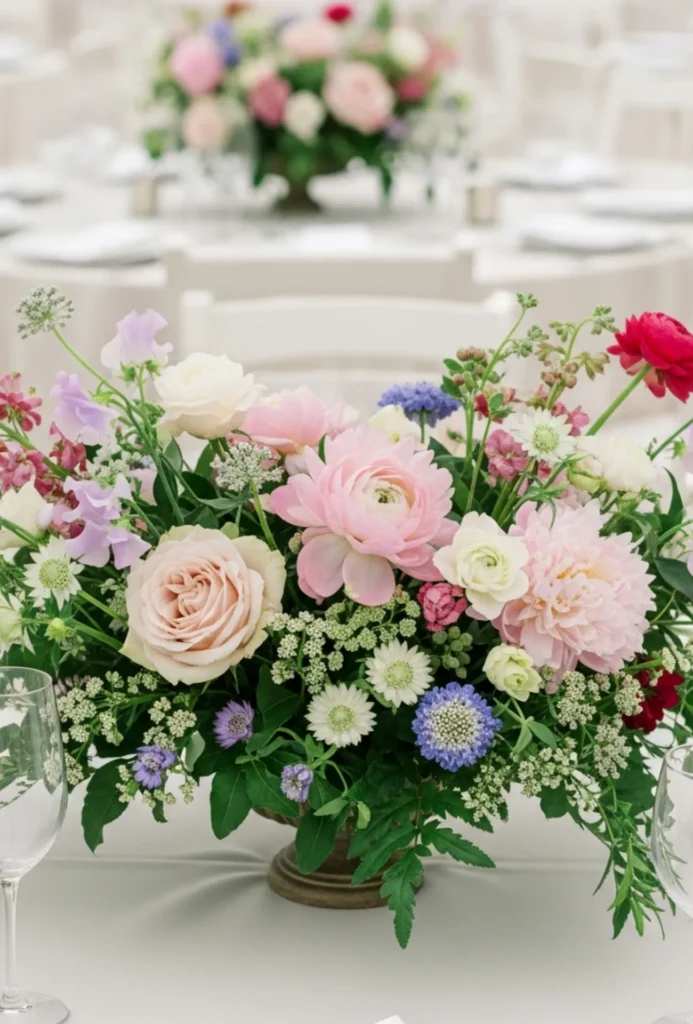
A garden-style centerpiece looks as though someone walked through a beautiful English country garden with a basket and gathered every lovely thing in bloom.
It is romantic, abundant, and has a natural joy that more structured arrangements cannot replicate.
The key to a convincing garden-style arrangement is variety. Mix large focal flowers like roses or peonies with medium flowers like sweet peas and ranunculus and fill in generously with small detail flowers like astrantia, scabiosa, and Queen Anne’s lace.
Weave greenery throughout, not as an afterthought but as an equal contributor to the overall composition.
Allow the arrangement to be slightly asymmetrical and let some stems reach outward beyond the vessel edge. The imperfection is entirely the point.
| Greenery Type | Character | Best Pairing |
| Eucalyptus | Silvery, aromatic, elegant | Roses, peonies, ranunculus |
| Ruscus | Deep green, glossy, structured | All flower types |
| Ferns | Soft, delicate, romantic | Wildflowers, sweet peas |
| Olive branches | Romantic, Mediterranean | White florals, dried accents |
| Ivy | Trailing, classic, lush | Cascading arrangements |
3. Low Peony and Hydrangea Clusters
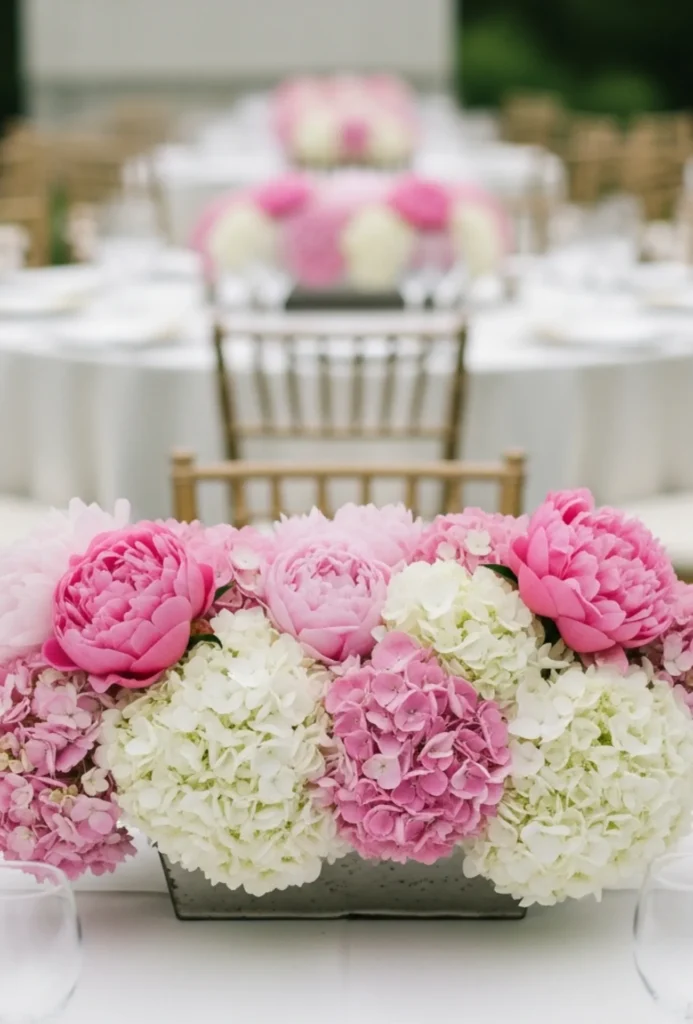
There is something wonderfully intimate about a low, full centerpiece that keeps the table feeling connected and conversational.
Peonies and hydrangeas together are perhaps the most naturally beautiful pairing in wedding florals and at low height they create a sense of abundance without ever feeling imposing.
The volume of hydrangea heads fills arrangements generously at low cost, creating a lush base into which peony stems can be nestled at different angles.
The contrast between the clustered floret texture of hydrangeas and the layered silky petals of peonies is genuinely stunning.
Work in soft pinks, creams, and whites for a classic romantic palette, or push toward dusty mauve hydrangeas with blush peonies for something with a more modern and moody quality.
- Use full, open peony heads as focal points and build hydrangea around and beneath them
- Add small white or cream flowers like ranunculus between the larger blooms to fill gaps
- Keep the arrangement dome-shaped so it looks equally full from every seat at the table
- Mist the arrangement lightly before the reception begins to keep blooms looking fresh
4. Cascading Floral Centerpieces with Trailing Vines
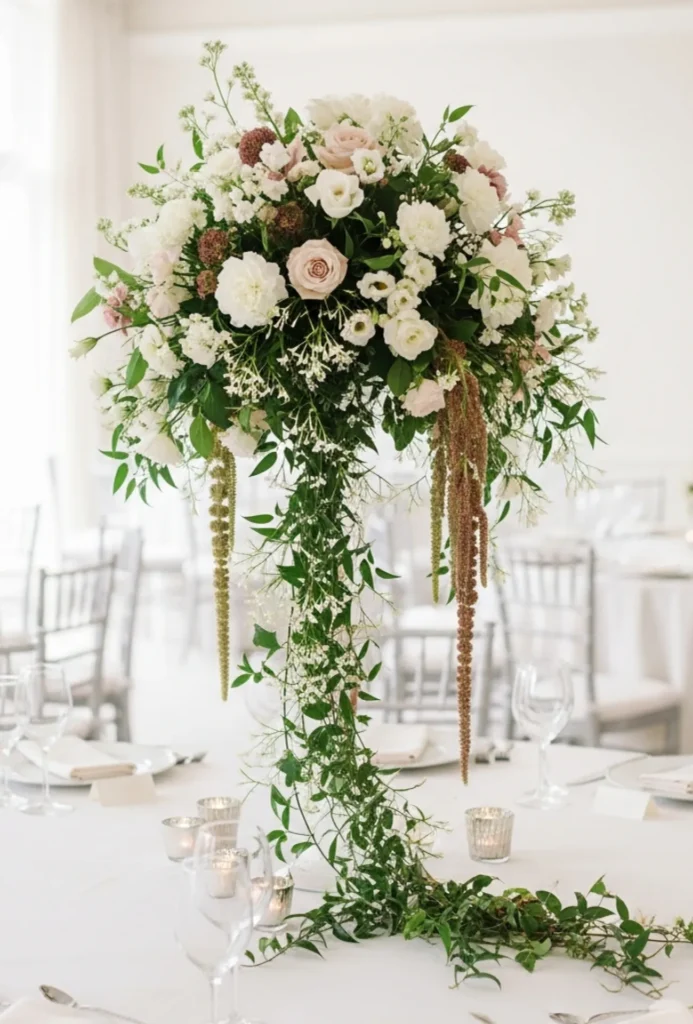
A cascading arrangement is one of the most dramatic and romantically theatrical centerpiece styles available.
Flowers and trailing vines spilling downward from the arrangement base create a sense of movement and abundance that feels almost alive.
Build the main arrangement at height using a tall vase or a raised compote and allow jasmine vines, smilax, ivy, or trailing amaranthus to cascade downward from the arrangement and pool softly on the table surface below.
The trailing element connects the centerpiece to the table itself, making the whole surface feel part of the display.
Cascading centerpieces suit formal receptions, candlelit dinners, and any wedding with a lush, romantic, or baroque aesthetic. They are genuinely show-stopping when executed with confidence.
- Establish the trailing vines first so the floral arrangement is built to complement their direction
- Use flexible trailing stems like jasmine, sweet pea tendrils, or ivy for the most graceful cascade
- Ensure the trailing elements do not interfere with place settings or guests’ space
- Photograph cascading arrangements from above as well as from the side for the full effect
5. Blush and Ivory Floral Compote Arrangements
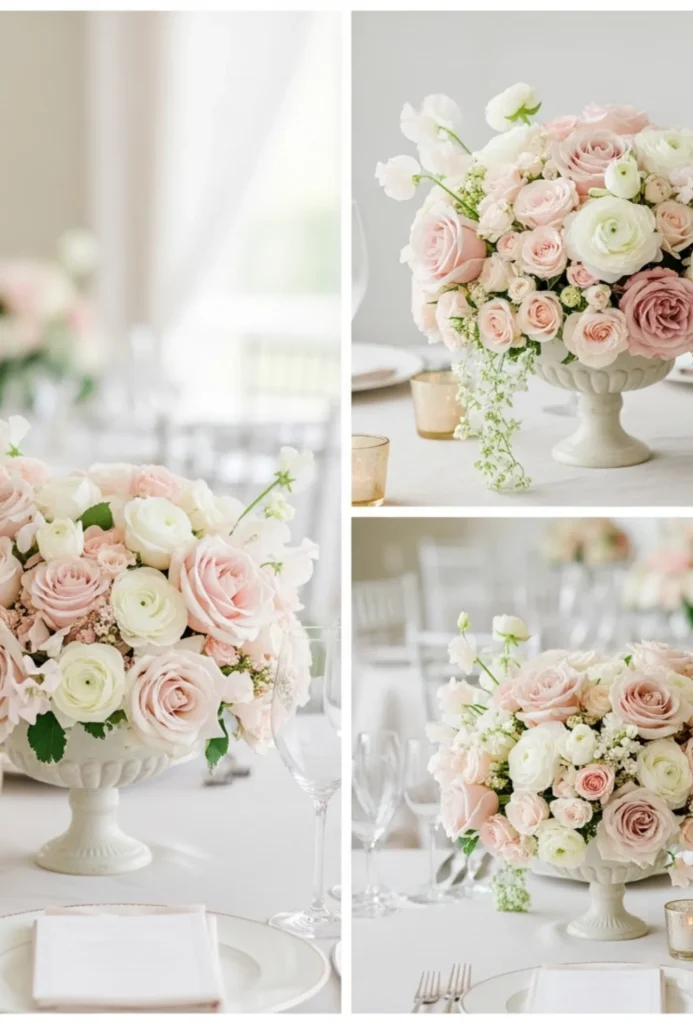
The compote bowl is a vessel with genuine elegance. Its elevated pedestal base gives the arrangement a natural lift while keeping the overall height intimate enough for guests to see each other across the table.
Filled with blush and ivory florals, it is one of the most enduringly beautiful wedding centerpiece formats.
Layer the compote with a dome of mixed blush and ivory blooms, working from the outer edge inward. Include roses, ranunculus, sweet peas, and small ivory lisianthus.
Let a few stems trail over the compote rim for a generous, slightly informal feel that prevents the arrangement from looking too stiff or formal.
The blush and ivory palette is one of the most universally flattering for weddings. It photographs beautifully across all lighting conditions and suits every complexion in the wedding party.
- Silver or mercury glass compotes add a vintage glamour quality to this arrangement style
- Terracotta or cement compotes give the same arrangement a modern, earthy update
- Add a few stems of pale green hellebore or soft green viburnum for a subtle color bridge
- Mirror tiles placed under the compote reflect the arrangement beautifully on the table surface
6. Monochrome Tulip Centerpiece Designs
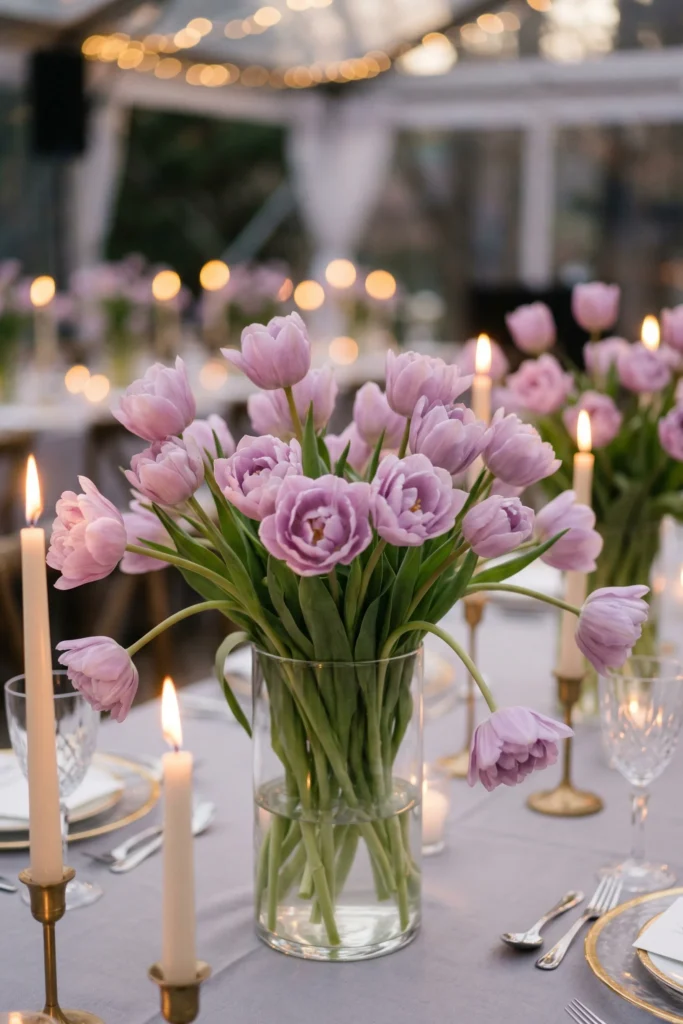
A mass of tulips in a single color arranged in a clean, simple vase has a minimalist beauty that is quietly extraordinary.
Tulips have a natural elegance of line and a graceful movement as they open that no other flower quite replicates.
Choose tulips in one carefully considered color. Pure white for a clean, modern, deeply romantic feeling. Soft lilac for something dreamy and slightly unexpected. Deep burgundy for a rich, passionate, dramatically beautiful statement.
The singular color focus gives the arrangement a confidence and clarity that mixed arrangements sometimes lack.
Allow the tulips to open naturally and even to move and curve slightly as the day progresses. A slightly open, naturally positioned tulip centerpiece has a living quality that looks genuinely beautiful in candlelight.
- Use double tulips such as ‘Angelique’ for the fullest, most peony-like effect
- Group a generous number of stems together so the arrangement feels abundant rather than sparse
- Cut stems to varying lengths so blooms sit at slightly different heights within the vase
- Remove leaves from the lower stem portion for a cleaner, more refined appearance
7. Floral Table Runner with Fresh Blooms
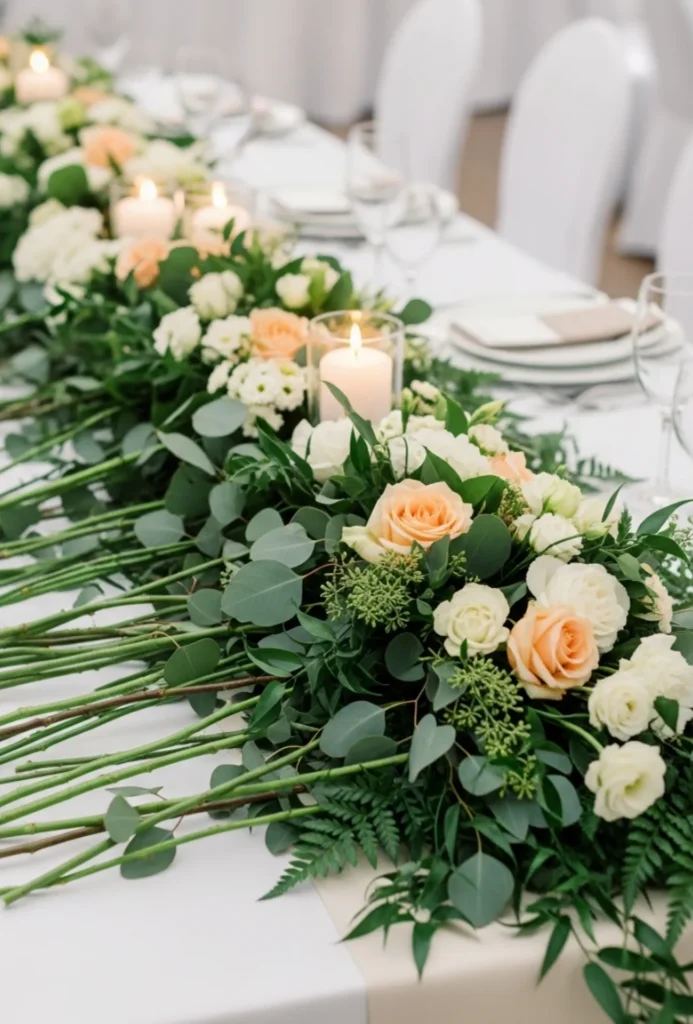
A fresh floral runner laid the full length of a wedding table is one of the most generously romantic ways to dress a table.
It turns the entire center of the table into a continuous, living garden and the effect when candlelight is added alongside is breathtaking.
Begin by laying long greenery stems as the foundation, building the runner base with eucalyptus, ruscus, and fern.
Layer flower heads throughout the length, keeping some areas denser for focal points and allowing the greenery to breathe between clusters. Tuck in candle holders at intervals and ensure trailing ends reach softly over the table edges.
The runner works most beautifully on long wooden farm tables where the contrast between the raw natural wood and the soft lush florals is most pronounced and romantic.
- Lay a thin plastic runner or floral mat beneath the arrangement to protect the table surface
- Build the runner from the center outward so both ends are equally balanced
- Include some blooms in bud stage so they open progressively throughout the reception
- Replenish wilting sections during a long reception by tucking in fresh flower heads
8. Orchid Arrangements with Candle Accents
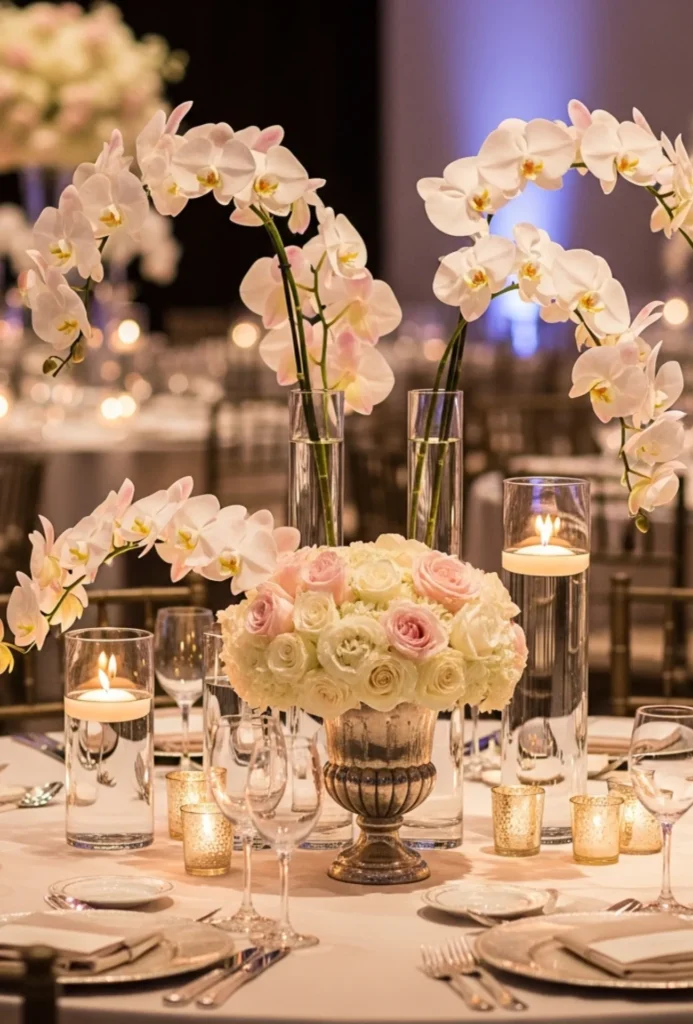
Orchids bring a sculptural, architectural elegance to wedding centerpieces that few other flowers can match.
Their long arching stems and precisely spaced blooms have a natural refinement that looks equally at home in a modern glass vase or a classic silver urn.
White or blush phalaenopsis orchids paired with warm candlelight create one of the most quietly romantic centerpiece combinations possible.
The candle glow reflects through the translucent petals of the orchid blooms and the warmth of the light complements the cool, precise beauty of the flower.
Arrange multiple orchid stems together so the arching branches fan outward in different directions. Surround the base with pillar candles in varying heights or cluster votive candles among low greenery beneath the orchid display.
| Orchid Variety | Character | Candle Pairing |
| Phalaenopsis | Elegant, arching, refined | Tall tapers, warm white glow |
| Cymbidium | Bold, full, architectural | Wide pillars, dramatic flame |
| Dendrobium | Delicate, cascading, light | Small votives, gentle flicker |
| Oncidium | Airy, dancing, romantic | Floating candles in bowls |
9. Wildflower Inspired Romantic Bouquets
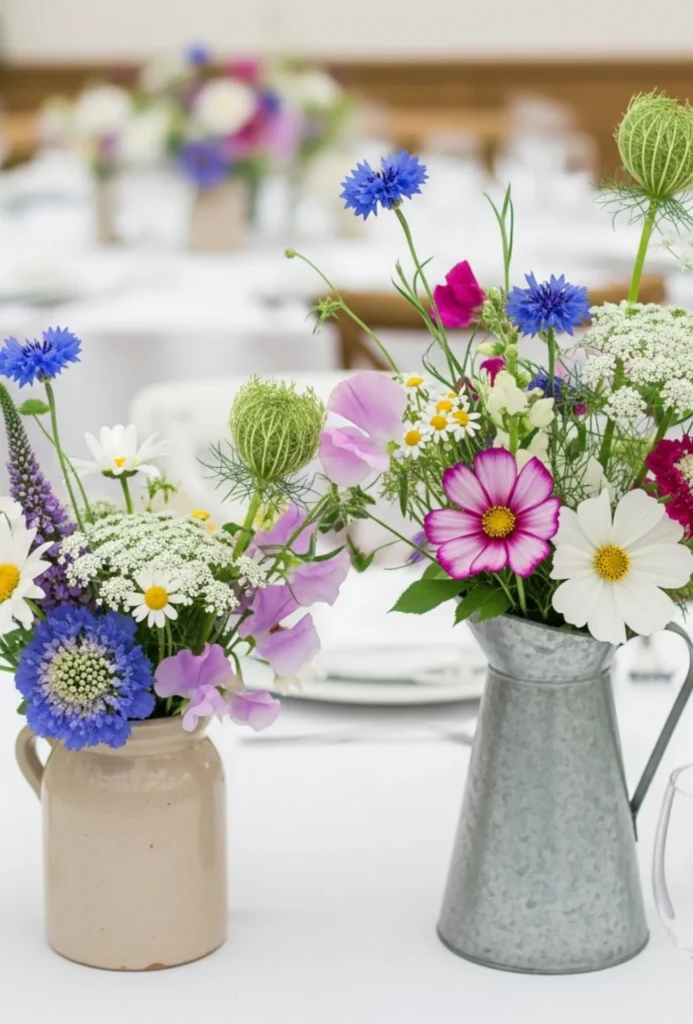
Wildflower centerpieces carry a relaxed, unscripted romance that feels genuinely joyful and alive. They look as though the flowers chose themselves, gathering in beautiful combinations that no florist could entirely plan.
Mix cornflowers, sweet peas, daisies, Queen Anne’s lace, cosmos, scabiosa, and whatever is locally in season into loose, generous arrangements.
Place in simple vessels like glass bottles, ceramic crocks, or galvanized metal jugs. The less formal the vessel, the more the wildflower aesthetic is honored.
This centerpiece style suits outdoor weddings, garden receptions, barn celebrations, and any couple who wants their wedding to feel personal, relaxed, and full of natural charm rather than formal precision.
- Source local and seasonal wildflowers for the most authentic and budget-friendly arrangements
- Allow the arrangement to be genuinely loose and unstructured rather than approximating wildness
- Include flowering herbs like lavender, rosemary, and chamomile for fragrance
- Mismatched vessels across different tables add to the charming, gathered quality of the display
10. Soft Pastel Mixed Floral Arrangements
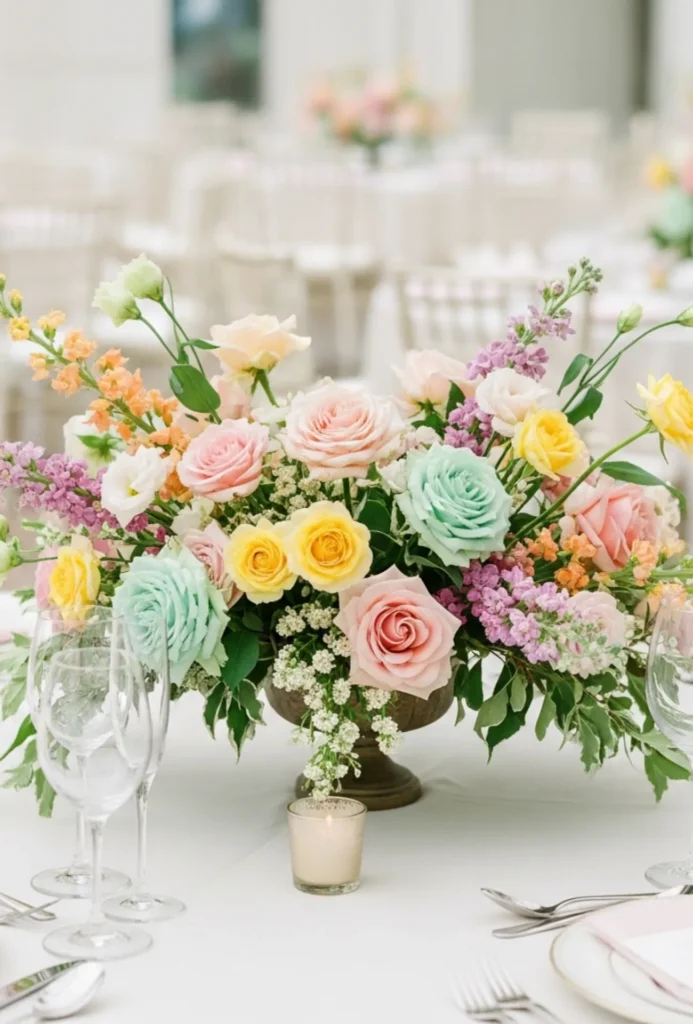
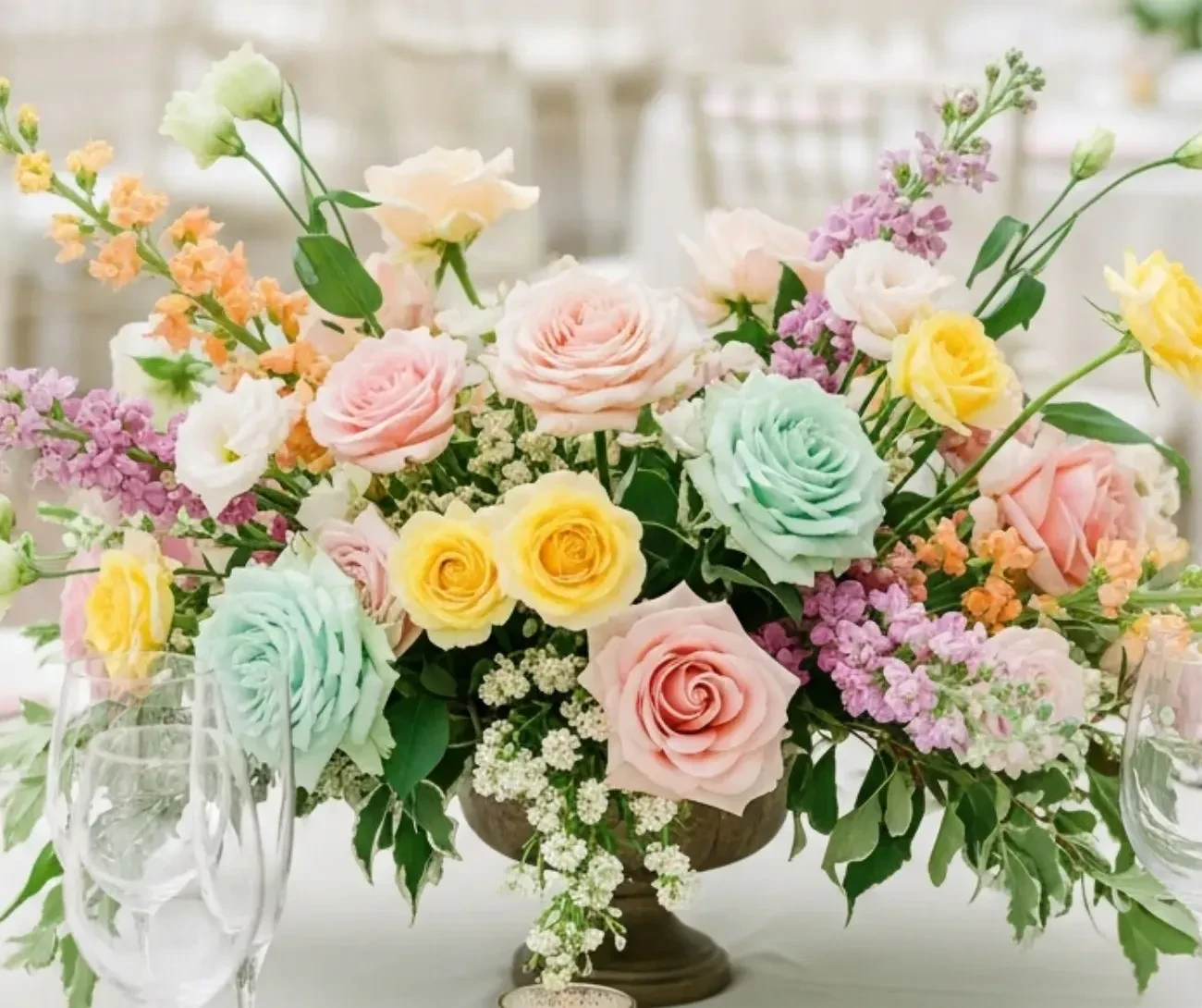
A soft pastel palette in a full, mixed floral arrangement creates something that feels genuinely dreamy. Pale peach, blush pink, soft lavender, butter yellow, and mint green together in a generous arrangement have a watercolor quality that is beautiful and deeply romantic.
The trick with pastels is ensuring there is enough tonal variation within the palette to prevent the arrangement from looking washed out.
Include slightly deeper shades within each color family and use greenery in warm rather than cool green tones to keep the overall effect warm and glowing rather than pale and flat.
Soft pastels suit spring and early summer weddings particularly well but work beautifully year-round in candlelit evening receptions where the warm light deepens and enriches every color.
- Anchor the arrangement with one slightly deeper tone to prevent the palette from looking too pale
- Include cream and ivory flowers as neutral bridges between the pastel color groups
- Soft pastel arrangements photograph most beautifully in natural daylight
- Add a few blooms with soft veining or delicate markings for visual detail within the palette
11. Peonies in Vintage Style Vessels
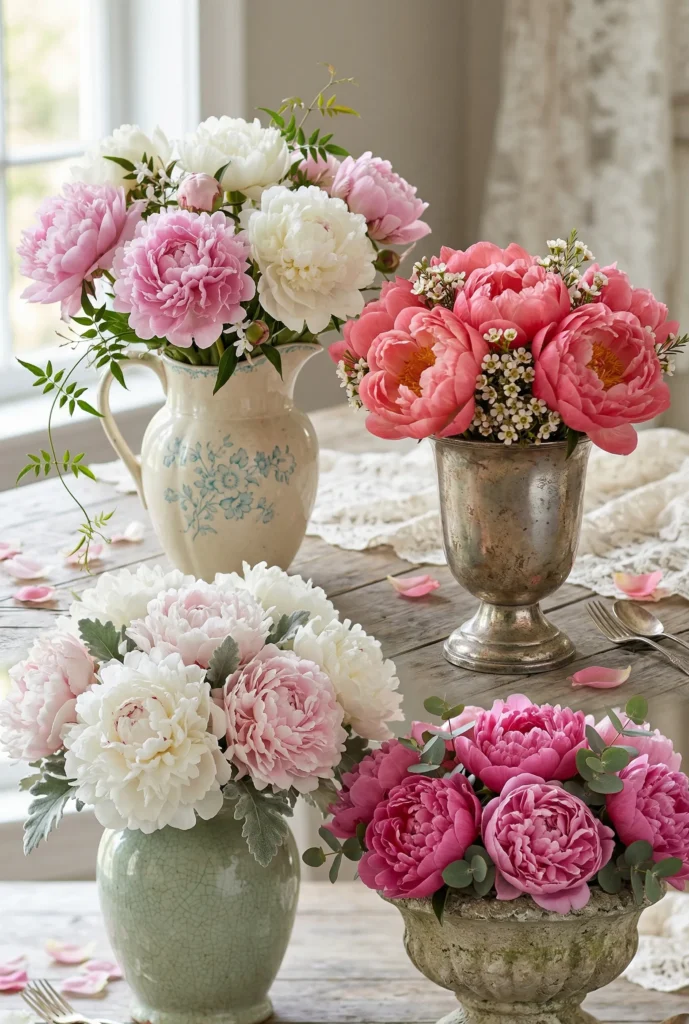
Peonies are arguably the most romantic flower in existence and placing them in a beautiful vintage vessel takes that romance to an entirely different level.
The combination of the ruffled, abundant peony bloom with an antique container carries a sense of history and beauty that feels completely right at a wedding.
Source vintage pitchers, old ceramic vases, antique silver urns, or weathered stone planters from antique markets, estate sales, or family collections.
A mismatched collection of vintage vessels each holding a generous bunch of peonies creates a centerpiece story that feels personally collected and genuinely beautiful.
Let the peonies be the stars entirely. They need minimal supporting flowers. Perhaps a few sprigs of greenery or some soft filler flowers, but peonies in a beautiful old vessel truly need very little else.
- Peonies should be purchased a day or two before the wedding to ensure they are fully open by the reception
- Store in a cool room with freshly cut stems in deep water to encourage even opening
- Mix peony varieties such as bowl of cream, coral charm, and sarah bernhardt for varied textures
- Vintage silver vessels can be polished to a bright shine or left with a soft patina depending on the desired aesthetic
12. Hydrangea and Eucalyptus Blends
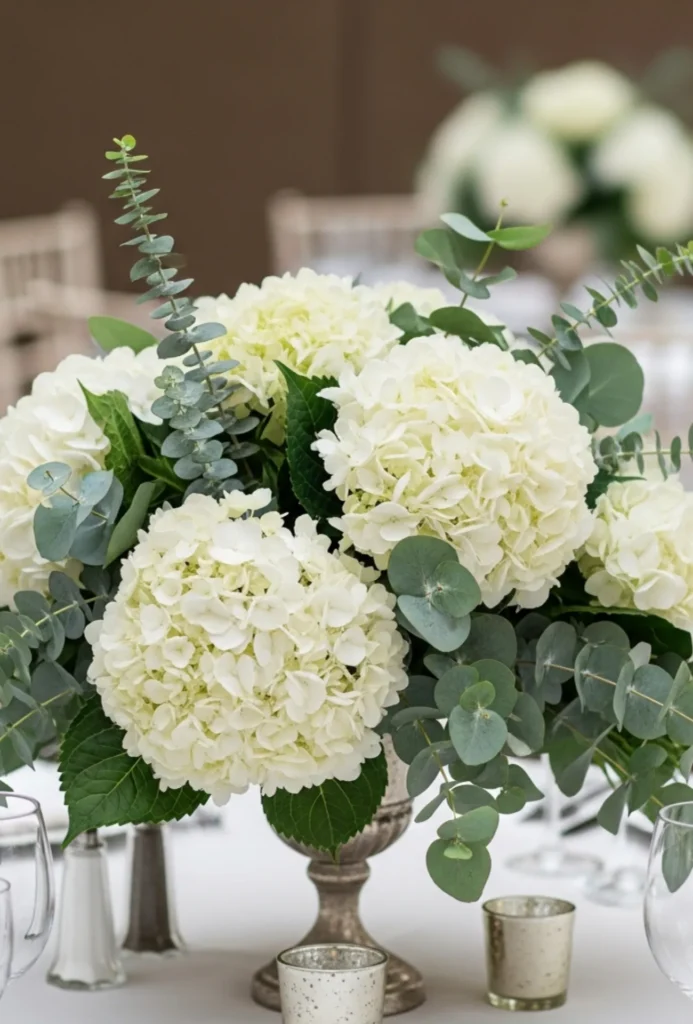
Hydrangeas and eucalyptus are one of the most beloved and reliable combinations in wedding floristry. The full, rounded quality of hydrangea heads alongside the silvery, aromatic quality of eucalyptus creates something that is simultaneously generous and refined.
Use eucalyptus not merely as a frame for the hydrangeas but as an active, visible part of the arrangement.
Allow eucalyptus branches to reach beyond the hydrangea mass and let their silvery leaves contrast with the softer, rounded texture of the flower clusters.
This combination works in virtually every wedding color palette. White hydrangeas with silver-dollar eucalyptus is a classic. Blue hydrangeas with seeded eucalyptus feels more relaxed and boho. Blush hydrangeas with preserved eucalyptus has a warm, slightly vintage quality.
- Use both seeded and silver-dollar eucalyptus varieties within the same arrangement for textural variety
- Condition eucalyptus by cutting the ends and stripping lower leaves before placing in water
- Hydrangeas drink enormous quantities of water so check and refill vessels frequently
- Submerge hydrangea heads briefly in cold water if they begin to wilt before the reception
13. Roses with Soft Berry Accents
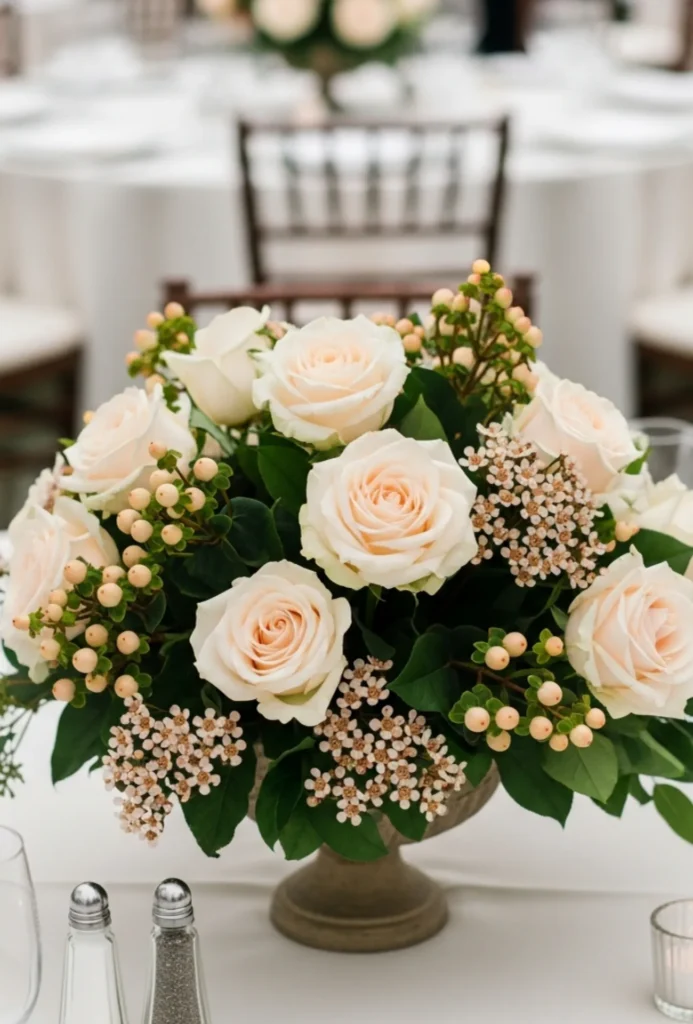
The addition of berry stems to a rose arrangement introduces a textural and visual complexity that transforms a beautiful floral display into something truly extraordinary.
Berries add depth, a sense of wildness, and an earthiness that softens the formality of roses beautifully.
Hypericum berries in ivory, blush, or burgundy are the most widely used and most versatile. Waxflower with its tiny berry like buds adds a different quality, more delicate and fine.
For autumn weddings, actual berry stems from the garden, including rosehips, beautyberries, and hawthorn berries, create arrangements that feel deeply seasonal and naturally romantic.
The berries should be distributed throughout the arrangement rather than clustered in one section. Their presence should feel discovered rather than placed.
- Choose berry colors that sit within the wedding palette rather than contrasting against it
- Hypericum berries in soft peach tone beautifully with blush and coral rose arrangements
- Deep burgundy rosehips alongside red and burgundy roses creates a rich, autumnal romance
- Strip lower leaves from berry stems to allow cleaner water and longer stem life
14. Herb Infused Floral Arrangements
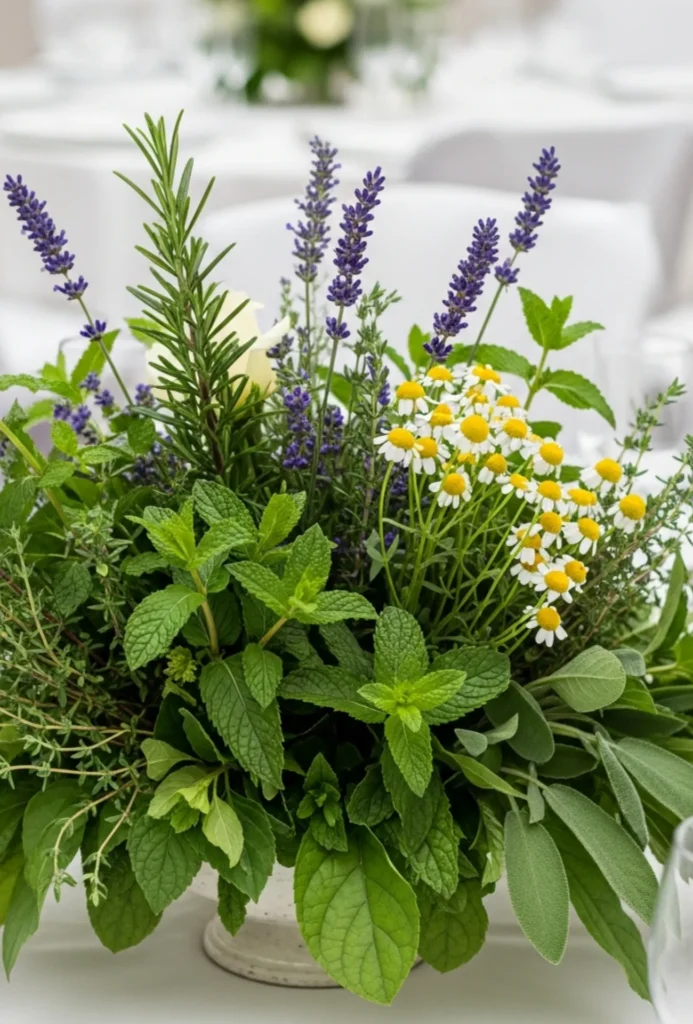
Incorporating fresh herbs into wedding floral centerpieces is one of the most sensory and unexpectedly romantic things you can do.
When guests lean in and catch the scent of fresh rosemary, lavender, or mint alongside the fragrance of flowers, the experience of the table becomes genuinely immersive.
Rosemary, thyme, mint, lavender, chamomile, and sage all integrate beautifully into floral arrangements. Their foliage textures vary wonderfully and each brings its own distinctive scent to the display.
Include herbs in both functional and decorative roles, as structural greenery, as filler, and as trailing elements.
The fragrance of an herb-infused arrangement drifts naturally across a table during a dinner reception and creates an atmosphere that purely floral arrangements cannot replicate. It is a detail guests often remember years later.
- Lavender adds both color and the most recognizably romantic floral herb fragrance
- Rosemary’s upright, structural stems work beautifully as a supporting element within arrangements
- Trim herbs from the garden the morning of the wedding for the freshest, most fragrant results
- Herb-infused arrangements suit outdoor, garden, and rustic wedding styles especially well
15. Amaranthus Hanging Style Floral Designs
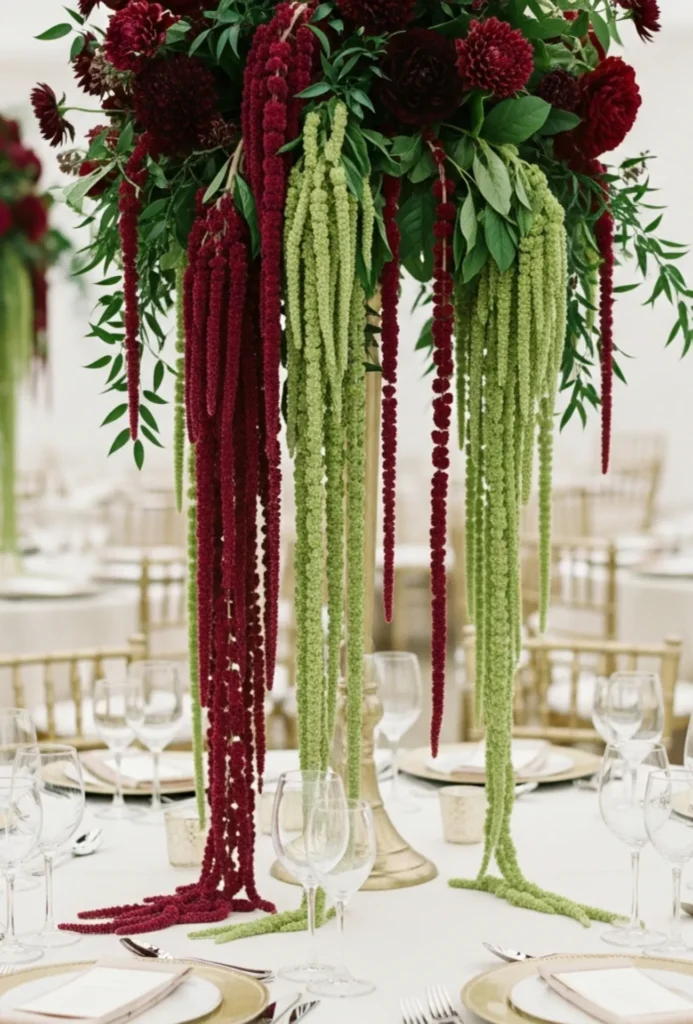
Long trailing amaranthus stems introduce a sense of movement and romantic drama that very few other florals can match.
Their pendulous, velvet-textured rope-like trails hang gracefully from arrangements and cascade toward the table surface in a way that feels genuinely theatrical and beautiful.
Use trailing amaranthus in deep burgundy, rich wine, or soft green tones as the defining dramatic element of the arrangement.
Build a full floral display at height and let long amaranthus stems fall downward from the arrangement base, some short and some reaching considerably longer for a varied, organic cascade effect.
Amaranthus suits richly romantic, garden-lush, and deeply colored wedding palettes. It looks spectacular in candlelight and photographs with incredible depth and movement.
- Source amaranthus with the longest possible trailing stems for maximum dramatic impact
- Deep burgundy amaranthus adds an almost jewel-like richness to rose and peony arrangements
- Handle amaranthus gently as the trailing heads are delicate and can break from the stem
- Allow amaranthus to condition in deep water for at least 12 hours before use in arrangements
16. Florals with Fruit Accents for Texture
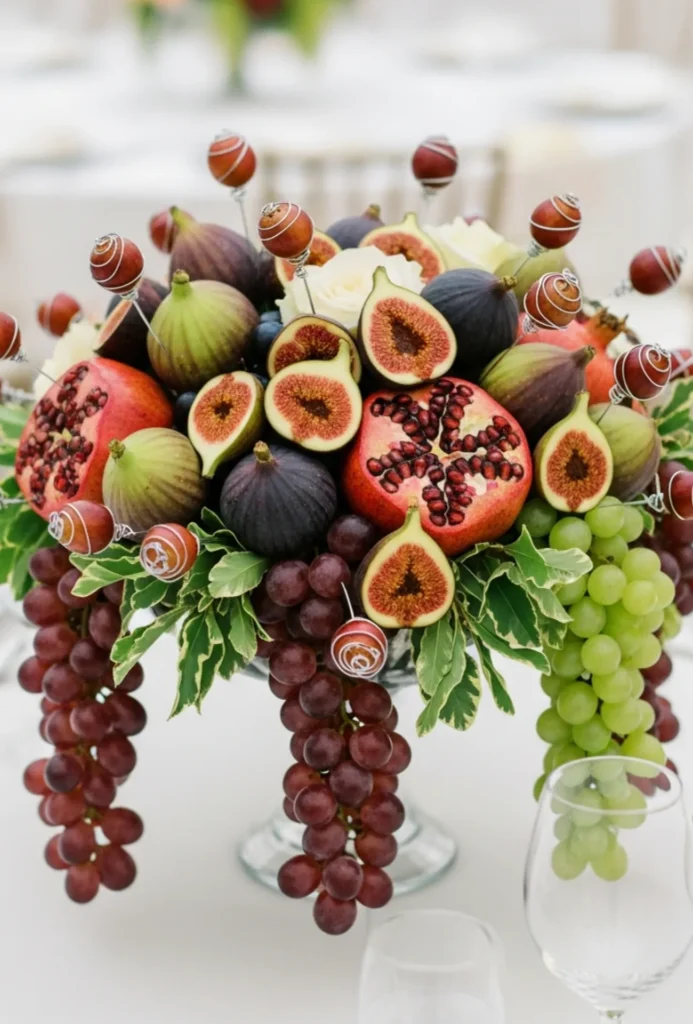
Fruit woven through a wedding floral centerpiece creates an abundance and richness that speaks directly of celebration, harvest, and the fullness of life. It is one of the oldest floral traditions and remains one of the most visually striking.
Cluster small fruits throughout the arrangement using floral wire or by simply nestling them securely between stems.
Figs cut to reveal their jewel-like interior, clusters of deep purple or green grapes trailing over the vessel edge, pomegranates split open to show their garnet seeds, and small kumquats or loquats all work magnificently.
The colors and textures of fruit alongside flowers create a still-life quality that feels almost painterly. At a long candlelit wedding table, the effect is genuinely magnificent.
- Purchase fruit the day before and store at room temperature so it looks naturally ripe
- Wire fruits individually with thin floral wire for secure placement within arrangements
- Cut fruit faces should be treated with lemon juice to delay browning at the surface
- Fruit-infused arrangements suit late summer, autumn, and harvest-themed wedding aesthetics particularly well
17. Ranunculus Romantic Centerpiece Clusters
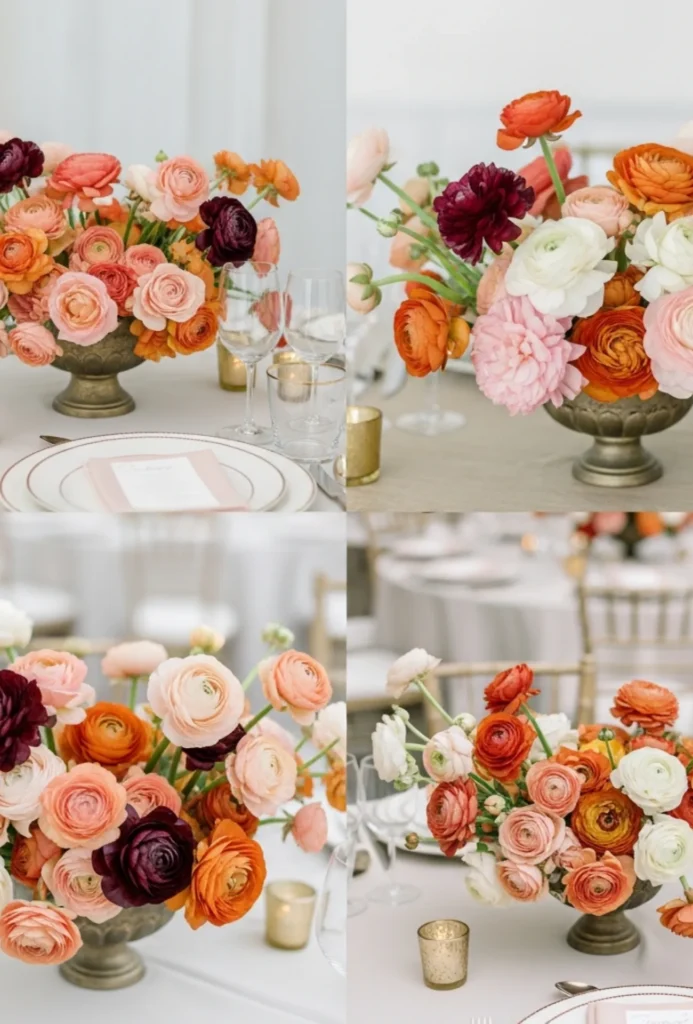
Ranunculus is arguably the most underappreciated flower in wedding floristry. Its tissue-thin layered petals, incredible color range, and long vase life make it one of the best flowers to build a wedding centerpiece around, either as the star of the show or as a key supporting player.
A centerpiece built primarily of ranunculus in complementary tones has an extraordinary papery, ruffled beauty. Peach, coral, blush, burnt orange, deep burgundy, and soft white ranunculus mixed together in a full arrangement feel like a painting come to life.
Their smaller scale compared to roses and peonies means ranunculus work best in generous quantities. Pack them in densely and allow their natural variety of bloom stages, from tight bud to fully open, to create natural variation within the arrangement.
| Ranunculus Color | Mood | Best Wedding Style |
| Blush and peach | Soft, dreamy, romantic | Garden, spring, outdoor |
| Coral and orange | Warm, joyful, vibrant | Summer, boho, Mediterranean |
| Deep burgundy | Rich, passionate, dramatic | Autumn, formal, candlelit |
| Cream and white | Pure, classic, refined | Modern, minimal, traditional |
| Mixed pastel | Playful, romantic, abundant | Relaxed, garden, vintage |
18. Vintage China Vase Floral Arrangements
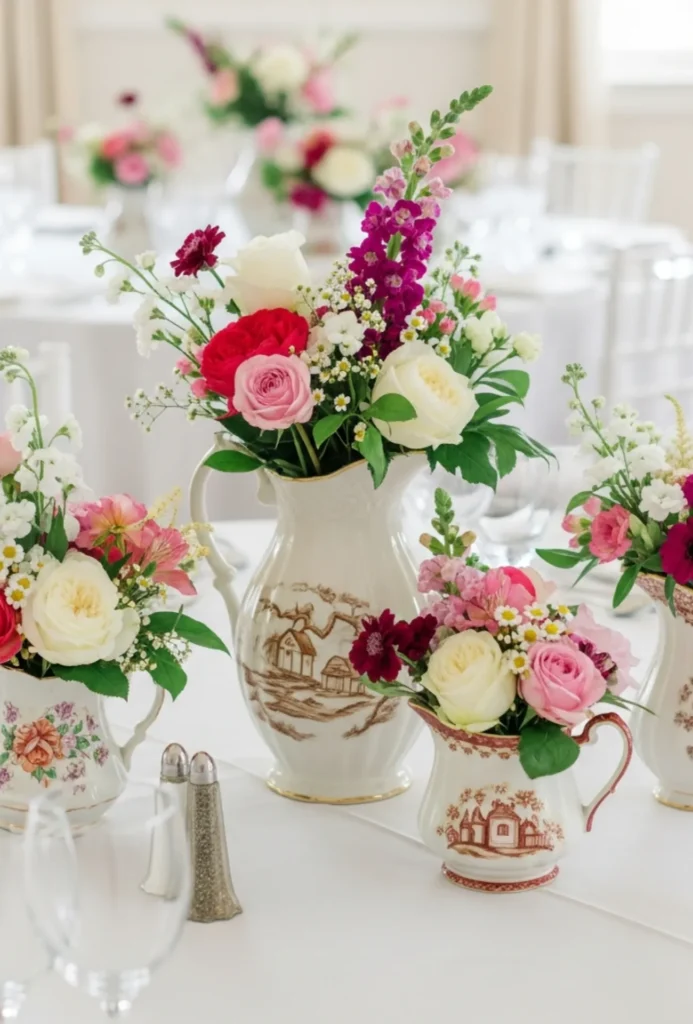
There is a tenderness and intimacy to wedding flowers displayed in vintage china vases and pitchers that no modern vessel quite captures.
The painted patterns, aged gilding, and slightly imperfect shapes of antique china give arrangements a quality that feels like love passed down through generations.
Mix different china patterns deliberately rather than matching them. A collection of mismatched vintage pieces each holding a small arrangement creates a centerpiece tableau that looks genuinely personal and curated rather than purchased as a set.
Ask family members whether any beloved old vases or jugs could be borrowed for the wedding tables. The story behind each piece adds a layer of meaning to the display that purchased items simply cannot carry.
- Keep arrangements in vintage china relatively simple so the vessel remains visible and celebrated
- Soft garden roses, sweet peas, and filler flowers suit vintage china proportions beautifully
- Seal any cracks in antique china with clear waterproof sealant before use as a vase
- Photograph the arrangements close up to capture both the floral detail and the china pattern
19. Floral Wreath Centerpieces with Candles
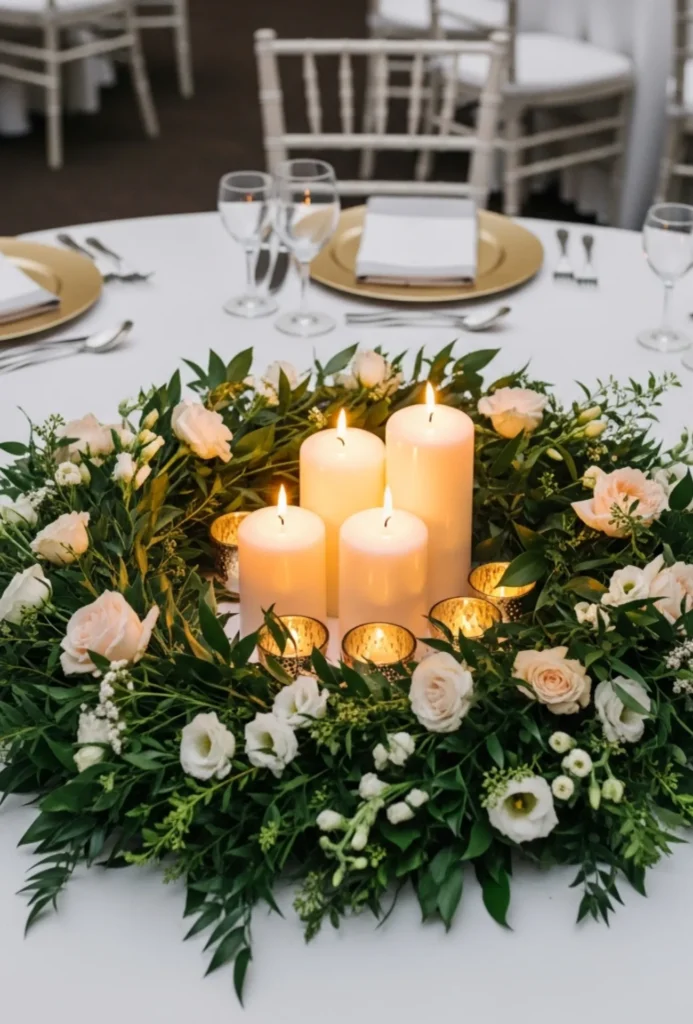
A floral wreath laid flat on the table as a centerpiece frame, with candles grouped at its center, creates one of the most symmetrical and ceremonially beautiful table displays imaginable. It feels ancient and intentional in the best possible way.
Build or source a lush green wreath base and weave fresh flowers throughout. Place three pillar candles of varying heights or a cluster of votives at the center of the wreath so the flames glow from within the floral ring.
As evening falls and the candles are lit, the wreath frames the candlelight in the most beautiful way.
The wreath centerpiece suits long banquet tables where the circular frame creates clear centerpiece moments at regular intervals. It also works beautifully as a single statement piece at the head table.
- Build the wreath on the day of the wedding for the freshest possible appearance
- Use a foam wreath base soaked in water to keep fresh flowers hydrated throughout the reception
- Vary the flower placement so some areas are denser and some allow more greenery to breathe
- Scatter a few loose petals inside the wreath ring around the candle base for a finishing touch
20. Rose and Tulip Mixed Bouquets
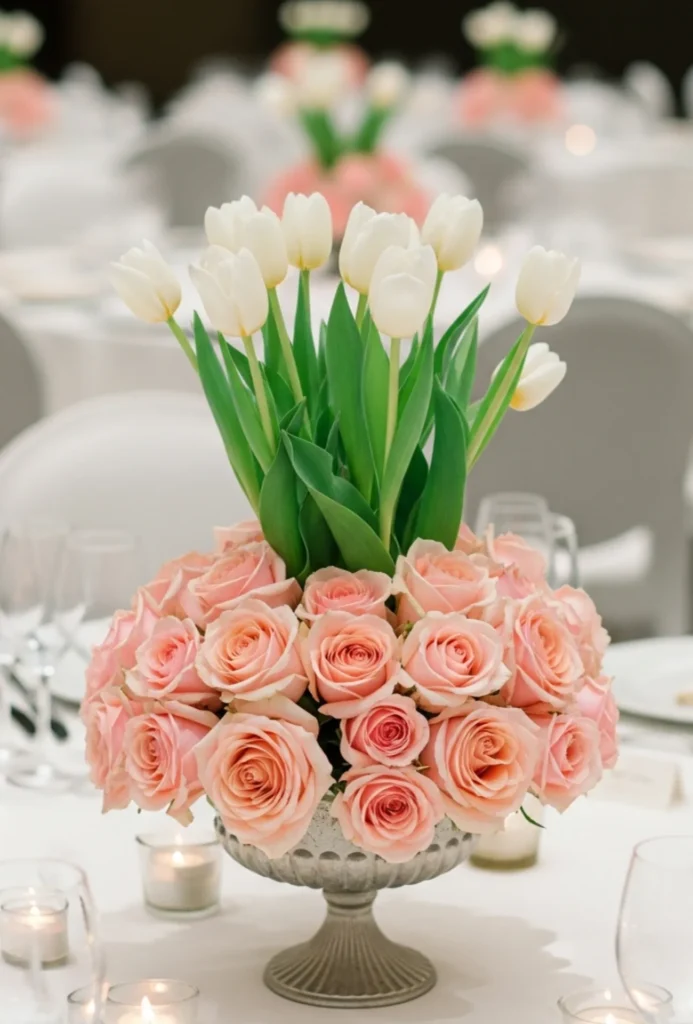
Roses and tulips together create an arrangement that feels both classic and fresh. The rounded fullness of roses paired with the smooth, clean lines of tulips is a combination that balances beautifully and suits virtually every wedding aesthetic.
Allow the tulips to be slightly taller than the roses so their elegant stems and graceful open heads rise above the fuller rose clusters below.
This natural height difference creates an arrangement with real movement and a sense of things growing at their own pace rather than being controlled into rigid uniformity.
In a monochrome palette, this combination is particularly striking. All-white roses and white tulips together have a purity and depth of texture that feels completely luxurious.
- Allow tulips to be at various stages of opening so the arrangement has natural variety
- Tulips continue to grow after cutting so arrangement proportions will shift beautifully during the event
- Mix garden roses with standard roses for a more textured, varied rose component
- Add a few stems of white or cream lisianthus between roses and tulips as a softening bridge
21. Hydrangea Cloud Style Arrangements
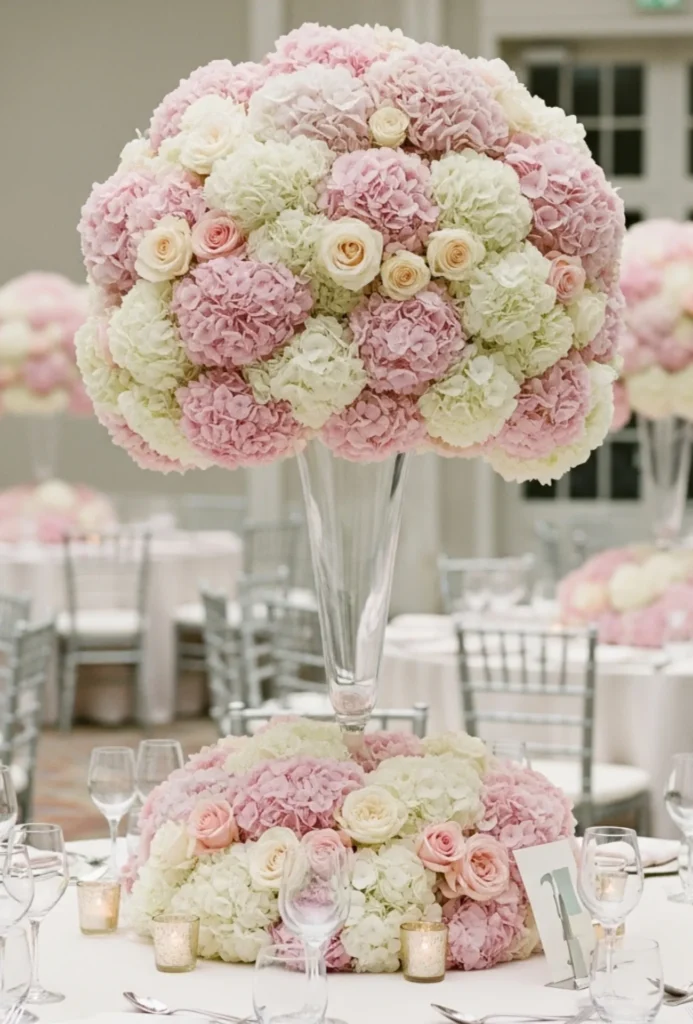
When hydrangeas are massed together in generous quantities and arranged to create a rounded, cloud-like form, the effect is soft, voluminous, and genuinely extraordinary. The cloud arrangement suits the dreamy, romantic atmosphere of a wedding perfectly.
Choose hydrangeas in consistent or very closely related tones so the mass reads as a single cloud of color. Soft blue, antique white, blush pink, or pale green hydrangeas each create a different emotional quality.
Pack the heads tightly together so no gaps appear and the surface of the arrangement looks continuous and billowing.
Place cloud arrangements in simple, weighty vessels that provide strong visual contrast with the soft, full floral mass above. A dark matte ceramic, a rough concrete pot, or a polished silver urn all work beautifully.
- Purchase hydrangeas a full day before the wedding and condition in deep cool water overnight
- Recut stems at a sharp angle and split the ends vertically to maximize water uptake
- Add a small amount of floral preservative to the vase water to extend bloom life
- Antique white and soft green hydrangeas mixed together create the most ethereal cloud effect
22. Tall Branch & Floral Mixed Designs
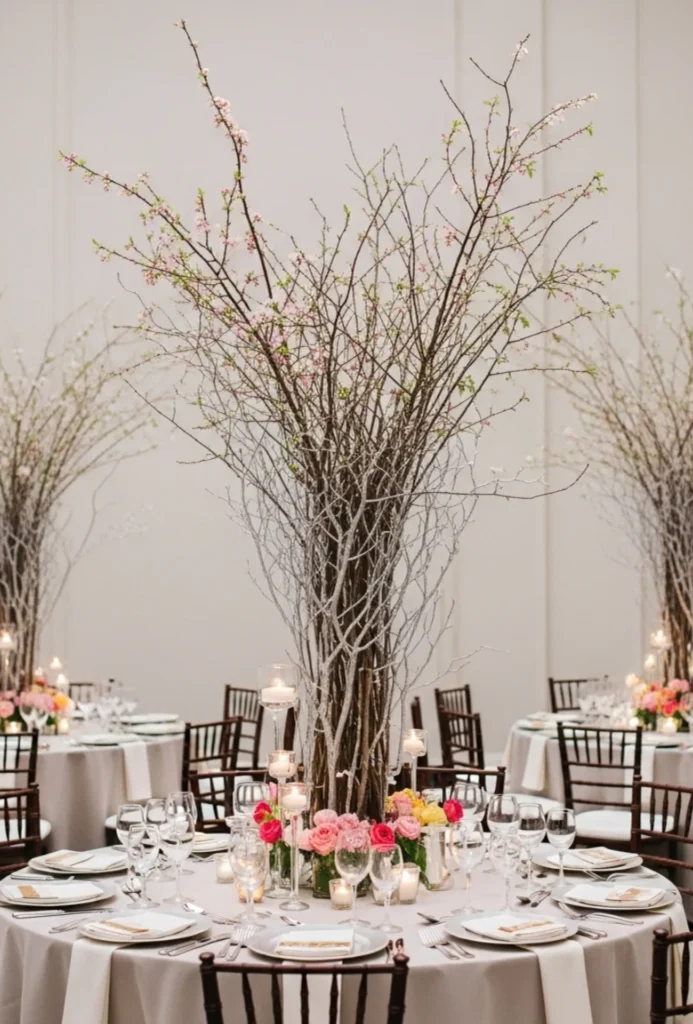
Incorporating dramatic branches into a floral centerpiece creates arrangements with extraordinary height and an airy, sculptural quality that flowers alone cannot achieve.
The branches create a sense of trees and landscape that transforms the scale of the entire room.
Establish long, interesting branches as the tallest element of the centerpiece. Cherry blossom in spring, apple blossom in early summer, contorted willow year-round, or simple bare silver-painted branches for a more graphic winter look.
Build the full floral arrangement at a lower level around and beneath the branch structure.
The contrast between the open, reaching branches above and the dense floral abundance below creates an arrangement that feels complete, alive, and genuinely dramatic from across the room.
- Secure branches firmly in a weighted, water-filled vessel to prevent any tipping risk
- Wrap branch bases in wet moss or florist wrap if they cannot be submerged in water
- Keep the floral section of the arrangement relatively generous to ground the tall branch elements
- Silver or white-painted bare branches add a winter wonderland quality to evening receptions
23. Lavender and White Romantic Florals
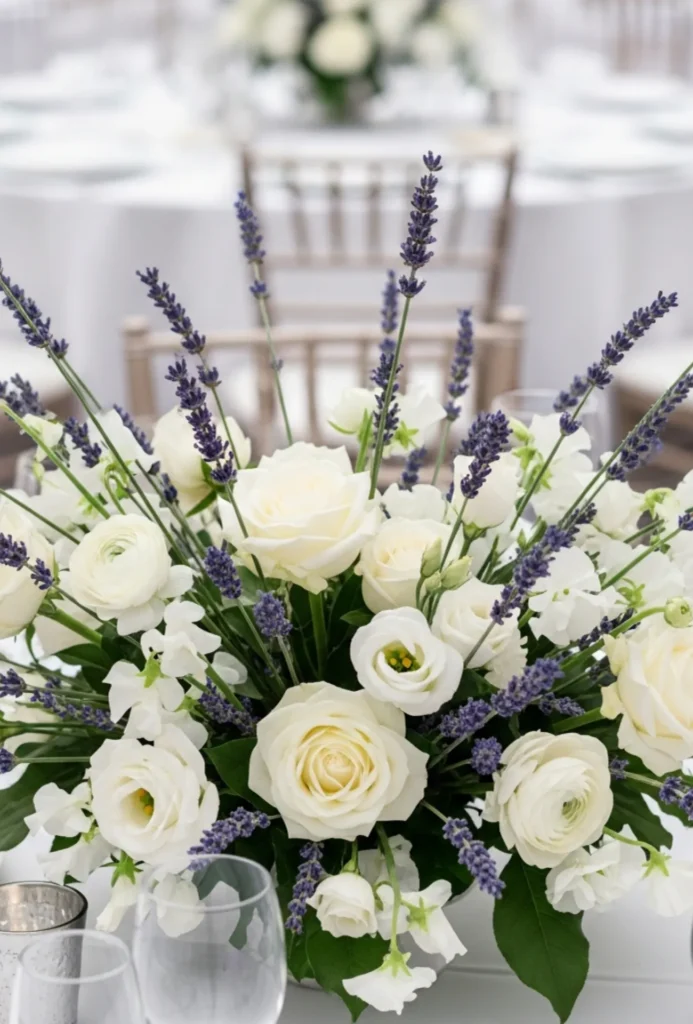
The combination of lavender purple and pure white in a floral centerpiece is one of the most classically romantic color pairings in wedding floristry.
It is simultaneously soft and defined, simple and rich, and it carries a sense of Provençal summer that feels deeply romantic.
Use actual lavender stems generously throughout the arrangement alongside white roses, white sweet peas, white ranunculus, and white lisianthus.
The purple-blue of the lavender against the pure white blooms creates beautiful tonal contrast and the fragrance of the lavender adds an entirely sensory dimension to the display.
This palette suits outdoor summer weddings, garden receptions, French-inspired celebrations, and any couple who wants their wedding to feel romantic, fragrant, and full of natural beauty.
- Use lavender at both bud and slightly open stages for the most complete fragrance expression
- Lavender stems are best kept relatively short and clustered rather than used as single reaching stems
- Add small white butterfly bush florets or white veronica as fine-textured fillers between lavender and larger blooms
- The fragrance of lavender intensifies as the room warms during the reception, creating natural aromatherapy
24. Burgundy and Blush Floral Combinations
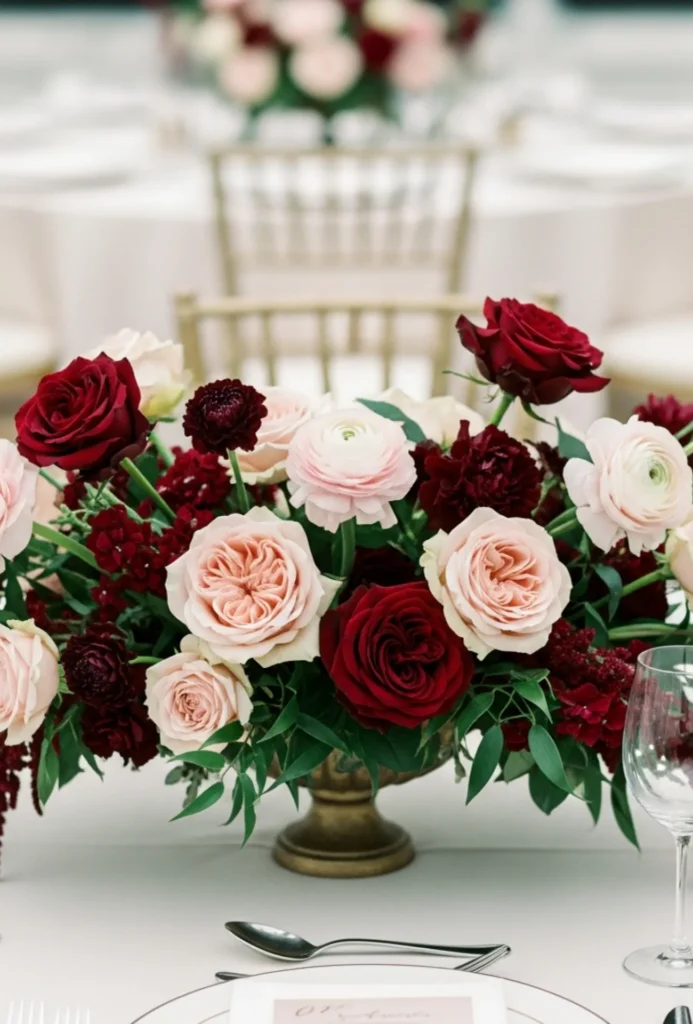
The combination of deep burgundy and soft blush in a wedding floral centerpiece is one of the most romantically sophisticated and timelessly beautiful color pairings in bridal floristry.
The depth of the burgundy gives the softness of the blush something to lean against and the contrast between the two tones creates arrangements with genuine richness and drama.
Build the arrangement using deep ‘Black Baccara’ or ‘Burgundy’ roses as anchor pieces, working blush garden roses, blush ranunculus, and pale dusty pink sweet peas around them.
Add deep burgundy scabiosa, wine-toned dahlias, and burgundy lisianthus as supporting blooms. Thread deep green foliage throughout so the arrangement has a grounded, garden quality.
The palette deepens beautifully in candlelight and photographs with extraordinary warmth and richness. It suits autumn and winter weddings especially well but has a timeless quality that works in any season.
- Use trailing amaranthus in deep burgundy to add movement and cascade to this arrangement
- Include dusty pink astilbe as a fine-textured element that bridges the burgundy and blush tones
- Dark green or near-black foliage like black mondo grass or dark pittosporum deepens the drama
- Add a few stems of dried poppy seed heads for textural contrast and a slightly wild, garden quality
Of all the decisions that shape the atmosphere of a wedding reception, the flowers may be the most emotionally powerful.
They are the element guests lean toward, photograph endlessly, and carry home in their memories long after every other detail has faded.
Which of these 24 centerpiece styles feels most like the wedding table you have always imagined, and do you believe that the flowers a couple chooses truly reflect something about the love story they are celebrating?