16 Solid Wood Dining Table Design Ideas for Modern Interiors

There’s something deeply satisfying about a solid wood dining table. It’s substantial, honest, and gets better with age rather than worse.
Modern interiors and natural wood aren’t opposites. In fact, the warmth and organic texture of real wood balance the clean lines and minimalism that define contemporary design.
These ideas showcase how solid wood tables fit seamlessly into modern spaces. From sleek Scandinavian styles to bold industrial pairings, you’ll see that contemporary doesn’t have to mean cold or sterile.
Ready to find the solid wood table that brings warmth and character to your modern home?
1. Minimalist Solid Oak Dining Table

A minimalist oak table strips away everything unnecessary, leaving only clean lines and beautiful wood grain. Simple rectangular form, straight legs, and natural finish let the material speak for itself.
Oak’s prominent grain adds visual interest without needing embellishment. The wood’s durability means this table will serve your family for generations.
This design works in virtually any modern space. Its restraint makes it adaptable, blending seamlessly while providing warmth that synthetic materials can’t match.
- Choose white oak for cooler tones or red oak for warmer hues
- Look for tables with minimal joinery visible on the surface
- Pair with simple chairs that don’t compete visually
- Finish with natural oil or matte polyurethane for protection
2. Scandinavian Light Wood Table With Clean Legs

Scandinavian design celebrates light wood tones and functional simplicity. These tables feature pale ash, birch, or beech with slender tapered legs that feel almost delicate.
The airy aesthetic makes rooms feel larger and brighter. Light wood reflects natural light beautifully, creating a sense of openness essential to Nordic design philosophy.
Pair with white walls, soft textiles, and minimal décor for authentic Scandi style. The table becomes a warm anchor in an otherwise pale, serene space.
3. Rectangular Pine Wood Table With Natural Finish

Pine brings rustic warmth to modern interiors without feeling too country. Its natural knots and color variation add character while clean lines keep it contemporary.
A clear natural finish showcases pine’s honey tones and distinctive grain patterns. The wood’s softness gives it a lived-in quality that suits casual modern homes.
This works beautifully in farmhouse-modern or transitional spaces. Pine bridges the gap between rustic charm and contemporary simplicity.
Solid Wood Species Comparison
| Wood Type | Color Tone | Grain Pattern | Durability | Best Style Match |
| Oak | Medium tan to brown | Prominent, open grain | Very high | Traditional, modern, transitional |
| Walnut | Rich chocolate brown | Straight, fine grain | High | Mid-century, contemporary, luxury |
| Pine | Light honey to amber | Knotty, varied | Medium | Farmhouse-modern, casual |
| Acacia | Golden brown with dark streaks | Distinctive, dramatic | High | Industrial, eclectic, global |
4. Solid Acacia Wood Table With Industrial Base
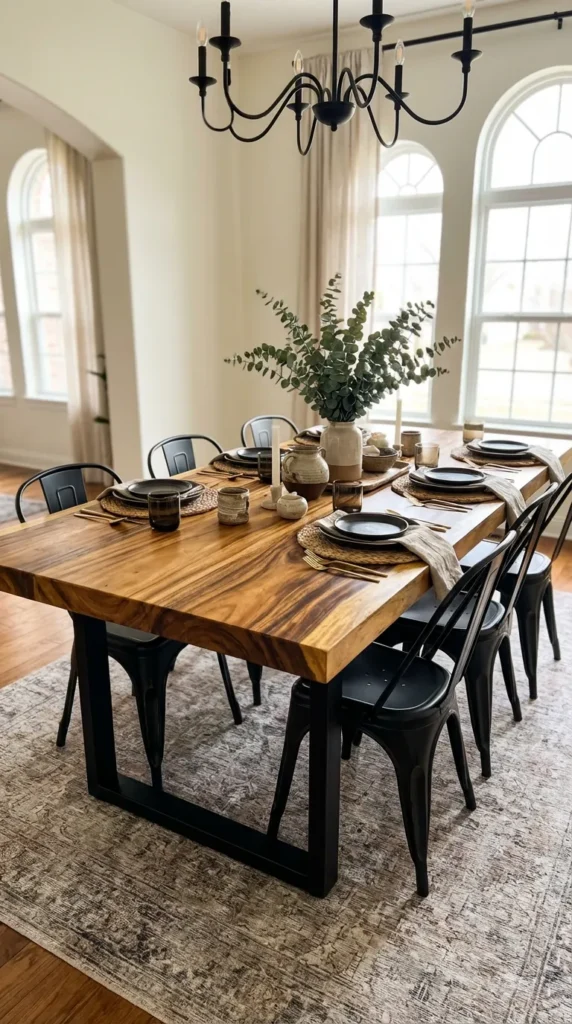
Acacia’s dramatic grain and rich color variations make each table completely unique. Pair that distinctive top with black metal legs for modern industrial edge.
The contrast between organic wood and structural metal creates visual tension that defines industrial style. It feels collected and intentional rather than mass-produced.
Acacia is incredibly hard and durable, making it practical for busy households. The wood’s natural water resistance is a bonus for dining tables.
- Expect color variation from golden to dark brown within each table
- Metal bases in matte black powder coat work best
- Use furniture pads under metal legs to protect floors
- Apply wood conditioner before staining for even color absorption
5. Walnut Slab Dining Table With Sleek Edges

Live edge walnut slabs are statement pieces that bring raw natural beauty into refined modern spaces. The natural edge preserves the tree’s original form while the flat top provides function.
Walnut’s deep chocolate tones and straight grain pattern exude luxury and sophistication. A live edge adds organic irregularity that softens modern minimalism.
Keep the base simple so the dramatic wood top takes center stage. Sleek metal or minimal wood legs let the slab shine.
6. Black Stained Oak Dining Table

Black-stained wood feels bold and contemporary while maintaining wood’s organic texture. The dark finish shows off oak’s grain beautifully through the stain.
This creates dramatic contrast in light, airy spaces. It grounds a room and provides visual weight without heaviness or bulk.
Black wood tables work particularly well in monochrome or high-contrast interiors. They bridge modern and traditional in unexpected ways.
- Apply multiple thin coats of stain for deep, even color
- Seal with matte or satin finish to avoid glossy look
- Pair with lighter chairs to prevent the space feeling too dark
- Mix with metallics like brass or copper for warmth
7. Pedestal Base Solid Wood Dining Table

Pedestal bases maximize legroom and seating flexibility. A single central support instead of four corner legs means chairs can squeeze in from any angle.
Modern pedestal designs use clean geometric forms rather than ornate traditional turnings. A solid wood top on a sculptural pedestal base feels both substantial and streamlined.
This works especially well for round or oval tables. The base’s visual weight centers the design and anchors the space.
8. Tapered Leg Teak Wood Table

Tapered legs are a mid-century modern signature. Starting thicker at the top and narrowing toward the floor, they create elegant lines that feel refined and intentional.
Teak’s warm golden-brown color and excellent durability make it ideal for dining tables. Its natural oils resist moisture and staining better than many hardwoods.
This design bridges vintage and contemporary beautifully. It feels retro without being dated, modern without being cold.
- Look for sustainably harvested or reclaimed teak
- Oil teak annually to maintain its warm golden color
- Pair with upholstered chairs in period fabrics like mustard or teal
- Mix with brass or walnut accents for authentic mid-century feel
9. Light Oak Table With Sculptural Silhouette
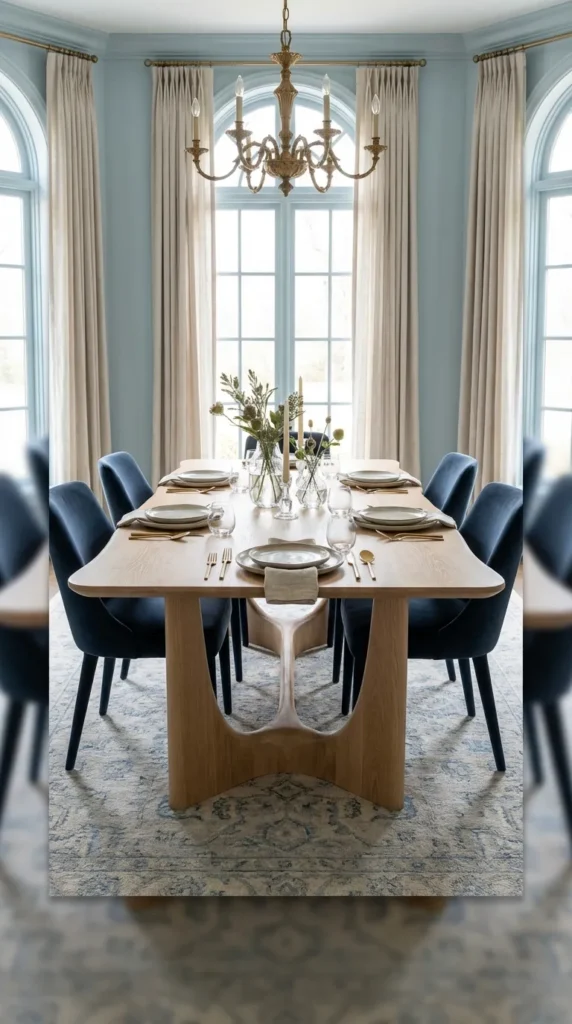
When a table has interesting architectural form, the wood itself can be simple. Light oak with unique leg shapes or base design becomes functional sculpture.
Look for organic curves, geometric angles, or asymmetrical bases that create visual interest. The pale oak keeps it feeling light despite bold form.
This approach suits modern spaces where furniture doubles as art. The table makes a statement while maintaining the warmth only real wood provides.
10. Mixed Wood Tone Tabletop Design

Combining different wood species or stains in one tabletop creates unique pattern and visual interest. Contrasting planks, geometric inlays, or ombre gradients make the table itself artwork.
This works especially well in eclectic or contemporary interiors. The mixed tones add complexity while the solid wood maintains cohesion.
Keep the base simple so the distinctive top remains the focal point. Let the wood’s natural variation be the design statement.
Mixed Wood Design Approaches
| Design Type | Visual Effect | Complexity Level | Best For |
| Alternating planks | Striped, rhythmic | Medium | Contemporary, modern farmhouse |
| Ombre gradient | Subtle, flowing | High | Artistic, unique spaces |
| Geometric inlay | Bold, graphic | Very high | Statement pieces, eclectic |
| Herringbone pattern | Classic, textured | High | Transitional, craftsman |
11. Solid Wood Table With Chamfered Edges
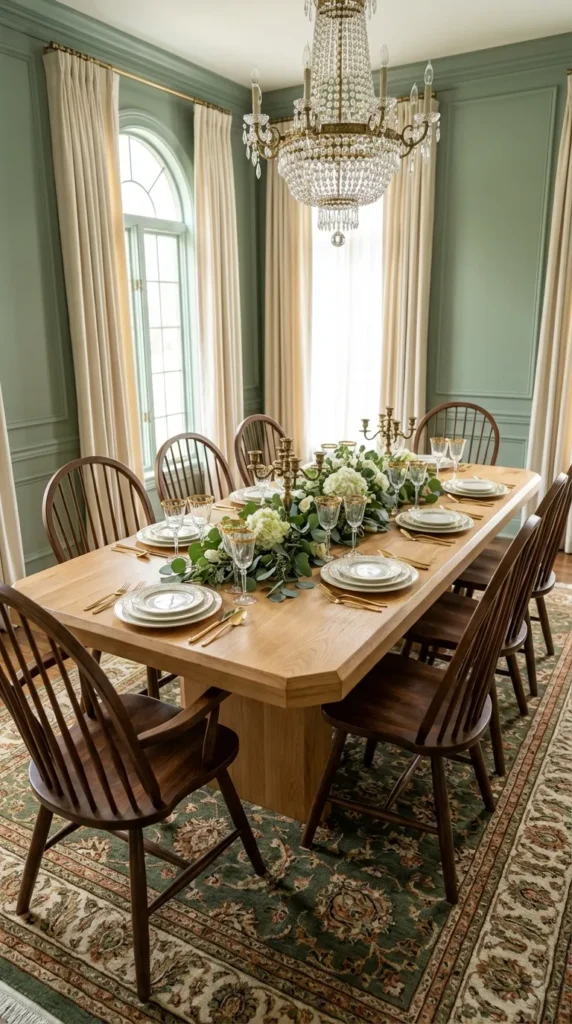
Chamfered edges are subtly angled rather than sharp or rounded. This refined detail adds architectural interest and feels distinctly modern.
The beveled edge catches light differently, creating shadow lines that give the table dimension and depth. It’s a small detail with significant visual impact.
This works across wood species but particularly shines on lighter woods where the edge detail shows clearly. It elevates a simple design into something special.
12. Round Solid Wood Dining Table

Round tables feel more social and democratic. Without a head, everyone sits equally, and conversation flows naturally around the circle.
In solid wood, a round table showcases the material’s beauty in a different way. Radial grain patterns or book-matched sections create natural artistry.
Modern round tables skip ornate bases for clean pedestals or simple four-leg designs. The circular form itself provides visual softness in angular modern rooms.
- Choose diameter based on seating: 48″ seats 4, 60″ seats 6-8
- Ensure pedestal base is substantial enough for stability
- Position lighting centered above the table
- Allow 36″ clearance around the table for chair movement
13. Wabi Sabi Style Pine Wood Table

Wabi-sabi celebrates imperfection, impermanence, and natural aging. A pine table embracing this philosophy shows knots, cracks, and color variation as beautiful features.
The wood might have filled knotholes, natural splits with butterfly joints, or deliberately rough-hewn surfaces. These “flaws” become the design.
This approach suits modern spaces seeking soul and authenticity. It’s the antithesis of perfect mass-production, which makes it feel more human and warm.
14. Mid Century Inspired Walnut Table

Mid-century modern design and walnut are practically synonymous. The rich brown wood with clean-lined bases defined 1950s and 60s dining furniture and still looks current today.
Look for tables with splayed legs, rounded edges, and minimal ornamentation. The wood’s natural beauty provides all the decoration needed.
This style has staying power because it balances warmth and sophistication perfectly. It’s formal enough for special occasions but casual enough for daily life.
- Authentic vintage pieces develop beautiful patina
- Modern reproductions offer consistent quality and sizing
- Pair with Eames-style chairs or other period seating
- Accessorize with ceramics, brass, and geometric textiles
15. Minimal Solid Oak Dining Set

A complete dining set in matching solid oak creates cohesive modern simplicity. Table and chairs in the same wood and style feel intentional and curated.
Oak’s strength makes it ideal for chair construction. Matching sets offer design unity while the natural wood keeps it from feeling sterile or generic.
This works beautifully in Scandinavian, Japanese-inspired, or contemporary minimalist spaces. The repetition of material creates calm rather than monotony.
16. Natural Wood Table With Statement Lighting

While the light fixture isn’t part of the table, dramatic lighting transforms how you experience the wood below. A sculptural pendant or chandelier highlights the grain and creates atmosphere.
Choose lighting that complements the table’s style. Modern geometric fixtures suit contemporary tables, while organic forms pair beautifully with natural edge or rustic pieces.
The interplay between wood warmth and beautiful light makes dining feel special. It’s functional art that serves the space daily.
- Hang fixtures 30-36 inches above the table surface
- Choose bulbs with warm color temperature to enhance wood tones
- Ensure fixture width is proportional to table size
- Install dimmer switches for adjustable ambiance
Which wood species speaks to you, and what draws you to its particular grain, color, or character?