22 Dining Table Ideas for Small Spaces That Maximize Style

Small spaces don’t mean you have to sacrifice style or the joy of gathering around a table. With smart choices and creative thinking, even the tiniest dining area can feel welcoming and functional.
The secret is choosing pieces that work harder and smarter. Tables that fold, extend, or tuck away when not needed give you flexibility without permanent bulk.
These ideas prove that limited square footage can still mean big style.
From space-saving furniture to visual tricks that make rooms feel larger, you’ll find practical solutions that don’t compromise on beauty.
Ready to transform your compact dining area into a space you actually love using?
1. Compact Round Dining Table
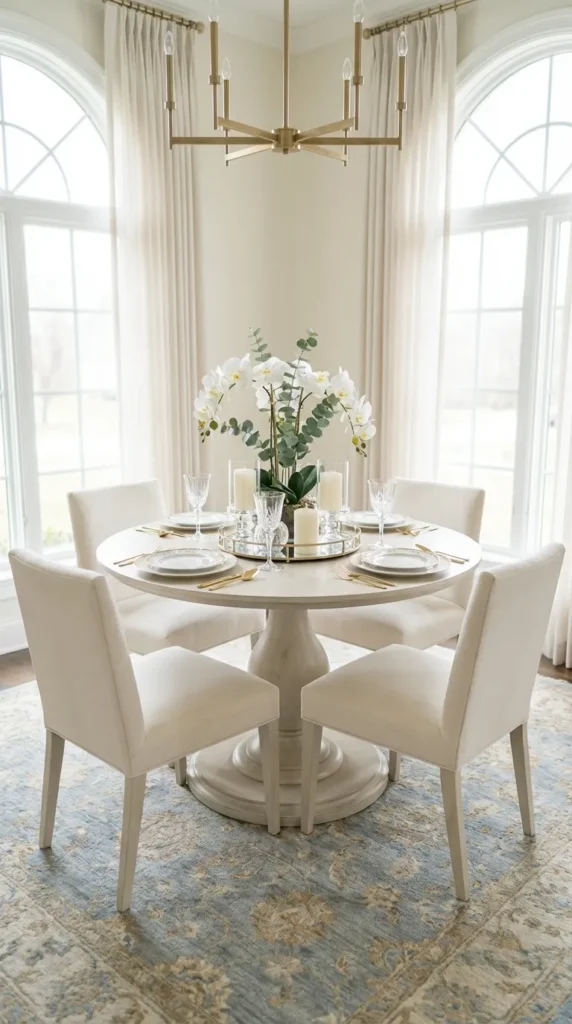
Round tables are small-space champions. Without corners taking up precious inches, they naturally fit better in tight spots and allow easier movement around them.
A 36 to 42-inch round table comfortably seats four people while taking up less visual and physical space than a rectangular equivalent. The curved shape feels softer and less imposing in cozy rooms.
Look for tables with slim profiles and lighter finishes. Heavy, dark wood can make a small space feel cramped, while lighter tones keep things airy.
- Measure your space and allow 36 inches of clearance around the table
- Choose pedestal bases instead of four legs for better chair placement
- Consider tables with built-in storage underneath
- Pair with armless chairs that tuck in completely
2. Glass-Top Dining Table For An Airy Feel
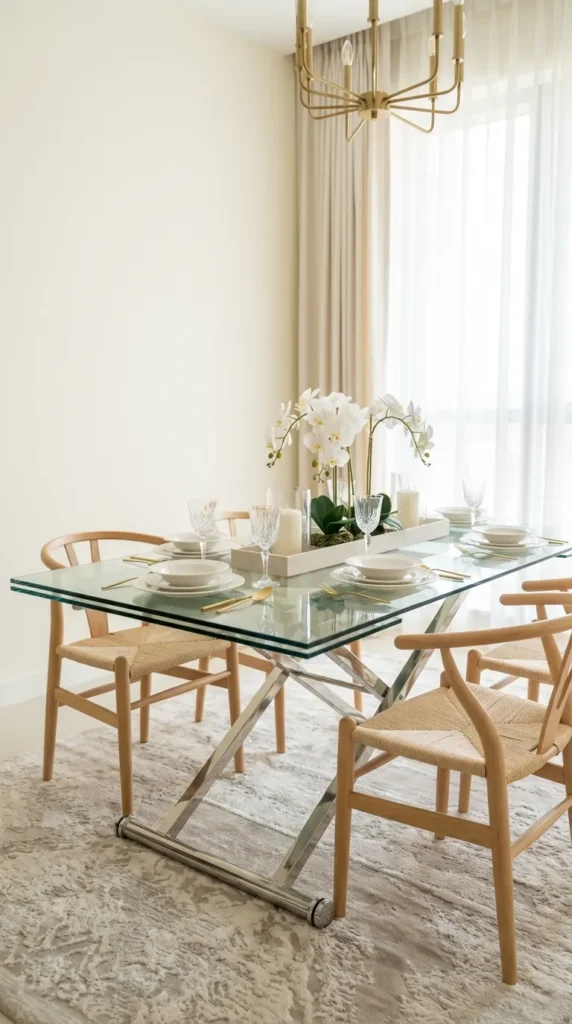
Glass tables create the illusion of more space because you can see straight through them. They’re practically invisible, making small rooms feel less crowded and more open.
The transparency lets light flow through rather than blocking it, which brightens the entire area. This works especially well in apartments with limited natural light.
Choose tempered glass for safety and durability. Pair with a simple metal or wood base that doesn’t compete visually, and the table almost disappears.
3. Transparent Acrylic Table Or Chairs
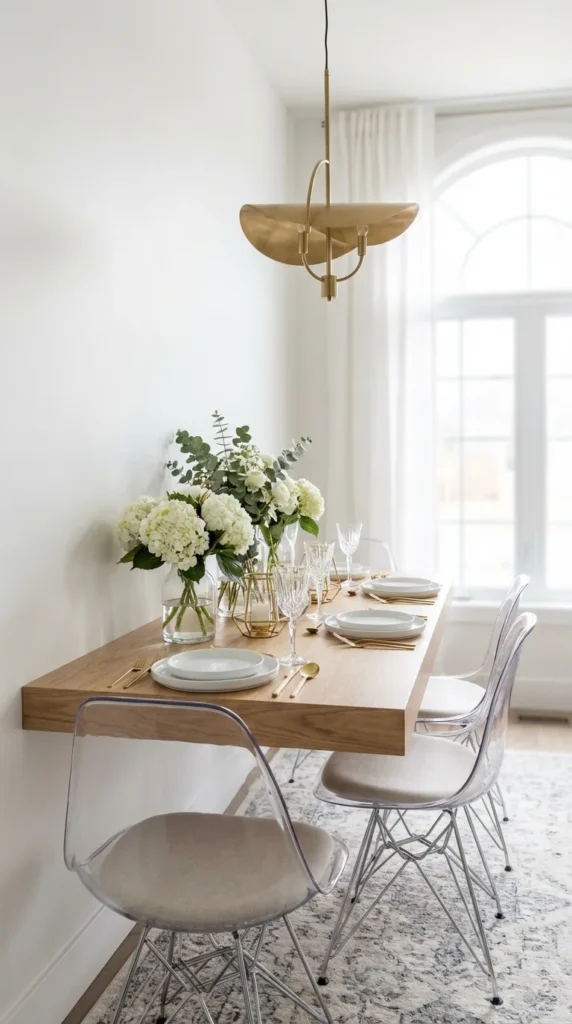
Acrylic furniture takes the invisible concept even further. Clear ghost chairs or a lucite table leg design feel modern and disappear into the background.
These pieces work beautifully in contemporary or eclectic spaces. They add function without visual weight, making your dining area feel spacious and uncluttered.
Mix clear acrylic chairs with a solid table, or vice versa. You don’t need everything transparent, just enough to create breathing room.
Space-Expanding Material Choices
| Material | Visual Effect | Best For | Maintenance Level |
| Clear glass | Airy, light | Contemporary, traditional | Medium (shows smudges) |
| Acrylic/lucite | Modern, invisible | Modern, eclectic | Low (scratches easily) |
| Light wood | Warm, spacious | Scandinavian, farmhouse | Low (durable) |
| White lacquer | Clean, expansive | Modern, minimalist | Medium (shows marks) |
4. Wall-Mounted Fold Down Dining Table
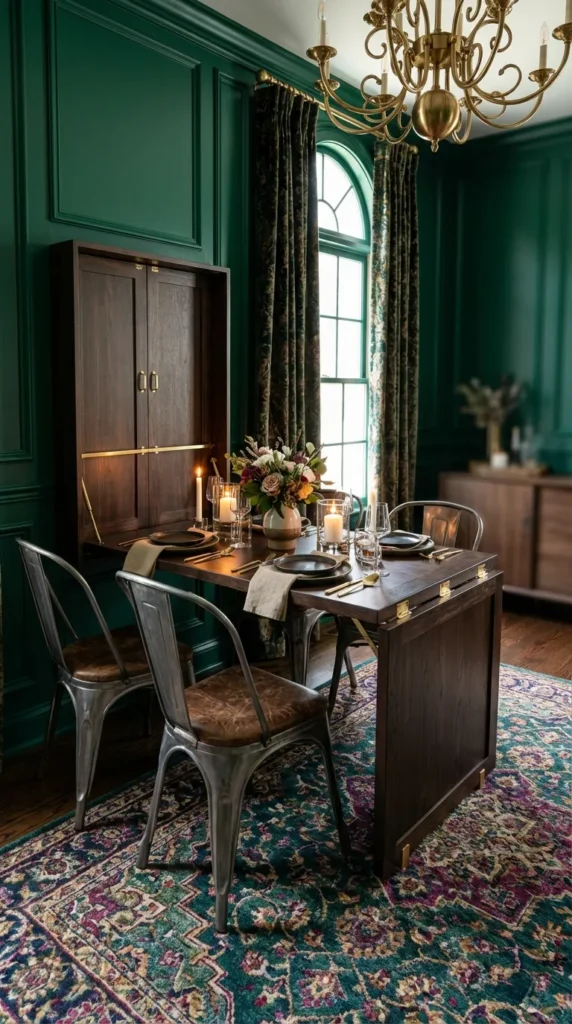
A wall-mounted table folds flat when not in use, giving you back valuable floor space. It’s perfect for studio apartments or multipurpose rooms where every inch counts.
Mount it at standard dining height, around 30 inches from the floor. When you need it, fold it down and add chairs. When you’re done, it becomes a slim shelf or disappears entirely.
Some designs include built-in storage or fold out to reveal chalkboard surfaces. Look for sturdy mounting hardware that can support weight safely.
- Ensure wall studs can support the table and weight of food
- Choose a finish that complements your wall color
- Add a small stool or two that store nearby
- Consider models with drop-down leg supports for stability
5. Corner Nook Table With Built-In Bench Seating
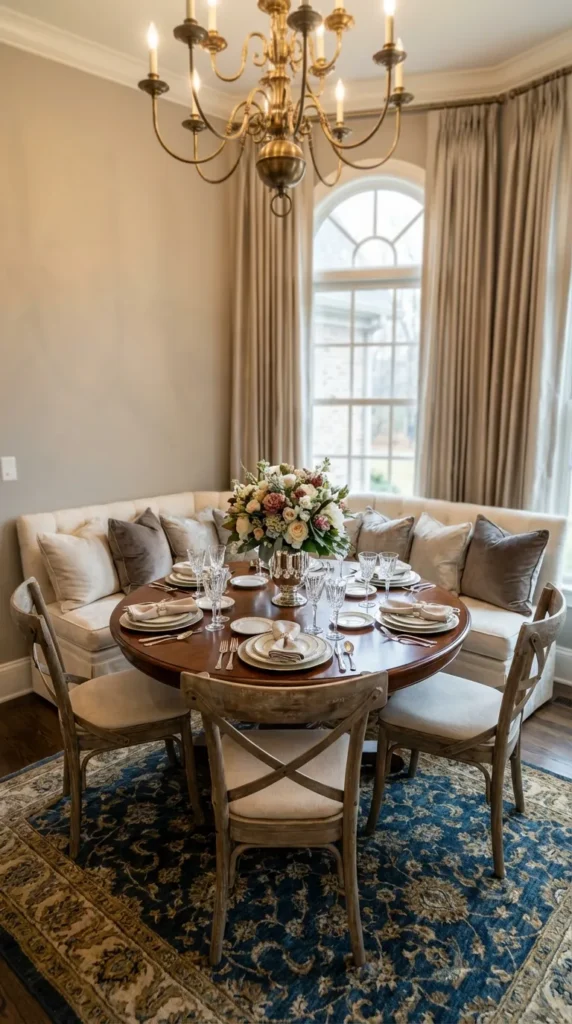
Corner nooks maximize awkward spaces that might otherwise go unused. A small table with L-shaped bench seating creates an efficient, cozy dining spot.
Built-in benches eliminate the space chairs need to pull out, saving significant room. Plus, benches can often seat more people than individual chairs in the same footprint.
Add cushions and pillows to make it comfortable and inviting. The snug corner setup feels like a little retreat within your home.
6. Extendable Dining Table With Leaves
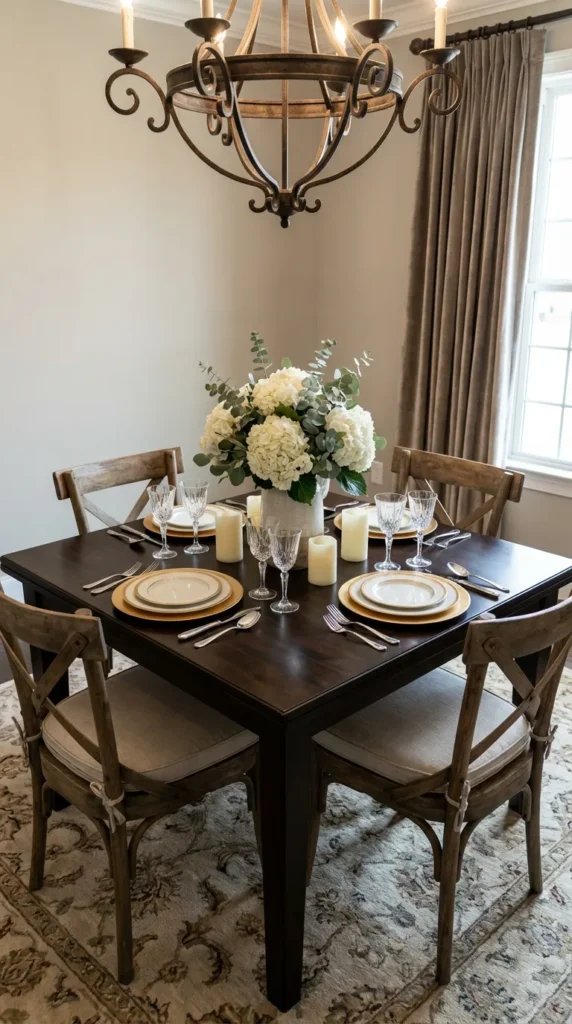
Extendable tables give you flexibility. Keep them small for daily use, then expand when guests arrive or you need extra work surface.
Modern extendable designs are sleek and easy to operate. Some have hidden leaves that store inside, while others use butterfly or drop-in mechanisms.
This is ideal if you entertain occasionally but don’t want a large table dominating your space every day. You get the best of both worlds without compromise.
7. Bistro Style Small Table And Chairs
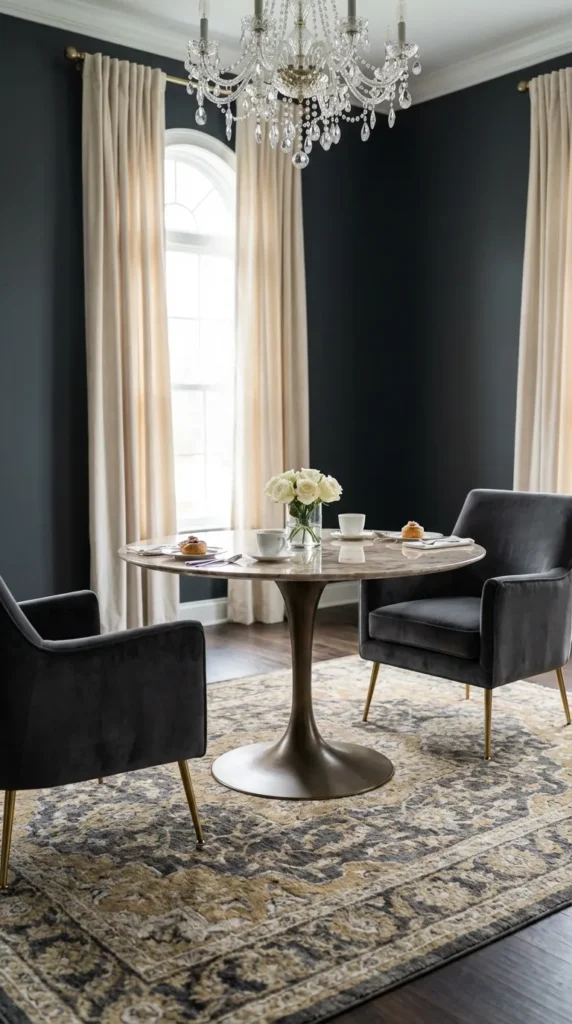
Bistro sets bring European café charm to small spaces. These compact tables, usually 24 to 30 inches across, are perfect for two people and minimal square footage.
The intimate scale feels intentional rather than compromised. Pair with folding metal chairs for authentic bistro style that also stores away easily.
This works beautifully in breakfast nooks, balconies, or studio apartments. The casual vibe encourages lingering over coffee and conversation.
- Choose weather-resistant materials if using on a balcony
- Look for chairs that stack or fold for storage
- Add a small vase with fresh flowers for café ambiance
- Consider a marble or mosaic top for extra style
8. Slim Pedestal Table For More Legroom
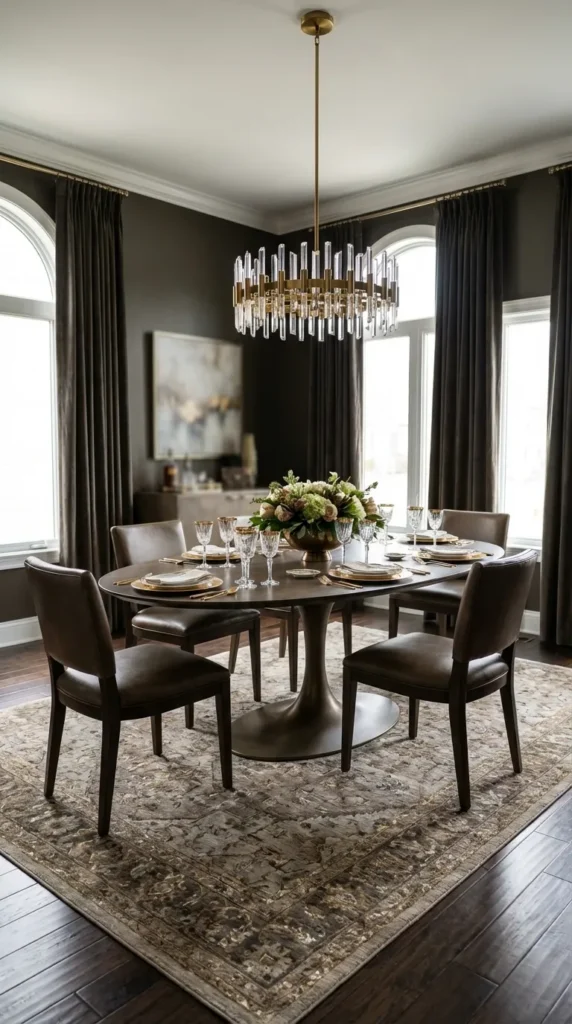
Pedestal tables with a single central base give you more legroom and flexibility with seating. Without four corner legs, chairs can squeeze in from any angle.
Choose narrow rectangular or oval pedestal tables in small spaces. They provide eating surface without the bulk of wider designs.
The streamlined base keeps the floor area feeling open and uncluttered. It’s easier to clean around too, which matters in tight quarters.
9. Round Pedestal Dining Table For Smooth Traffic Flow
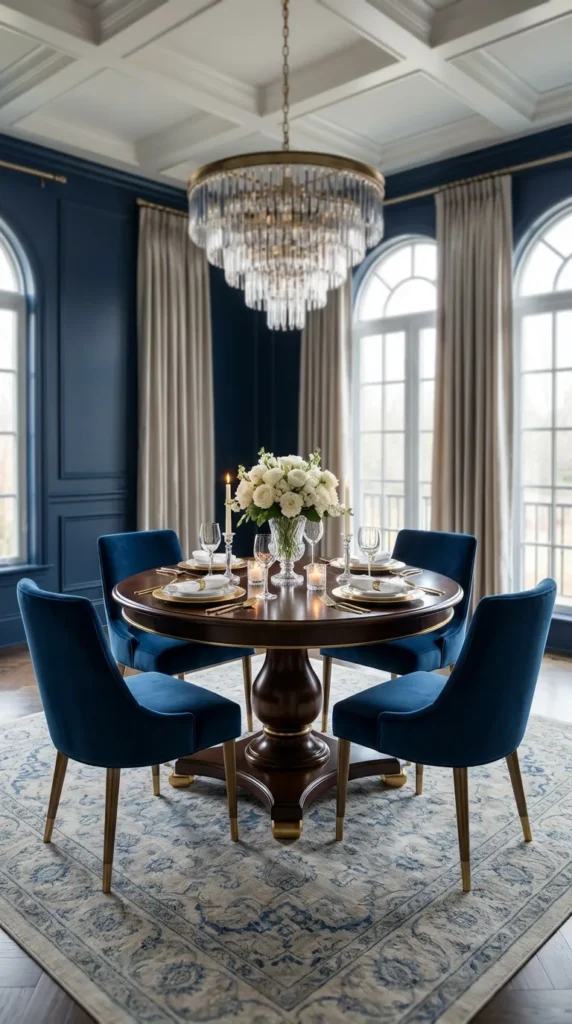
Combining round and pedestal designs creates the ultimate small-space table. The circular top eliminates sharp corners that catch hips and clothes, while the single base maximizes seating options.
This design is particularly smart in narrow rooms or spaces with multiple doorways. Traffic flows smoothly around the curved edges.
A 42-inch round pedestal table seats four comfortably and feels less imposing than rectangular alternatives. It becomes a natural gathering spot without dominating the room.
Small-Space Table Shape Guide
| Table Shape | Seats | Best Space Type | Traffic Flow |
| Round (36″) | 2-4 | Square rooms, tight corners | Excellent |
| Round (42-48″) | 4-6 | Open areas, studios | Excellent |
| Rectangular (48×30″) | 4 | Narrow rooms, against walls | Good |
| Oval (54×36″) | 4-6 | Flexible spaces | Very good |
| Square (36×36″) | 4 | Square rooms, corners | Fair |
10. Drop Leaf Table That Expands When Needed
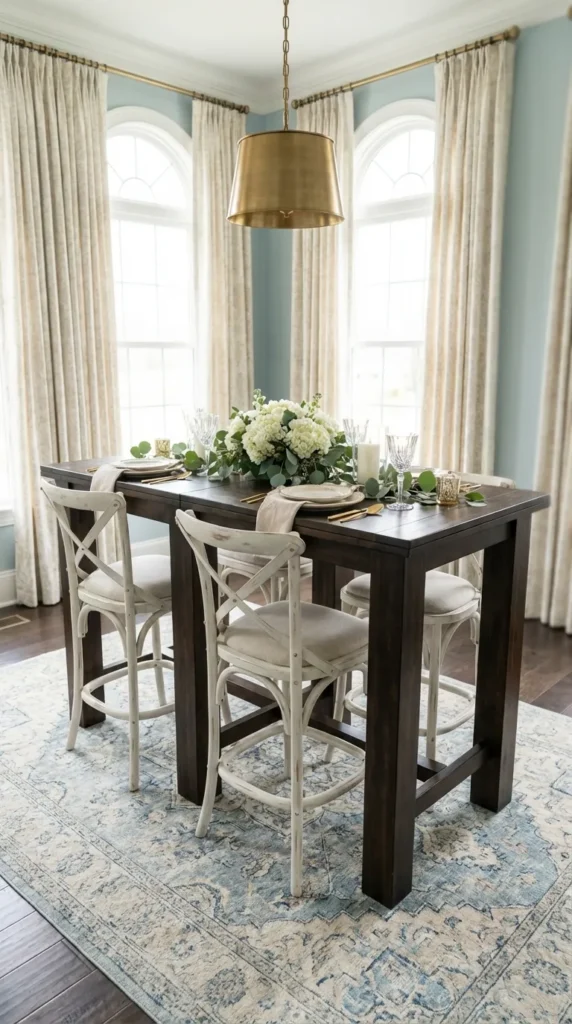
Drop-leaf tables have hinged sections that fold down on one or both sides. Keep both leaves down for a slim console, raise one for two people, or both for four or more.
This vintage-inspired style works in traditional, farmhouse, and cottage spaces. Modern versions offer cleaner lines for contemporary interiors.
Store folding chairs nearby so you can quickly set up for guests. The flexibility means your space adapts to your needs rather than the other way around.
11. Built In Bench Or Banquette Along The Wall
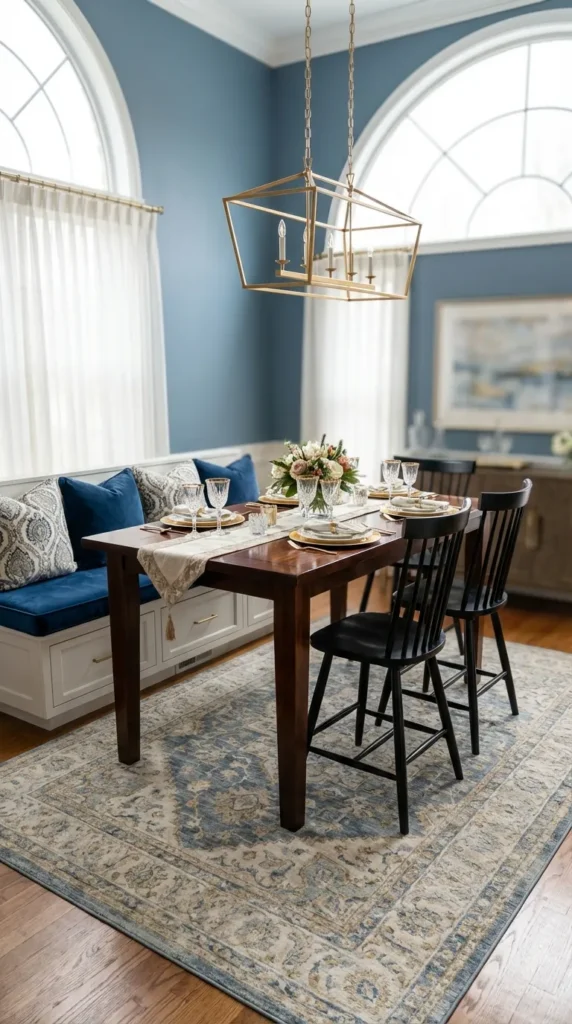
A bench built into the wall or against it saves the space chairs would need to pull out. It creates permanent seating that maximizes capacity in minimal square footage.
Add a narrow table in front and you have a streamlined dining setup. The bench can include storage underneath for extra functionality.
Cushions make it comfortable and add personality through fabric and color. This setup works especially well in kitchens or breakfast nooks.
- Build storage drawers or lift-top compartments into the bench
- Add cushions at least 3 inches thick for comfort
- Mount the bench at standard dining height (18 inches)
- Include back cushions or pillows for longer meals
12. Small Oval Dining Table To Eliminate Sharp Corners
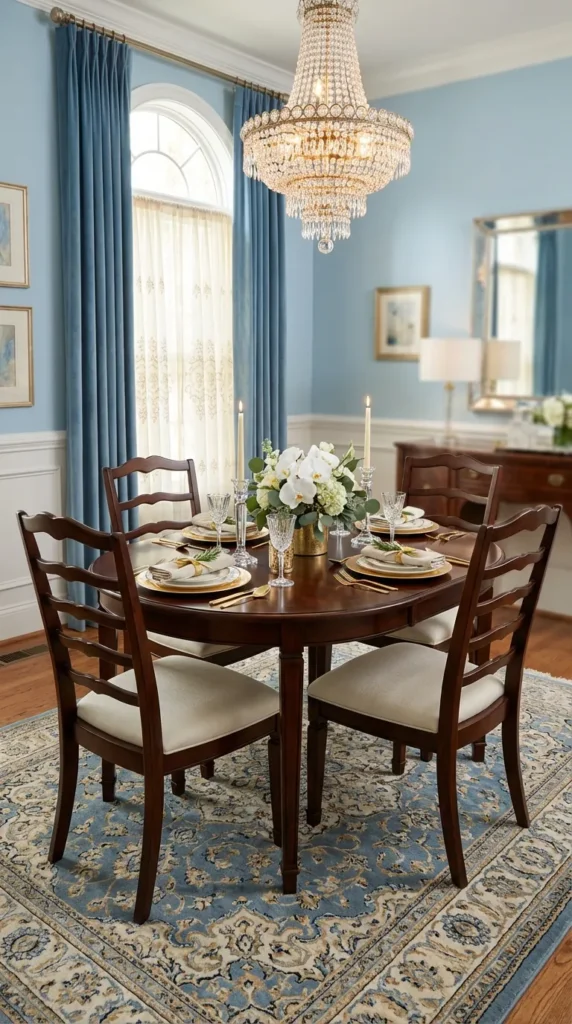
Oval tables combine the space efficiency of round tables with the capacity of rectangular ones. The elongated shape seats more people while the curved ends allow better traffic flow.
They fit nicely in narrow rooms where a rectangle would feel too boxy. The soft curves make the space feel less rigid and more inviting.
Look for ovals between 48 and 60 inches long for small spaces. This size comfortably seats four to six without overwhelming your room.
13. Nesting Tables That Can Be Separated Or Stacked
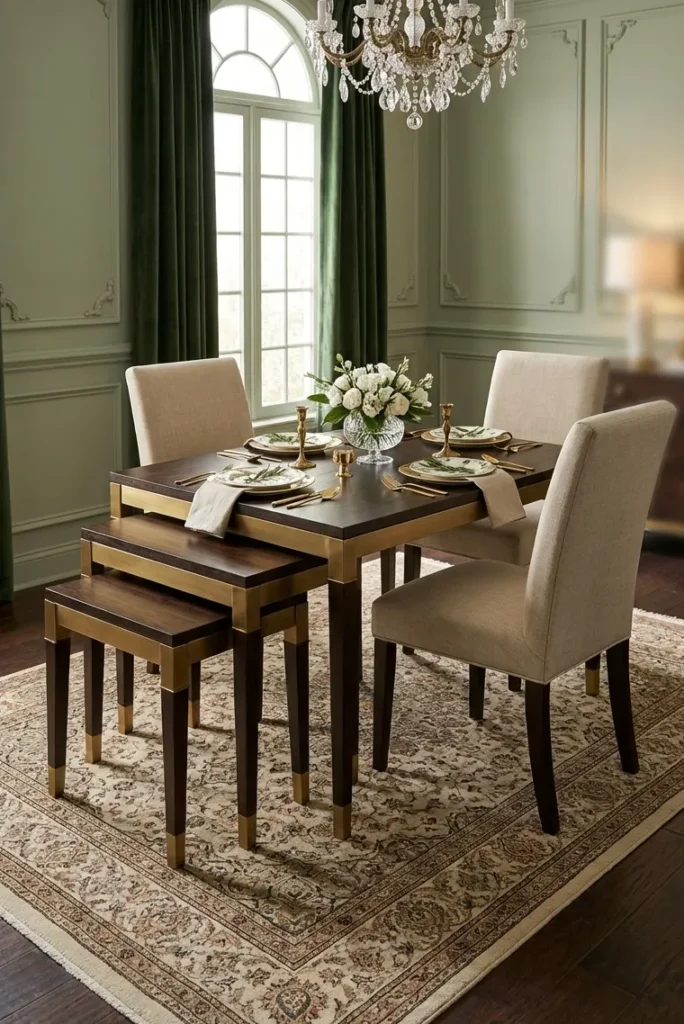
Nesting tables stack together when not needed, taking up minimal floor space. Pull them apart when you need surface area for serving or extra guests.
Use the smallest as a regular dining table for one or two, then add the others when company arrives. They’re incredibly versatile for changing needs.
Choose nesting sets with similar styling but varying heights. Stacked, they create visual interest while staying compact.
14. Foldable Chairs That Tuck Away When Not In Use
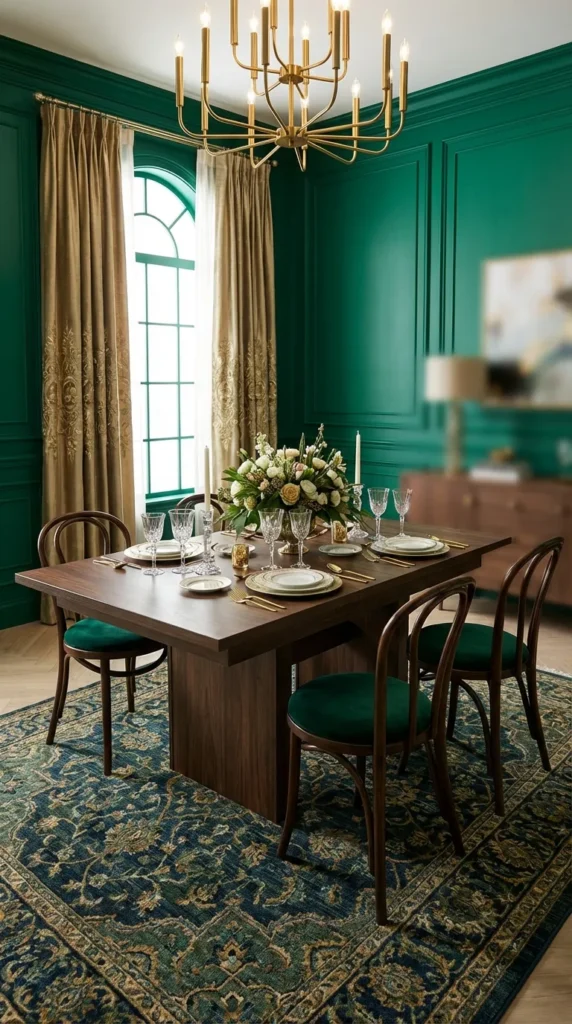
Folding chairs are the unsung heroes of small-space dining. When you’re done eating, fold them up and tuck them in a closet, behind a door, or against a wall.
Modern folding chairs have come a long way from clunky metal versions. Look for slim designs in wood, metal, or even upholstered styles that don’t look like folding chairs.
Keep your everyday chairs out and store extras folded. This way you’re ready for guests without crowding your daily living space.
15. Corner Banquette With Cushions For Cozy Seating
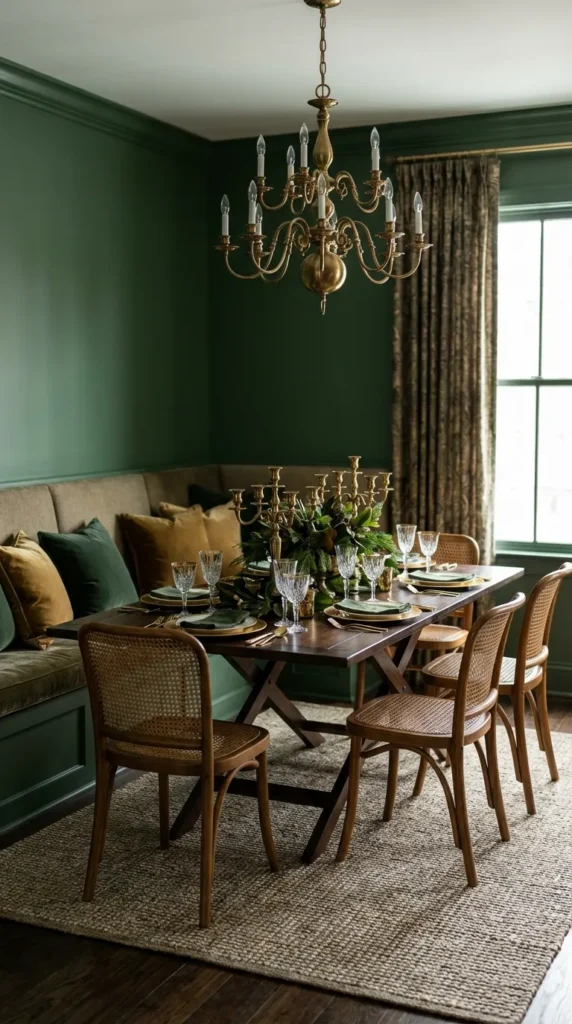
A corner banquette wraps around two walls, creating an efficient L-shaped seating area. It seats more people than individual chairs in the same footprint.
The built-in nature means you only need to worry about a table and maybe one or two extra chairs on the open sides. Most of the seating is handled permanently.
Make it comfortable with plush cushions in washable fabrics. The cozy, enclosed feeling turns dining into a special experience rather than a squeezed-in necessity.
- Measure carefully to ensure the table fits within the banquette
- Use bench cushions cut to exact dimensions
- Add throw pillows for back support and style
- Consider L-shaped storage underneath for linens or pantry items
16. Bar Height Table With Stools That Slide Underneath
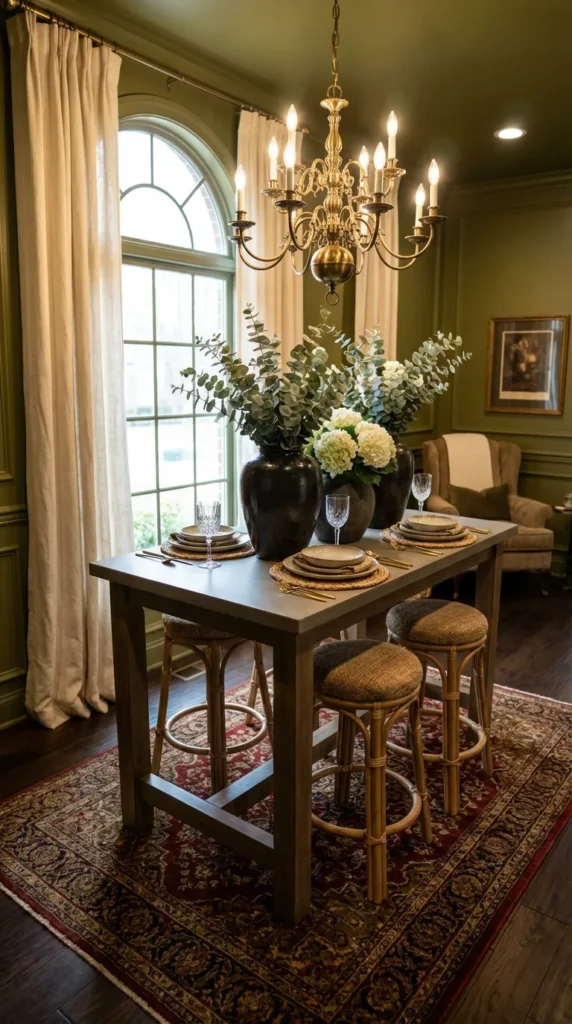
Bar-height tables and counter stools take up less visual space because the furniture is more vertical than horizontal. The stools slide completely under the table when not in use.
This works especially well in kitchens or studio apartments where the table might also function as food prep space or a work surface.
Choose backless stools that tuck away entirely. The clean lines and elevated height make small spaces feel more open and modern.
17. Console To Dining Convertible Table
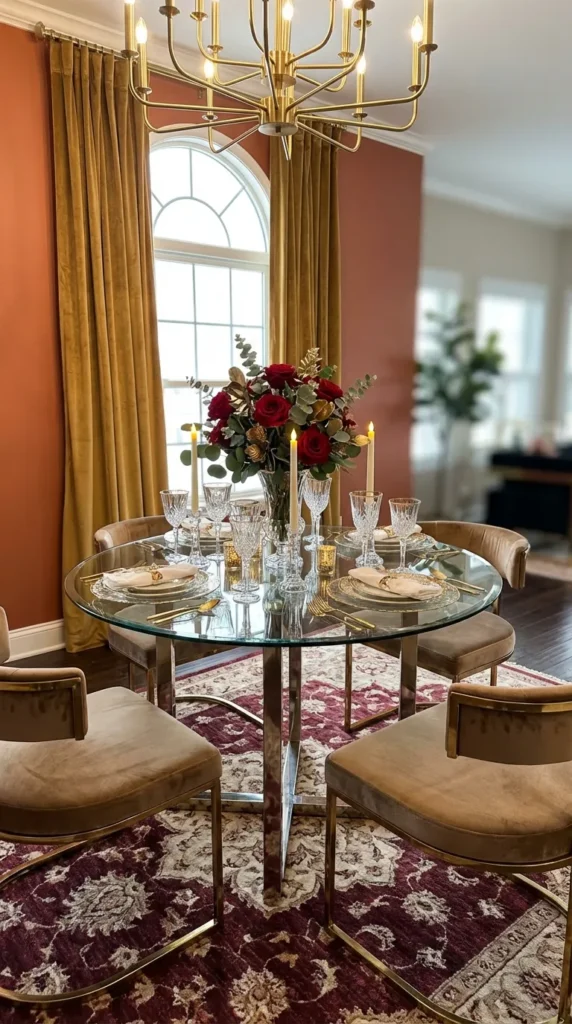
Convertible tables are game-changers for tiny homes. A slim console table against the wall transforms into a full dining table when needed.
Some designs fold out, others extend with hidden leaves, and some even rise in height. These multi-functional pieces adapt to your needs throughout the day.
When not dining, you have a console for keys, mail, or décor. When it’s time to eat or entertain, transform it into proper dining space.
Convertible Table Mechanisms
| Type | How It Works | Space Saved | Best For |
| Fold-out | Sides flip up and lock | 50-70% | Studios, multipurpose rooms |
| Extending console | Pulls apart with leaf insert | 40-60% | Small dining rooms |
| Lift-top | Top raises from coffee to dining height | 30-50% | Living/dining combos |
| Wall-mounted drop-leaf | Mounted to wall, folds down | 80-90% | Tiny apartments, dorms |
18. Slim Rectangular Table Against A Wall
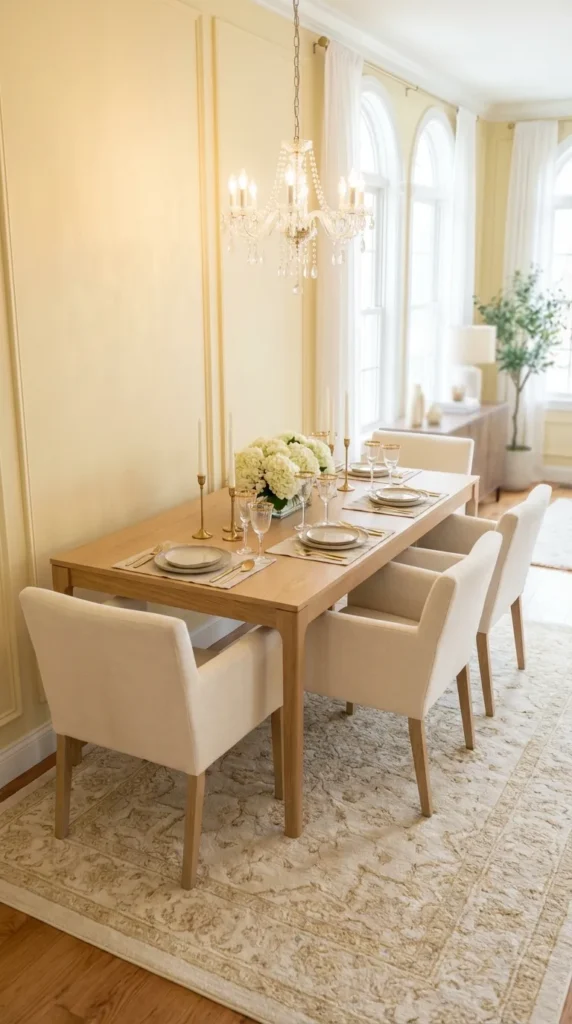
A narrow rectangular table pushed against a wall works like a dining banquette without built-in seating. You only need chairs on three sides, saving significant space.
Look for tables no wider than 30 to 36 inches. This gives you enough surface for place settings and serving dishes without jutting too far into the room.
Pull it away from the wall when you have guests and need all four sides. The rest of the time, it stays tucked against the wall as a space-saving solution.
19. Light Wood Tones To Visually Expand The Area
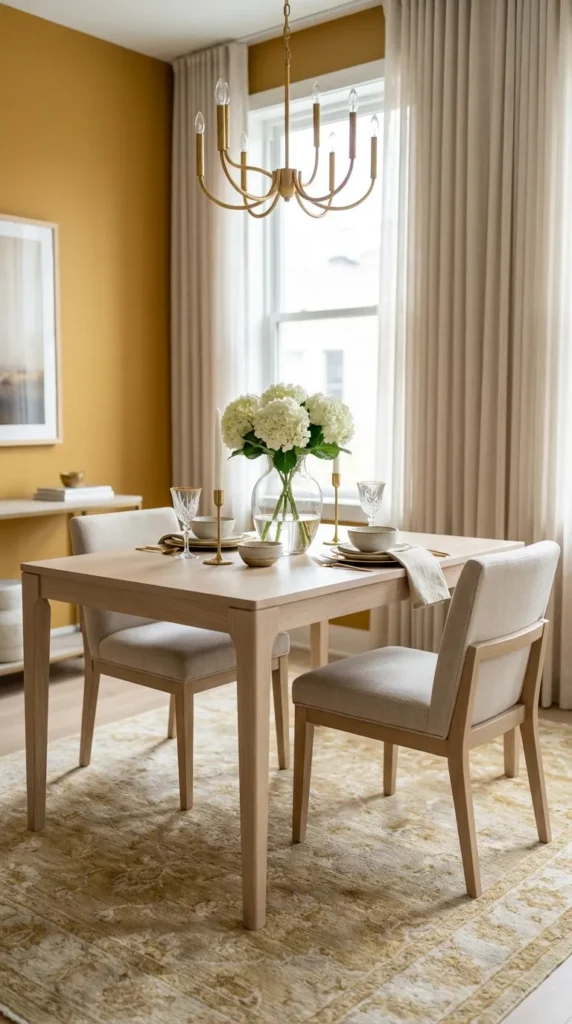
Light woods like oak, ash, maple, or birch reflect more light and make spaces feel larger. They create airiness that dark woods can’t match in small rooms.
Pale wood tones also feel fresh and modern. They work across design styles from Scandinavian to coastal to contemporary farmhouse.
Pair light wood with white or pale walls for maximum space-expanding effect. The cohesive, bright palette pushes visual boundaries outward.
- Choose natural or whitewashed finishes
- Avoid heavy, dark stains in small spaces
- Match or coordinate wood tones with other furniture
- Keep grain simple rather than heavily figured
20. Mixed Seating (Bench + Chairs) To Maximize Capacity
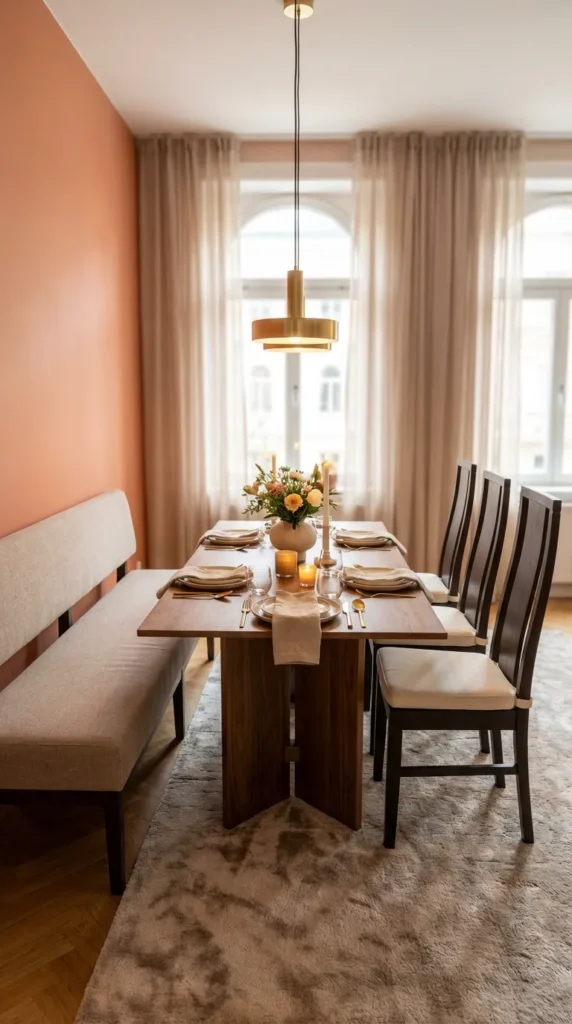
Combining a bench on one side with chairs on the other maximizes seating in minimal space. Benches fit more people than individual chairs and eliminate gaps between seats.
A bench along the wall with two chairs across creates flexible seating for four to six people. Kids can squeeze in extra easily on the bench side.
This arrangement also looks collected and casual rather than too matchy. It brings visual interest through varied seating while solving capacity issues.
21. Floating Shelves Near Dining Area For Décor Without Clutter
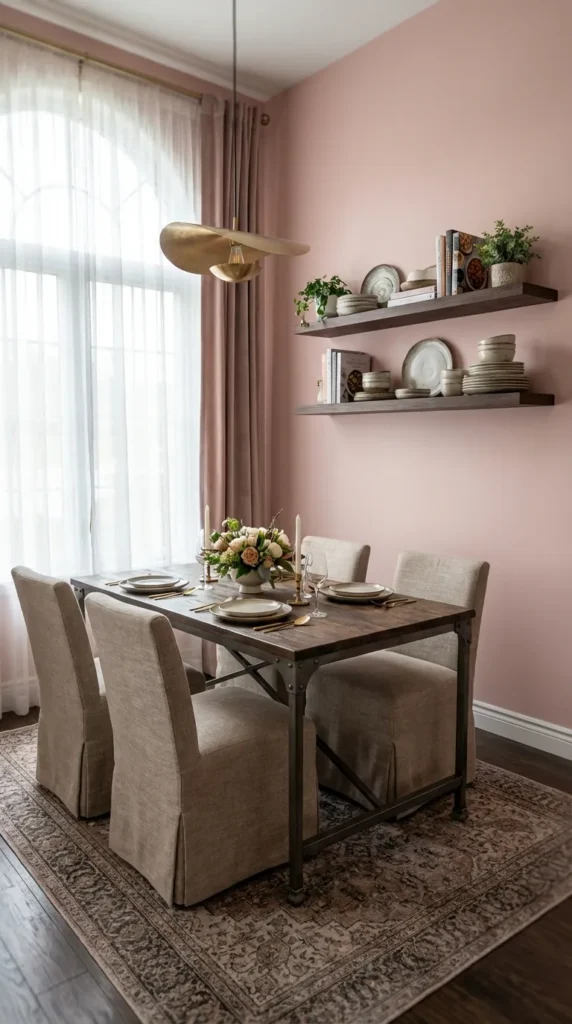
In small spaces, every piece of furniture needs to justify its existence. Skip bulky buffets and sideboards in favor of floating shelves that provide storage without bulk.
Mount shelves near your dining area for dishes, glassware, or décor. They add function and personality without eating into precious floor space.
Style them with everyday items you actually use. Beautiful dishes, a few cookbooks, or a small plant collection keeps it practical and pretty.
22. Minimalist Décor And Accessories To Keep The Space Airy
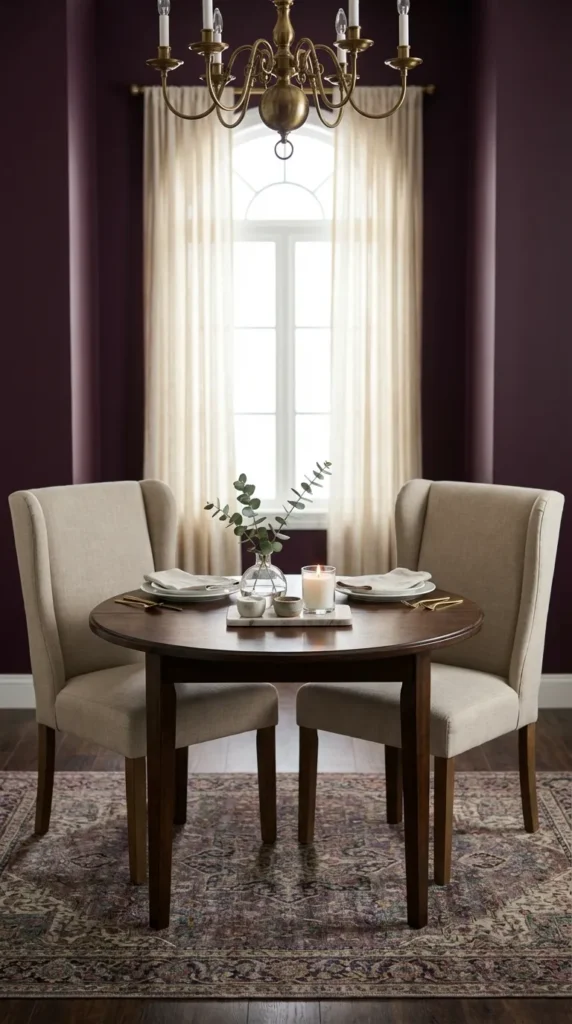
In small dining spaces, less truly is more. A single bud vase with fresh stems beats an oversized centerpiece that blocks conversation and view.
Keep surfaces clear except for intentional décor. A small tray with salt and pepper, one candle, or a simple bowl creates interest without clutter.
The goal is breathing room. When your table isn’t crowded with stuff, the whole space feels bigger and more peaceful.
- Use one low centerpiece instead of multiple items
- Choose dual-purpose pieces like attractive salt cellars or oil bottles
- Rotate seasonal décor rather than layering everything at once
- Keep daily items stored away between meals
What small-space challenge has been the trickiest to solve in your own dining area?