18 Banquet Dining Table Ideas for Large Gatherings
Banquet dining transforms ordinary gatherings into memorable occasions. Whether you’re hosting weddings, corporate events, family reunions, or milestone celebrations, the right table layout sets the entire tone.
Large-scale entertaining requires thoughtful planning beyond just fitting everyone in a room. The layout impacts conversation flow, service efficiency, and how connected guests feel to each other.
These banquet arrangements solve different challenges and create distinct atmospheres. From formal to casual, intimate to grand, there’s a configuration for every type of gathering.
Let’s explore creative banquet table layouts that help you host large groups with style and intention.
1. Classic Long Banquet Table Layout
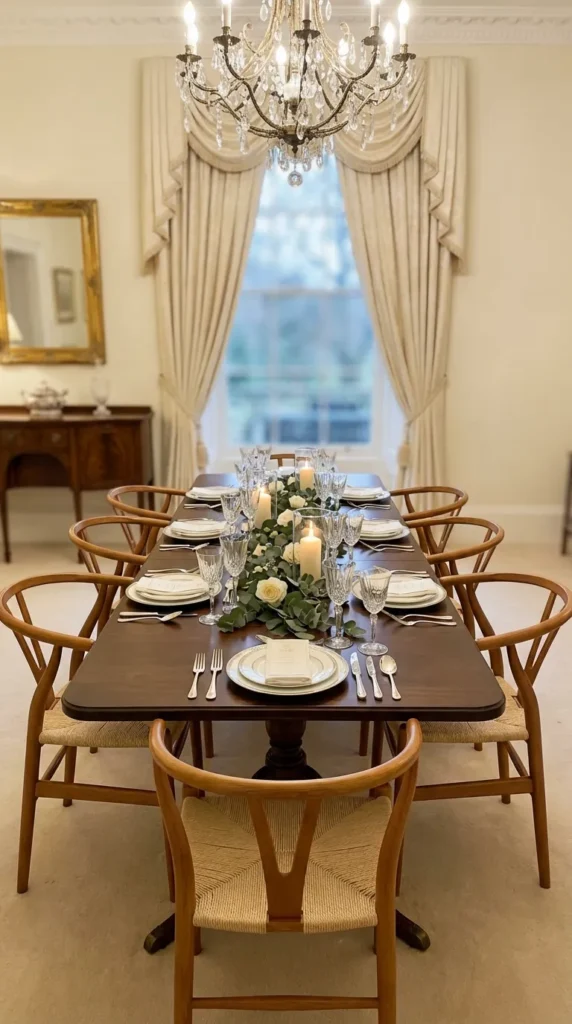
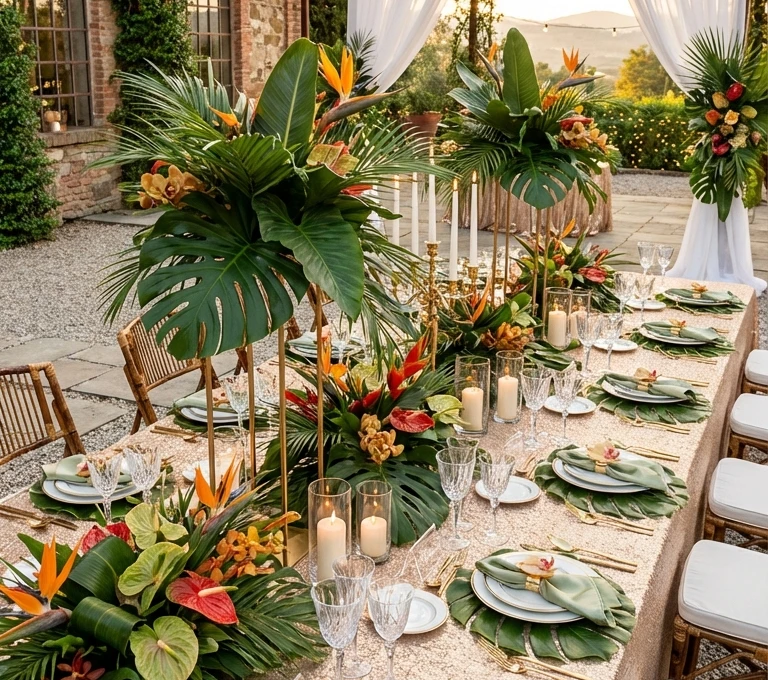
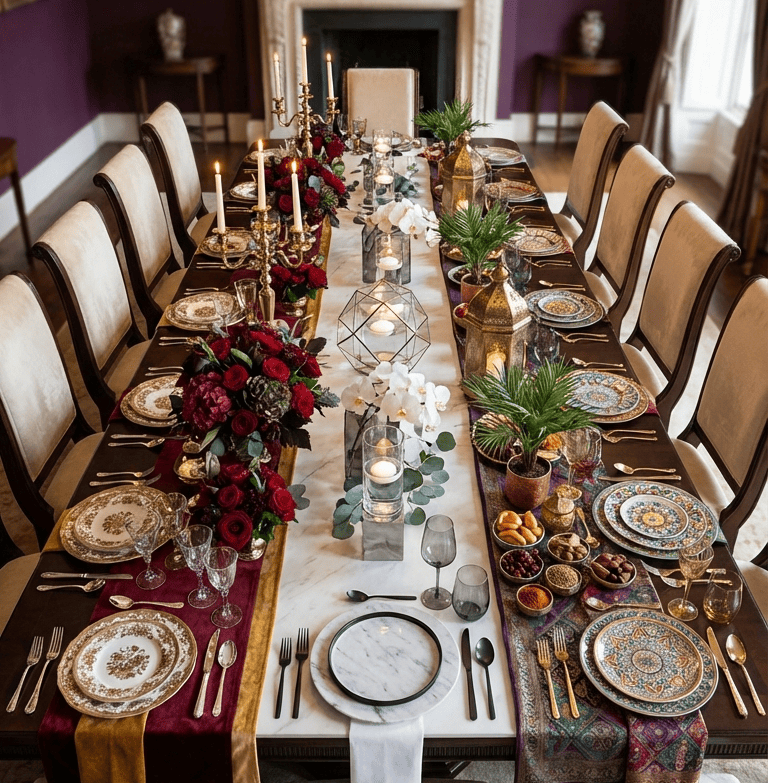
Long rectangular tables arranged in straight rows create traditional banquet elegance. This timeless configuration works beautifully for formal dinners, galas, or celebrations where formality matters.
Guests sit facing each other across the table, encouraging conversation with immediate neighbors. The linear arrangement creates clear sightlines to a head table or stage.
This layout maximizes seating capacity while maintaining an organized, sophisticated atmosphere. It’s efficient for service and creates that classic celebration feeling.
2. Multiple Parallel Banquet Tables

Arrange several long tables parallel to each other with aisles between for larger crowds. This configuration scales the classic banquet layout for hundreds of guests.
The parallel arrangement allows efficient table service and easy movement throughout the space. Guests can see across to other tables, maintaining the room’s social energy.
Space tables at least 6 feet apart for comfortable aisle access. This layout works perfectly for wedding receptions, fundraisers, or large family gatherings.
Parallel table spacing:
- 6 feet minimum between table edges for service
- 8 feet for comfortable two-way traffic
- 10 feet if including performance or presentation space
- Consider room shape when determining table count
3. U Shaped Banquet Layout

U-shaped arrangements create intimate community while accommodating larger groups. Tables form three sides of a rectangle with an open center.
This layout focuses attention on the open area, perfect for speakers, performances, or interactive elements. Everyone can see the center without turning around.
The configuration works beautifully for corporate dinners, awards ceremonies, or events where presentations are integral to the gathering.
4. Horseshoe Banquet Layout
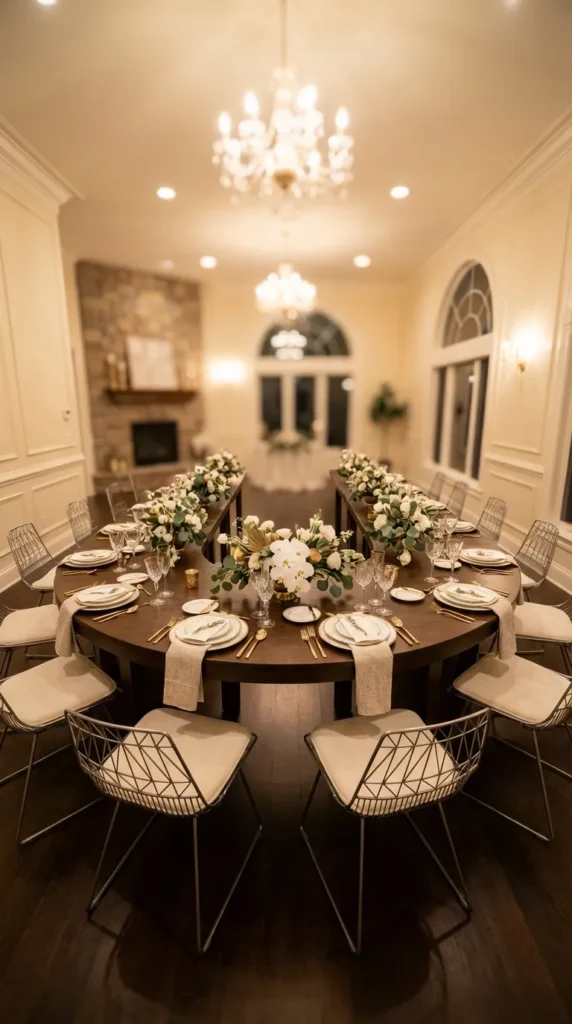
Similar to U-shaped but with curved or angled tables creating a more organic flow. The horseshoe opens toward a focal point while maintaining connected seating.
This softer configuration feels less formal than strict U-shapes while providing similar benefits. Guests feel more connected in the curved arrangement.
Perfect for seminars with meals, training events, or celebrations that blend dining with programming. The open center invites interaction and engagement.
5. Rectangle Cluster Banquet Layout
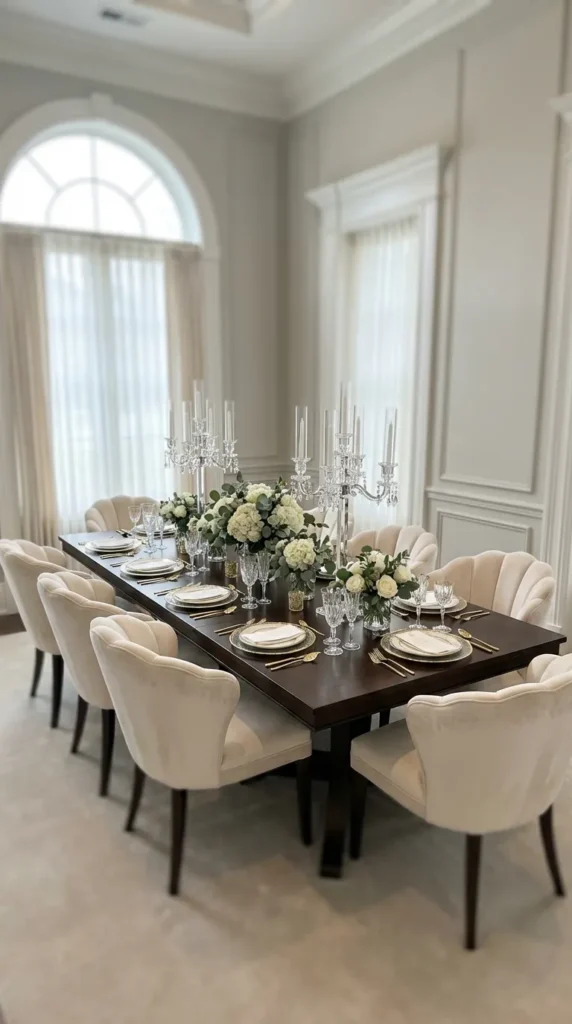
Group rectangular tables in clusters throughout the space rather than strict rows. Each cluster seats 8 to 12 people, creating intimate conversation zones.
This arrangement balances large gathering energy with small group intimacy. Guests feel part of both their immediate table and the larger celebration.
The clusters allow creative spacing and room flow. Add centerpieces and varied decor to make each cluster feel special and distinct.
| Layout Type | Formality Level | Best For | Service Efficiency |
| Classic Long | High | Formal dinners, galas | Very efficient |
| Parallel Tables | Medium-High | Large weddings, fundraisers | Efficient |
| U-Shaped | High | Corporate events, awards | Very efficient |
| Rectangle Clusters | Medium | Versatile celebrations | Medium |
6. Banquet with Round Tables Layout
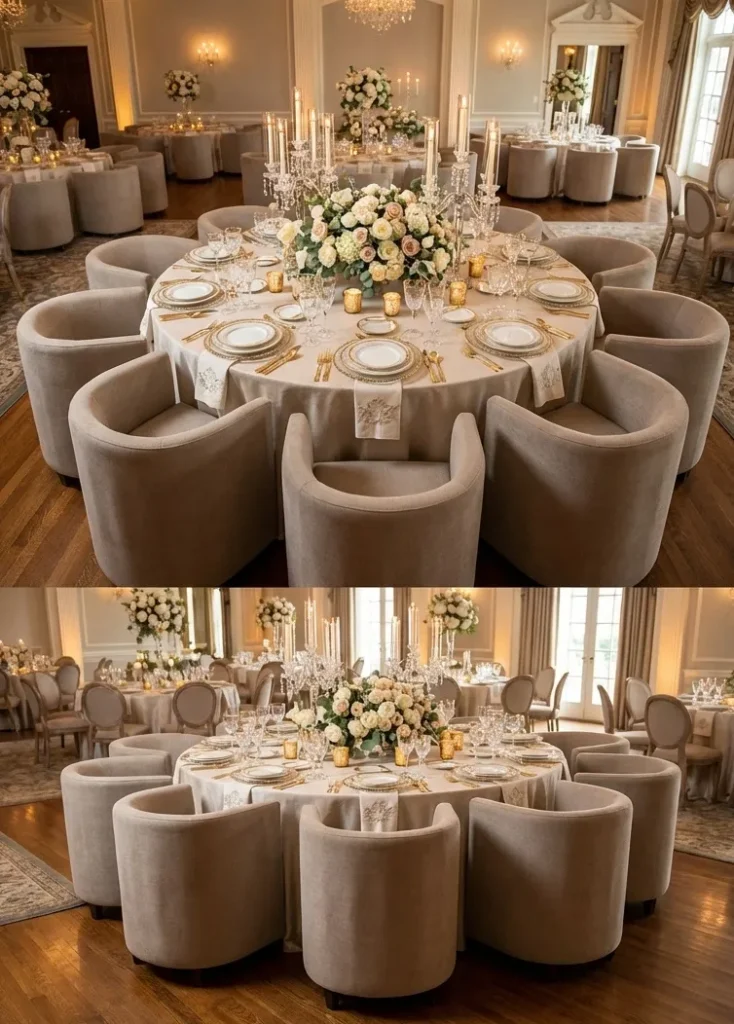
Round tables scattered throughout the space create relaxed, social atmosphere. Each table typically seats 8 to 10, encouraging inclusive conversation.
Round configurations feel less formal and more celebratory than rectangular arrangements. Guests interact equally with everyone at their table.
This popular wedding reception layout works beautifully for any celebration prioritizing conversation and connection over formality.
7. Mixed Shapes Banquet Layout (Long + Round)

Combine long rectangular tables with round tables for visual interest and functional variety. Use rectangles for larger groups or VIPs, rounds for general seating.
The mixed shapes create dynamic visual flow and accommodate different group sizes. It’s practical problem-solving that also looks intentionally designed.
This flexibility helps maximize awkward room shapes while creating distinct zones within the gathering space.
8. Head Banquet Table Highlight
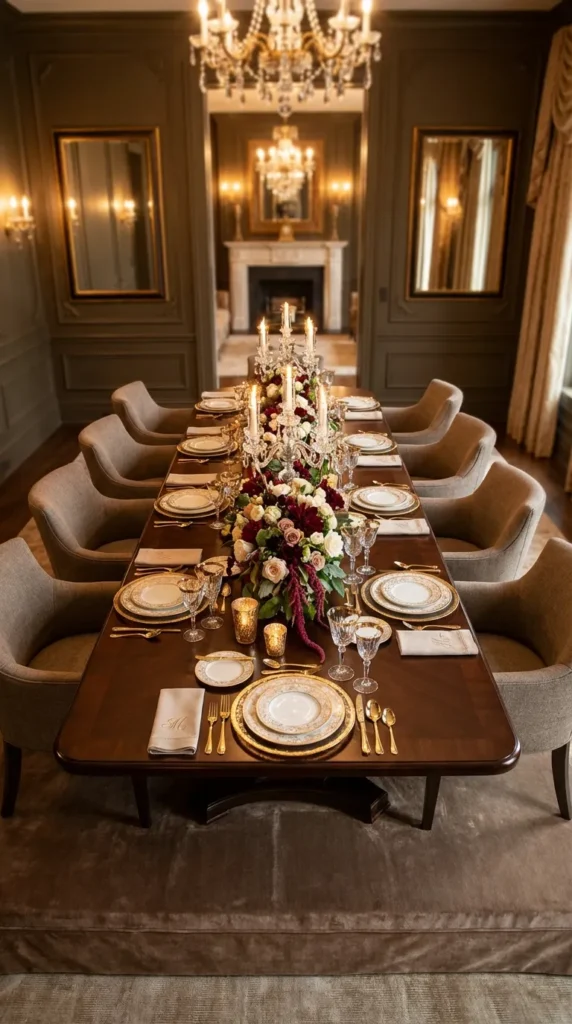
Elevate or specially position one head table where hosts, honorees, or speakers sit. This table becomes the focal point with enhanced decor and prominent placement.
The head table might be on a riser, feature upgraded linens, or include special floral arrangements. Everyone can see the guests of honor easily.
This traditional configuration works for weddings, award dinners, or any event honoring specific people. It creates clear hierarchy while maintaining group cohesion.
9. Island Style Banquet Seating
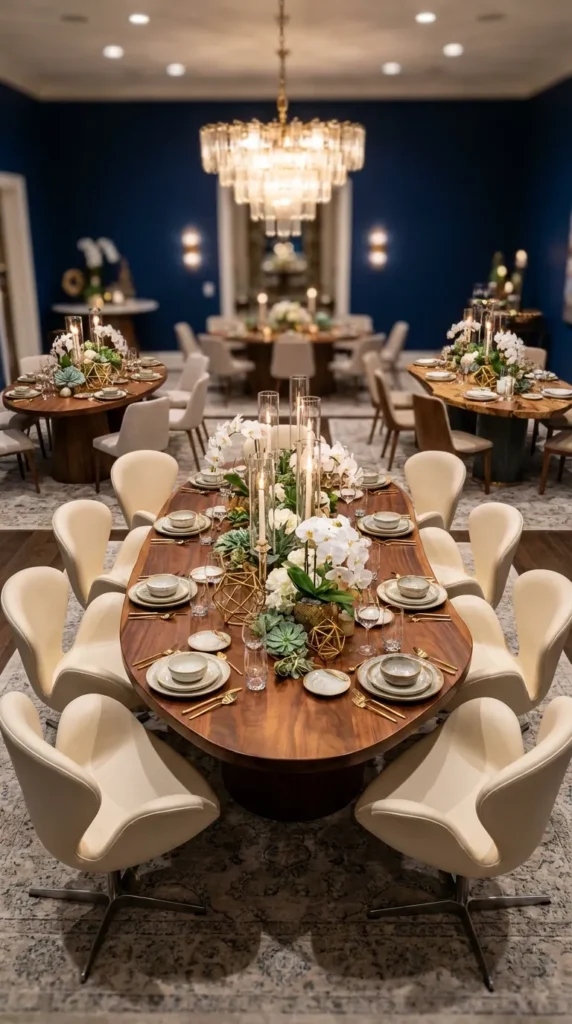
Create distinct table “islands” throughout the space with deliberate spacing between each. Each island functions as its own intimate gathering within the larger event.
This layout encourages mingling between courses as guests move between islands to visit friends. The open space facilitates movement and social interaction.
Perfect for cocktail-style banquets or events where networking and socializing are as important as the meal itself.
Island configuration tips:
- Space islands at least 8 feet apart
- Vary island sizes for visual interest
- Create clear pathways for circulation
- Use lighting or decor to define each island
10. Theater Style Banquet Layout
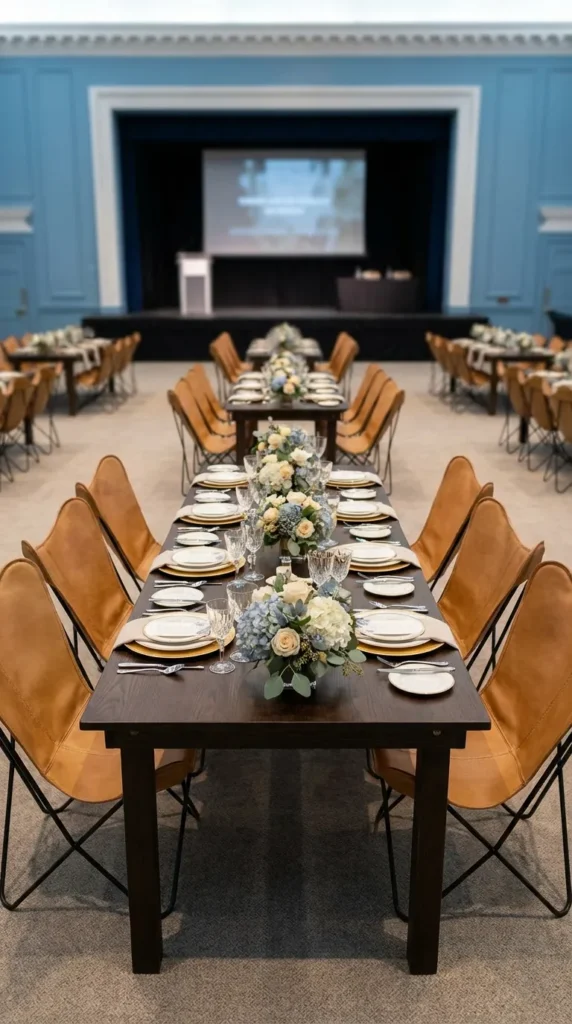
Arrange tables in theater-style rows all facing one direction toward a stage or presentation area. This hybrid layout accommodates speakers while providing dining surfaces.
Narrow rectangular tables allow guests to sit facing forward comfortably. The configuration prioritizes viewing while still enabling meal service.
Ideal for conferences, training sessions, or events where presentations are primary and meals are secondary. It’s functional for learning-focused gatherings.
11. Family Style Banquet Serving Layout
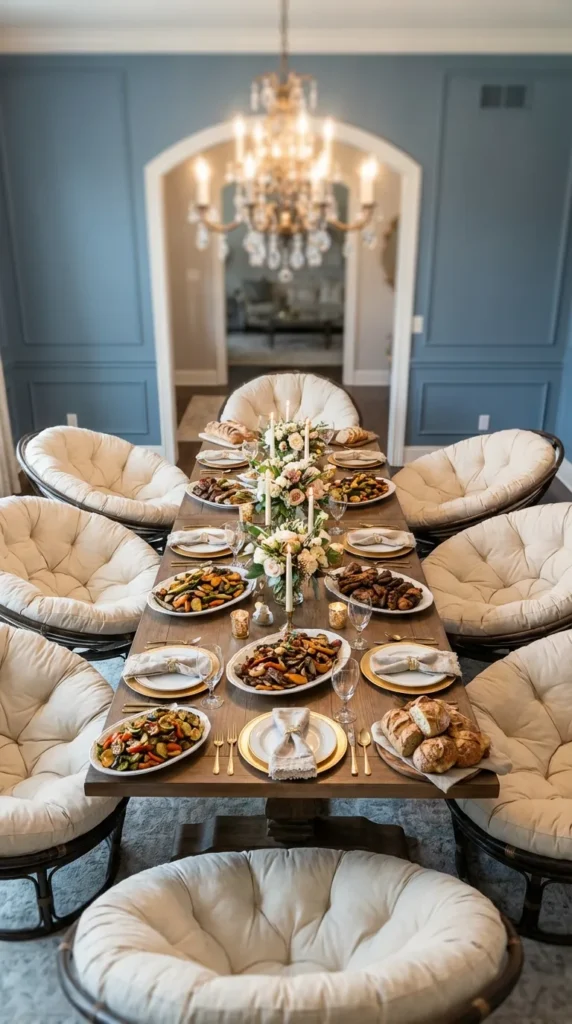
Long tables with food served family-style in large platters passed among guests. This casual approach encourages interaction and creates warm, communal atmosphere.
The serving style suits the layout, with ample table space for shared dishes. Guests serve themselves and each other, breaking ice naturally.
This configuration works beautifully for rehearsal dinners, family reunions, or casual celebrations prioritizing connection over formality.
12. Grid Banquet Layout

Arrange square or rectangular tables in precise grid pattern throughout the space. The geometric precision creates modern, organized aesthetic.
This layout maximizes capacity while maintaining visual order. The uniformity feels contemporary and intentional rather than haphazard.
Perfect for corporate events, galas, or modern celebrations where clean lines and organization enhance the overall design concept.
13. Open Center Banquet Layout
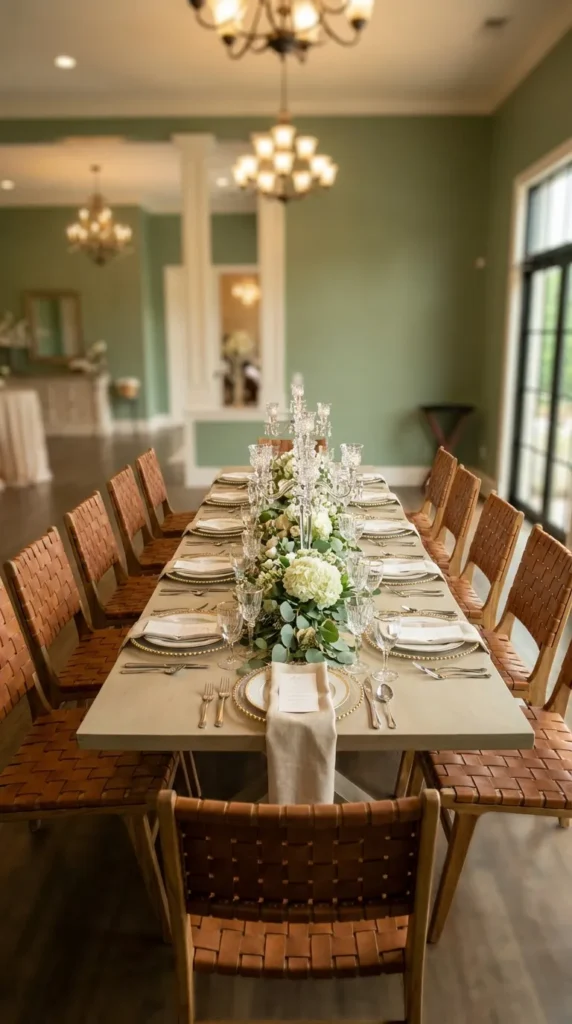
Position tables around the room’s perimeter, leaving the center open for dancing, performances, or socializing. This creates distinct dining and activity zones.
Guests have clear sightlines to central activities while maintaining dedicated dining space. The open center prevents crowding during entertainment.
This popular wedding reception layout transitions easily from dinner to dancing. It’s functional for multi-purpose event flow.
| Layout Feature | Guest Interaction | Flexibility | Space Efficiency |
| Round Tables | Very high | Medium | Medium |
| Mixed Shapes | High | Very high | High |
| Open Center | Very high | Very high | Medium |
| Grid Pattern | Medium | Low | Very high |
14. Diagonal Banquet Layout
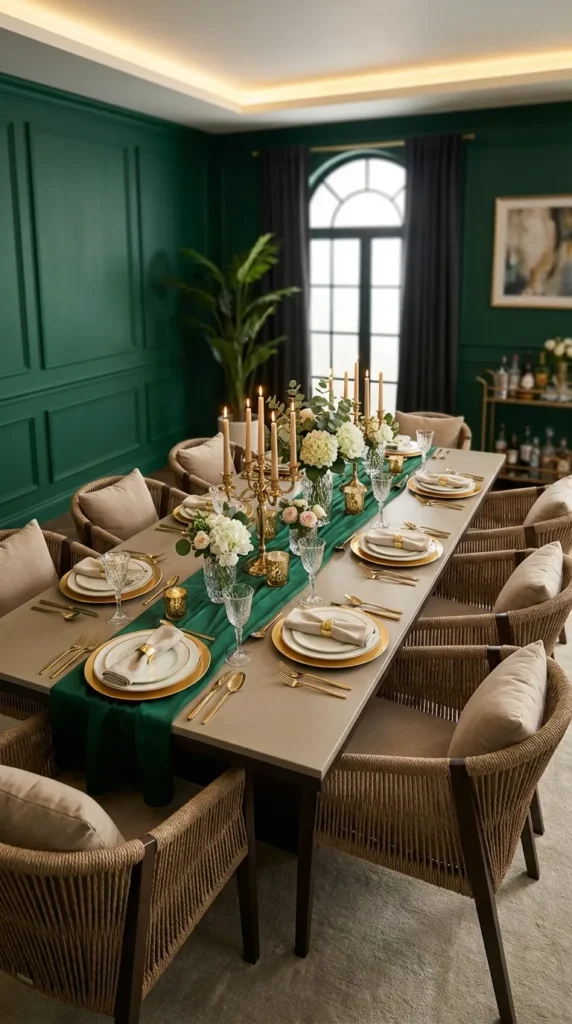
Angle rectangular tables diagonally across the room instead of parallel to walls. This unexpected arrangement creates dynamic visual interest.
The diagonal orientation makes rooms feel larger and more interesting. It breaks up predictable layouts while maintaining functionality.
This creative approach works well in square rooms or spaces where traditional layouts feel boring. It’s a simple way to add design impact.
15. Zig Zag Banquet Layout
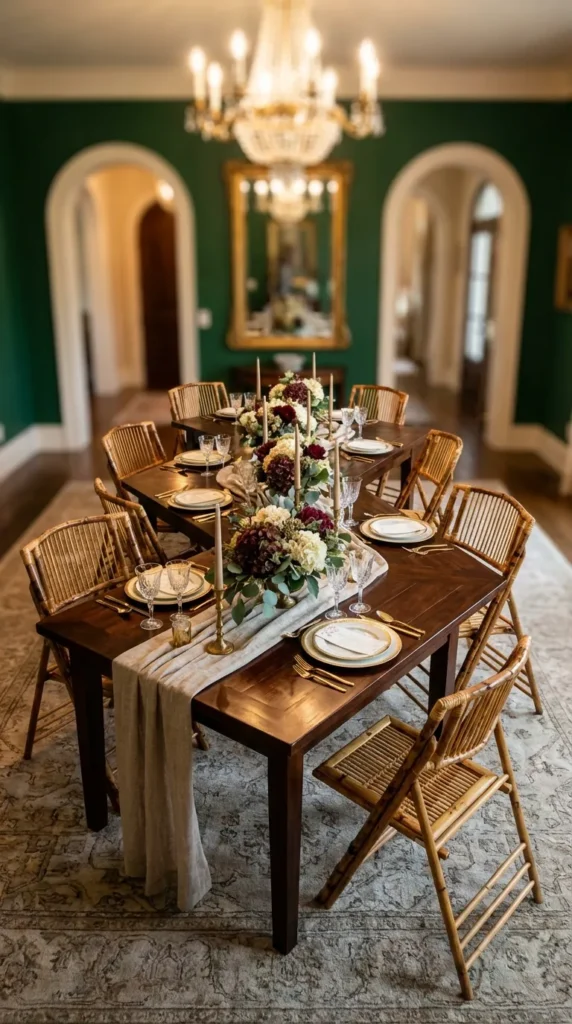
Arrange tables in zig-zag or chevron patterns creating movement and visual rhythm. The angled configuration adds energy and modern style.
This layout guides natural traffic flow while creating distinct dining sections. The pattern itself becomes decorative element enhancing the space.
Perfect for contemporary celebrations or events in uniquely shaped venues where creative layouts solve spatial challenges beautifully.
16. Breakout Banquet Areas Layout

Create multiple distinct dining areas within one large space, each with its own character or theme. Guests choose where to sit based on preference.
Different areas might feature varied table styles, decor themes, or even menu options. The variety accommodates different group dynamics and preferences.
This layout works wonderfully for large corporate events, festivals, or celebrations where diversity and choice enhance the experience.
Creating breakout areas:
- Use decor or lighting to define each zone
- Vary table configurations between areas
- Consider different themes or color schemes
- Ensure equal access to service and amenities
17. Garden or Outdoor Banquet Layout

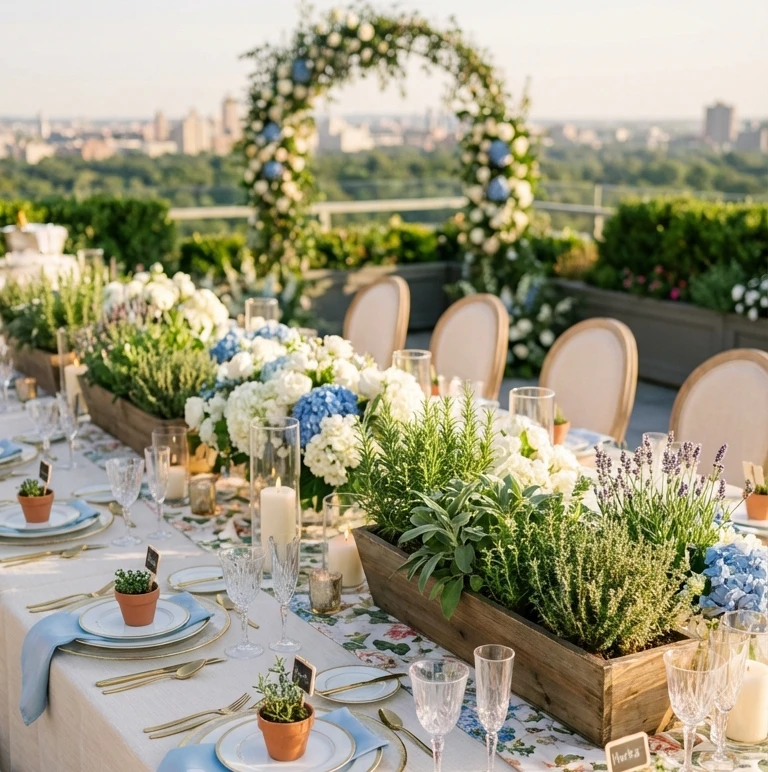
Adapt banquet layouts for outdoor settings with considerations for natural features, weather, and landscape. Use the environment to enhance table placement.
Arrange tables to take advantage of views, shade trees, or architectural features. The natural setting becomes part of your decor and layout strategy.
Outdoor layouts often feel more relaxed with organic spacing and flexible arrangements. Weather-appropriate materials and backup plans are essential.
18. Themed Sectioned Banquet Layout

Divide the space into themed sections, each with distinct decor, table arrangements, or even menu items. Guests experience variety within one gathering.
Sections might represent different courses, global cuisines, time periods, or aspects of the celebration theme. The variety creates journey-like experience.
This creative approach works for milestone birthdays, themed corporate events, or celebrations where experiential design enhances the gathering.
Which banquet layout will help you create the perfect atmosphere for your large gathering, balancing guest comfort with your event’s unique vision and purpose?